Complete Guide to Otsuchi Castle (Iwate Prefecture) | History and Highlights of Sanriku’s Largest Mountain Castle
What is Otsuchi Castle?
Otsuchi Castle is a Japanese castle ruin (mountain castle) located in Shiroyama, Otsuchi, Kamihei District, Iwate Prefecture. It is known as the ancestral residence of the Otsuchi clan, who ruled this region for approximately 280 years, from the Muromachi period to the early Edo period. It is also known as Hamasaki-kan, Hamasaki Castle, or Furudate, and was designated an Iwate Prefecture Historic Site on September 4, 1992.
The Otsuchi Castle ruins are built on a steep mountain range rising west of the center of Otsuchi town, at an altitude of approximately 140 meters and a relative height of approximately 140 meters. As one of the largest medieval castles in the Sanriku coastal region, it is an important historical site for regional history research. Currently, it is maintained as Shiroyama Park and is affectionately known as “Shiroyama” by the townspeople.
History of Otsuchi Castle
Construction of the Castle and the Establishment of the Otsuchi Clan
While there are various theories regarding the builder of Otsuchi Castle, historical records confirm that Otsuchi Jiro, a member of the Asonuma clan based in Tono, resided at Otsuchi Castle. The Asonuma clan was a powerful family that ruled the Tono region from the Kamakura period to the Muromachi period, and it is believed that a branch of this family advanced to Otsuchi on the coast and built the castle.
The Otsuchi clan prospered from the Muromachi period to the early Edo period as a powerful local lord with a net yield of 10,000 koku (equivalent to an economic power of 70,000 koku). They are believed to have accumulated economic power through trade in marine products and salt production, taking advantage of their location facing Otsuchi Bay.
Otsuchi Castle in the Sengoku Period
During the Sengoku period, the Otsuchi clan found itself in a difficult position between the two major powers, the Nanbu clan and the Date clan. In particular, during the Tensho era (1573-1593), the power struggle between the Nanbu and Date clans intensified, and the Otsuchi region was affected.
Around 1590, the then-lord of the castle, Otsuchi Sonhachiro, is said to have taken a stance in opposition to the Nanbu clan. However, due to the expansion of Nanbu Toshinao’s (later the 27th head of the Nanbu clan) power, Otsuchi Castle was besieged by Nanbu forces. Ultimately, Otsuchi Sonhachiro surrendered to Nanbu Toshinao, and according to one account, he fled to seek refuge with Date Masamune.
Edo Period and Abandonment of the Castle
During the Edo period, the Otsuchi region came under the control of the Nanbu domain. In 1659, Otsuchi Castle was demolished by order of the Nanbu domain, losing its function as a castle. Subsequently, a magistrate’s office was established in Otsuchi, and it came to be governed as a direct territory of the domain.
Records show that Otsuchi Sonhachiro Masasada, the castle lord, sent the local specialty salted salmon to Edo, where it was highly valued and gained reputation as Nanbu’s “bent-nosed salmon.” This salted salmon became widely known as a specialty product of the Otsuchi region and became an important product supporting the local economy.
Structure and Layout of Otsuchi Castle
Overview
Otsuchi Castle is a mountain castle with a typical medieval castle form, skillfully built utilizing the steep mountain massif. Its layout utilizes the ridge, and while it may appear small at first glance, in reality, the combined size of the fort and the four enclosures (kuruma) was large enough to accommodate a considerable number of people. It is considered one of the largest castle remains in the Sanriku region.
Arrangement of Main Enclosures
The Otsuchi Castle ruins have a structure of four interconnected enclosures, exhibiting a typical medieval castle form with Takadate on the east side and the Western Fort on the west side.
Main Enclosure (Honmaru): Located at an altitude of 140 meters, it has an area of approximately 523 square meters. This is the central enclosure of the castle ruins and is thought to have housed the lord’s residence and command post.
Ninokuruwa and Sanonokuruwa: These were positioned adjacent to the main enclosure and are presumed to have served both defensive and residential purposes.
Other Enclosures: Multiple enclosures were arranged in a continuous pattern, forming a tiered defensive line.
Defensive Structures
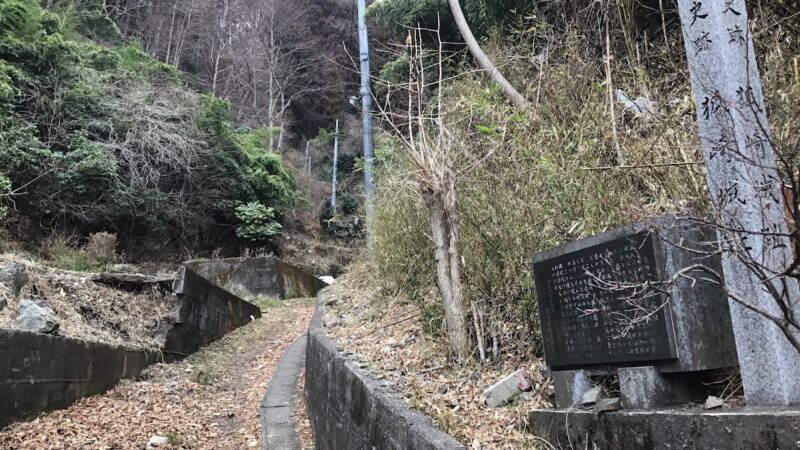
Excavations in 1983 and 1995 uncovered the remains of a dry moat, clearly confirming it was a castle site. The moat played a crucial role as a defensive structure for a mountain castle, strategically positioned to prevent enemy intrusion.
Furthermore, postholes were discovered during the excavations, confirming the existence of structures such as turrets and gates. It is evident that a robust defensive system was constructed by combining natural fortifications utilizing the steep terrain with artificial defensive structures.
Location and Geographical Characteristics
Otsuchi Castle is located on a hill overlooking Otsuchi Bay, built in a strategically important location overlooking the Otsuchi River. Located at a strategic point controlling water transport routes between the sea and rivers, it is believed to have functioned not only as a military defensive base but also as a center for trade and logistics.
Its elevation of 140 meters, with a relative height of 140 meters, provided sufficient defensive capabilities for a coastal mountain castle and was also suitable for monitoring enemy movements from a distance. It can be said that the castle was constructed utilizing the complex terrain of the Sanriku coast, taking advantage of the region’s unique characteristics.
Excavation and Research Results
1983 Excavation
The 1983 excavation uncovered the remains of a dry moat, archaeologically confirming the existence of the castle ruins, which had previously only been spoken of in folklore. This investigation revealed that Otsuchi Castle was not merely a residence but a full-fledged fortress equipped with defensive facilities.
1995 Excavation
The 1995 excavation uncovered postholes in addition to the remains of a moat, demonstrating the existence of buildings within the castle grounds. The arrangement and size of the post holes suggest the possibility of a considerably large structure having existed there.
These research findings provide important evidence supporting the historical value of Otsuchi Castle, leading to its designation as a prefectural historical site on September 4, 1992.
Basic Information on Otsuchi Castle
Location: Shiroyama, Otsuchi, Kamihei-gun, Iwate Prefecture (Inamoto, Chiwari)
Former Province: Mutsu Province
Common Name/Alternate Name: Hamasaki-kan, Hamasaki Castle, Furudate
Castle Structure: Mountain Castle
Elevation: Approximately 140 meters
Relative Height: Approximately 140 meters
Main Enclosure Area: Approximately 523 square meters
Construction Period: Muromachi period (details unknown)
Builder: Otsuchi Jiro (attributed)
Main Lords: Otsuchi clan (successive generations)
Year of Abandonment: Manji 2 (1659)
Designated Cultural Property: Iwate Prefecture Designated Historic Site (designated September 4, 1992)
Current Status: Developed as Shiroyama Park
Access and Visiting Information for Otsuchi Castle
Access Information
Public Transportation: From JR Kamaishi Line “Kamaishi Station,” take the Iwate Kotsu bus bound for “Otsuchi,” get off at “Otsuchi Town Hall,” and walk for approximately 15 minutes.
By Car: Approximately 30 minutes from Kamaishi Expressway “Kamaishi Kita IC” via National Route 45. Parking is available near Otsuchi Town Hall.
Points of Interest
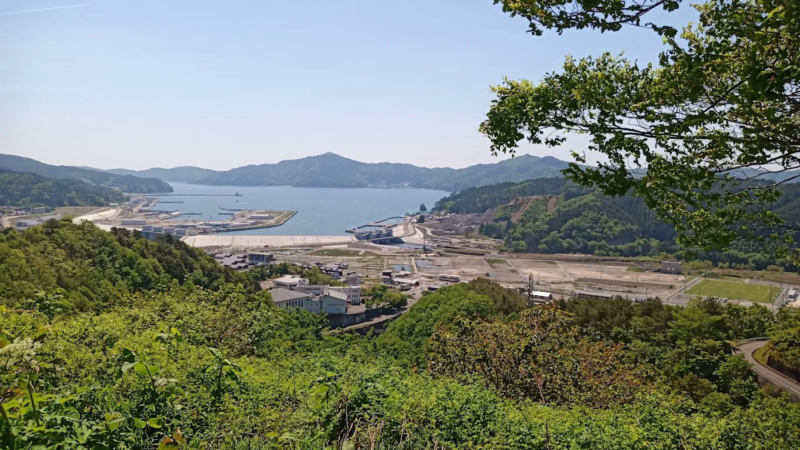
As the site is maintained as Shiroyama Park, you can explore the castle ruins using the walking paths. From the main enclosure, you can enjoy a panoramic view of Otsuchi Bay and the town of Otsuchi, experiencing the scenery seen by the former castle lords.
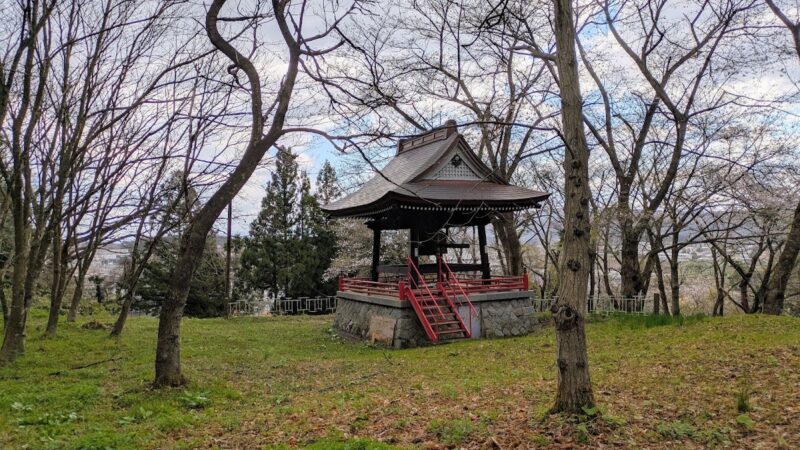
By climbing while observing the layout utilizing the steep terrain and the remains of the tiered enclosures, you can truly appreciate the defensive structure of a medieval mountain castle. In spring, cherry blossoms bloom, making it a popular place of relaxation for local residents.
Otsuchi Town and the Great East Japan Earthquake
Otsuchi Town suffered immense damage from the Great East Japan Earthquake on March 11, 2011. The tsunami devastated most of the town’s urban area, resulting in the loss of many precious lives. However, the Otsuchi Castle ruins, located on high ground, escaped tsunami damage and served as a safe haven.
Since the earthquake, Otsuchi Town has continued its recovery efforts, and Shiroyama, where the Otsuchi Castle ruins are located, has become a symbol of the town’s history and culture, serving as a spiritual anchor for its residents. In the process of recovery, the importance of preserving and passing on the region’s historical heritage has been reaffirmed.
The Relationship Between the Otsuchi and Nanbu Clans
The relationship between the Otsuchi and Nanbu clans is an important theme in understanding the medieval history of the Sanriku region. The Nanbu clan was a prominent family that expanded its power in the northern Tohoku region from the Kamakura period, and controlled most of what is now Iwate Prefecture from the Muromachi period to the Sengoku period.
It is believed that the Otsuchi clan initially had close ties with the Asonuma clan of Tono, but as the Nanbu clan’s power expanded, they gradually came under its influence. During the turbulent Tensho era, they were temporarily in conflict, but ultimately, they were incorporated into the Nanbu domain’s system of rule.
The demolition of Otsuchi Castle in 1659 is thought to have been part of the Nanbu domain’s policy of enforcing the “One Castle Per Province” decree and strengthening direct control of the domain.
Otsuchi Castle and Medieval Castles of the Sanriku Region
Besides Otsuchi Castle, many other medieval castle ruins remain in the Sanriku region. Many are mountain castles utilizing the complex terrain of the coastline, characterized by their strategic locations controlling key points of maritime traffic.
Otsuchi Castle, among these, boasts one of the largest scales and a full-fledged layout with multiple interconnected baileys, indicating its central role as a regional castle. Otsuchi Castle holds an important position in the study of medieval castles in the Sanriku region.
References and Historical Materials
Important historical materials for studying the history of Otsuchi Castle include the “Nanbu Family Documents” and the “Morioka Domain Miscellaneous Records.” Local oral traditions and records also provide clues to the castle’s history.
Archaeological survey reports published in 1983 (Showa 58) and 1995 (Heisei 7) detail the remains and excavated artifacts. These materials can be viewed at the Otsuchi Town Board of Education and the Iwate Prefectural Museum.
Cultural Value of Otsuchi Castle
The reasons why the Otsuchi Castle ruins are designated as an Iwate Prefecture Historic Site are as follows:
- Scale and Structure: It is one of the largest castles in the Sanriku region and retains the typical form of a medieval mountain castle in excellent condition.
- Historical Significance: As the residence of the Otsuchi clan, who ruled the region for approximately 280 years, it holds an important position in the history of the region.
- Preservation of Remains: Archaeological excavations have confirmed remains such as dry moats and post holes, revealing the actual state of the castle.
- Regional Symbol: It is a cultural heritage site that is familiar to the townspeople as Shiroyama (Castle Mountain) and forms the identity of the region.
It is necessary to preserve and utilize these values for future generations.
Summary
Otsuchi Castle is one of the largest medieval mountain castle ruins in the Sanriku region, located in Otsuchi Town, Iwate Prefecture. For approximately 280 years, from the Muromachi period to the early Edo period, it ruled the region as the residence of the Otsuchi clan and prospered as a center for the trade of marine products. Although demolished by the Nanbu clan in 1659, the castle remains today as Shiroyama Park and was designated an Iwate Prefecture Historic Site in 1992.
It possesses the typical form of a medieval castle, utilizing the steep terrain, and archaeological excavations have confirmed remains such as dry moats and post holes. Even during the reconstruction process after the Great East Japan Earthquake, it has become a spiritual anchor for the townspeople as an important heritage symbolizing the region’s history and culture.
Visiting the Otsuchi Castle ruins allows you to experience the medieval history of the Sanriku region, the glory of the Otsuchi clan, and the historical changes of the area. From the main enclosure ruins, at an altitude of 140 meters, you can enjoy a panoramic view of Otsuchi Bay, conveying the scenery that the former castle lords saw.