Mizusawa Castle (Iwate Prefecture) Complete Guide: A Thorough Explanation of the History of the 21 Fortresses of the Date Clan and the Remains of Gagyū Castle
What is Mizusawa Castle?
Mizusawa Castle (Mizusawa-jō) was a Japanese castle located in Mizusawa, Ōshū City, Iwate Prefecture. Built on a flatland in the center of the Izawa Plain on the west bank of the Kitakami River, it was also known as Gagyū Castle, Ōkyū Castle, and Mizusawa Fortress. During the Edo period, it was one of the 21 Fortresses of the Date Clan and a crucial base for the northern defense of the Sendai Domain.
Built on a slightly elevated area of the Mizusawa Terrace, this castle was strategically located at a key transportation hub, connecting to the Ōshū Kaidō, Akita Kaidō, and Kuroishi Kaidō, as well as the Otomegawa and Kitakami River waterways. Even after the introduction of the “One Castle Per Province” system, its continued existence as a fortress was recognized, and it functioned as the residence of the Mizusawa Date family until the end of the Edo period.
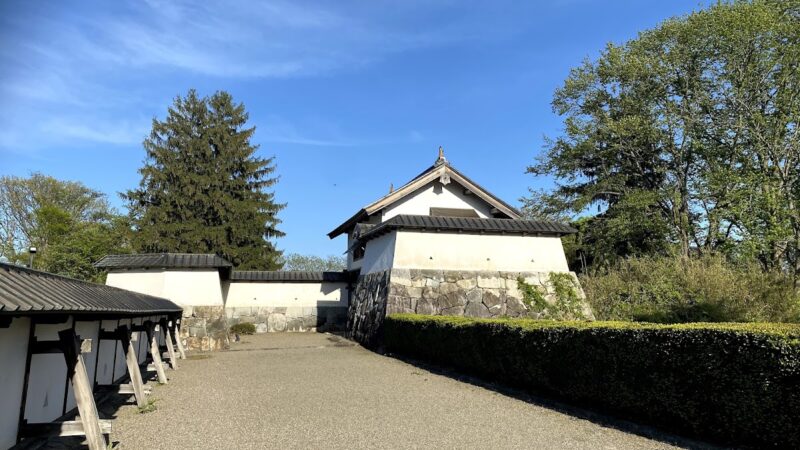
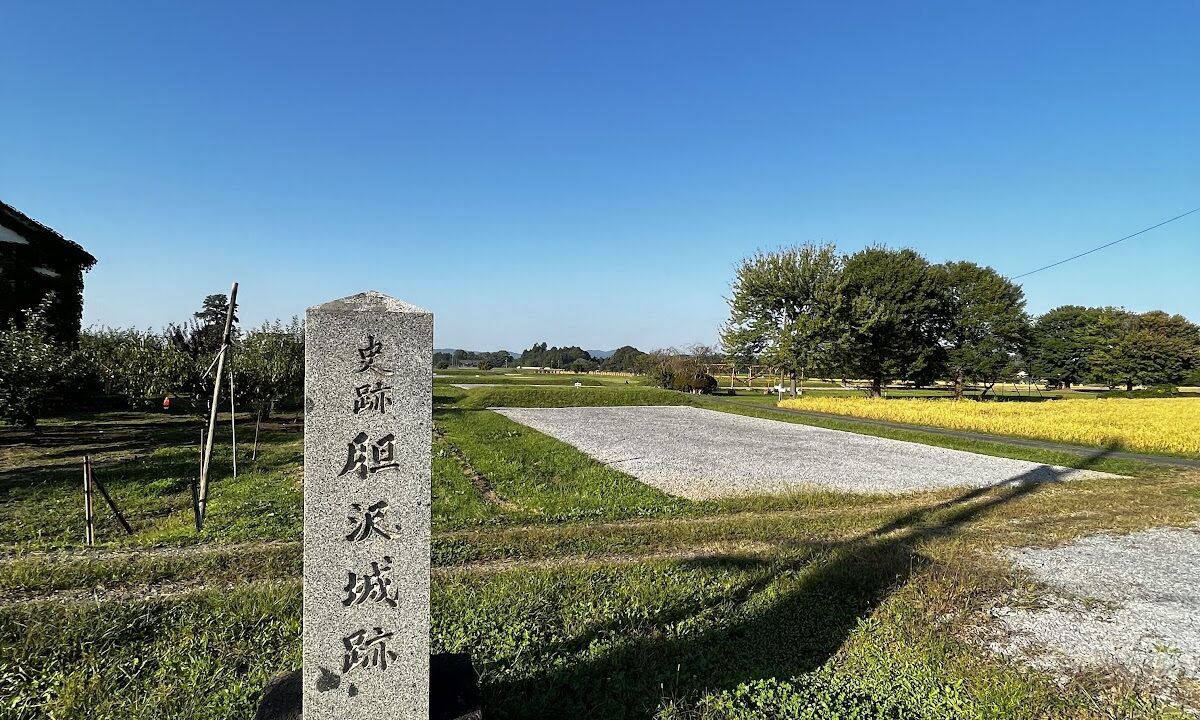
Currently, the castle ruins are undergoing urbanization, but traces of earthworks and moats remain in some areas, allowing us to imagine its former glory.
History and Background of Mizusawa Castle
Mystery of its Construction: The Minamoto no Yoriyoshi Theory and Unknown Origins
There are no clear records regarding the construction date and builder of Mizusawa Castle, and the details remain unknown. According to the “Iwate Prefecture Geographical Summary,” it is said to have been built by Minamoto no Yoriyoshi in Tenki 5 (1057). This coincides with the period of the Former Nine Years’ War (1051-1062), and the tradition is that Minamoto no Yoriyoshi built the castle when he pacified the Tohoku region as Governor of Mutsu Province and Commander of the Chinju-fu (Northern Defense Headquarters).
However, there are no reliable historical materials to support this theory, and it is highly likely that the actual construction date was much later.
Kasai Clan Era: A Base for Controlling the Izawa Plain
In the Middle Ages, Mizusawa Castle was one of the important bases for the Kasai clan’s control of the Izawa Plain. According to local tradition, the castle was ruled by the Hachiya, Sasaki, and Kashiwayama clans, who were vassals of the Kasai clan.
The Kasai clan was a family descended from Kasai Kiyoshige, who was appointed as the chief magistrate of Oshu by Minamoto no Yoritomo after the fall of the Oshu Fujiwara clan. They controlled a vast territory including Izawa County. Mizusawa Castle is thought to have functioned as a central facility for regional governance within this system.
The Dispossession of the Kasai Clan by Toyotomi Hideyoshi and the Rule of Date Masamune
In 1590, during Toyotomi Hideyoshi’s siege of Odawara, the Kasai clan was dispossessed of their territory for being late in joining the campaign. At this time, Date Masamune acquired a vast territory including the former Kasai territory, and Mizusawa Castle came under his control.
Masamune adopted a policy of placing trustworthy family members and important retainers in strategically important locations to establish his hegemony in the Tohoku region. As part of this effort, Mizusawa Castle was appointed lord by Shiroishi Munezane, a cousin of Date Masamune.
Shiroishi Munezane and the Rusu Family’s Rule
Shiroishi Munezane was a cousin of Date Masamune and played an important role in the Sendai Domain. Initially, Munezane was adopted by Rusu Munetoshi and inherited the Rusu name, but later reverted to the Shiroishi name.
The Rusu family was a prominent branch of the Date clan for generations and played a central role in the governance of Mizusawa Castle. Rusu Munetoshi is known as the lord of Iwagazaki Castle, and the rule of his family in Mizusawa strengthened the Sendai Domain’s northern defense system.
The Establishment of the Mizusawa Date Family and the Edo Period
In the Edo period, Mizusawa Castle became the residence of the Mizusawa Date family. As a branch of the Sendai Domain, the Mizusawa Date family held a crucial position, responsible for its strategic location.
Following the “One Castle Per Province” system implemented in 1601, many castles were abandoned, but Mizusawa Castle was permitted to remain as a “fortress.” This indicates that Mizusawa Castle was a militaryly and politically important base for the Sendai Domain.
As one of the 21 fortresses of the Date clan, Mizusawa Castle was located near the border with the Nanbu Domain, serving as a frontline defense against threats from the north. The Mizusawa Date family, the lords of the castle, were responsible not only for regional governance but also for playing a central role in the domain’s northern defense during times of military tension.
Development of the Castle Town
Throughout the Edo period, a castle town centered around Mizusawa Castle developed. A typical castle town layout was formed, with the residences of retainers surrounding the castle, followed by the houses of townspeople, and then temples surrounding those areas.
Mizusawa also flourished as a post town on the Oshu Kaido road, a transportation hub where roads such as the Akita Kaido and Kuroishi Kaido intersected. Furthermore, it served as a hub for transporting goods using the Otomegawa and Kitakamigawa rivers, fostering a vibrant exchange of local products. This economic prosperity supported the development of the castle town of Mizusawa.
From the End of the Edo Period to the Meiji Restoration
During the end of the Edo period, Mizusawa Castle, as part of the Sendai Domain, was involved in the Boshin War. The Sendai Domain joined the Ouetsu Reppan Alliance and fought against the new government forces, but ultimately surrendered.
After the Meiji Restoration, Mizusawa Castle was abandoned due to the abolition of the feudal domains and the establishment of prefectures, and its castle facilities were gradually dismantled. Much of the castle site has been urbanized, making it difficult to imagine its former appearance today.
Structure of Mizusawa Castle
Characteristics as a Flatland Castle
Mizusawa Castle is a flatland castle located in the central part of the Izawa Plain on the west bank of the Kitakami River. Built on a slightly elevated area of the Mizusawa Terrace, its slightly higher position than the surrounding plains provided a defensive advantage.
While flatland castles are less defensible than mountain castles, they are well-suited for peacetime governance and economic activity, and were advantageous for the development of castle towns. Mizusawa Castle leveraged these characteristics, functioning as both a military base and a center of regional governance.
Layout of Enclosures
Mizusawa Castle consisted of multiple enclosures (kuruwa). The central main enclosure (honmaru) was surrounded by the second and third enclosures, each demarcated by moats and earthworks.
Records indicate that a giant cedar tree, known as “Ubasugi,” was once planted in the third enclosure. This Ubasugi was a symbolic presence of the castle and remains an essential element when discussing Mizusawa Castle today.
Defensive Structures
Mizusawa Castle, being a flatland castle, was primarily defended by moats and earthworks. Water moats and dry moats surrounded the castle, preventing enemy intrusion, while the earthworks acted as walls protecting the interior.
The castle gate was heavily guarded, and it is believed that defensive structures such as a masugata koguchi (square-shaped gate) were employed. Furthermore, the layout, with the entire castle town surrounded by temples, was designed to function as a defensive line in times of need.
Origin of the Name Gagyūjō (臥牛城)
The alternative name for Mizusawa Castle, “Gagyūjō” (臥牛城), is said to derive from the castle’s shape resembling a reclining ox. The undulating terrain of the castle, built on a slight elevation, likely appeared like a reclining ox from a distance.
Such castle names, likened to animals, are found throughout Japan and are a traditional naming method that expresses the castle’s topographical features. The name Gagyūjō became a beloved name symbolizing the tranquil appearance of Mizusawa Castle.
Highlights and Current Status of Mizusawa Castle
Existing Remains
Currently, most of the Mizusawa Castle site has been urbanized, and there are few clear remains. However, with careful observation, traces of its former glory can be found.
Some earthworks and moat remains are preserved as part of the topography, allowing us to imagine the scale of the former castle. Furthermore, the layout of the castle town shows remnants of Edo-period urban planning, making it a delightful historical stroll.
The Legend of the Old Cedar
The Old Cedar, said to have been planted in the third enclosure, was a symbolic presence of Mizusawa Castle. Although this giant tree no longer exists, its legend is passed down as part of local history.
The legends and anecdotes surrounding the Old Cedar are important elements that add color to the history of Mizusawa Castle. When visiting the castle ruins, it’s worthwhile to reflect on the giant tree that once stood here.
Traces of the Castle Town
The town layout and temple arrangements from the castle town era still remain in the city of Mizusawa. Along the Oshu Kaido road, old buildings and historical sites are scattered, allowing you to feel the traces of history.
The cluster of temples was positioned as an outer defensive line for the castle, and even today, many temples are concentrated on the outskirts of the town. Visiting these temples will help you understand the structure of the castle town during the Edo period.
Photo Spots
When visiting the Mizusawa Castle ruins, photo spots include the remaining earthworks and moat remains, the townscape of the castle town, and the scenery of the temple district. In particular, taking photos while being mindful of the former layout of the baileys will allow you to visually capture the structure of the castle.
The location where the old cedar tree is said to have stood, and the estimated location of the castle gate, will also be photo spots that stimulate historical imagination.
Access and Visiting Information for Mizusawa Castle
Location
Mizusawa Ward, Oshu City, Iwate Prefecture (Former Mizusawa City Center)
Access Methods
Access by Train
- Approximately 15 minutes on foot from JR Tohoku Main Line “Mizusawa Station”
- Approximately 20 minutes by bus or taxi from Tohoku Shinkansen “Mizusawa-Esashi Station”
Access by Car
- Approximately 10 minutes from Tohoku Expressway “Mizusawa IC”
- Parking lots are scattered throughout the city, but there is no dedicated parking lot for the castle ruins.
Estimated Visiting Time
Allow approximately 15-30 minutes to explore the castle ruins. However, if you plan to visit the entire castle town or the surrounding temples, it is recommended to allow 2-3 hours.
Notes for Visitors
Mizusawa Castle ruins are located in an area that has undergone urbanization, and there is no clearly designated “castle ruins park.” Many areas are residential and commercial, so consideration for local residents is necessary when visiting.
Many of the ruins may be located on private property, so please be careful not to trespass. Please try to observe only from public roads.
Tourist Spots Around Mizusawa Castle
Oshu City Samurai Residence Museum
This museum showcases the samurai culture of Mizusawa, allowing visitors to see a samurai residence from the Edo period. It is a valuable facility for understanding the lives of samurai who served the Mizusawa Date family.
Takano Choei Memorial Museum
This is a memorial museum for Takano Choei, a scholar of Western learning from Mizusawa. You can learn about the achievements of Takano Choei, known as an enlightened intellectual of the late Edo period.
Shobo-ji Temple
An ancient temple of the Soto Zen sect, and one of the representative temples of Mizusawa’s temple district. It has historical value as one of the temples positioned for the outer defense of the castle town.
Komagata Shrine
This shrine is revered as the guardian shrine of Mizusawa. It has been a spiritual pillar of the region since the castle town era.
Oshu City Cultural Center (Z Hall)
Although a modern cultural facility, it occasionally hosts exhibitions and events related to the history and culture of Mizusawa.
The Role of Mizusawa Castle in the Date 21 Fortresses
What are the Date 21 Fortresses?
The Date 21 Fortresses is a collective term for 21 fortresses (castles) established by the Sendai Domain for the defense and governance of its territory. Under the “One Castle Per Province” system, castles other than Sendai Castle were generally abandoned, but strategically and politically important locations were permitted to remain as “fortresses.”
The Front Line of Northern Defense
Mizusawa Castle played a particularly important role in northern defense among the Date 21 Fortresses. Located near the border with the Nanbu Domain, it was intended to serve as the front-line base for the Sendai Domain’s northern defense in the event of military tension.
The Mizusawa Date family, as a branch of the Date clan, held high status and, through their military strength and governing ability, continued to protect this important location.
Coordination with Other Fortresses
Mizusawa Castle, in cooperation with neighboring fortresses such as Iwagazaki Castle and Ichinoseki Castle, formed a defense network for the northern part of the Sendai Domain. A system of mutual support was established among these fortresses; if one fortress was attacked, reinforcements would be dispatched from other fortresses.
Historical Significance of Mizusawa Castle
Center of Regional Governance
Mizusawa Castle was not merely a military facility, but the political, economic, and cultural center of the Izawa region. The Mizusawa Date family, the lords of the castle, also focused on regional development and industrial promotion, contributing to the prosperity of Mizusawa.
Strategic Transportation Hub
Mizusawa, where major highways including the Oshu Kaido intersected, was a hub for goods and information. By controlling this transportation hub, Mizusawa Castle became a crucial nexus in the Sendai Domain’s distribution network.
Center for Cultural Dissemination
The castle town of Mizusawa fostered a unique culture that blended samurai culture and merchant culture. The emergence of intellectuals like Takano Chōei demonstrates the high cultural level of Mizusawa.
Summary
Mizusawa Castle (Ōshū City, Iwate Prefecture) is a castle with a long history, dating back to the old legend that it was built by Minamoto no Yoriyoshi, and continuing through the Kasai and Date clans. As one of the 21 Date strongholds, it was an important base for the northern defense of the Sendai Domain and functioned as the residence of the Mizusawa Date family until the end of the Edo period.
Although much of the castle site is now urbanized, traces of the earthworks, moats, and the layout of the castle town can still be seen, giving a glimpse of its former glory. As its alternative names, such as Gagyūjō, Ōkyūjō, and Mizusawa Yōgai, suggest, this castle was cherished by the local people and played an important role.
Visiting Mizusawa Castle offers more than just a tour of the castle ruins; it provides an opportunity to explore diverse historical themes, including the history of the Tohoku region from the medieval to early modern periods, the Date clan’s governing policies, and the development of the castle town. It is a historical site that those interested in the history of Iwate Prefecture or Japanese castles should definitely visit.