Ichinohe Castle (Iwate Prefecture) | History and Remains of a Hilltop Castle that Flourished as a Base for the Nanbu Clan
Overview of Ichinohe Castle
Ichinohe Castle was a Japanese castle located in Ichinohe-cho, Ninohe-gun, Iwate Prefecture. Built in Ichinohe, Nukabe-gun, during the Sengoku period, this hilltop castle prospered for a long time as the residence of the Ichinohe Nanbu clan.
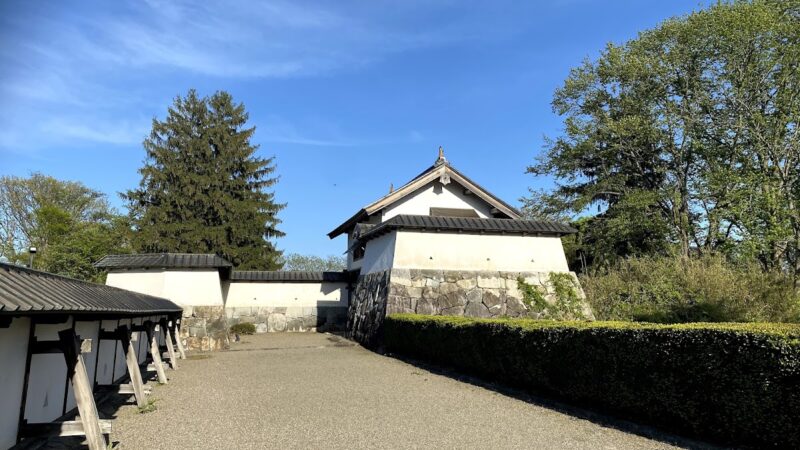
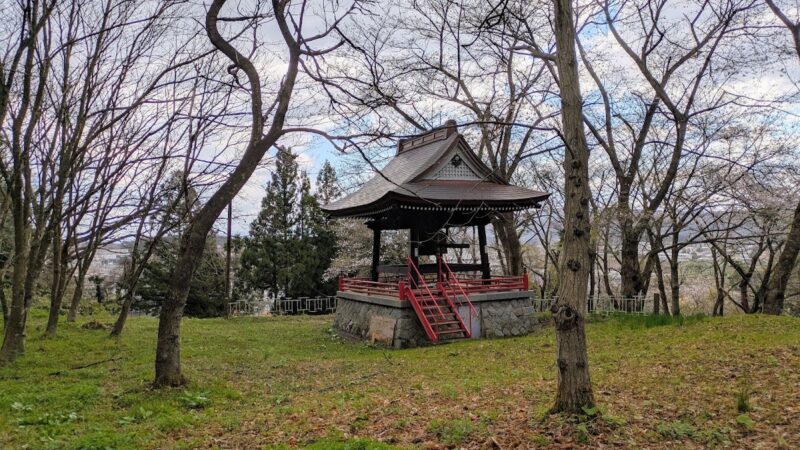
The castle grounds are situated on a plateau approximately 60 meters high on the right bank of the Mabuchi River, and functioned as a defensive structure that skillfully utilized the natural terrain. Currently, it is maintained as “Ichinohe Park” and is an important cultural heritage site that conveys the history of the region.
Basic Information
- Location: Kitakan, Ichinohe, Ichinohe-cho, Ninohe-gun, Iwate Prefecture
- Former Province: Nukabe District, Mutsu Province
- Classification/Structure: Hilltop castle, multi-bailey style
- Builder: Nanbu Yoshizane (2nd generation of the Ichinohe Nanbu clan)
- Construction Period: Kenchō era (1249-1256)
- Main Lords: Ichinohe Nanbu clan
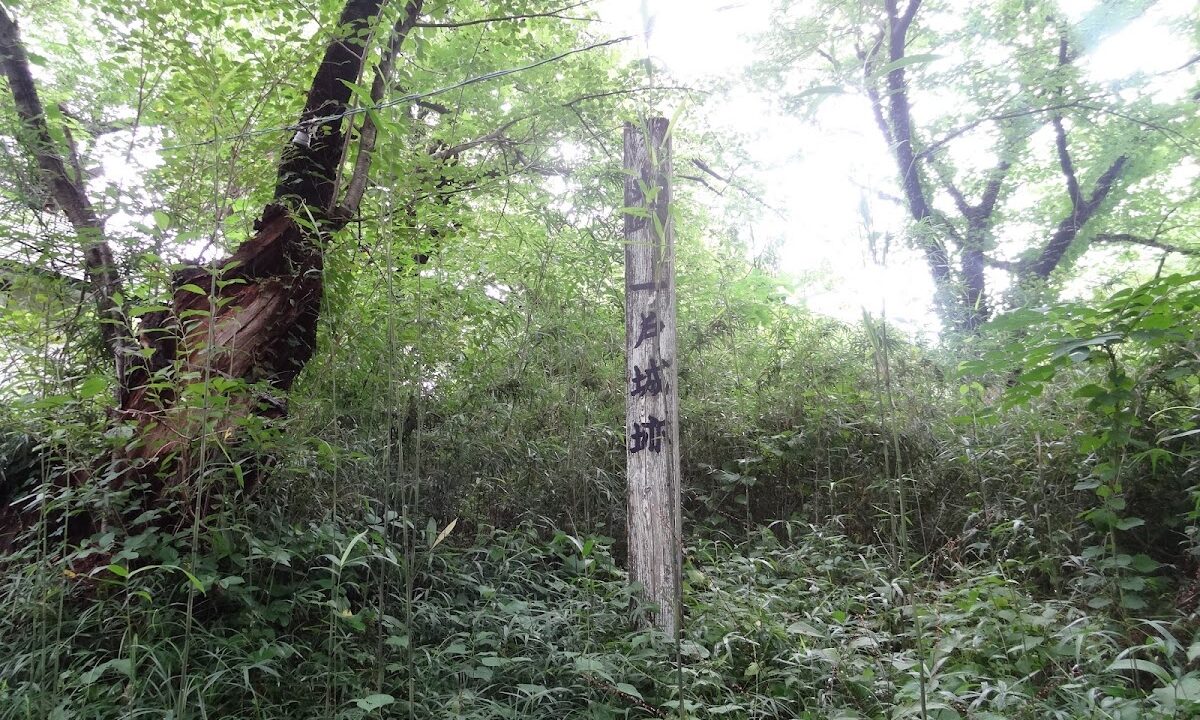
- Remains: Enclosures, earthworks, moats
- Keep Structure: None
- Common Name/Alternate Name: None in particular
Ichinohe Castle has a typical multi-bailey structure for a medieval castle, with multiple enclosures arranged in a series to enhance its defensive capabilities. While it lacks a symbolic structure of early modern castles like a keep, it strongly retains the characteristics of a mountain castle from the Sengoku period.
Structure of Ichinohe Castle
Castle Layout and Topographical Utilization
The most distinctive feature of Ichinohe Castle is its location utilizing the terrace cliff on the right bank of the Mabuchi River. The 60-meter elevation difference posed a significant obstacle for attacking enemies, functioning as a natural stronghold.
The castle utilized the elevated area of the terrace cliff, which ran continuously in a north-south direction, and consisted of the following four main enclosures:
Four Main Enclosures
1. Kitadate (North Enclosure)
This enclosure, located furthest north, is thought to have functioned as the front line of the entire castle. Kitadate played a crucial role in the defense of Ichinohe Castle.
2. Hachimandate (Hachiman Enclosure)
This enclosure extends south from Kitadate. The name “Hachiman” suggests the possibility of a facility dedicated to the Hachiman deity. In medieval castles, it was common to enshrine Hachiman as a guardian deity.
3. Shinmei-date
Located south of Hachiman-date, this enclosure is presumed to have contained facilities related to the Shinmei Shrine, a branch of the Ise Grand Shrine, based on its name, Shinmei.
4. Jōnen-date
This is the southernmost enclosure. The name Jōnen has Buddhist connotations, suggesting it may have been a temple facility or a space related to religious beliefs.
Linear Enclosure Defense Structure
Ichinohe Castle employs a linear enclosure structure. This structure involves arranging multiple enclosures in a line, allowing each enclosure to function as an independent defensive unit while simultaneously supporting one another.
This structure offered the advantage of allowing for the establishment of a new defensive line at the next enclosure even if the enemy captured one. It is a rational layout that maximizes the use of the long, narrow plateau terrain.
Existing Remains
Currently, the following remains can be confirmed at the Ichinohe Castle site:
- Kuruwa (enclosures): The flat surfaces of each enclosure remain, allowing us to estimate their original size.
- Dorui (earthen ramparts): Traces of earthen ramparts can be found in some enclosures, indicating the presence of defensive structures.
- Horikiri (moat): Traces of moats separating enclosures can be confirmed.
These remains are valuable resources for understanding the structure of hilltop castles during the Sengoku period. Although some remains have been altered due to the site being developed as a park, the basic layout remains as it was in its heyday.
History of Ichinohe Castle
Construction and the Establishment of the Ichinohe Nanbu Clan
Ichinohe Castle is believed to have been constructed during the Kenchō era (1249-1256) by Nanbu Yoshizane, the second head of the Ichinohe Nanbu clan. This period coincides with the mid-Kamakura period, when the Nanbu clan expanded its power into Nukabe District.
The Nanbu clan was a family descended from the Kai Genji clan. They were granted Nukabe District in Mutsu Province for their achievements in Minamoto no Yoritomo’s Oshu War. Subsequently, the Nanbu clan established several branches within Nukabe District, each building castles and governing the region.
The Ichinohe Nanbu clan was one of these branches, based in the Ichinohe area of Nukabe District. The name “Ichinohe” is thought to originate from the administrative division name when Nukabe District was divided into “Nine Nohe.”
Muromachi and Sengoku Periods
Throughout the Muromachi period, the Ichinohe Nanbu clan continued to govern the region from Ichinohe Castle. Although detailed records from this period are scarce, Ichinohe Castle undoubtedly functioned as one of the Nanbu clan’s important bases in Nukabe District.
With the arrival of the Sengoku period, power struggles arose within the Nanbu clan, and conflicts with surrounding Sengoku daimyo intensified. It is believed that Ichinohe Castle also experienced these periods of warfare, but no specific records of battles remain.
Changes Since the Early Modern Period
After Toyotomi Hideyoshi’s unification of Japan, the Nanbu clan continued as the Morioka Domain. However, within the framework of castle policies in the early modern period, medieval mountain castles like Ichinohe Castle gradually fell out of use.
During the Edo period, the Ichinohe area was incorporated into the Morioka Domain’s administrative system, and it is believed that Ichinohe Castle was abandoned. Subsequently, the castle ruins were used as living spaces and farmland for the local people.
Preservation and Utilization in Modern Times
Since the Meiji era, the Ichinohe Castle ruins have been recognized as a local historical heritage site. From the Showa to the Heisei period, part of the castle ruins was developed into “Ichinohe Park,” which is now used as a place of relaxation for local residents.
While playgrounds and open spaces are installed within the park, the historical value of the castle ruins is also respected, and information boards and other markers have been installed. It is also used as a place for local history education, and is a subject of local history studies for elementary and junior high school students.
The Ichinohe Nanbu Clan and the Castle Network of Nukabe District
Castle Arrangement in Nukabe-Kunohe
Understanding Ichinohe Castle is crucial to understanding the Nanbu clan’s castle arrangement in Nukabe District. The Nanbu clan divided Nukabe District into “Kunohe” (nine districts) and established a system of control by placing family members in each district.
The main castles include the following:
- Ichinohe Castle: The residence of the Ichinohe Nanbu clan
- Ninohe Castle: The base of the Ninohe region (later Fukuoka Castle)
- Sannohe Castle: The residence of the main Nanbu family
- Yonohe Castle: The base of the Shinohe region
- Gonohe Castle: The base of the Gonohe region
- Rokunohe Castle: The base of the Rokunohe region
- Shichinohe Castle: The base of the Shichinohe region
- Hachinohe Castle: The base of the Hachinohe region
- Kunohe Castle: The base of the Kunohe region
These castles were interconnected, forming a defense network for the entire Nukabe district. Ichinohe Castle was an important base that played a part in this network.
Related Castles in the Surrounding Area
Besides Ichinohe Castle, there are other medieval castles in Ichinohe town, such as Anetai Castle. These are thought to have functioned as subsidiary castles that complemented the Ichinohe Nanbu clan’s rule.
Anetai Castle is located in the Anetai district of Ichinohe town and was the residence of the Anetai clan. It is presumed that the Anetai clan, as vassals of the Ichinohe Nanbu clan, played a role in supporting the defense of Ichinohe Castle.
Cultural Value of Ichinohe Castle
Status as a Designated Cultural Property
Currently, Ichinohe Castle ruins are not designated as a national or prefectural cultural property. However, they are recognized as an important historical heritage site in the region and are protected as a town cultural property.
Iwate Prefecture also has castles designated as national historic sites, such as Morioka Castle and Kunohe Castle. Like these castles, Ichinohe Castle is an important site for understanding the history of Iwate Prefecture from the medieval to the early modern period.
Status of Academic Research
Regarding Ichinohe Castle, research has been conducted by local historians. The creation of castle layout maps and the collection of historical documents are underway.
However, full-scale archaeological excavations have been limited, and many aspects of the castle’s detailed structure and changes remain unclear. Further research may yield new insights.
Access and Visiting Information for Ichinohe Castle
Transportation Access
Access by Train
- Approximately 15 minutes on foot from Ichinohe Station on the IGR Iwate Galaxy Railway
- Ichinohe Station is approximately 40 minutes from Morioka Station
Access by Car
- Approximately 5 minutes from Ichinohe Interchange on the Tohoku Expressway
- Accessible from National Route 4
Points to Note When Visiting
The site is maintained as Ichinohe Park, allowing for free exploration. Parking is available within the park, making visits by car convenient.
When visiting the castle ruins, please pay attention to the following points:
- Elevation Difference of the Plateau: You can appreciate the advantageous location, which is 60 meters higher than the Mabuchi River.
- Layout of Enclosures: You can observe the arrangement of enclosures running north-south and understand the structure of the connected enclosures.
- Traces of Earthworks and Moats: Although it is maintained as a park, if you observe carefully, you can find traces of defensive structures.
- View: The view from the plateau is excellent, allowing you to imagine the scenery that the former castle lords saw.
Nearby Tourist Attractions
When visiting Ichinohe Castle, we recommend also visiting the nearby tourist attractions.
- Goshono Site: A large-scale Jomon period settlement site, and one of the constituent assets of the World Heritage Site “Jomon Prehistoric Sites in Hokkaido and Northern Tohoku.”
- Okunakayama Plateau: A plateau resort area where you can enjoy beautiful natural scenery.
- Mabuchi River: Along the Mabuchi River, which flows below the castle ruins, a beautiful gorge unfolds.
The Position of Ichinohe Castle in Iwate Prefecture’s Castle Culture
Major Castles of Iwate Prefecture
Iwate Prefecture has numerous medieval and early modern castles. Among them, the following castles are particularly famous.
- Morioka Castle: A modern castle that served as the base of the Nanbu clan, and one of the three most famous castles in Tohoku.
- Kunohe Castle: The site of Toyotomi Hideyoshi’s final battle, designated a national historic site.
- Hanamaki Castle: A flatland castle that functioned as a branch castle of the Nanbu clan.
- Shiwa Castle: An ancient castle from the Heian period.
Although Ichinohe Castle is smaller in scale compared to these famous castles, it is indispensable for understanding the Nanbu clan’s rule in Nukabe District during the medieval period.
Characteristics as a Hilltop Castle
Many castles in Iwate Prefecture are hilltop castles or mountain castles due to the topographical characteristics. Ichinohe Castle is a typical hilltop castle, skillfully utilizing the natural terrain of a river terrace.
These hilltop castles, which balanced defensiveness and habitability, were widely adopted during the Sengoku period. The structure of Ichinohe Castle is a valuable example for understanding the castle-building techniques and strategic thinking of the time.
Challenges and Prospects of Ichinohe Castle Research
Future Research Topics
Many aspects of Ichinohe Castle remain unexplained.
- Determining the Construction Date: While there is a tradition that it was built during the Kenchō era, archaeological evidence is insufficient.
- Changes in the Castle’s Structure: It is unclear how the castle’s structure changed between its construction and abandonment.
- Specific Battle Records: No records of Ichinohe Castle being used in actual battles have been found.
- Structure of the Castle Town: The nature of the castle town that formed around the castle remains unclear.
Directions for Preservation and Utilization
The Ichinohe Castle ruins are currently a popular park in the area, but the following initiatives can be considered to further enhance its value as a historical heritage site.
- Detailed Survey: Creation of a precise layout map using the latest surveying technology.
- Archaeological Excavation: Confirmation of remains through archaeological excavation of important locations.
- Development of a Development Plan: A development plan that balances park functions with historical site preservation.
- Strengthening Information Dissemination: Improvement of information boards and provision of information using digital technology.
Summary
Ichinohe Castle is a medieval hilltop castle located in Ichinohe-cho, Ninohe-gun, Iwate Prefecture. Built by the Ichinohe Nanbu clan during the Kencho era, it functioned as an important base for the Nanbu clan in Nukabe-gun until the Sengoku period.
The castle, built on a plateau on the right bank of the Mabuchi River, consisted of four main enclosures: Kitakan, Hachimankan, Shinmeikan, and Jōnenkan, and was a defensive structure that skillfully utilized the natural terrain. Currently, it is maintained as Ichinohe Park, and remains such as enclosures, earthworks, and moats remain.
Ichinohe Castle is an important historical site that tells the story of the Nanbu clan’s rule over Nukabe District, and is indispensable for understanding the medieval castle culture of Iwate Prefecture. Further research is expected to reveal even greater historical value.
When visiting Ichinohe Town, be sure to visit the Ichinohe Castle ruins and reflect on medieval history. The view of the Mabuchi River from the plateau conveys the landscape that the former castle lords saw.
References
Research on Ichinohe Castle is primarily based on the following documents:
- “Medieval Castle Sites in Iwate Prefecture” (Iwate Prefectural Board of Education)
- “History of Ichinohe Town” (Ichinohe Town History Compilation Committee)
- “Studies on the Nanbu Clan” (Various academic papers)
- “Comprehensive Survey of Japanese Castles, Volume 2: Aomori, Iwate, and Akita” (Shin Jinbutsu Oraisha)
- “Castles of Nukabe District” (Local History Research Journal)
These documents are fundamental materials for understanding the history and structure of Ichinohe Castle. For those who wish to learn more, related materials can be viewed at the Ichinohe Town Library and Local History Museum.
While Ichinohe Castle was not the stage for any major events in the history of Japanese castles, it is a castle that has quietly watched over the history of the region. Its existence is of great significance in understanding the history of the Tohoku region from the medieval to the early modern period.