Complete Guide to Toyoda-kan (Iwate Prefecture): The Site of a Heian Period Residence, the Origin of the Oshu Fujiwara Clan
What is the Toyoda-kan Site?
The Toyoda-kan site is a late Heian period archaeological site located in Iwayado Mochida, Esashi Ward, Oshu City, Iwate Prefecture. Known as the birthplace of Fujiwara no Kiyohira, the first head of the Oshu Fujiwara clan who built its prosperity, it is a historical site occupying an important place in Japanese history.
Currently, it is preserved as a historical park, conveying the atmosphere of a Heian period residence. Measuring approximately 250 meters east-west and 120 meters north-south, this site attracts attention from history enthusiasts and tourists alike as the birthplace of Oshu Fujiwara culture.
Basic Information
Location: Iwayado Mochida, Esashi-ku, Oshu City, Iwate Prefecture
Type: Castle Ruins
Period: Late Heian Period
Structure: Hilltop Castle, Flat Ground
Size: 250m East-West x 120m North-South
Common Name/Alternate Name: Toyoda-kan, Toyoda Castle Ruins
Former Province: Esashi District, Mutsu Province
Classification: Residence Ruins
History
Built by Fujiwara no Tsunekiyo
Toyoda-kan was built by Fujiwara no Tsunekiyo, who received Esashi District from Minamoto no Yoriyoshi, the governor of Mutsu Province. Fujiwara no Tsunekiyo was an ancestor of the Oshu Fujiwara clan and a warrior who played an important role in the Former Nine Years’ War.
Tsunekiyo served Minamoto no Yoriyoshi, but during the Former Nine Years’ War, he switched sides to the Abe clan and married the daughter of Abe no Yoriyoshi. This marriage resulted in the birth of Fujiwara no Kiyohira, who would later become the first head of the Oshu Fujiwara clan. Tsunekiyo made Toyoda-kan his residence and the center of his administration in Esashi County.
The Former Nine Years’ War and Tsunekiyo’s End
During the Former Nine Years’ War (1051-1062), Fujiwara no Tsunekiyo played a key role as a general on the Abe clan’s side. However, after the Abe clan’s defeat at the Battle of Kurikawa in 1062 (Kohei 5), Tsunekiyo was captured and executed by Minamoto no Yoriyoshi. His execution is said to have been particularly brutal, reportedly carried out by sawing.
The Birthplace and Upbringing of Fujiwara no Kiyohira
Toyoda-kan is historically very important as the birthplace and upbringing of Fujiwara no Kiyohira, the first head of the Oshu Fujiwara clan. After the death of his father, Tsunekiyo, Kiyohira’s mother remarried Kiyohara no Takesada, and he was raised by the Kiyohara clan.
After the Later Three Years’ War (1083-1087), Kiyohira established his control over Oshu and expanded his power from Toyoda-kan as his base. It is said that Kiyohira spent approximately 30 years in this area, making Toyoda-kan a foundational place in his life.
Relocation to Hiraizumi
In 1099 (Kowa 1), Fujiwara no Kiyohira moved his base from Toyoda-kan to Hiraizumi. This relocation marked a significant turning point in the history of the Oshu Fujiwara clan. Kiyohira developed Hiraizumi as a new political and cultural center, constructing magnificent temples, including Chuson-ji.
However, even after Kiyohira moved to Hiraizumi, Toyoda-kan is believed to have maintained its function as an important base for the Oshu Fujiwara clan. It is presumed to have continued to serve as a government office and administrative center for Esashi County.
After the Fall of the Oshu Fujiwara Clan
After the fall of the Oshu Fujiwara clan in 1189 (Bunji 5), the detailed history of Toyoda-kan is unclear. However, it is possible that it was used in some form throughout the medieval period. It is believed that the site had already been abandoned by the Edo period, and it has been preserved as a local historical site.
Remains and Current Status
Excavation Surveys and Excavated Artifacts
Multiple excavations have been conducted at the Toyoda-kan site, confirming the remains of buildings and traces of daily life from the Heian period. The surveys have uncovered remains such as post-hole buildings, pits, and ditches.
Excavated artifacts include Heian period earthenware, Sue ware, and iron products, providing valuable information about the lifestyle of the time. These artifacts indicate that Toyoda-kan functioned not merely as a military facility, but also as a place for daily life.
Structure of the Manor Site
Toyoda Manor was a flatland castle built on a flat area, measuring approximately 250 meters east-west and 120 meters north-south. Partial traces of earthworks and moats remain, utilizing the terrain for defensive purposes.
It is believed that the main buildings were located in the center of the manor, and its defensive capabilities were enhanced by surrounding it with moats and earthworks. It is an important archaeological site that shows the typical structure of a powerful local lord’s residence in the Tohoku region during the late Heian period.
Development as a Historical Park
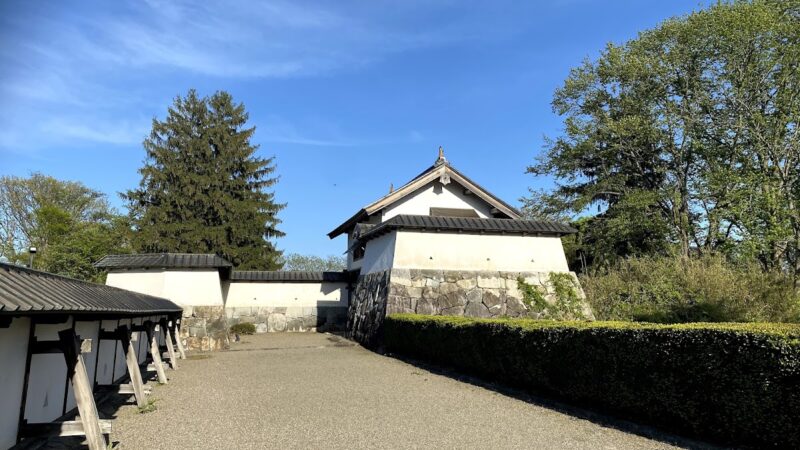
Currently, the Toyoda Manor site is maintained and preserved as a historical park. Information boards are installed within the park, allowing visitors to learn about the history of Toyoda Manor and the life of Fujiwara no Kiyohira.
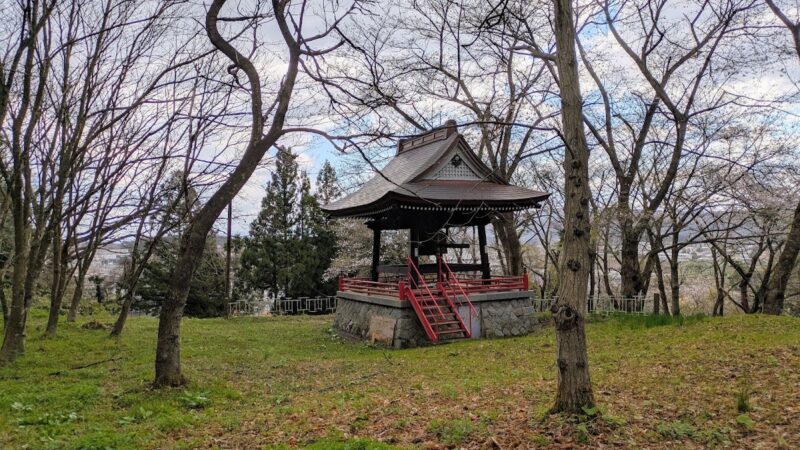
The park is also used as a place of relaxation for local residents, and in spring, cherry blossoms bloom, making it a popular spot for cherry blossom viewing. While maintaining its value as a historical site, it is utilized as a space that is also enjoyed by modern people.
Preservation Status and Challenges
The Toyoda-kan site is in relatively good condition, but it has also been affected by weathering and development over many years. Balancing the appropriate preservation and utilization of the historical site is a challenge, and the local community and government are cooperating to advance preservation activities.
Regular mowing and cleaning activities are carried out, and it is carefully protected as a local historical heritage site. It is also used as an educational space, serving as a site for history lessons in local schools.
Location
The Toyoda-kan site is located in Iwayado Mochida, Esashi-ku, Oshu City, Iwate Prefecture. Oshu City was formed in 2006 through the merger of Mizusawa City, Esashi City, Maesawa Town, Isawa Town, and Koromogawa Village, and the Toyoda-kan site is located within the former Esashi City area.
Esashi-ku is located in the southern inland part of Iwate Prefecture, consisting of fertile plains and mountainous areas along the Kitakami River basin. Agriculture has flourished here since ancient times, and rice cultivation is particularly well-known. Furthermore, it has a history of flourishing as part of the sphere of influence of the Oshu Fujiwara clan during the Heian period.
Related Historical Sites in the Surrounding Area
Numerous historical sites related to the Oshu Fujiwara clan and the Heian period exist around the Toyoda-kan ruins.
Iwayado Castle Ruins: A medieval castle site located near Toyoda-kan, which was the residence of the Esashi clan. It is currently maintained as a park.
Hiraizumi: The place where Fujiwara Kiyohira moved to from Toyoda-kan, home to the World Heritage sites of Chuson-ji Temple and Motsu-ji Temple. It is approximately a 30-minute drive from the Toyoda-kan ruins.
Izawa Castle Ruins: An ancient fortified castle built in the early Heian period, which served as a base for controlling Oshu. It is designated as a national historic site.
Visiting these historical sites together will allow for a deeper understanding of the history of Oshu during the Heian period.
Access
Access by Public Transportation
JR Tohoku Shinkansen
Nearest Station: Mizusawa-Esashi Station
Take the Esashi City Bus bound for “Negi-machi, Daigo, Kojiya, or Kuchizawa” from Mizusawa-Esashi Station and get off at the “Mochida” bus stop. It’s about a 2-minute walk from there. The bus ride takes approximately 10 minutes.
JR Tohoku Main Line
Nearest Station: Mizusawa Station
Take the Esashi City Bus from Mizusawa Station. It takes approximately 25 minutes to reach the nearest bus stop.
Since bus services are limited, it is recommended to check the timetable in advance. Especially on holidays and during peak tourist seasons, you may want to consider taking a taxi.
Access by Car
Tohoku Expressway
Exit at Mizusawa IC and take National Route 397 for approximately 15 minutes.
Parking is available within the historical park and is free of charge. However, parking is limited, so it may get crowded during events and cherry blossom season.
Car Navigation Settings
Address: Iwayado Mochida, Esashi-ku, Oshu City, Iwate Prefecture
Facility Name: Toyoda-kan Ruins, Toyoda-kan Ruins Historical Park
Visiting Information
Opening Hours: Always open (Historical Park)
Admission Fee: Free
Estimated Time Required: 30 minutes to 1 hour
Best Time to Visit: Spring (Cherry Blossom Season), Autumn (Autumn Foliage Season)
Information boards are installed, so you can easily visit on your own. However, if you want to understand it more deeply, it is recommended to contact the Oshu City Tourism Association to check if guided tours are available.
Historical Significance of Toyoda-kan Ruins
Importance as the Birthplace of the Oshu Fujiwara Clan
Toyoda-kan Ruins is the birthplace of the Oshu Fujiwara clan, who ruled Oshu for approximately 100 years. The birth and upbringing of Fujiwara no Kiyohira in this region, and his eventual rise to ruler of Oshu after the Later Three Years’ War, were extremely significant events in Japanese medieval history.
The culture that Kiyohira cultivated in Hiraizumi was sophisticated, comparable to that of Kyoto, and the Buddhist culture represented by the Konjikido Hall of Chuson-ji Temple is highly regarded to this day. It was at Toyoda-kan that Kiyohira’s character development and political foundation were laid.
Archaeological Site Revealing the Political Structure of the Tohoku Region in the Heian Period
The Toyoda-kan site is a valuable archaeological site for understanding the political structure and the lives of local powerful families in the Tohoku region during the late Heian period. At that time, the Tohoku region was a region where the central government’s control was weak, and local powerful families built their own independent powers.
The Toyoda-kan site plays an important role in providing clues about how figures like Fujiwara no Tsunekiyo and Kiyohira governed the region and what kind of lives they led.
Connection to the Former Nine Years’ War and the Later Three Years’ War
Toyoda-kan is a place deeply connected to the Former Nine Years’ War and the Later Three Years’ War, two major wars in the Tohoku region during the Heian period. The story of Fujiwara no Tsunekiyo fighting on the side of the Abe clan in the Former Nine Years’ War, and his son Kiyohira becoming the ruler of Oshu after the Later Three Years’ War, is known as a dramatic development in Japanese history.
These two wars led to the central government’s influence extending to the Tohoku region, and simultaneously, the Oshu Fujiwara clan, a unique political force, was born. Toyoda-kan symbolizes this turning point in history.
Tourism and Regional Development
Touring Sites Associated with the Oshu Fujiwara Clan
Toyoda-kan ruins are positioned as part of a tourist route visiting sites associated with the Oshu Fujiwara clan. Visiting it in conjunction with the Hiraizumi World Heritage Sites allows for a comprehensive understanding of the history of the Oshu Fujiwara clan.
Tourists can learn about Kiyohira’s starting point at the Toyoda-kan ruins and experience the peak of the Oshu Fujiwara clan’s glory in Hiraizumi, allowing them to feel the flow of time and the dynamism of history.
Use in Local History Education
The Toyoda-kan ruins play an important role in local school education. Local elementary and junior high schools visit the Toyoda-kan ruins as part of their history lessons, learning about Heian period history while actually viewing the historical site.
The Toyoda-kan ruins are a valuable educational site that fosters local pride and stimulates interest in history through local historical heritage.
Use in Cultural Events
The Toyoda-kan ruins occasionally host history-themed events and lectures. It serves as a gathering place for local history enthusiasts and researchers to share the latest research findings and discuss the preservation of the historical site.
Furthermore, during cherry blossom season, it is bustling with visitors enjoying the blossoms, and is a popular spot where people can enjoy both history and nature.
Future Challenges and Prospects
Preservation and Development of the Historic Site
The long-term preservation of the Toyoda-kan site is a crucial challenge. It is necessary to prevent the weathering of the remains due to the natural environment while developing an environment where visitors can safely view the site.
In the future, it is expected that more detailed archaeological excavations will be conducted to reveal the overall picture of Toyoda-kan, further enhancing its value as a historical site.
Strengthening Utilization as a Tourism Resource
As Hiraizumi gains international attention as a World Heritage Site, the Toyoda-kan site, as the starting point of the Oshu Fujiwara clan’s story, also has the potential to be more actively utilized as a tourism resource.
Efforts are needed to deepen visitors’ understanding, such as installing multilingual information boards and providing reconstructed CG images using digital technology.
Collaboration with the Local Community
The cooperation of the local community is essential for the preservation and utilization of the Toyoda-kan site. Sustainable historical site management becomes possible when local residents understand the value of the historical site and participate in preservation activities with pride.
Efforts to protect the Toyoda-kan ruins as a regional historical heritage site and pass it on to future generations will become increasingly important.
Summary
The Toyoda-kan ruins are an important historical site from the late Heian period, where Fujiwara no Kiyohira, the first head of the Oshu Fujiwara clan, was born and raised. Built by his father, Fujiwara no Tsunekiyo, this residence served as Kiyohira’s base for approximately 30 years until he moved to Hiraizumi.
Through the turbulent times of the Former Nine Years’ War and the Later Three Years’ War, Kiyohira rose from this region to become the ruler of Oshu. The Toyoda-kan ruins, a valuable heritage site that conveys this historical turning point, are preserved and maintained as a historical park.
Located in Esashi Ward, Oshu City, Iwate Prefecture, this historical site, when visited in conjunction with the Hiraizumi World Heritage sites, offers a deeper understanding of the history of the Oshu Fujiwara clan. It will undoubtedly continue to be protected and passed down as an important cultural heritage site not only for history enthusiasts but also for the local people.