Tendō Castle, Wajima City (Ishikawa Prefecture) | A Thorough Explanation of the History and Remains of the Largest Mountain Castle in Oku-Noto
What is Tendō Castle?
Tendō Castle was a Japanese castle located in Besshodani-machi, Wajima City, Ishikawa Prefecture. As the main castle of the Nukui clan, who ruled the entire Outer Noto region, it played an important role from the Muromachi period to the Sengoku period. Currently designated as a historical site by Wajima City, it is known as the largest mountain castle ruin in the Oku-Noto region.
Built on the slopes of Mt. Inubushi (elevation 333.6m), at an elevation of 224m, this castle extended over a vast area of approximately 900m east-west and 800m north-south. The relative elevation difference is approximately 160m, suggesting that it was a strong defensive structure that skillfully utilized the mountain’s terrain.
Based on the scale and layout of the remaining ruins, Tendō Castle was a large-scale mountain castle of the Sengoku period, even by national standards, and speaks to the powerful influence of the Nukui clan in the Noto region.
History of Tendō Castle
Construction and the Rise of the Nukui Clan
There are various theories regarding the construction date of Tendō Castle, but it is said to have been built in 1455 (Kōshō 1) by Nukui Bitchū-no-kami Toshimune. Nukui Toshimune served as a steward to Hatakeyama Yoshimune, the governor of Noto Province, and built the castle in this location to strengthen the defenses of the northern frontier.
The Nukui clan served as vassals of the Yama clan and expanded their influence in the outer Noto region, centered on Wajima. With Tendō Castle as their base, the Nukui clan ruled this land for approximately 300 years, reigning as a powerful local lord.
Prosperity in the Muromachi Period
During the Muromachi period, Wajima was known as one of Japan’s leading ports, known as the “Three Ports and Seven Harbors.” The castle town of Tendō Castle developed against the backdrop of the economic power of the port town of Wajima, solidifying the Nukui clan’s base of power.
While serving the Hatakeyama clan, the governors of Noto Province, the Nukui clan maintained their own sphere of influence and functioned as the de facto rulers of the entire Outer Noto region. Tendō Castle was a symbol of their power, serving as both a military base and a political and economic center.
The Sengoku Period and the Battle of Hishiwaki
With the arrival of the Sengoku period, the Noto region was engulfed in fierce warfare. In 1577 (Tenshō 5), Uesugi Kenshin invaded Noto, and the Hatakeyama clan’s power rapidly declined. In this chaos, the Nukui clan also found themselves in a difficult position.
In 1578 (Tenshō 6), the Battle of Hishiwaki, the most important turning point in the history of Tendō Castle, occurred. The castle lord at the time, Nukui Kagetaka, faced off against the combined forces of Nagatsura Tatsuya and the Oda clan, who aimed to recapture Anamizu Castle.
In this battle, Kagetaka Nukui suffered a defeat and fled to Echigo. This marked the end of the Nukui clan’s nearly 300-year rule over Tendō Castle. The Battle of Hishiwaki was a crucial battle that significantly altered the power dynamics of the Sengoku period in the Noto region.
Tendō Castle After its Abandonment
It is believed that Tendō Castle was abandoned after the Battle of Hishiwaki. A legend arose that remnants of the Nukui clan hid their war funds somewhere within the castle, and this buried treasure legend continues to this day.
Afterward, the Tendō Castle ruins, while gradually returning to nature over many years, were preserved as an important historical site. Currently, it is designated as a historical site by Wajima City and is positioned as a valuable cultural asset that conveys the history of Oku-Noto.
Tendō Castle’s Layout and Structure
Overall Placement
Tendō Castle was built on a vast area, approximately 1 km east-west and 2 km north-south, centered on the middle slopes of Mt. Inubushi. This castle is one of the largest in the Oku-Noto region, demonstrating the immense power of the Nukui clan.
The castle’s layout cleverly utilizes the mountainous terrain, with multiple baileys (kuruma) strategically placed. The main section is located at an altitude of approximately 224m, a difference of about 160m from the base of the mountain, providing extremely advantageous defensive conditions.
Honmaru and Main Baileys
The Honmaru was located in the center of Tendō Castle. The Honmaru was the most important part of the castle, and it is believed to have housed the lord’s residence and command post. Multiple baileys were arranged in a stepped pattern around the Honmaru, strengthening its defenses.
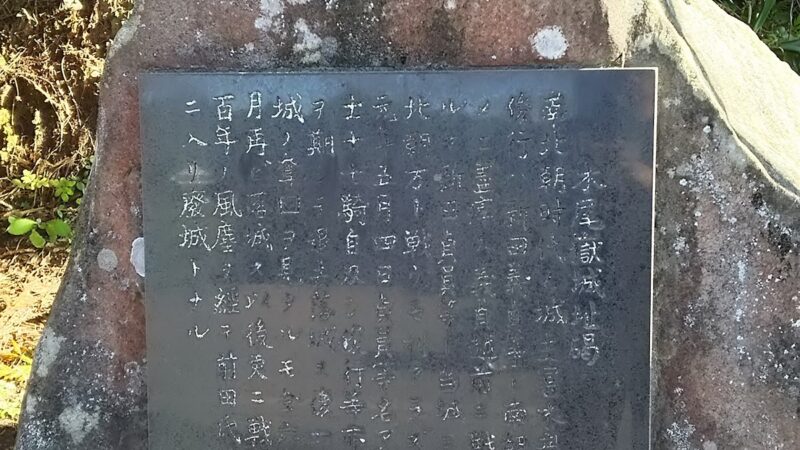
Even today, there is a marker indicating the site of the Honmaru, allowing visitors to see the castle’s central area in its heyday. The layout of the baileys can be deciphered from the topography, making it a valuable resource for understanding the structure of mountain castles during the Sengoku period.
Earthworks
Earthworks were constructed in various locations throughout Tendō Castle. Earthen ramparts are defensive structures built by piling up earth, preventing enemy intrusion and also functioning as firing positions from within the castle.
The remaining earthen ramparts allow us to confirm their height, width, and arrangement, providing insight into the level of castle construction technology at the time. It is presumed that the ramparts were positioned along the edges of the baileys, forming multiple lines of defense.
Dry Moat Defensive System
Dry moats played a crucial role in the defense of Tendō Castle. Dry moats are moats that do not hold water and were a common defensive structure in mountain castles. Deeply excavated dry moats were a powerful obstacle hindering enemy advances.
The remains of Tendō Castle’s dry moats are still clearly visible today, and their large scale demonstrates the castle’s high level of defense. Dry moats were positioned between baileys or around the outer perimeter of the castle, forming multiple lines of defense against attackers.
Stone Wall Remains
Stone walls were also used at Tendō Castle. The use of stone walls in mountain castles requires a certain level of technical skill and economic power, making it evidence of the strength of the Nukui clan.
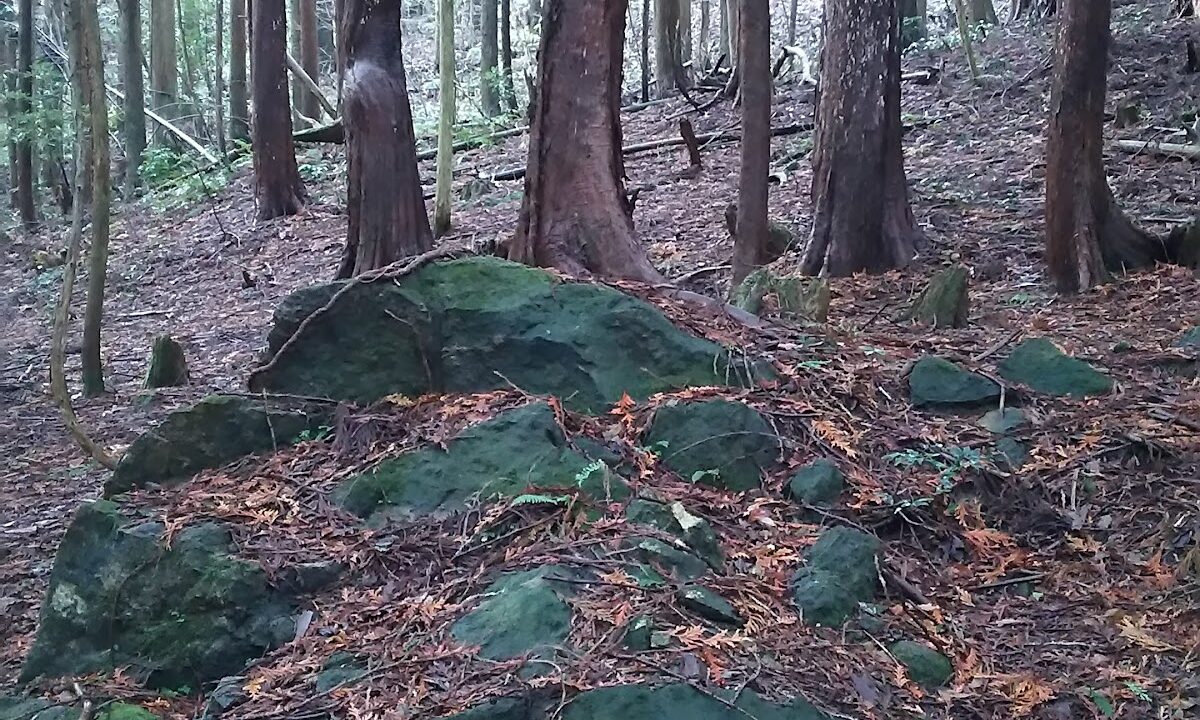
Stone wall remains still exist in various places today, allowing us to confirm the stone-laying techniques of the time. It is believed that the main method used was the “nozurazumi” technique, where natural stones were piled up, exhibiting characteristics of stone-laying techniques from the Sengoku period. Stone walls were used in combination with earthworks to achieve even stronger defenses.
Residence Sites and Living Spaces
Numerous residence sites of the castle lord and his retainers have been confirmed within Tendō Castle. The place name “Tendō Yashiki” (Tendō Residence) also remains, suggesting that a considerable number of people lived within the castle.
These residence sites indicate that the castle was not merely a military facility, but also a place of daily living. Here, we found a typical example of a medieval castle: functioning as a political and administrative center in peacetime and being converted into a fortress in wartime.
Current Status of the Tendō Castle Ruins
Preservation Status
The Tendō Castle ruins are protected as a Wajima City designated historical site, and the main remains are preserved in relatively good condition. Remains such as the main keep, earthworks, dry moats, and stone walls can be identified, conveying the appearance of a mountain castle from the Sengoku period.
However, due to years of weathering and overgrown vegetation, some of the remains are unclear. Nevertheless, as the largest castle ruins in Oku-Noto, its value is considered extremely high.
Access and Visiting
The Tendō Castle ruins are located approximately 7 km southwest of Wajima city center. There is a forest road leading to the castle ruins from the side of the prefectural road, and signs indicating the main keep and dry moat remains are installed.
However, there are reports that some parts of the forest road are overgrown with vegetation, making passage by regular cars difficult. It is recommended to check the condition of your vehicle and the road conditions before visiting. Also, as it is a mountain castle, appropriate equipment and physical fitness are necessary.
Points to Note During Your Visit
When visiting the Tendō Castle ruins, the first point to note is the location of the main keep. From here, you can understand the overall layout of the castle. Next, observe the remains of the earthworks and dry moats, and try to imagine the defensive system of the time.
Don’t miss the remains of the stone walls. The technique of stacking natural stones (nozurazumi) clearly demonstrates the characteristics of stone walls from the Sengoku period. Also, by examining the flat areas remaining from the residences, you can imagine what life was like inside the castle.
From an elevation of 224m, you can see the city of Wajima and the Sea of Japan, allowing you to appreciate the strategic importance of why the Nukui clan built their castle in this location.
The Nukui Clan and Their Rule of Outer Noto
The Origins and Expansion of the Nukui Clan
The Nukui clan, as a powerful local lord of Noto, built their influence in the Outer Noto region from the Muromachi period to the Sengoku period. Starting as vassals of the Yama clan, they established their own sphere of influence centered on Wajima.
Since Toshimune Nukui, the governor of Nukui Province, built Tendō Castle, the Nukui clan ruled the region for approximately 300 years, using the castle as their base. While utilizing their position as stewards of the Hatakeyama clan, the governors of Noto Province, they are believed to have effectively acted as independent lords.
Wajima Port and Economic Base
One of the Nukui clan’s power bases was the economic strength of Wajima Port. Wajima, one of the three major ports and seven harbors, was an important hub for trade on the Sea of Japan. In later periods, it flourished as a port of call for Kitamae ships, and the wealth generated by maritime transport supported the Nukui clan’s finances.
The prosperity of Wajima as a port town also contributed to the development of the castle town of Tendō Castle. Tax revenues from commercial activities were used to maintain the castle and strengthen military power, solidifying the Nukui clan’s rule.
Position within Noto Province
Within Noto Province, the Nukui clan was a representative local lord of the Outer Noto region. While maintaining their position as vassals of the Hatakeyama clan, the Nukui clan governed their territory with considerable autonomy.
In particular, the Nukui clan’s influence was immense in the Oku-Noto region. The sheer size of Tendō Castle demonstrates their military and economic strength, suggesting a dominant position over the smaller local lords in the surrounding area.
Noto and Tendō Castle in the Sengoku Period
Uesugi Kenshin’s Invasion of Noto
In 1577 (Tenshō 5), Uesugi Kenshin of Echigo invaded Noto. This invasion dealt a devastating blow to the power of the Hatakeyama clan, the governors of Noto. The Nukui clan was not immune to the effects of this turmoil.
Uesugi Kenshin’s invasion of Noto fundamentally altered the balance of power within Noto. The local lords, who had previously enjoyed stability under the Hatakeyama clan, were forced to make new choices.
Details of the Battle of Hishiwaki
The Battle of Hishiwaki, which took place in 1578 (Tensho 6), was a crucial battle that determined the fate of Tendō Castle. This battle occurred as part of a dispute over Anamizu Castle.
Nukui Kagetaka aimed to recapture Anamizu Castle, but suffered a defeat against a powerful enemy: the combined forces of Naga Tsuratatsu and the Oda clan. Naga Tsuratatsu was a powerful local lord in Noto Province and had cooperated in the expansion of Oda Nobunaga’s power. The Naga clan’s forces, supported by the Oda clan, were an insurmountable threat to the Nukui clan.
This defeat forced Nukui Kagetaka to flee to Echigo Province, marking the end of the Nukui clan’s rule over Tendō Castle. The Battle of Hishiwaki was also a symbolic event demonstrating the establishment of Oda power in Noto Province.
Noto Province at the End of the Sengoku Period
After the Battle of Hishiwaki, Noto Province came under the influence of the Oda clan. In 1581, Maeda Toshiie was granted the entire province of Noto, and Noto came under the control of the Maeda clan.
Tendo Castle was abandoned, and the Nukui clan’s influence disappeared from the historical stage. However, the Nukui clan’s 300 years of rule left a significant mark on the history of the Outer Noto region, centered around Wajima.
Cultural Value of Tendō Castle
Designation as a Wajima City Historic Site
Tendo Castle ruins are a Wajima City designated historic site and are protected as an important cultural property of the region. As the largest mountain castle ruins in Oku-Noto, its historical and academic value is highly regarded.
With the city’s historic site designation, preservation and research of the remains are progressing, and further research results are expected in the future. It is also used as a place for local history education, serving as an important resource for learning local history.
Archaeological Value
Tendo Castle ruins provide valuable materials for the study of mountain castles during the Sengoku period. The remains of the castle, including the main keep, earthworks, dry moats, and stone walls, are remarkably well-preserved, making it an important case study for researching the castle construction techniques and structures of the time.
In particular, its scale—900m east-west by 800m north-south—is exceptionally large for a castle of a local lord, demonstrating the strength of the Nukui clan’s power. As a large-scale mountain castle site nationwide, it attracts the attention of castle researchers.
Importance in Regional History
Tendo Castle is indispensable for understanding the history of Wajima City and the Noto region. The 300-year rule by the Nukui clan was a crucial element characterizing the transition period from the medieval to the early modern period in this region.
The development of the port town of Wajima and the history of Tendō Castle are closely intertwined, serving as a prime example of the formation process of a medieval city, encompassing maritime trade and a castle town. As a historical heritage site that shapes the region’s identity, its continued preservation and utilization are highly anticipated.
The Legend of the Buried Treasure at Tendō Castle
Origin of the Legend
A legend remains that the remnants of the Nukui clan, defeated in the Battle of Hishiwaki, hid their war funds somewhere within Tendō Castle. This buried treasure legend is a typical folktale found at castle ruins throughout Japan, where defeated warlords hide their treasures.
It is presumed that the wealth accumulated by the Nukui clan over 300 years was considerable, and the legend of the buried treasure arose from its apparent disappearance overnight. Whether or not the buried treasure actually existed is unknown, but such legends imbue castle ruins with mystery and continue to fascinate people.
History as Told by the Legend
Buried treasure legends are not merely products of fantasy; they sometimes reflect historical facts. During the Sengoku period, it was common for defeated warlords to hide treasures in anticipation of a comeback.
In the case of Tendō Castle, it cannot be ruled out that Nukui Kagetaka, when fleeing to Echigo, may have hidden his war funds with the intention of eventually returning to Noto. However, Mr. Nukui never returned to Noto afterward, and the hidden treasure (if it existed) may have remained lost.
Historical Environment Around Tendō Castle
Geographical Characteristics of Inubushiyama
Inubushiyama, where Tendō Castle was built, is a mountain with an elevation of 333.6m, located approximately 7km southwest of Wajima city center. This mountain is relatively high within the Outer Noto region and was a strategically important location offering panoramic views of the surrounding area.
The mountain’s terrain is complex, making it suitable for building a castle as a natural stronghold. Steep slopes and multiple ridges formed a natural defensive line, which was reinforced with artificial earthworks and dry moats, resulting in an impregnable fortress.
Relationship with Wajima City Center
Tendō Castle and Wajima city center are approximately 7km apart, forming a relationship between a castle town and the main castle. It is believed that during peacetime, the lord and some of his retainers resided in residences in the town, while in times of emergency, they would take refuge in Tendō Castle.
Wajima’s function as a port town was a crucial element supporting Tendō Castle’s economic base. The distribution of goods and tax revenue through maritime transport were essential for maintaining the castle and strengthening its military power. This interdependence enabled the long-term rule of the Nukui clan.
Relationship with Castles on the Noto Peninsula
Many medieval castles existed on the Noto Peninsula, but Tendō Castle was one of the largest. Its scale is particularly striking even when compared to other major castles such as Anamizu Castle and Nanao Castle.
These castles were strategically placed to reflect the power dynamics within Noto Province, and they maintained a mutually check-and-balance relationship. Tendō Castle, as a base in the Outer Noto region, played a vital role in the defense of the northern part of the Noto Peninsula.
Current Status and Challenges of Tendō Castle Research
Excavation and Research Results
While investigations have been conducted at the Tendō Castle site, a detailed investigation of the entire vast castle area has not yet been achieved. Archaeological excavations have been limited, and many aspects remain unclear.
Documentary sources are also limited, and many aspects of the detailed history of the Nukui clan and the specific structure of Tendō Castle remain unknown. Further research may reveal new facts.
Preservation and Utilization Efforts
In Wajima City, efforts are underway to preserve the Tendō Castle site as a valuable cultural asset and to utilize it for local history education and tourism. The challenge lies in how to maintain its value as a historical site while making it accessible and utilized.
Preserving the remains requires continuous maintenance, including vegetation management and landslide prevention. Ensuring visitor safety and improving access are also crucial issues. A sustainable preservation and utilization plan must be formulated while balancing these factors.
Future Research Directions
Many possibilities remain in the study of Tendō Castle. Expanding archaeological investigations will allow for a more detailed understanding of the castle’s structure and transformations. Furthermore, the unearthing of historical documents is expected to clarify the history of the Nukui clan and their position within Noto Province.
Recent advances in castle research have made new analytical methods available. Precise topographic surveys using laser surveying technology are effective for detailed understanding of the remains. Investigations utilizing such cutting-edge technologies have the potential to significantly advance future research.
Access and Visiting Information for Tendō Castle
Location and Transportation
Location: Besshodani-machi, Wajima City, Ishikawa Prefecture (Tendō Yashiki)
Access: Approximately 15 minutes by car from Wajima city center, about 7 km southwest. Access is via a forest road off the prefectural road. Access by public transport is difficult; therefore, the use of a private car or rental car is recommended.
Important Notes for Visitors
Tendo Castle Ruins are a mountain castle, and the following points should be noted when visiting:
- Clothing and Equipment: Comfortable walking shoes, long-sleeved shirts, and long pants are recommended. Insect repellent is also necessary during the summer months.
- Condition of Forest Roads: Some areas are overgrown with vegetation, making passage difficult for regular vehicles. Checking road conditions beforehand is recommended.
- Physical Fitness: A certain level of physical fitness is required as you will be walking on mountain paths.
- Safety Management: The area around the ruins has uneven footing in some places, so please be very careful while visiting.
- Weather: It is advisable to avoid visiting during rainy weather as the ground can become slippery.
Best Season for Visiting
The best time to visit Tendō Castle Ruins is spring (April-May) and autumn (October-November). During these times, the weather is mild, vegetation is relatively sparse, and the ruins are easier to observe.
During the summer, the area is not suitable for visiting due to overgrown vegetation, obscuring the ruins, and the presence of numerous insects. In winter, heavy snowfall may make access difficult.
Summary
Tendo Castle is the largest mountain castle site in Oku-Noto, located in Wajima City, Ishikawa Prefecture. The Nukui clan used it as their base of operations for approximately 300 years, functioning as the political, military, and economic center of the Outer Noto region.
Within the vast castle grounds, approximately 900m east-west and 800m north-south, the remains of the main keep, earthworks, dry moats, and stone walls are well-preserved, conveying the appearance of a Sengoku period mountain castle. Although the castle was abandoned after the Nukui clan’s defeat in the Battle of Hishiwaki in 1578, its historical value remains undiminished, and it is now protected as a Wajima City designated historical site.
Tendo Castle ruins are an important cultural asset indispensable for understanding the medieval history of the Noto region, and further research, appropriate preservation, and utilization are expected in the future. When you visit Wajima, be sure to stop by this historic mountain castle ruin and reflect on the era when the Nukui clan ruled.