Tenjin Castle (Joso City, Ibaraki Prefecture) | A Thorough Explanation of the History and Remains of this Medieval Castle Remaining at Ogo Tenmangu Shrine
Tenjin Castle, located in Uchikune, Ogo, Joso City, Ibaraki Prefecture, is a medieval hilltop castle also known as “Tenjin-yama Castle.” Currently, the site of Ogo Tenmangu Shrine, considered one of Japan’s three great Tenjin shrines, stands here. During the Sengoku period (Warring States period), this was an important military base where battles between the Hojo and Tagaya clans took place. This article provides a detailed explanation of Tenjin Castle’s history, the characteristics of its remains, and points to note when visiting.
Basic Information on Tenjin Castle
Tenjin Castle is a hilltop castle built on a single hill approximately 7 meters high on the east bank of the Higashi-Jinren River. Ogo Tenmangu Shrine is located in the main enclosure and is still used as a shrine grounds today.
Location: Uchikune, Ogo, Joso City, Ibaraki Prefecture
Alternate Name: Tenjin-yama Castle
Castle Structure: Hilltop Castle
Construction Period: Details unknown (estimated to be before the Tensho era)
Abandonment Period: Around the Tensho era (1573-1592)
Remains: Earthworks, cliffs
Designated Cultural Property: None
Relationship between Ogo Tenmangu Shrine and Tenjin Castle
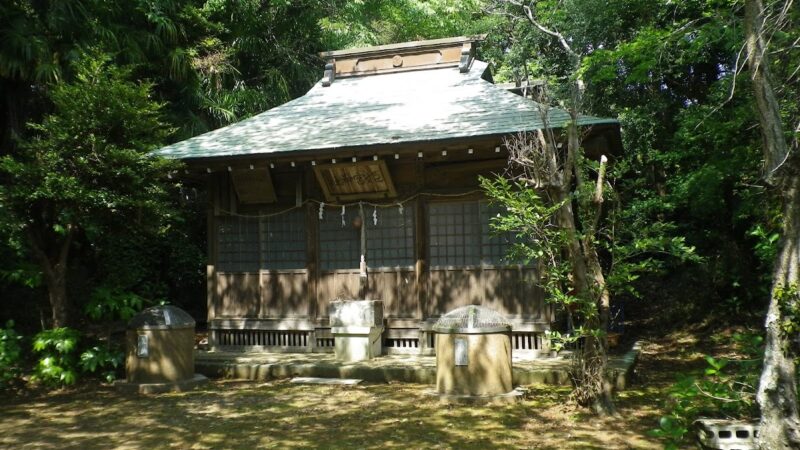
The main enclosure of Tenjin Castle is home to the Ogo Tenmangu Shrine, said to have been founded in 929 AD. This shrine is a historically significant shrine sometimes counted as one of Japan’s three great Tenjin shrines, and enshrines Sugawara no Michizane.
While there is little explanation of the castle on the shrine’s information board or official website, traces remain indicating that this location certainly functioned as a castle during the medieval period. However, it’s not that ancient Shinto priests transformed into samurai and built a fort; rather, it’s believed that an existing shrine on a hill was militarily utilized.
It’s registered as Tenjin Castle on Google Maps and is a well-known castle site among castle researchers and history enthusiasts.
History of Tenjin Castle
Construction History
While there are no clear records regarding the construction date or builder of Tenjin Castle, tradition suggests that it was already functioning as a castle during the Tensho era (1573-1592) of the Sengoku period.
This area along the Higashi-Niren River was near the border of Shimosa and Hitachi provinces and was a key point for water transport. Therefore, it was of high military value and is presumed to have been fortified by a powerful local figure.
Conflict between the Hojo and Tagaya Clans
The most noteworthy aspect of Tenjin Castle’s history is the conflict between the Hojo and Tagaya clans during the Tensho era.
According to legend, Tenjin Castle was once a fortress of the Odawara Hojo clan. The Hojo clan, expanding their power in the Kanto region, established bases in various locations to extend their influence to the Joso region. Tenjin Castle is thought to have been one of them.
Particularly interesting is the legend that Hojo Ujimasa burned down the Tenmangu shrine and built the castle. If this legend is true, it means the Hojo clan destroyed an existing shrine to convert it into a military facility. However, the credibility of this legend requires careful verification.
Meanwhile, the Tagaya clan, a powerful local daimyo, opposed the Hojo clan’s expansion. It is said that during the Tensho era, the Tagaya clan attacked Tenjin Castle, and a fierce battle ensued between them and the Hojo clan.
The Road to the Castle’s Abandonment
When the Hojo clan was destroyed in Toyotomi Hideyoshi’s Odawara campaign in 1590, the power dynamics in the Kanto region changed dramatically. It is believed that Tenjin Castle ceased to serve its military purpose and was abandoned around this time.
Later, Ogo Tenmangu Shrine was rebuilt and continues to exist as a center of local faith to this day.
Tenjin Castle’s Layout and Structure
Main Enclosure (within the grounds of Ogo Tenmangu Shrine)
The main enclosure of Tenjin Castle is located within the grounds of the current Ogo Tenmangu Shrine. Situated on a hill approximately 7 meters high, it utilizes the elevated terrain compared to the surrounding area.
Low earthworks can be seen within the main enclosure. While many of these earthworks no longer retain their original form due to the construction of the shrine and years of weathering, they are important traces that can be confirmed as castle remains. The height of the earthworks is estimated to be around 1 meter currently, and it is thought that they were higher in the past.
Cut Slopes
Cut slopes (artificially carved steep slopes) can be seen around the main enclosure. These are terrains that were carved by human hands to enhance defensibility while utilizing the natural landscape. A steep cliff was a basic defensive feature of a castle, serving to make enemy intrusion difficult.
Utilization of Topography
Tenjin Castle’s layout took advantage of its location on the east bank of the Higashi-Jinren River. The river acted as a natural moat, effectively preventing attacks from the west. Furthermore, its isolated hilltop terrain was suitable for defense, and it is presumed to have also served as a lookout point, providing a panoramic view of the surrounding area.
Scale and Characteristics
Tenjin Castle is not a large-scale castle, but rather a relatively small fort-like structure. It has a simple layout centered around the main enclosure, and complex enclosure arrangements or large-scale moats have not been confirmed.
This suggests that Tenjin Castle functioned more as a regional control base or temporary military facility than as a full-fledged residence intended for long-term sieges.
Highlights and Remains of Tenjin Castle
Traces of Earthworks
Careful observation of the grounds of Ogo Tenmangu Shrine reveals traces of low earthworks. Paying particular attention to the edges of the shrine grounds, you can see remnants of the earthworks as slight elevations.
While much has been altered due to the shrine’s maintenance, viewing the earthworks as part of the castle’s remains allows you to imagine the layout of the defensive structures at the time.
Cut Slopes and Topography
The cut slopes surrounding the main enclosure are one of the important remains of Tenjin Castle. Looking down from the shrine grounds, you can see areas where the steep slopes have been artificially carved. These cut slopes indicate the defensive line of the time.
Architecture of Ogo Tenmangu Shrine
Although not a castle remains, Ogo Tenmangu Shrine itself is worth visiting. It is an ancient shrine said to have been founded in 929 AD, and its main hall and worship hall are important buildings that convey the history of the region.
As a Tenmangu shrine, it enshrines Sugawara no Michizane and is revered by local people as the god of learning. Plum trees are planted on the grounds, blooming beautifully in the spring.
Surrounding Landscape
The unique feature of Tenjin Castle, its location along the Higashi-Jinren River, can be truly appreciated by visiting the site. You can understand how important the topography of the river and hills was for a medieval castle site.
Access and Visiting Information for Tenjin Castle
Location and Map
Address: Ōgo-uchikune, Jōsō City, Ibaraki Prefecture
It’s best to aim for Ōgo Tenmangū Shrine when visiting. You can find the location by searching for “Ōgo Tenmangū Shrine” or “Tenjin Castle” on Google Maps.
Access
By Train/Bus:
- Approximately 15 minutes by car from Mitsukaido Station on the Kanto Railway Joso Line
- Access by public transport alone is inconvenient; taxi use is recommended.
By Car:
- Approximately 20 minutes from the Yawara IC on the Joban Expressway
- Approximately 15 minutes from the Joso IC on the Ken-O Expressway
- Parking is available at the shrine (free of charge).
Visiting Hours and Fees
Visiting Time: Approximately 15-20 minutes
Admission Fee: Free (Free to visit and worship within the shrine grounds)
Visiting Hours: Anytime during the day (according to the shrine’s visiting hours)
Notes for Visitors
- Consideration for the Shrine: Ogo Tenmangu Shrine is an active shrine. Please observe proper etiquette and avoid disturbing other visitors.
- Protection of Remains: Remains such as earthworks are fragile. Please be careful not to trample or damage the ground.
- Photography: Photography is generally permitted on the shrine grounds, but consideration is needed during festivals and other special occasions.
- Clothing and Equipment: Although the shrine grounds are flat, comfortable walking shoes are recommended.
- Season: Visiting is possible throughout the year, but the spring plum blossom season and the autumn foliage season offer particularly beautiful scenery and are highly recommended.
Visiting Nearby Castles
When visiting Tenjin Castle, it is also recommended to visit other castles in the Joso City area.
Furumaki Castle
Furumaki Castle, located near Tenjin Castle, is another medieval castle in Joso City. Known as a castle associated with the Tagaya clan, visiting it together with Tenjin Castle will provide a deeper understanding of the medieval history of this region.
Tagaya Castle (Mizukaido Castle)
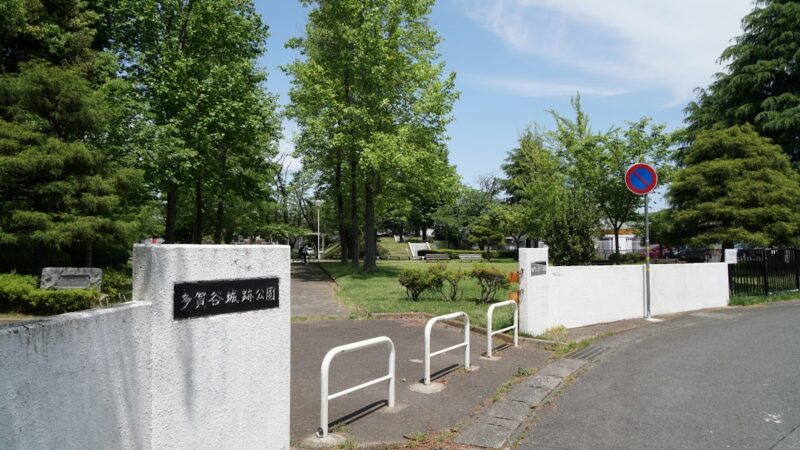
Tagaya Castle, a representative castle of Joso City, was the base of the Tagaya clan, who attacked Tenjin Castle. Currently, part of the site has been developed into a park, allowing visitors to see larger castle remains.
Ishige Castle
Ishige Castle, located in the Ishige district of Joso City, is another castle with remains from the Sengoku period. Like Tenjin Castle, it was one of the military strongholds in the border region between Shimosa and Hitachi provinces.
Historical Significance of Tenjin Castle
Position in Local History
Tenjin Castle is not a large-scale castle, but it symbolizes the power struggles in the Joso region during the Sengoku period. This castle, which was a point of contact between the two major powers, the Hojo clan and the Tagaya clan, is an important historical site for understanding the political and military situation of the region.
Complex of Shrine and Castle
Another characteristic of Tenjin Castle is that it combines an ancient place of worship with a medieval military facility. The historical layering of the site of the Ogo Tenmangu Shrine, said to have been founded in 929 AD, and its later use as a castle, is a fascinating example in the history of Japanese castles.
The conversion of religious sites into military facilities was not uncommon during the Sengoku period (Warring States period). Temples and shrines were often built in strategic locations or with good views, making them militarily valuable. Tenjin Castle is a prime example of this.
Expansion of the Hojo Clan’s Power
The tradition that Tenjin Castle served as a fortress for the Hojo clan provides valuable information about the history of the Odawara Hojo clan’s expansion of power in the Kanto region. The Hojo clan established bases throughout the Kanto region as they expanded their control. Tenjin Castle is thought to have played a part in the Hojo clan’s strategy for controlling Kanto.
Current Status and Challenges of Tenjin Castle Research
Limitations of Historical Sources
Historical sources concerning Tenjin Castle are extremely limited. Many aspects of the castle remain unknown, including its builder, construction date, and detailed historical circumstances. While local traditions and archaeological investigations are gradually revealing more, many aspects remain unexplained.
Preservation of the Remains
Because the site is still used as the Ogo Tenmangu Shrine, there is a possibility that the castle remains have been altered by the shrine’s maintenance and renovations. It is presumed that many parts, such as the height and shape of the earthworks and the precise boundaries of the baileys, no longer retain their original form.
Expectations for Future Investigations
Small-scale castles like Tenjin Castle have not been studied as extensively as larger castles. However, it is an important historical site for understanding local history, and further detailed investigations are anticipated.
In particular, archaeological excavations could provide more accurate information about the castle’s structure and age. Furthermore, research into ancient documents may reveal previously unknown historical facts.
Significance of Visiting Tenjin Castle
Experiencing Historical Romance
Tenjin Castle is not a castle with flashy remains, but its simplicity embodies the true essence of a regional castle from the Sengoku period. Standing on the historical stage where the Hojo and Tagaya clans fought, one can imagine the tension and lives of the people at that time.
Learning Local History
Visiting Tenjin Castle is a good opportunity to learn about the medieval history of Joso City and southern Ibaraki Prefecture. Because it hasn’t been developed into a large-scale tourist destination, it’s a valuable place to quietly confront history.
Perspectives on Castle Research
For castle enthusiasts, visiting small castles like Tenjin Castle is important for understanding the diversity of castles. By visiting not only famous large castles but also small regional forts and castles, one can gain a three-dimensional understanding of the entire Sengoku period castle system.
Summary
Tenjin Castle (Tenjin-yama Castle) in Joso City, Ibaraki Prefecture, is a medieval flatland castle built on a hill where the Ogo Tenmangu Shrine stands. This castle, the site of a fierce battle between the Hojo and Tagaya clans, is not large in scale, but it is an important historical site that tells the story of the power struggles in the Joso region during the Sengoku period.
While the remaining earthworks and cliffs are modest, there are many points of interest, such as its location along the Higashi-Niren River and the layered history where the shrine and castle overlap.
Tenjin Castle, where you can quietly reflect on medieval history, is a place you should definitely visit when you come to Joso City. It may not be flashy, but the traces of the people who lived during the Sengoku period are certainly preserved there.