Takaoka Castle (Ibaraki Prefecture) – A Thorough Explanation of the Shirakawa Yuki Clan’s Mountain Castle Remains and History
Located in Daigo-machi, Kuji-gun, Ibaraki Prefecture, Takaoka Castle is a mountain castle built by the Shirakawa Yuki clan in the early Sengoku period. Unlike the Takaoka Castle built by Maeda Toshinaga in Toyama Prefecture, the Takaoka Castle in Ibaraki Prefecture is an important historical site that tells the story of the tense relations in northern Hitachi Province during the Sengoku period, and remains such as baileys and moats still exist today. This article provides a detailed explanation of the little-known history, structure, highlights, and access methods of Takaoka Castle.
History and Construction Background of Takaoka Castle
Construction by the Shirakawa Yuki Clan
Takaoka Castle is considered one of the castles built by the Shirakawa Yuki clan in the early Sengoku period. The Shirakawa Yuki clan was a branch of the Yuki clan, based in southern Hitachi Province, and expanded their influence into the Shirakawa region of Mutsu Province. The area around Daigo Town in northern Ibaraki Prefecture was strategically important, located near the border between Hitachi and Mutsu Provinces.
Preparation for the Satake Clan’s Invasion
The main purpose of building Takaoka Castle was to prepare for an invasion by the Satake clan, who were expanding their power in northern Hitachi Province. The Satake clan, based at Ota Castle (present-day Hitachiota City, Ibaraki Prefecture), grew to become the largest power in Hitachi Province throughout the Sengoku period. For the Shirakawa Yuki clan, the Satake clan’s southward expansion was a major threat, and it is believed they constructed a defensive line by placing multiple castles and fortifications around Daigo Town.
###Unclear History of the Castle
Unfortunately, no detailed historical documents concerning Takaoka Castle have been discovered to date. The name of the castle lord, the specific construction date, and the time of its abandonment remain unknown. Given its small size, it is highly likely that it served more as a lookout post or signal fire station rather than a permanent castle. It is presumed to have been abandoned with the end of the Sengoku period, having fulfilled its role.
Structure and Layout of Takaoka Castle
Location as a Hilltop Castle
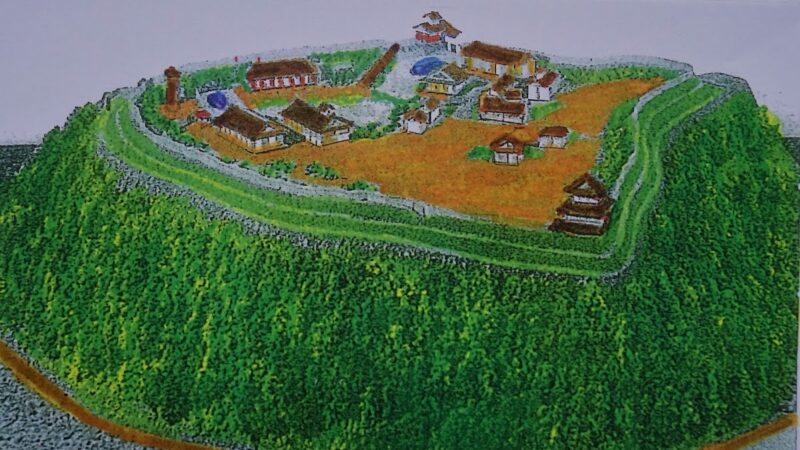
Takaoka Castle is classified as a hilltop castle. While its relative elevation is not particularly high, its layout utilizes the surrounding terrain for high defensive capabilities. The current topography reveals the skillful use of natural terrain and the castle-building techniques employed during the Sengoku period.
Arrangement of the Main Enclosure and Baileys
The main enclosure, the heart of the castle, is currently occupied by waterworks, making it impossible to fully understand its original form. However, multiple baileys were arranged around the main enclosure, and their traces can still be seen today. These baileys are thought to have been strategically placed to effectively defend with limited forces.
Remains of Moats and Earthworks
The most important remains of Takaoka Castle are the moats surrounding it. These moats were defensive structures dug to cut across ridges, playing a crucial role in preventing enemy incursions. The clearly visible moats suggest that this castle may have possessed defensive functions beyond mere lookout posts.
Furthermore, traces of earthworks can also be seen, albeit partially. Earthen ramparts are earthen walls surrounding the baileys, enhancing defensive capabilities and making it difficult to see inside the baileys from the outside.
Traces of Horizontal Moats
According to some researchers, traces of horizontal moats remain at Takaoka Castle. Horizontal moats are trenches dug horizontally along slopes, effectively hindering enemy lateral movement. These remains suggest that Takaoka Castle was a full-fledged mountain castle incorporating Sengoku period castle construction techniques.
Highlights of Takaoka Castle
Existing Baileys
The biggest highlight of a visit to Takaoka Castle is the group of baileys that still remain today. Walking around the main bailey where water facilities are located, you can imagine the layout of the baileys in the past from the elevation changes and flat areas. While it’s difficult to grasp the overall picture due to the dense trees, careful observation allows you to understand the castle structure of the Sengoku period.
Clear Moats
The most impressive remains at Takaoka Castle are the moats. The deeply excavated moats remain clearly visible even after several hundred years, testifying to the advanced castle-building techniques of the time. Seeing the moats in person will allow you to truly appreciate the defensive capabilities of this castle.
Surrounding Natural Environment
Takaoka Castle Ruins are located in the naturally rich environment of Daigo Town. The fresh greenery in spring and the autumn foliage are beautiful, allowing you to enjoy both exploring the castle ruins and observing nature. While full-fledged mountaineering equipment is not necessary, comfortable shoes and clothing are recommended.
A Space to Stimulate Historical Imagination
Takaoka Castle lacks prominent remains such as a keep or stone walls, but this is precisely what stimulates the historical imagination of visitors. Imagining the Sengoku period warlords monitoring the movements of the Satake clan and living tense days here makes standing in the quiet mountains a particularly profound experience.
How to Access Takaoka Castle
Access by Public Transportation
Public transportation access to Takaoka Castle is limited. The nearest station is Hitachi-Daigo Station on the JR Suigun Line, but the castle ruins are quite far from the station, making walking impractical. We recommend taking a taxi from the station or renting a car.
Access by Car
Access by car is the most convenient. From the Naka Interchange on the Joban Expressway, head north on National Route 118 towards Daigo Town. The journey takes approximately 60 minutes. However, there is no dedicated parking lot near the castle ruins, so you will need to use nearby public facilities or roadside rest areas and walk from there.
Points to Note When Visiting
Takaoka Castle Ruins are not a developed tourist destination, but a historical site located in a forest. Please note the following points when visiting:
- Wear comfortable shoes and clothing suitable for walking.
- Bring insect repellent during the summer months.
- Prepare a map or GPS app (to avoid getting lost).
- Avoid visiting alone; visit with others if possible.
- Be especially careful during winter and rainy weather, as the ground can be slippery.
Nearby Tourist Attractions and Castles
Tourist Attractions in Daigo Town
When visiting Takaoka Castle, we recommend also visiting other tourist attractions in Daigo Town. Fukuroda Falls is a scenic spot counted among Japan’s three most famous waterfalls, offering beauty in every season. You can also relax and unwind at Daigo Onsen (hot springs).
Nearby Castles
Several castles built during the Sengoku period (Warring States period) exist around Takaoka Castle. Hitachi-Furuya Castle, Hitachi-Namegata Castle, and Hitachi-Funako Castle are relatively close by, and visiting them together will give you a deeper understanding of the power dynamics in this region during the Sengoku period.
Hitachi Aso Castle and Aso Jinya are also historically interesting sites. If you have time, why not enjoy a “castle tour” visiting these castles?
Historical and Cultural Facilities in Daigo Town
Daigo Town also has facilities where you can learn about the local history. The local history museum exhibits the history and culture of Daigo Town, and you may be able to obtain information about local castles, including Takaoka Castle. It is recommended to check the opening days and hours before visiting.
Current Status and Challenges of Takaoka Castle Research
Lack of Historical Materials
The biggest challenge in Takaoka Castle research is the lack of documentary materials. Even basic information such as the castle lord, construction date, and abandonment date has not been confirmed. If new historical materials are discovered in the future, the history of Takaoka Castle may become clearer.
The Need for Archaeological Investigation
Currently, no full-scale archaeological excavation surveys are being conducted at Takaoka Castle. If archaeological excavations are conducted, new insights into the castle’s construction period, characteristics, and duration of use may be gained from the unearthed artifacts. However, a comprehensive investigation is difficult due to the presence of water supply facilities in the main enclosure.
Position in Regional History Research
Takaoka Castle is an important historical site for understanding the power dynamics of the Sengoku period in northern Hitachi Province. Further research is expected from the perspective of regional history, particularly regarding the conflict between the Shirakawa Yuki clan and the Satake clan, and the role of small-scale castles in this region.
Preservation Status and Future Prospects of Takaoka Castle
Current Preservation Status
While water supply facilities are located in the main enclosure of Takaoka Castle, the surrounding baileys and moats are relatively well preserved. However, maintenance and management are not entirely sufficient, and some parts of the remains are obscured by overgrown trees.
Challenges in Preservation Activities
Small-scale castles like Takaoka Castle are often not recognized for their value as tourist resources, resulting in insufficient preservation efforts. To properly preserve it as a regional historical heritage site, continuous efforts by local governments and history enthusiasts are necessary.
Potential for Future Use
There is potential to develop the group of castles around Daigo Town, including Takaoka Castle, as a “Sengoku Period Castle Network” and utilize it as a historical tourist route. By installing explanatory signs and developing walking paths, it would be possible to attract tourists interested in history.
Significance of Visiting Takaoka Castle
Learning about Local Sengoku Period History
Visiting Takaoka Castle is a valuable opportunity to learn about the region’s Sengoku period history, which is not found in textbooks. By actually seeing a practical mountain castle built by a local minor lord, rather than a large-scale castle of a daimyo, one can get closer to the true image of the Sengoku period.
The Joy of Castle Research
Unlike famous, tourist-oriented castles, visiting historical sites like Takaoka Castle offers the true joy of castle research. There is intellectual pleasure in imagining its former appearance from the few remaining structures and considering the historical background.
A Fusion of Nature and History
Takaoka Castle Ruins is a historical heritage site quietly nestled in nature. Away from the hustle and bustle of the city, the time spent reflecting on history in this lush green environment offers invaluable healing and learning for those of us living in the modern age.
Summary
Takaoka Castle in Daigo Town, Ibaraki Prefecture, is a mountain castle built by the Shirakawa Yuki clan during the Sengoku period as a defense against the Satake clan. While many details of its history remain unclear, the surviving remains such as baileys and moats convey the castle-building techniques and strategic thinking of the time.
Although the main keep is now equipped with water facilities, preventing a complete view of its original appearance, careful observation of the surrounding remains allows you to feel the tense atmosphere of the Sengoku period.
While access is somewhat inconvenient, visiting in conjunction with the rich natural beauty of Daigo Town makes for a fulfilling historical walk. Why not plan a trip to experience the Sengoku history of this region by combining it with other tourist attractions such as Fukuroda Falls and surrounding castles?
Takaoka Castle may not be flashy, but it is a valuable historical site that teaches us about the diversity of Japanese castle history and the depth of regional history. It is a place worth visiting not only for castle enthusiasts, but also for those interested in the Sengoku period or regional history.