Yakami Castle (Hyogo Prefecture) Complete Guide: A Famous Sengoku Period Castle Built on Tanba Fuji and the Fierce Battle of Akechi Mitsuhide
Overview
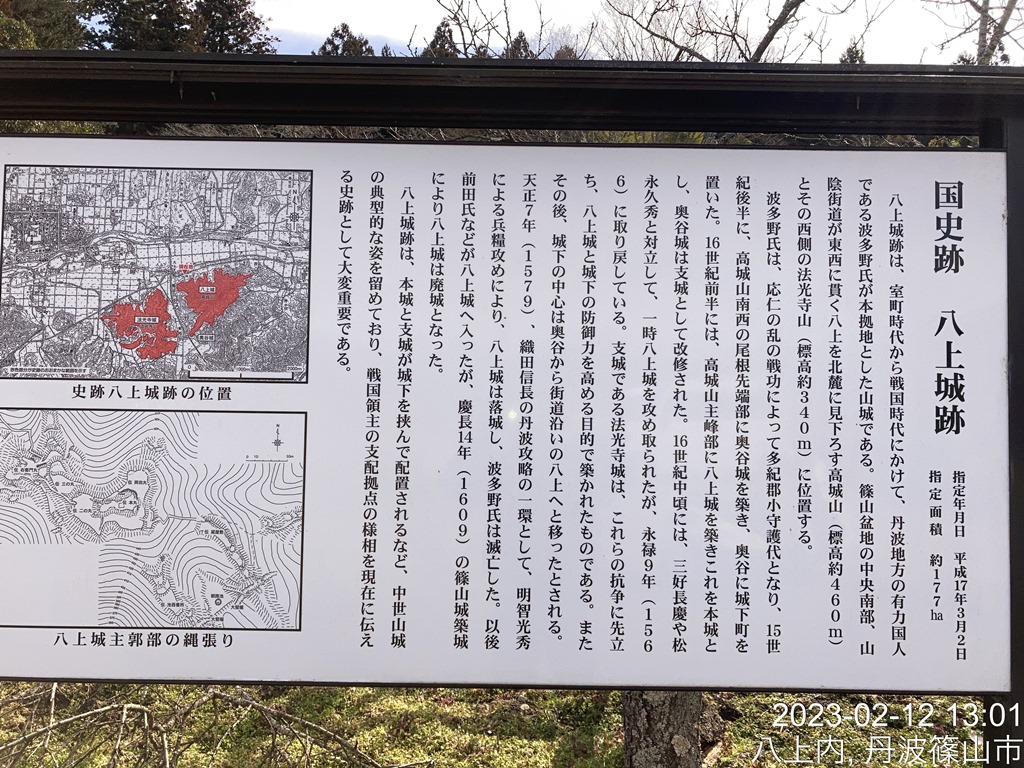
Yakami Castle (Yakami-jō) is a mountain castle built on Mt. Takajō (approximately 460 meters above sea level) in Tanba-Sasayama City, Hyogo Prefecture, dating from the medieval to the Sengoku period. Also known as “Yakami Takajō,” this mountain, with its beautiful shape often referred to as Tanba Fuji, was the base of the Hatano clan, a powerful local lord of Tanba Province.
The Yakami Castle ruins are a large-scale mountain castle site stretching approximately 3 kilometers from east to west. It features a complex castle structure with Yakami Castle on Mt. Takajō as the main castle and Hōkōji Castle on Mt. Hōkōji to the west as a subsidiary castle. During Oda Nobunaga’s conquest of Tanba, it was the site of a fierce battle between Akechi Mitsuhide and the Hatano clan, making it an extremely important historical site in the Sengoku period.
Designated a National Historic Site on March 2, 2005 (Heisei 17), it became the 41st National Historic Site in Hyogo Prefecture. Even today, the remains of the castle, such as baileys, earthworks, and moats, are well-preserved, conveying the typical appearance of a medieval mountain castle.
History of Yagami Castle
The Hatano Clan and the Background of its Construction
While there are no clear records regarding the exact construction period of Yagami Castle, it is believed to have been built during the mid-to-late Muromachi period by the Hatano clan, a powerful local lord in the Tanba region. The Hatano clan expanded their power primarily in Taki County, becoming one of the most powerful forces in Tanba Province.
The Sasayama Basin was a strategically important transportation hub, where the San’in Road (Sasayama Road) leading from Kyoto to the San’in region passed through, and where roads to Yamashiro, Harima, Tajima, and Osaka intersected. The Hatano clan made the most of this geographical advantage, establishing their main castle on the summit of Takajoyama Mountain, creating a defensive stronghold that offered a panoramic view of the entire basin.
Yagami Castle in the Sengoku Period
During the Sengoku period, the Hatano clan became the most powerful force in Tanba Province. Their influence in Tanba reached its peak, particularly during the time of Hatano Hideharu. Yagami Castle was not merely a military base; it functioned as the political and economic center of the Hatano clan, with many retainers and merchants gathering in the castle town, leading to prosperity.
In the late 16th century, as Oda Nobunaga expanded his power in his quest for national unification, Tanba became a target. Nobunaga appointed Akechi Mitsuhide as the commander for the conquest of Tanba, and the full-scale attack began around 1575 (Tensho 3).
The Battle of Yagami Castle and Akechi Mitsuhide
The siege of Yagami Castle was one of the most difficult battles for Akechi Mitsuhide. Hatano Hideharu was a skilled general who, utilizing the strong defenses of Yagami Castle and its advantageous terrain, repelled Mitsuhide’s attacks numerous times.
In 1576 (Tensho 4), Mitsuhide intensified his attack on Yagami Castle, but encountered fierce resistance from the Hatano clan, forcing him to retreat for a time. Mitsuhide suffered heavy losses in this battle, prolonging the conquest of Tanba Province.
In 1578 (Tensho 6), Mitsuhide changed his strategy, shifting from a direct attack on Yagami Castle to a plan to isolate it by successively capturing surrounding subsidiary castles. Furthermore, he implemented a prolonged siege, starving the castle of its supplies. This siege lasted for over a year, resulting in a severe food shortage within Yagami Castle.
Finally, in June 1579 (Tensho 7), Hatano Hideharu decided to surrender. It is said that Mitsuhide promised Hideharu his life to be spared, but after Hideharu was sent to Azuchi Castle, he was executed on the orders of Oda Nobunaga. As a result, the Hatano clan was destroyed, and Yagami Castle came under Mitsuhide’s control.
Yagami Castle After its Fall
After capturing Yagami Castle, Akechi Mitsuhide established his control over Tanba Province, but he himself was killed in the Honnoji Incident of 1582 (Tensho 10). Afterward, Tanba Province came under the control of Toyotomi Hideyoshi, and Maeda Shigekatsu became the lord of Yagami Castle.
After the Battle of Sekigahara in 1600 (Keicho 5), Matsudaira Yasushige became the lord of Yagami Castle, but in 1609 (Keicho 14), it was decided by order of Tokugawa Ieyasu to construct a new castle, Sasayama Castle, on the plains of the Sasayama Basin. Consequently, Yagami Castle was abandoned.
After its abandonment in 1609 (Keicho 14), Yagami Castle was neglected, and its buildings were lost. However, its layout as a mountain castle and its civil engineering remains were well preserved.
Structure and Remains of Yagami Castle
Characteristics of the Layout
Yagami Castle has a typical medieval mountain castle layout, with multiple baileys arranged continuously along the ridge from the summit of Takajo Mountain. The main remains are as follows:
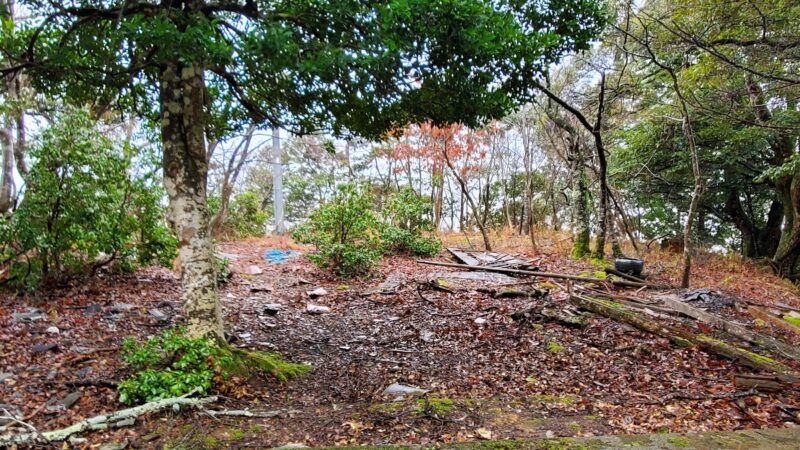
Honmaru (Main Enclosure): Located on the mountaintop at an altitude of approximately 460 meters, it measures approximately 30 meters east-west and 20 meters north-south. Earthen ramparts surround the Honmaru, enhancing its defensive capabilities. From the Honmaru, one can overlook the entire Sasayama Basin, a location truly befitting its reputation as a “fortress of unparalleled strength.”
Ninmaru and Sanmaru: These are groups of baileys located north and south of the Honmaru, each constructed in a stepped manner. These baileys were crucial defensive points, designed to progressively prevent enemy incursions.
Asaji Pond: Located northwest of the main keep, this reservoir served as a crucial water source in preparation for a siege. Securing water was a matter of life and death for mountain castles, and the existence of this pond enabled Yagami Castle to withstand a long siege.
Defensive Structures
The high level of Yagami Castle’s defenses lies in the clever placement of its defensive structures.
Moat: A dry moat dug to cut across the ridgeline, serving as a vital defensive line to prevent enemy intrusion. Yagami Castle had multiple moats, with particularly large ones along the main approach routes.
Earthwork: Earthen walls built around the enclosures, protecting against enemy arrows and firearms. Even today, approximately 2-3 meters of Yagami Castle’s earthworks remain, allowing us to imagine their original appearance.
Vertical Moat: A moat dug vertically along the slope, preventing enemy intrusion from the slope and also functioning as a rainwater drainage channel.
Coordination with Subsidiary Castles
The defensive system of Yagami Castle relied not only on the main castle but also on coordination with the surrounding subsidiary castles.
Hokoji Castle: A subsidiary castle located approximately 1.5 kilometers west of Yagami Castle, built on Hokoji Mountain (approximately 380 meters above sea level). A castle town was formed between it and Yagami Castle, and the two castles formed a unified defensive network.
Maeda Shuzen Residence Site: The site of a retainer’s residence located at the foot of Yagami Castle, an important base protecting the entrance to the castle approach.
Konosu and Shimo-no-Chayamaru Sites: A group of enclosures arranged in a vertical line along the ridge, playing a role in defending the castle approach. The continuous placement of these facilities dramatically increased the defensive capabilities of Yagami Castle.
Highlights of Yagami Castle
Access and Ascent Routes
Several ascent routes to Yagami Castle are available. The most common route is the trail from the Kasuga Shrine side, where there are signposts and parking spaces.
The climb from the trailhead to the main keep takes about 40-50 minutes. The path is relatively well-maintained and marked, making it safe even for beginners. However, as it is a mountain castle, appropriate clothing and shoes for hiking are necessary.
Scenic Viewpoint
The view from the main keep is one of the greatest highlights of Yagami Castle. On a clear day, you can enjoy a panoramic view of the entire Sasayama Basin and the beautiful scenery of the surrounding mountains. Imagining the view that the Hatano clan and Akechi Mitsuhide once gazed upon from this spot evokes a sense of historical romance.
Especially during the autumn foliage season and when a sea of clouds forms in the early morning, breathtaking scenery unfolds.
Well-Preserved Remains
Even more than 400 years after its abandonment, the remains of Yagami Castle are remarkably well-preserved. The following remains are particularly worth seeing.
- Earthworks of the Main Enclosure: The earthworks surrounding the castle retain their height, allowing you to appreciate its original scale.
- Moats: Multiple moats remain clearly visible, allowing you to learn about the defensive techniques of medieval mountain castles.
- Terrain Differences in the Enclosures: The continuous arrangement of enclosures from the mountaintop to the foot of the mountain demonstrates skillful use of the terrain in castle planning.
- Asaji Pond: Remains of a water source facility are visible, providing insight into preparations for a siege.
Location and Access Information
Location: Yagamiuchi, Tamba-Sasayama City, Hyogo Prefecture (Takajoyama)
Access:
- From JR Fukuchiyama Line “Sasayamaguchi Station,” take the Shinki Green Bus bound for “Sasayama Bus Depot” for approximately 15 minutes, get off at “Kasuga Shrine,” and walk for approximately 40 minutes to reach the main enclosure.
- Approximately 15 minutes by car from the Maizuru-Wakasa Expressway “Tannan-Sasayama IC” to the Kasuga Shrine castle entrance parking lot.
Parking: Several parking spaces are available near Kasuga Shrine (free).
Climbing Time: Approximately 40-50 minutes from the entrance to the main keep.
Notes:
- As it is a mountain castle, appropriate clothing and shoes for hiking are required.
- Please bring your own drinking water.
- Be careful of wasps and other insects in summer.
- There is a possibility of snow and ice in winter.
National Historic Site Designation and Preservation Activities
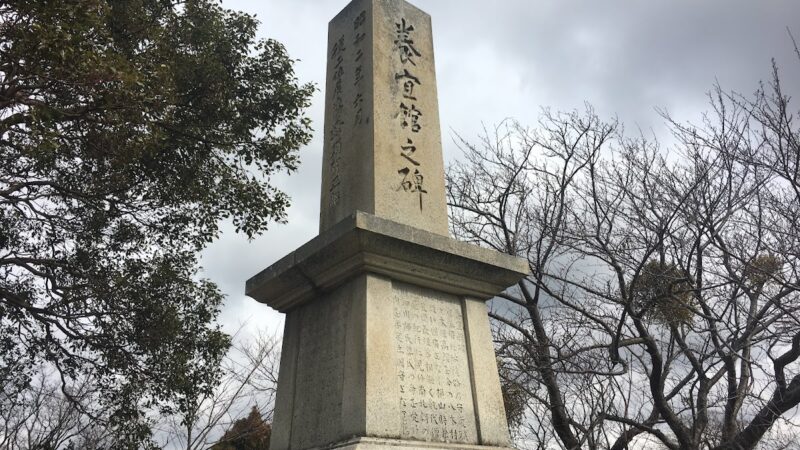
The Yagami Castle Ruins were designated a National Historic Site on March 2, 2005 (Heisei 17) due to their historical value and the excellent state of preservation of the remains. This designation was achieved through a preservation movement by many researchers, including the Osaka Historical Society, and local residents.
Since the designation, the Tamba-Sasayama City Board of Education has been leading efforts to preserve and utilize the remains. Maintenance activities such as improving the approach to the castle, installing information boards, and regular grass cutting are carried out to ensure a safe environment for visitors.
Furthermore, local volunteer groups conduct cleaning activities and guided tours, and the entire community continues its efforts to protect the Yagami Castle ruins and convey their value.
Related Historical Sites in the Surrounding Area
When visiting the Yagami Castle ruins, visiting the related historical sites in the surrounding area will allow you to gain a deeper understanding of Tanba’s history.
Sasayama Castle Ruins
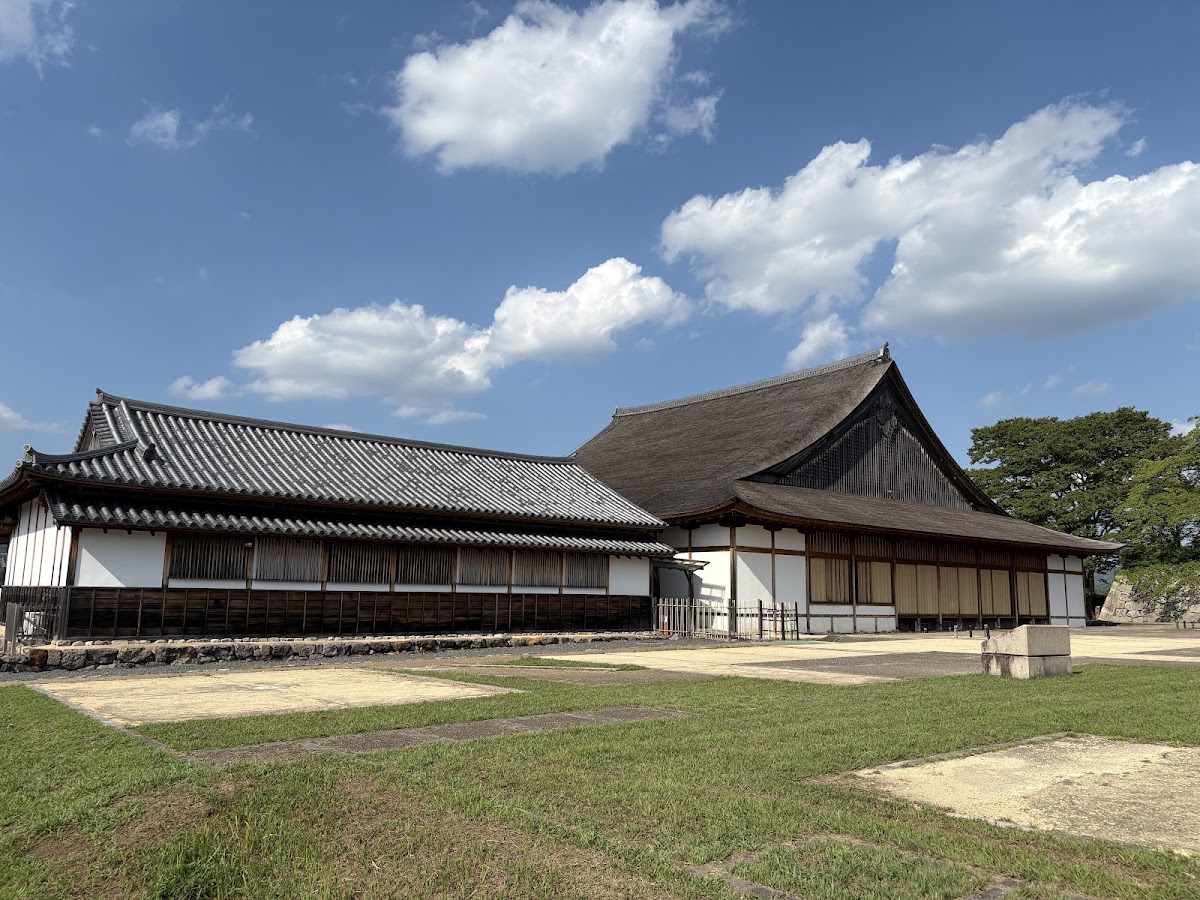
Sasayama Castle, built after the abandonment of Yagami Castle, is a flatland castle constructed in 1609 (Keicho 14) by order of Tokugawa Ieyasu. It is now designated as a national historic site, and the main hall has been restored. The transition from Yagami Castle to Sasayama Castle symbolizes the shift from the medieval to the early modern period.
Hokoji Castle Ruins
Hokoji Castle Ruins, which functioned as a subsidiary castle of Yagami Castle, also retains the remains of a mountain castle, similar to Yagami Castle. Visiting both castles will give you a complete understanding of the Hatano clan’s castle network.
Kasuga Shrine
Located near the entrance to Yagami Castle, Kasuga Shrine is said to have been revered by the Hatano clan. An information board about Yagami Castle is also installed on the shrine grounds.
The Relationship Between Yagami Castle and Akechi Mitsuhide
The 2020 NHK Taiga drama “Kirin ga Kuru” (The Kirin Arrives) brought renewed attention to the relationship between Akechi Mitsuhide and Yagami Castle. For Mitsuhide, capturing Yagami Castle was the greatest challenge in his important mission of pacifying Tanba Province.
It is said that Mitsuhide, having struggled to capture Yagami Castle, learned the importance of siege warfare and starvation tactics from this experience, and applied them to later battles. Furthermore, his battle with Hatano Hideharu was one of the major turning points in Mitsuhide’s life.
According to one theory, Mitsuhide offered his mother (or aunt) as a hostage to persuade Hatano Hideharu to surrender. However, Nobunaga executed Hideharu, and the hostage was also killed. This is said to have been one of the reasons for Mitsuhide’s resentment towards Nobunaga. However, there is no historical evidence to support this legend, and it is considered highly likely to be a later fabrication.
Cultural Value of Yagami Castle
Yagami Castle ruins, as a representative example of medieval Japanese mountain castles, possess the following cultural value:
Historical Value
It was the main battlefield of the Tanba campaign, part of Oda Nobunaga’s unification of Japan, and is an indispensable site for understanding the political and military history of the Sengoku period. The battle between Akechi Mitsuhide and the Hatano clan is widely known as an important episode in Sengoku history.
Archaeological Value
The layout and remains of a typical medieval mountain castle are well-preserved, making it a valuable resource for studying Sengoku period castle construction techniques and defensive systems. Archaeological excavations have unearthed artifacts that reveal aspects of daily life and battles during that period.
Scenic Value
The beautiful shape of Mt. Takagi, known as Tanba Fuji, and the view of the Sasayama Basin from its summit are representative of the region’s landscape. It possesses high value as a cultural landscape where historical heritage and natural scenery are integrated.
Best Season to Visit Yagami Castle
Yagami Castle ruins can be visited year-round, but each season offers a different charm.
Spring (March-May): The fresh greenery is beautiful, the weather is mild, and it’s the perfect season to visit the castle. The scenery at the foot of the mountain is also vibrant during cherry blossom season.
Summer (June-August): While the greenery is lush and the shade is cool, temperatures are high and there are many insects, so adequate preparation is necessary. Visiting early in the morning is recommended.
Autumn (September-November): The autumn foliage is beautiful, making it the most popular season. Especially from late October to early November, you can expect spectacular views. The climate is also suitable for mountain climbing.
Winter (December-February): The air is clear, offering excellent views, and the snowscapes are beautiful, but caution is needed regarding snow and ice. Winter mountain climbing equipment and experience are required.
Summary
Yagami Castle (Tamba-Sasayama City, Hyogo Prefecture) is an important mountain castle from the Sengoku period, which flourished as the base of the Hatano clan and was the site of fierce battles with Akechi Mitsuhide. Built on Mt. Takajo, approximately 460 meters above sea level, its solid layout and well-preserved remains possess high historical and cultural value as a typical example of a medieval mountain castle.
With its beautiful mountain shape, also known as Tanba Fuji, the spectacular views from the summit, and numerous remains that evoke the spirit of the warlords who lived during the Sengoku period, Yagami Castle ruins are an attractive spot not only for history enthusiasts but also for those who enjoy mountain climbing and hiking.
Yagami Castle ruins are designated as a national historical site and are carefully protected by the local people. Be sure to visit and experience the historical romance of the Sengoku period and the beautiful nature of Tanba. When visiting the castle, please be sure to have appropriate equipment and be well-prepared to ensure a safe and enjoyable experience.