Complete Guide to Yagi-yakata (Hyogo Prefecture): A Thorough Explanation of the Residence Site of the Hosokawa Clan, the Shugo (Provincial Governor) of Awaji
Yagi-yakata (or Yagi no Yakata), located in Yagi-Yogi-naka, Minami-Awaji City, Hyogo Prefecture, is the site of the shugo (provincial governor) residence and the former residence of the Hosokawa clan, who ruled Awaji Province from the Nanboku-cho period to the Muromachi period. This historical site, which functioned as the center of Hosokawa rule for approximately 180 years, still retains some of its earthworks and moats and is protected as a Hyogo Prefecture designated historical site.
This article provides a thorough explanation of this important historical site, indispensable to understanding the history of Awaji, covering its historical background, the characteristics of its remains, highlights, access methods, and surrounding tourist spots.
What is Yagi-yakata?: The Residence of the Awaji Shugo
Yagi-yakata is a flatland castle that existed from the Nanboku-cho period to the Muromachi period as the residence of the Hosokawa clan, who served as the Shugo of Awaji Province. The site of the residence is located in present-day Yagi-Yōgi-naka, Minami-Awaji City, Hyogo Prefecture, and had a rectangular shape, measuring approximately 120 meters east-west and 250 meters north-south.
Function as a Shugo’s Residence
A Shugo’s residence was a base facility for the Shugo daimyo (provincial governor) established in each province from the Kamakura period to the Muromachi period. Yōgikan was not merely a residence, but functioned as the administrative and military center responsible for governing the entire Awaji Province. It is believed that political affairs were conducted within the residence, and it was also used as a meeting place for the retainers.
Value as a Prefecturally Designated Historic Site
The Yōgikan site was designated a Hyogo Prefecture Historic Site on April 1, 1971. As the remains of a Shugo daimyo’s residence from the Nanboku-chō period to the Muromachi period, it is an extremely important historical site for understanding the political and military system of the time. It is highly valued academically as a valuable resource for the study of medieval history in Awaji.
History of Yōgikan: 180 Years of Hosokawa Rule
Construction by Hosokawa Morōji
The history of Yōgikan dates back to the Nanboku-chō period (Northern and Southern Courts period). It is believed to have begun when Hosokawa Morōji, a senior retainer of Ashikaga Takauji, established his residence in this area after pacifying Awaji Island at Takauji’s command.
Hosokawa Morōji was a warrior who served as a close confidant of Ashikaga Takauji and was appointed Governor of Awaji. At that time, Awaji was strongly influenced by the Southern Court, and it was necessary to establish a base for the Northern Court. Yōgikan was built to meet these military and political needs.
180 Years of Rule by the Hosokawa Clan
From Hosokawa Morōji onward, the Hosokawa clan ruled Awaji for approximately 180 years over seven generations. During this long period of rule, Yōgikan continued to function as the political center of Awaji Province.
The Hosokawa clan’s rule over Awaji was relatively stable, and a governing system centered around the residence was established. Successive Awaji provincial governors used the Yōgikan as their base, leading the samurai groups on the island and carrying out administrative duties such as tax collection and maintaining public order.
The Assassination of Hosokawa Naoharu and the Abolition of the Yōgikan
The history of the Yōgikan came to an end during the time of its seventh head, Hosokawa Naoharu. Naoharu was assassinated by Miyoshi Yukinaga, marking the end of the Hosokawa clan’s rule over Awaji.
The Miyoshi clan were important retainers of the Hosokawa clan, but in the midst of the Sengoku period’s trend of gekokujō (overthrowing one’s superiors), they had grown to possess power surpassing that of their lord. After Hosokawa Naoharu’s death, the Yōgikan was also abolished, bringing to an end its approximately 180-year history as the Awaji provincial governor’s residence.
Structure and Remains of Yōgikan Castle
Size and Layout of the Castle
Yōgikan Castle was a flatland castle with a rectangular site measuring approximately 120 meters east-west and 250 meters north-south. This size was standard for a shugo (provincial governor) residence, and it is presumed that it contained living quarters, administrative spaces, and offices for retainers.
The long north-south orientation is typical of castle construction at the time. It is believed that the main gate was located on the front (south side), and the main buildings were located in the center.
Remains of Earthworks
Even today, parts of earthworks built to strengthen the defenses can be seen around the Yōgikan Castle site. The earthworks surrounded the castle on all four sides, and although their height varied depending on the location, it is estimated that they were several meters high at the time.
The earthworks were not merely defensive structures, but also symbols of authority. A castle surrounded by high earthworks had a visual effect of demonstrating the dignity of a shugo daimyo (provincial governor). The existing earthworks are weathered, but they are valuable remains that allow us to imagine the scale of the site at the time.
Traces of a Dry Moat
A dry moat surrounded the outside of the earthworks. A dry moat is a moat that does not hold water and functioned as a defensive structure to prevent enemy intrusion. Traces of the dry moat still remain in some places, providing clues to the defensive structure of the manor.
The width of the dry moat varied depending on the location, but it is estimated to have been approximately several meters. The combination of earthworks and a dry moat is a defensive system common to medieval manors and castles, and the Yōgi Manor also possessed this basic structure.
Estimated Building Layout within the Manor
The results of the archaeological excavation have revealed that multiple buildings were arranged within the manor. It is believed that the main hall (the residence of the governor), the administrative office (a building for conducting government affairs), the vassal’s quarters, and warehouses were systematically arranged.
The buildings were primarily made of wood, and it is presumed that a mix of stone-foundation buildings and post-and-beam buildings existed. It is also thought that some buildings had tiled roofs, suggesting that a high-status architectural style was adopted for the time.
Highlights of Yōgikan
Stone Monument and Information Board Remaining at the Site
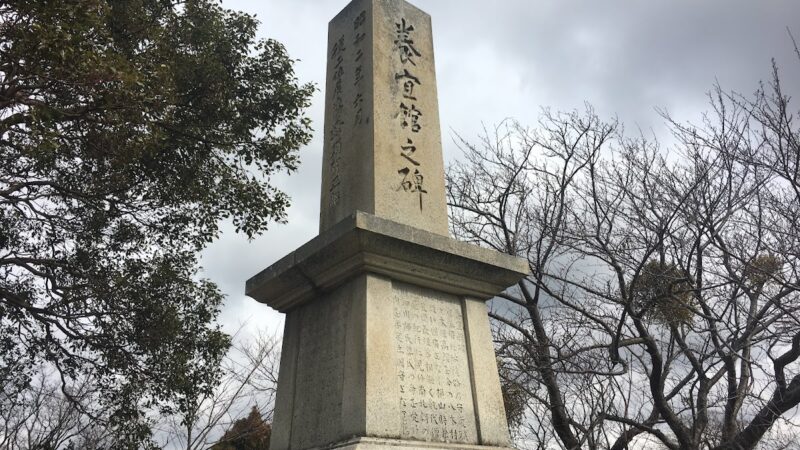
At the Yōgikan site, there is a stone monument marking the historical site and a detailed information board. The information board describes the history of the mansion, the Hosokawa clan’s rule over Awaji Island, and explanations of the remains, helping visitors understand the value of the historical site.
The stone monument serves as a symbol of the historical site’s existence and represents the region’s historical identity. It is also a recommended spot for photography.
Exploring the Earthworks
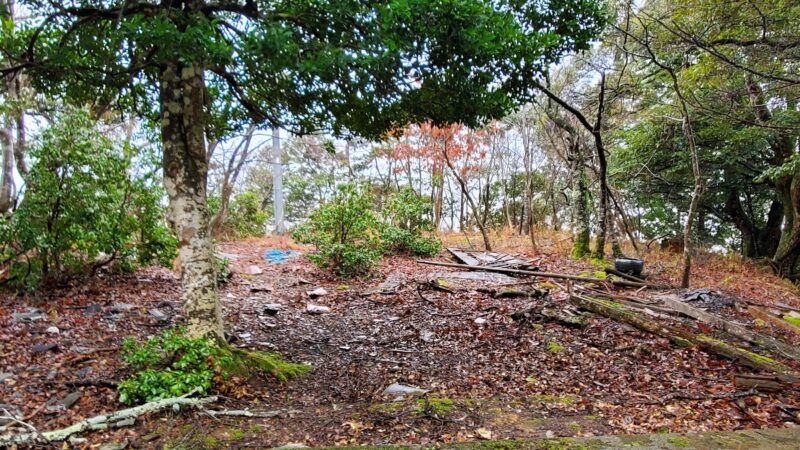
The greatest highlight of the Yōgikan site is the existing earthworks. Walking around the mansion site, you can see the rises of the earthworks in various places. In particularly well-preserved areas, you can get a real sense of the scale of the earthworks at that time.
There are places where you can climb onto the earthen ramparts, and from there, you can get a sense of the scale of the entire manor site, measuring 120 meters east-west and 250 meters north-south.
Surrounding Landscape
The Yōgi Manor site is located in the rural area of Minami-Awaji City, and the historical site remains amidst a tranquil farming landscape. This landscape itself is valuable for understanding the environment in which the medieval manor was situated.
It is believed that at the time, the area surrounding the manor was filled with the residences of retainers and the living quarters of merchants and artisans, suggesting a bustling atmosphere quite different from the quiet rural landscape of today.
The Joy of Engaging Historical Imagination
The Yōgi Manor site doesn’t have flashy reconstructed buildings or exhibition facilities, but that’s precisely why visitors can freely exercise their historical imagination. While observing the traces of the earthen ramparts and moats, there’s the pleasure of imagining the rule of the Hosokawa clan, the lives of the samurai, and the conduct of government affairs.
For history buffs, this is a historical site that offers a thoughtful visit experience, perfect for creating your own “castle notes.”
Access to Yōgikan
Location
Address: Yagi Yōgi-naka, Minamiawaji City, Hyogo Prefecture
Access by Public Transportation
The main mode of public transportation to Awaji Island from Honshu is by express bus.
- From Kobe/Sannomiya: Take an express bus bound for Awaji Island from Sannomiya Bus Terminal, get off at the nearest bus stop, and then take a taxi or walk.
- From Osaka: Take an express bus bound for Awaji Island from Osaka (Umeda).
Yōgikan Ruins are located a little distance from the city center, so it’s a bit of a distance from the bus stop. Taking a taxi is recommended.
Access by Car
Access by car is the most convenient.
- Kobe-Awaji-Naruto Expressway: Approximately 15 minutes by car from Nishiawaji-Mihara IC
- Parking: There is no large-scale parking lot specifically for the historical site, but there are spaces available for parking in the surrounding area.
Awaji Island is a developed tourist destination, and renting a car to tour the island is recommended. You can also enjoy visiting historical spots, including the Yōgikan Ruins.
Estimated Visiting Time
Allow 30 minutes to an hour to visit the Yōgikan Ruins. If you want to carefully observe the earthworks or explore the surrounding area, it is recommended to allow a little more time.
Nearby Tourist Spots and Model Courses
Historical Spots on Awaji Island
When visiting the Yōgikan Ruins, it is recommended to also visit other historical spots on Awaji Island.
Sumoto Castle: A representative mountain castle of Awaji Island, it is an impressive castle with remaining stone walls and a castle tower base. It is approximately 20 minutes by car from the Yōgikan Ruins.
Yura Fortress Ruins: The remains of a gun battery built during the Meiji era, a fascinating spot as a modern military heritage site.
Awaji Kokubunji Temple Ruins: The ruins of a Kokubunji temple built during the Nara period, offering insights into the ancient history of Awaji Island.
Awaji Island’s Nature and Tourist Spots
In addition to historical tours, you can also enjoy Awaji Island’s rich nature and tourist facilities.
Awaji Hanasajiki: A vast flower field where flowers bloom in every season, offering a spectacular view of the Akashi Kaikyo Bridge.
Uzushio Cruise: A sightseeing boat that allows you to see the Naruto Strait whirlpools up close, one of the highlights of Awaji Island sightseeing.
Awaji Island Ranch: A tourist ranch where you can experience milking cows, recommended for families.
Recommended Model Courses
Historical Exploration Course (1-Day Plan):
- Morning: Visit the Yōgikan Ruins → Visit Sumoto Castle
- Lunch: Awaji Beef Lunch in Minami-Awaji City
- Afternoon: Awaji Kokubunji Temple Ruins → Yura Fortress Ruins
- Evening: Sunset Viewing at Keino Matsubara
History and Nature Enjoyment Course (1-Night, 2-Day Plan):
- Day 1: Yōgikan Ruins → Sumoto Castle → Awaji Hanasajiki → Overnight Stay
- Day 2: Whirlpool Cruise → Awaji Puppet Theater → Awaji Island Ranch
Points to Note When Visiting Yōgikan
Clothing and Items to Bring
The Yōgikan Ruins are an outdoor historical site, and the main activities involve walking along the earthworks. The following equipment is recommended.
- Comfortable shoes: Sneakers or trekking shoes are suitable.
- Hat and sunscreen: Sunlight is strong in summer, so sun protection is necessary.
- Rain gear: Bring a folding umbrella or rainwear during periods of unpredictable weather.
- Drinks: Hydration is especially important in summer.
Best season for visiting
The Yōgikan Ruins are open year-round, but each season offers a different charm.
- Spring (March-May): The pleasant weather makes it ideal for strolling. The surrounding rural scenery is also beautiful during this time.
- Autumn (September-November): The heat subsides, making for a comfortable visit. The autumn foliage is also charming.
- Summer (June-August): Heat protection is necessary, but you can enjoy the lush greenery and rich natural scenery.
- Winter (December-February): There are fewer tourists, allowing for a quiet visit to the historical site. Take proper precautions against the cold.
Photography Tips
- Stone Monument and Information Board: A classic photo spot for commemorating your visit.
- Distant View of the Earthwork: To capture the overall atmosphere of the castle ruins, it’s recommended to take photos from a slightly distant position.
- Texture of the Earthwork: Close-up shots of the texture of the earthwork surface and the vegetation are also interesting.
- Surrounding Rural Landscape: Photographing the historical site together with the surrounding environment conveys the unique characteristics of the location.
Research and Preservation Activities of Yōgikan
Results of Archaeological Excavations
Multiple archaeological excavations have been conducted at the Yōgikan site. These investigations have revealed the size of the castle, the building layout, and the unearthed artifacts.
The unearthed artifacts include roof tiles, ceramics, and pottery, providing clues to the lifestyle and trade practices of the time. The discovery of Chinese ceramics, in particular, indicates that the Hosokawa clan possessed a wide-ranging trade network.
Preservation and Challenges of the Historic Site
The Yōgikan Ruins, protected as a Hyogo Prefecture designated historical site, face challenges in preservation. The earthworks are susceptible to deterioration over time and damage from wind and rain, requiring regular maintenance.
Preservation activities are ongoing by local residents and the government, including grass cutting and repairs to the earthworks. Furthermore, awareness campaigns to promote the value of the historical site are also an important initiative.
Local History Education
The Yōgikan Ruins are also utilized as a site for local history education. Local elementary and junior high schools provide opportunities for students to visit the Yōgikan Ruins as part of their local history studies, learning about the medieval history of Awaji Island.
Through these educational activities, efforts are being made to pass on the region’s history and culture to the next generation.
The Hosokawa Clan and the History of Awaji Island
The Origins of the Hosokawa Clan and Their Relationship with the Ashikaga Clan
The Hosokawa clan was a prestigious samurai family descended from the Seiwa Genji clan and held significant influence as a branch of the Ashikaga clan. In particular, Hosokawa Morouji served as a close confidant of Ashikaga Takauji and played a crucial role during the turbulent period of the Northern and Southern Courts.
His appointment as governor of Awaji was a testament to the deep trust he received from the Ashikaga clan. Awaji was a strategically important region, a key point connecting the Kinai region and Shikoku.
Hosokawa Clan’s Rule in Awaji
The Hosokawa clan’s rule over Awaji was relatively stable. Using the Yōgikan as their base, they organized samurai groups on the island and established an efficient system of governance.
They strived to stabilize the local community through the promotion of agricultural production, maintaining public order, and protecting temples and shrines. Furthermore, they are believed to have contributed to the development of trade, leveraging Awaji’s geographical characteristics as a key point for maritime traffic.
Awaji After the Hosokawa Clan
After the death of Hosokawa Naoharu, Awaji came under the control of the Miyoshi clan. Subsequently, after the turmoil of the Sengoku period, it eventually transitioned to the system of rule of a modern daimyo with the unification of Japan by Toyotomi Hideyoshi.
Although the Yōgikan was abolished, the political center of Awaji remained largely unchanged, and governance centered around Sumoto continued.
Reference Materials for a Deeper Understanding of the Yōgikan Site
Related Books
For those who wish to learn more about the Yōgikan, the Hosokawa clan, and the medieval history of Awaji, the following books are recommended:
- *Medieval History of Awaji* (A local history research book)
- *Studies on the Hosokawa Clan* (A research book covering the Hosokawa clan in general)
- *Medieval Castles of Hyogo Prefecture* (A book covering castles in the prefecture)
- *Shugo and Shugo Offices in the Nanboku-chō Period* (A specialized book explaining the Shugo system)
More detailed local historical materials may be available at local libraries and local history museums.
Related Museums and Archives
Takigawa Memorial Art Museum Tamaseikan, Minami-Awaji City: A facility introducing the history and culture of Minami-Awaji City, which also has exhibits related to the Yōgikan.
Sumoto City Awaji Cultural History Museum: This museum covers the history of Awaji Island in general, and has a rich collection of exhibits on the medieval period.
Hyogo Prefectural Archaeological Museum: This facility exhibits archaeological discoveries within the prefecture, and you can also learn about medieval ruins.
Online Information
Basic information about Yōgikan is provided on the Hyogo Prefecture official tourism website “HYOGO! Navi” and the Minami Awaji City official website. It is recommended to check the latest information before visiting.
Also, on castle research community sites, “castle notes” and photos from people who have actually visited are shared, which can be helpful for your visit.
Summary: Yōgikan Tells the Story of Medieval Awaji
The Yōgikan site may not be flashy, but it is an important historical site that tells the story of Awaji’s medieval history. This residence, which functioned as the center of rule for 180 years over seven generations of the Hosokawa clan from the Nanboku-chō period to the Muromachi period, conveys the political and military system of that time.
The surviving earthworks and moats convey a message of history that transcends time. Visiting this site, protected as a Hyogo Prefecture designated historical site, allows you to experience a living, locally rooted history that you won’t find in textbooks.
When visiting Awaji Island, be sure to explore not only its beautiful nature and delicious food, but also historical sites like the Yōgikan Ruins. Nestled amidst a tranquil rural landscape, these historical sites offer visitors a rich opportunity to engage their historical imagination.
The Hosokawa clan’s rule of Awaji, the turmoil of the Northern and Southern Courts period, the shugo system of the Muromachi period—the Yōgikan Ruins are a valuable “site” for considering these historical themes. For history buffs, those interested in Awaji’s culture, and those who simply want to enjoy a quiet historical site tour, the Yōgikan Ruins are a must-see.