Complete Guide to Chozui Castle (Hyogo Prefecture): The Charm of the Uno Clan’s Mountain Castle and High Stone Walls that Resisted Hashiba Hideyoshi
What is Chozui Castle?
Chozui Castle is a mountain castle built on the summit of Mt. Chozui, at an altitude of 584.8 meters, located in Katayama and Uno, Yamazaki-cho, Shiso City, Hyogo Prefecture. It is also known as Chozui-san Castle or Hirose Castle.
Functioning as a strategic point in western Harima Province from the Nanboku-cho period to the Sengoku period, this castle still retains high stone walls, a rarity for a medieval mountain castle, and is a valuable historical site selected as one of Hyogo Prefecture’s 100 Best Castles.
History of Nagamizu Castle
Construction during the Nanboku-cho Period
Nagamizu Castle is believed to have been built during the Bunwa era (1352-1356) of the Nanboku-cho period by Akamatsu Norisuke, who served as the governor of Harima Province. The Akamatsu clan was a powerful daimyo family that expanded its influence primarily in Harima Province, and Nagamizu Castle played a crucial role as a base for controlling western Harima.
Akamatsu Norisuke followed Ashikaga Takauji during the turbulent Nanboku-cho period and established his power as the governor of Harima, Bizen, and Mimasaka Provinces. Nagamizu Castle is thought to have functioned as one of the important bases supporting the Akamatsu clan’s rule during this period.
The Kakitsu Rebellion and the Uno Clan Era
The Kakitsu Rebellion, which occurred in 1441, marked a major turning point in the history of Nagamizu Castle. In this rebellion, Akamatsu Mitsusuke assassinated Ashikaga Yoshinori, the 6th Shogun of the Muromachi Shogunate, and the Akamatsu clan temporarily declined.
Following the Kakitsu Rebellion, Nagamizu Castle came to be used as the residence of the Uno clan, a prominent family within the Akamatsu clan. The Uno clan was a powerful branch of the Akamatsu clan and was entrusted with governing the region centered around Shisō County. Using Nagamizu Castle as their base, the Uno clan contributed to maintaining the Akamatsu clan’s power in western Harima Province.
Hashiba Hideyoshi’s Invasion of Harima and the Fall of Nagamizu Castle
The end of Nagamizu Castle came during Hashiba Hideyoshi’s invasion of Harima Province during the Tenshō era. Hashiba Hideyoshi, acting on orders from Oda Nobunaga, began his campaign to pacify Harima Province in 1577.
At that time, the lords of Nagamizu Castle were Uno Masayori and his son, Sukekiyo. The Uno clan had close ties to the Mōri clan and continued to resist Hashiba Hideyoshi, who was on Oda’s side, until the very end. In 1580, Nagamizu Castle, under fierce attack from Hashiba’s forces, fell to arson.
In this battle, Uno Masayori and his son Sukekiyo, along with their family and retainers, were killed, leading to the downfall of the Uno clan. The castle burned down and was subsequently abandoned.
Nagamizu Castle After its Fall
After the fall of Nagamizu Castle, Shintoku-ji Temple, a Nichiren Buddhist temple, was built on the site of the castle’s main keep. Even today, Shintoku-ji Temple houses memorial towers for Uno Masayori, Sukekiyo, and their family and retainers, allowing visitors to remember the warriors who perished at Nagamizu Castle.
Structure and Layout of Nagamizu Castle
Terraced Castle Layout
Nagamizu Castle is a terraced mountain castle built around the summit of Mount Nagamizu, which is 584.8 meters above sea level. A terraced layout is a castle layout in which baileys are arranged in a stepped fashion from the main keep, a structure that takes advantage of the mountain’s terrain for superior defense.
The main keep (Honmaru) is located at the highest point, with the second enclosure (Ninokuruwa) situated on a ridge extending southward from it, and the third enclosure (Sannomaru) on a ridge extending southeastward from the tip of the second enclosure. To the southeast of the main keep, a complex structure unfolds with three large enclosures, each with a drop of over 10 meters. From the lowest level of these enclosures, a group of smaller enclosures connects to the northwest, creating a multi-faceted structure.
Structure of the Main Keep
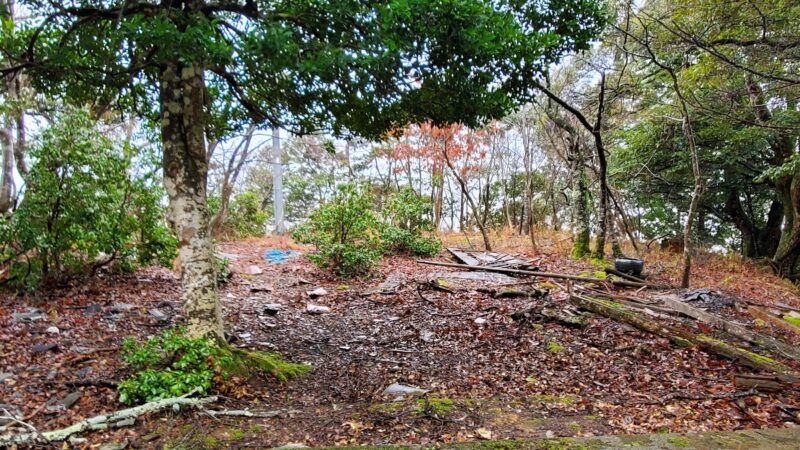
The main keep is located at the summit of Mount Nagamizu and forms the core of the castle. Enclosures are arranged from the main keep along the eastern ridge and further north, designed to withstand attacks from multiple directions.
Currently, Shintoku-ji Temple stands on the site of the main keep, but magnificent stone walls remain around it. The stone walls of the main keep, in particular, are the most impressive of all the walls in Nagamizu Castle, overwhelming visitors.
Rare High Stone Walls for a Medieval Mountain Castle
The greatest highlight of Nagamizu Castle is its rare high stone walls for a medieval mountain castle. Generally, medieval mountain castles primarily relied on earthen ramparts and steep slopes for defense, with only a limited number possessing high stone walls.
The stone walls of Nagamizu Castle remain extensively, mainly around the mountaintop, and the walls around the main keep are particularly impressive in terms of height and scale. These walls are believed to have been constructed when the Uno clan developed Nagamizu Castle as a full-fledged base.
The stone walls were built using a technique called “nozurazumi,” a simple yet sturdy construction where natural stones are piled up as they are. The fact that these walls have remained intact for over 400 years speaks to the high level of stonework technology of the time.
Second and Third Baileys
The second bailey, located on the ridge south of the main keep, served as an important defensive line protecting the main keep. The third bailey, further southeast on the ridge, played a role in preventing incursions from the south of the castle.
These baileys were each demarcated by earthen ramparts and trenches, indicating a layered defensive system.
Main Enclosure and Small Enclosures
The three-tiered main enclosure, extending southeast from the main keep, is believed to have been used for logistics and troop garrisoning. The elevation difference of over 10 meters enhanced defensibility while also securing a large, flat area.
The small enclosures, connected northwest from the lowest tier of the main enclosure, are presumed to have functioned as more detailed defensive structures.
Remains of Nagamizu Castle
Stone Walls
As mentioned above, the most significant remains of Nagamizu Castle are the high stone walls. Stone walls remain extensively on the mountaintop, centered around the main keep, and the stone walls of the main keep are particularly impressive in both height and scale.
The stone walls are constructed using the “nozurazumi” method, showcasing skillful techniques of combining natural stones. While some sections have collapsed, the overall state of preservation is good.
Earthworks and Moats
In addition to the stone walls, remains such as earthworks that demarcate the enclosures and moats that cut across the ridges can also be observed. These are typical defensive structures of a medieval mountain castle, demonstrating the complexity of the layout of Nagamizu Castle.
Enclosures (Kuruwa)
Several enclosures, including the main enclosure (Honmaru), second enclosure (Ninokuruwa), and third enclosure (Sanokuruwa), remain in good condition. The flat areas of each enclosure are clearly defined, allowing visitors to appreciate the scale of the castle at the time.
Shintoku-ji Temple and Memorial Tower
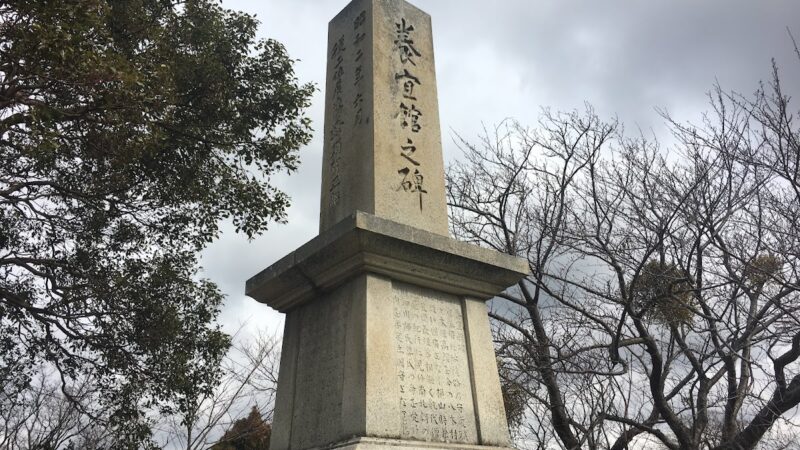
Shintoku-ji Temple, built on the site of the main enclosure, houses a memorial tower for Uno Masayori and his son Sukekiyo, and their family and retainers. This memorial tower was erected to comfort the spirits of the warriors who perished at Nagamizu Castle and is a valuable historical site that conveys the castle’s history.
Access to Nagamizu Castle
Location
671-2576 Katayama, Yamazaki-cho, Shiso City, Hyogo Prefecture, Japan (Nagamizu Mountain)
Access by Car
The trailhead can be reached in approximately 15 minutes by car from the Yamazaki Interchange on the Chugoku Expressway. There is a road on the east side of the mountain, and if you go up it, you will find a sign that says “40 minutes (1 kilometer) to the castle ruins.” There is a parking space next to this sign, and from here you will start your hike.
Hiking Routes
There are mainly two hiking routes to Nagamizu Castle.
East Side Hiking Route (Recommended Route)
This route starts by going up the road on the east side of the mountain and climbing from the sign that says “40 minutes (1 kilometer) to the castle ruins.” It is relatively well-maintained and has signs, making it recommended for first-timers. The hiking time is approximately 40 to 50 minutes.
Southwest Side Hiking Route (Next to Izui Elementary School)
There is also a route that starts next to Izui Elementary School on the southwest side of the mountain. This route is also usable, but it has some slightly steeper sections compared to the east side route.
Precautions for Hiking
Nagamizu Castle is a mountain castle at an altitude of 584.8 meters, and appropriate preparation is necessary for hiking.
- Attire: Please wear comfortable clothing and hiking boots or trekking shoes.
- Items to Bring: We recommend bringing drinking water, a towel, insect repellent, and a bear bell.
- Time: Please allow approximately 2 hours for the round trip.
- Season: There are many insects in summer, and there is a possibility of snow in winter. Spring and autumn are suitable for hiking.
- Caution for Solo Hiking: Please try to hike in groups whenever possible. If hiking alone, please inform family or friends of your hiking plan.
Highlights and How to Enjoy Nagamizu Castle
Experience the Power of the High Stone Walls
The biggest highlight of Nagamizu Castle is undoubtedly the high stone walls surrounding the main keep. It is rare to find stone walls of this scale remaining in a medieval mountain castle, making it a must-see for castle enthusiasts.
Standing in front of the stone walls, you can feel the high level of stonework techniques from over 400 years ago and the grandeur of the castle at that time. We recommend observing the stone walls from various angles and enjoying taking photographs. ### View from the Summit
From the summit, at an altitude of 584.8 meters, you can overlook the townscape of Shiso City and the surrounding mountains. On a clear day, the vast landscape of the Harima region unfolds, allowing you to imagine the former castle lords gazing upon this same view.
Feeling the Romance of History
Standing before the memorial tower at Shintoku-ji Temple, you can reflect on the tragic end of the Uno clan, who resisted Hashiba Hideyoshi’s invasion of Harima to the very end. This is a valuable place where you can feel the turbulent history of the Sengoku period firsthand.
Observing the Castle Layout
By actually walking and observing the terraced layout of the castle, which extends from the main keep to the second and third baileys, you can understand the defensive system of a medieval mountain castle. Walking while checking the arrangement of each bailey and the relative positions of the earthworks and moats will give you a deeper understanding of the castle’s structure.
Nearby Tourist Attractions
Hijiriyama Castle
Like Nagamizu Castle, this mountain castle is located in Shiso City and was one of the branch castles of the Akamatsu clan. Many castle enthusiasts visit it in conjunction with Nagamizu Castle.
Shinonomaru Castle
An Akamatsu clan-related castle ruin located in Shiso City, it allows you to enjoy a tour of Harima’s mountain castles along with Nagamizu Castle.
Mogamiyama Park Momijiyama
A famous spot for autumn foliage in Yamazaki-cho, Shiso City, where you can enjoy beautiful autumn colors. It’s recommended to stop by before or after climbing Nagamizu Castle.
Michi-no-Eki Harima Ichinomiya
A roadside station where you can purchase Shiso City’s specialty products and fresh local vegetables. A convenient rest stop when visiting Nagamizu Castle.
Map
Nagamizu Castle is located in Katayama and Uno, Yamazaki-cho, Shiso City, Hyogo Prefecture. The castle ruins are located on the summit of Mt. Nagamizu, approximately 15 minutes by car north from the Yamazaki Interchange on the Chugoku Expressway.
Searching for “Nagamizu Castle” or “Mt. Nagamizu” on Google Maps will show the location near the trailhead. If using a car navigation system, set “Uno, Yamazaki-cho, Shiso City, Hyogo Prefecture” as your destination and follow the local signs.
Points to Note When Visiting Nagamizu Castle
Best Time to Visit
Since Nagamizu Castle is a mountain castle, choosing the right season is important for your visit.
- Spring (April-May): Beautiful fresh greenery, mild temperatures, and ideal for hiking.
- Autumn (October-November): Beautiful autumn foliage, cool weather, and a good time for hiking.
- Summer (June-September): Many insects and intense heat; early morning visits are recommended.
- Winter (December-March): Snow is possible; caution is required when hiking.
Estimated Time Required
Allow approximately 40-50 minutes for the one-way hike from the trailhead to the summit, 30 minutes to 1 hour for sightseeing at the summit, and about 40 minutes for the descent. A total of 2.5 to 3 hours should be allocated.
Equipment and Preparation
- Hiking boots or trekking shoes
- Comfortable clothing (long sleeves and long pants recommended)
- Drinking water (500ml or more)
- Towel, hat
- Insect repellent spray (spring to autumn)
- Bear bell (for wildlife protection)
- Camera (for photographing stone walls and scenery)
- Map or smartphone (with GPS function)
Cultural Value of Nagamizu Castle
Nagamizu Castle is selected as one of Hyogo Prefecture’s 100 Best Castles and is an important historical site representing medieval mountain castles in the Harima region.
Its high stone walls, which are rare for medieval mountain castles, remain in excellent condition, making it a valuable resource for castle research. Furthermore, its historical value is highly regarded because it was the stage for a significant historical event of the Sengoku period: Hashiba Hideyoshi’s invasion of Harima Province.
As the residence of the Uno clan and a branch castle of the Akamatsu clan, it is an important historical site that tells the story of the medieval history of western Harima, and its preservation and utilization are expected to continue.
Summary
Nagamizu Castle is a valuable mountain castle that conveys the history of Harima Province from the Nanboku-cho period to the Sengoku period. Built by Akamatsu Norisuke, it functioned as the residence of the Uno clan and ultimately fell during Hashiba Hideyoshi’s invasion of Harima, giving it a dramatic history.
It retains high stone walls, which are rare for a medieval mountain castle, and is a worthwhile sight even for those who are not castle enthusiasts. The view from the mountaintop at an altitude of 584.8 meters is also magnificent, making it a spot where you can enjoy hiking and historical exploration at the same time.
When visiting Shiso City, Hyogo Prefecture, be sure to visit Nagamizu Castle and experience the historical romance of the Sengoku period and the charm of a medieval mountain castle.