Takagi-Otsuka Castle (Hyogo Prefecture) Complete Guide: A Thorough Explanation of the Fortification Remains from the Battle of Miki and the Unique Structure Utilizing a Burial Mound
What is Takagi-Otsuka Castle?
Takagi-Otsuka Castle is a Sengoku period fortification site located in Asahigaoka, Bessho-cho, Miki City, Hyogo Prefecture. It is known as one of over 30 outposts built by the Oda army, led by Hashiba Hideyoshi (later Toyotomi Hideyoshi), to besiege Miki Castle during the Battle of Miki, which took place from 1578 to 1580.
Currently, it is designated as a national historic site as “Miki Castle Ruins and Outpost Ruins/Earthworks,” and is well preserved as a historic park in a corner of the Asahigaoka housing complex. Located on a hill approximately 88 meters above sea level and 33 meters above ground level, its most distinctive feature is its unique structure, which cleverly utilizes a keyhole-shaped burial mound from the Kofun period.
Historical Background of Takagi-Otsuka Castle
The Battle of Miki and the Role of the Fortified Castles
The construction of Takagi-Otsuka Castle was rooted in a fierce battle for supremacy in the Harima region. In March 1578, Hashiba Hideyoshi, acting on orders from Oda Nobunaga, began his siege of Miki Castle, which was held by the rebellious Bessho Nagaharu. This battle, known as the “Battle of Miki” or the “Siege of Miki,” was a protracted conflict lasting approximately two years.
To completely surround Miki Castle, Hideyoshi constructed over 30 fortified castles. These fortified camps were crucial bases for cutting off supply lines to Miki Castle and executing a siege by starvation. Takagi-Otsuka Castle was one of them, and its existence is recorded in the contemporary map of Miki Castle, “Miki Castle Map.”
Builder and Lord
The name of the lord of Takagi-Otsuka Castle is not definitively known, but it is presumed to have been built in 1579 by Maeda Toshiie and other Echizen warriors who fought alongside Oda Nobutada. Maeda Toshiie was a warrior who later became the founder of the Kaga domain with its million koku (unit of rice production), and at this time he was a senior retainer of the Oda family, fighting in various battles.
From the size and structure of the castle, it appears to have been developed as a base intended for a certain period of garrisoning, rather than a temporary encampment. The Battle of Miki ended in January 1580 with the suicide of Bessho Nagaharu, and it is believed that Takagi-Otsuka Castle ceased its role after that.
Structure and Features of Takagi-Otsuka Castle
Watchtower Base Utilizing a Burial Mound
The most distinctive feature of Takagi-Otsuka Castle is the use of the largest burial mound in the Takagi burial mound group (Takagi No. 1 Burial Mound) as a watchtower base in the center of the castle. This burial mound is a keyhole-shaped mound, and by repurposing the natural elevated area as a military facility, it secured an efficient observation post with a clear view of the surrounding area.
While examples of burial mounds being repurposed as castle facilities are found throughout Japan, it is rare to see a fortified camp that so clearly preserves the shape of a burial mound, making it a major highlight of Takagi-Otsuka Castle. It is presumed that from this elevated position, not only was it possible to monitor the direction of Miki Castle, but also the movements of the surrounding outposts.
Unique Arrangement of the Cross-Shaped Earthworks
Another significant feature of Takagi-Otsuka Castle is the cross-shaped earthworks surrounding the central burial mound. The earthworks have intentionally left open corners, which functioned as entrances (koguchi).
This cross-shaped arrangement makes it easy to launch flanking attacks (attacks from the flanks) regardless of the direction from which the enemy attacked. The earthworks remain about 1-2 meters high today, and it is believed they were even higher in the past. A moat was also constructed outside the earthworks, further enhancing its defensive capabilities.
Arrangement of Enclosures and Entrances
The castle grounds were arranged with multiple enclosures (kuruwa) centered around a central watchtower platform. The entrances, or “koguchi,” which were openings in the cruciform earthworks, were not simple entrances but rather designed to restrict the movement of intruders. Visiting the site reveals the ingenious use of limited space, evident in the labyrinthine arrangement of small earthworks.
Archaeological Excavations and Excavated Artifacts
Excavations at Takagi Otsuka Castle have yielded valuable artifacts that reveal the castle’s actual use. Stone mortar fragments and Tenmoku tea bowls from Seto-Mino ware have been discovered, suggesting that it was not merely a military base, but also a place where a garrison lived for a period of time.
The Tenmoku tea bowl was a high-quality item used by the samurai class of the time, indicating the high status of the samurai stationed here. The presence of a millstone suggests the possibility of locally grinding grain for food, indicating a well-established logistical system for long-term warfare.
Highlights of Takagi-Otsuka Castle
Well-Preserved Earthworks
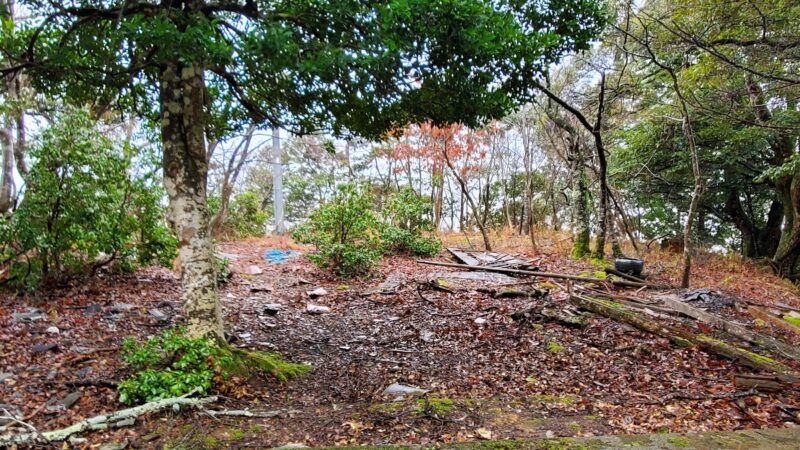
The greatest highlight of Takagi-Otsuka Castle is the clearly recognizable cruciform earthworks, even after more than 400 years. Despite its location within a residential area, it has been maintained and preserved as a historical park, allowing for a remarkably well-preserved observation of the earthworks’ shape.
It’s a valuable place to actually walk on the earthworks and experience the scale and structure of the castle at that time. Looking around from across the earthworks, you can understand why this location was chosen as a fortified camp and appreciate its topographical advantages.
Fusion of Burial Mounds and Castle Structures
Takagi Burial Mound No. 1, used as a central watchtower platform, is an interesting point where remains from different eras—the Kofun period and the Sengoku period—overlap. Observing the shape of the keyhole-shaped burial mound, one can imagine how it was used as a military facility.
Climbing to the top of the burial mound offers a panoramic view of the surrounding terrain, making it clear that this location was ideal as a surveillance post. You can enjoy a unique landscape, unlike any other, where the two historical elements of a burial mound and a castle are fused together.
Detailed Information Boards and the Location of Surrounding Fortifications
At the site, there are information boards that provide detailed explanations not only of Takagi-Otsuka Castle but also of the surrounding fortifications. You can see the overall structure of the fortification network during the Battle of Miki and the relative locations of each castle on a map, which is extremely useful for understanding the strategy of the siege of Miki Castle.
The information boards also include information on other fortifications, such as Takaoyama Castle, and are helpful for planning a “fortification tour” route starting from Takagi-Otsuka Castle and visiting the surrounding castle ruins.
Access to Takagi Otsuka Castle
Access by Public Transportation
By Train:
- Get off at Miki Station on the Kobe Electric Railway Ao Line
- Take the Shinki Bus from the station and get off at the Asahigaoka bus stop, then walk for about 5 minutes.
- Or take a taxi from Miki Station for about 10 minutes.
By JR:
- Get off at Yakujin Station on the JR Kakogawa Line
- Take a taxi from the station for about 15 minutes.
Visiting by public transportation is somewhat inconvenient, so we recommend planning with plenty of time to spare. Since the number of buses is limited, it is important to check the timetable in advance.
Access by Car and Parking
By Car:
- About 10 minutes from Miki Higashi IC on the Sanyo Expressway
- About 15 minutes from Yoshikawa IC on the Chugoku Expressway
Parking Information:
There is no dedicated parking lot for Takagi Otsuka Castle, but there are a few parking spaces along the roadside around the historical park. However, since it is located in a residential area, consideration must be given to avoiding disturbing nearby residents. Please consider using the parking lots of other tourist facilities in Miki City (such as the Miki City Horimitsu Museum of Art) and walking from there.
Nearest Tourist Attractions
When visiting Takagi Otsuka Castle, we recommend also visiting the Miki City Historical Museum. The museum has detailed exhibits on the Battle of Miki, allowing you to deepen your understanding of the role of the surrounding fortresses, including Takagi Otsuka Castle, and the battle situation at the time.
Related Historical Sites in the Surrounding Area
Miki Castle Ruins
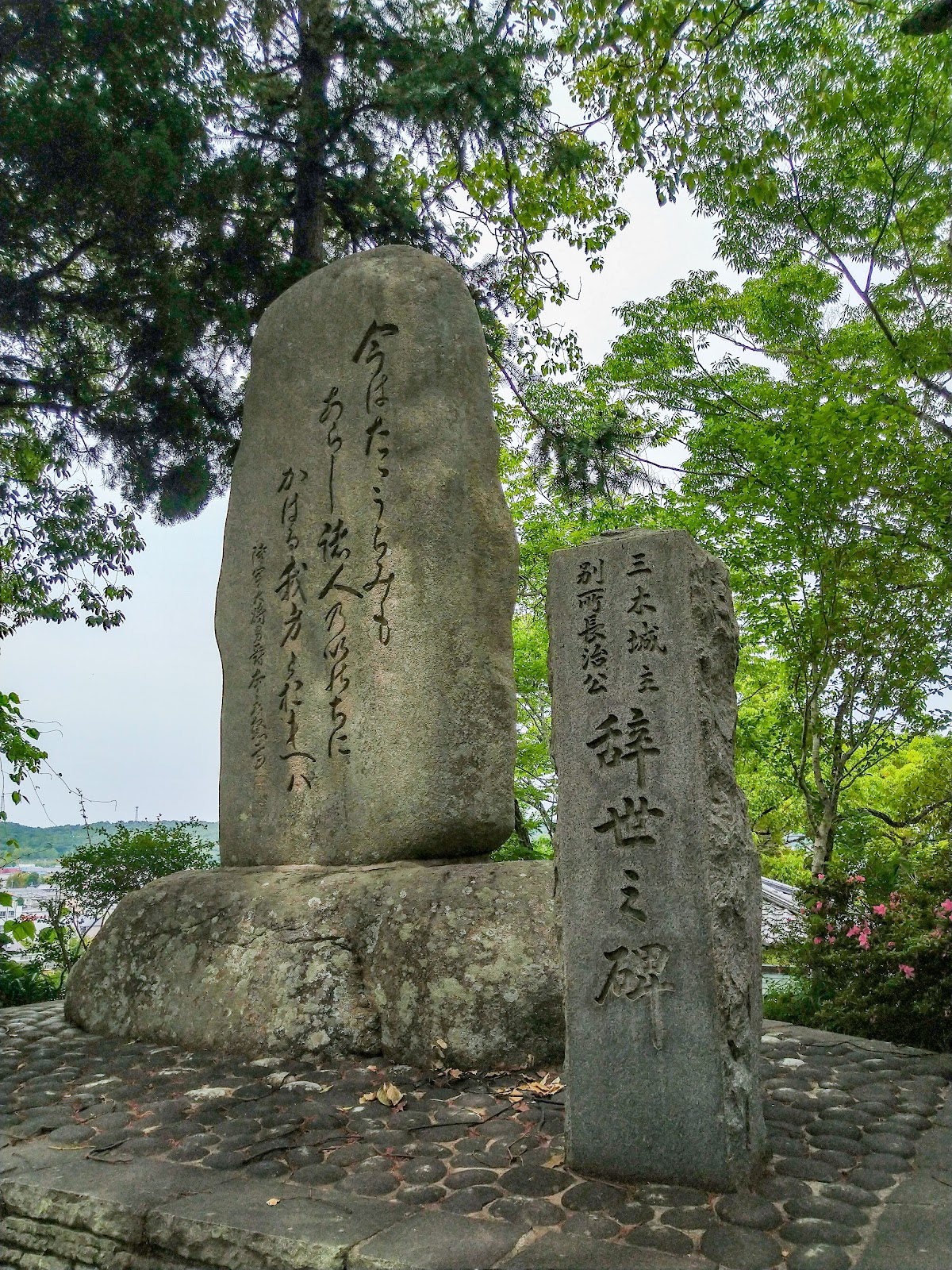
If you visit Takagi Otsuka Castle, the Miki Castle Ruins, which were central to the siege, are also a must-see. Currently, it is maintained as Uenomaru Park, and a monument inscribed with the death poem of Bessho Nagaharu stands on the site of the main keep. Looking towards Takagi Otsuka Castle from Miki Castle, you can visually understand part of the siege network.
Miki Castle Ruins are approximately 10 minutes by car or 30 minutes on foot from Takagi Otsuka Castle.
Takaoyama Castle Ruins
This castle was one of the main strongholds of the Oda forces during the Battle of Miki, and is believed to be the site where Hashiba Hideyoshi established his headquarters. Like Takagi-Otsuka Castle, it is a nationally designated historical site, allowing for observation of a larger-scale fortified camp structure.
Takaoyama Castle Ruins are approximately a 15-minute drive from Takagi-Otsuka Castle.
Other Outpost Castles
More than 30 outpost castles were built during the Battle of Miki. If you have time, please also visit the following outpost castle ruins:
- Hiraiyama-no-ue Outpost Castle: Relatively well-preserved, with earthworks and moats remaining.
- Kurumi-no-kutsuya-no-maru Outpost Castle: Clear remains of a mountain castle.
- Shukuhara Outpost Castle: Located within a residential area, but with remaining earthworks.
Visiting these outpost castles will provide a clearer overall understanding of the siege network surrounding Miki Castle.
Points to Note and Etiquette When Visiting
Historical Site in a Residential Area
Takagi Otsuka Castle is located within a residential area called Asahigaoka Housing Complex. Please note the following points when visiting:
- Consideration for noise: As this is a residential area, please refrain from loud conversations and visits in the early morning or late at night.
- No trespassing on private property: Do not enter areas other than the historical park.
- Take your trash with you: Please take all your trash with you and help keep the environment clean.
- No on-street parking: Please park in a location that does not obstruct traffic.
Suitable time of year and appropriate attire for visiting
Visiting period:
- Visiting is possible year-round, but spring (March-May) and autumn (October-November) are the most comfortable times.
- Take precautions against the heat in summer and warm clothing in winter.
- Be careful as the earthworks can become slippery in rainy weather.
Attire:
- Comfortable walking shoes (sneakers or trekking shoes)
- Wear clothes that you don’t mind getting dirty if walking on the earthworks.
- Wear a hat, sunscreen, and insect repellent in summer.
- Bring your own drinking water (there are few vending machines in the area).
The Historical Value of Takagi-Otsuka Castle
Importance in the Study of Fortified Camps
Takagi-Otsuka Castle is an extremely important historical site in the study of fortified camps from the Sengoku period. Despite being a temporary field fortification, it is rare nationwide to find such clearly preserved remains, making it a valuable resource for understanding the construction techniques and tactics of the time.
In particular, the structure of the watchtower platform utilizing a burial mound demonstrates the practical castle-building philosophy of the Sengoku period, which maximized the use of existing terrain, and is highly regarded from the perspective of castle history research.
A Gateway to Understanding the Battle of Miki
The Battle of Miki was a crucial turning point in Hashiba Hideyoshi’s path to becoming the unifier of Japan. Takagi-Otsuka Castle and the surrounding fortifications represent the prototype of the large-scale siege tactics that Hideyoshi later employed at Osaka Castle and Fushimi Castle, making it an important historical site for tracing the development of Hideyoshi’s military strategy.
Local Preservation Activities
Miki City is focusing on the preservation and utilization of the group of ruins designated as a National Historic Site, “Miki Castle Ruins and Outer Fortifications/Earthworks.” Takagi Otsuka Castle has also been developed as a historical park, with regular maintenance such as grass cutting and updating of information boards.
Local history enthusiast groups also hold guided tours irregularly, offering opportunities to view the castle ruins while listening to expert explanations. Event information can be obtained by contacting the Miki City Historical Museum.
Photography Tips
Takagi Otsuka Castle is also an attractive photography spot:
Recommended Angles:
- From the top of the watchtower platform (burial mound) overlooking the cruciform earthworks
- Horizontal composition capturing the beautiful curves of the earthworks
- Details of the gate area
- A documentary photograph combining the information board and the earthworks
Notes on Photography:
- Be careful not to include houses in the shot
- The soft light of early morning beautifully highlights the shadows of the earthworks
- The autumn foliage season makes for stunning landscape photographs including the surrounding trees
Related Materials and Information Sources
For those who want to learn more about Takagi Otsuka Castle, the following materials are helpful:
Books:
- “The Battle of Miki and the Fortified Castles” (Miki City Board of Education)
- “Castles of Hyogo Prefecture” (Hyogo Prefecture Board of Education)
- “Castles of Oda Nobunaga” (by Hitoshi Nakai)
Facilities:
- Miki City Historical Museum (Permanent exhibition details the Battle of Miki)
- Hyogo Prefectural Archaeological Museum (Regularly holds special exhibitions on castles in Harima)
Website:
- Miki City Official Homepage (Updated historical site information)
- Hyogo Prefecture Tourism Site HYOGO! Navi (Access information)
Summary: The Charm of Takagi-Otsuka Castle
Takagi-Otsuka Castle, though not large in scale, is a valuable historical site that conveys the structure of a Sengoku period encampment. Its unique structure, including a watchtower base utilizing a burial mound and a cross-shaped earthen rampart, its excellent state of preservation despite being located in a residential area, and its deep connection to the historical event of the Battle of Miki, are major attractions of this castle.
When visiting the Harima region, why not visit Takagi-Otsuka Castle along with the Miki Castle ruins and Takaoyama Castle ruins, and experience a part of the magnificent siege waged by Hashiba Hideyoshi? Standing on the site allows you to experience a sense of presence and feel the very breath of the warlords of that time, something you can’t get from history books.
Takagi Otsuka Castle, recognized as a nationally designated historical site, deserves to be preserved for future generations. Within its small earthen ramparts, the history of the Sengoku period, leading to the unification of Japan, is undeniably etched.