Complete Guide to Kuge Castle (Hyogo Prefecture) | The Castle and History of the Kuge Clan, Local Lords of Tanba
Kuge Castle, located in Kasuga-cho, Tanba City, Hyogo Prefecture, is a medieval mountain castle also known as Tamamaki Castle. The Kuge clan, who migrated from Musashi Province to Tanba Province, resided there for generations. During the Muromachi period, it was the base of this family, which flourished as the deputy governor of Tanba. This article provides a detailed explanation of this historic castle site, including its history, castle structure, access methods, and the remains that can be visited today.
What is Kuge Castle? | A Strategic Point in Tanba Also Known as Tamamaki Castle
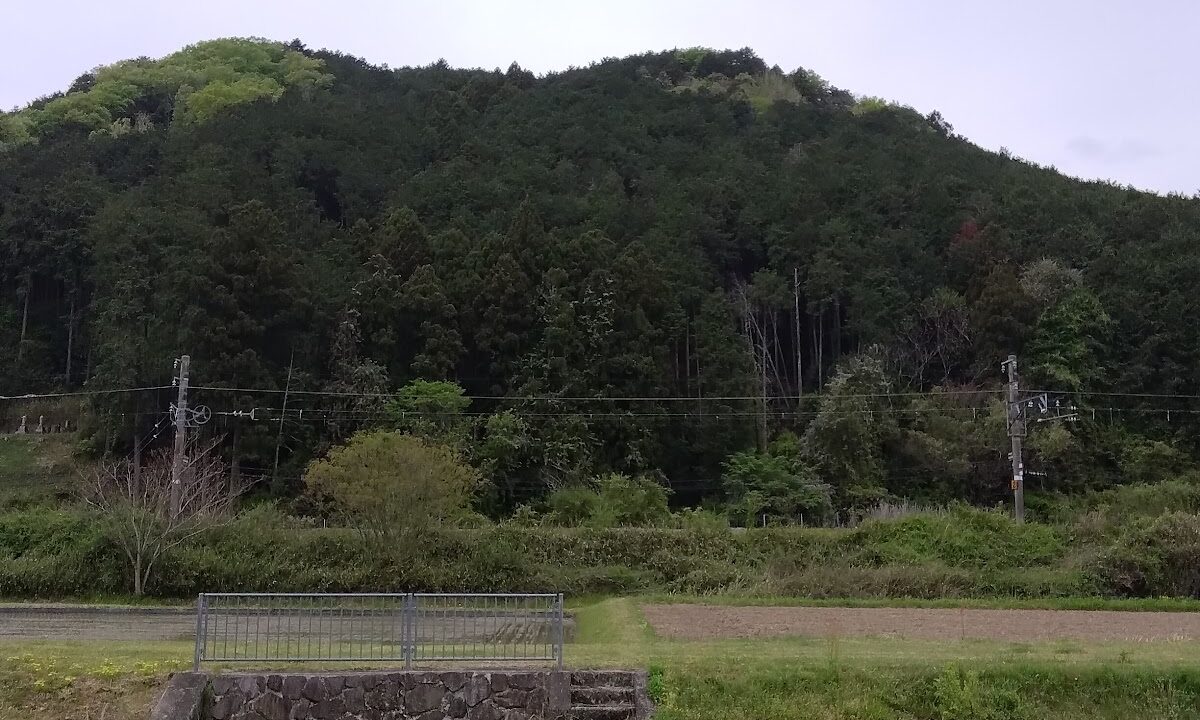
Kuge Castle is a medieval mountain castle located in Kasuga-cho, Tanba City, Hyogo Prefecture. It was the castle of the Kuge clan, local lords of Tanba Province, who resided there for generations. Built on a mountaintop approximately 300 meters above sea level, it occupies a strategically important location overlooking the surrounding area.
There are several theories regarding the origin of the alternative name, Tamamaki Castle, but it is believed to derive from the place name and topographical features. In medieval Tanba Province, it functioned as an important base, alongside Kuroi Castle and Yagami Castle, which will be discussed later.
The castle is of medium size for a medieval mountain castle, with multiple baileys arranged around the main enclosure, and defensive structures such as moats can be seen. Even today, the remains of the castle are well-preserved in the mountains, making it a valuable historical site for learning about the structure of medieval castles.
History of the Kuge Clan | Migration from Musashi Province to Tanba Province
The Kuge Clan in Musashi Province
The Kuge clan was originally a samurai group residing in Kugeho, Osato District, Musashi Province (near present-day Kumagaya City, Saitama Prefecture). From the late Heian period to the early Kamakura period, they were known as powerful local lords with influence in Musashi Province.
The Kuge clan belonged to the Inomata clan, one of the seven Musashi clans, and wielded considerable power in northern Musashi Province. During this period, the Kuge clan acted as leaders of a samurai group, commanding local armed forces.
Serving Minamoto no Yoritomo and Relocation to Tanba
The Kuge clan’s connection to Tanba Province began when Minamoto no Yoritomo raised the banner of war against the Taira clan. The Kuge clan, leading 250 cavalrymen, joined Yoritomo’s army and distinguished themselves in battle against the Taira.
As a result of this military achievement, the Kuge clan was granted the position of lord of Tanba Province and two manors by Minamoto no Yoritomo. This marked the beginning of the Kuge clan’s connection to Tanba Province, and subsequently, the Kuge clan moved their base of operations to Tanba Province.
After the establishment of the Kamakura Shogunate, the Kuge clan established their position as shogunate retainers in Tanba Province, building Kuge Castle as their ancestral residence. Leveraging their experience in Musashi Province, they expanded their influence as local lords in Tanba Province.
Prosperity in the Muromachi Period | As Deputy Governor of Tanba
With the arrival of the Muromachi period, the Kuge clan assumed the important position of Deputy Governor of Tanba Province. The Deputy Governor was responsible for overseeing administration and military affairs within the province as a representative of the governor, effectively giving them control over Tanba Province.
During this period, the Kuge clan reigned as the most powerful local lord in Tanba Province, leading the surrounding local lords. Based at Kuge Castle, they played a central role in the politics and military affairs of Tanba.
Backed by the authority of the Muromachi Shogunate, the Kuge clan established a firm position within Tanba Province. This period can be considered the most prosperous time for the Kuge clan.
The Meio Coup and the Decline of the Kuge Clan
The Impact of the Coup by Hosokawa Masamoto
The fate of the Kuge clan changed dramatically with the “Meio Coup,” which occurred in 1493 (Meio 2). This political upheaval was a coup d’état in which Hosokawa Masamoto expelled Shogun Ashikaga Yoshizumi (later Yoshitane) and installed Ashikaga Yoshizumi as the new Shogun.
The Meio Coup drastically altered the power structure of the Muromachi Shogunate and affected the power dynamics of shugo and shugodai throughout the country. In Tanba Province, this coup led to the Kuge clan losing their position as shugodai, significantly diminishing their power.
Having lost the authority of shugodai, the Kuge clan rapidly declined their influence within Tanba. The local lords who had previously been subservient to them also defected, and the Kuge clan was reduced to the status of a local lord.
Subordination in the Sengoku Period
With the arrival of the Sengoku period, the Kuge clan was unable to maintain its independent power and was forced to become subservient to more powerful forces. In particular, they became subservient to the Akai clan (Ogino clan) of Kuroi Castle, who were expanding their power in eastern Tanba Province.
The Akai clan, centered around Ogino Naomasa (Akai Naomasa), feared as the “Red Demon of Tanba,” had built a powerful force spanning eastern and central Tanba Province. The Kuge clan sought to survive the turbulent Sengoku period by becoming a subordinate of the Akai clan.
However, this subordinate relationship would ultimately determine the fate of the Kuge clan and Kuge Castle.
Akechi Mitsuhide’s Conquest of Tanba and the Fall of Kuge Castle
Oda Nobunaga’s Conquest of Tanba
In the late 1570s, as Oda Nobunaga expanded his power from the Kinai region to the Chugoku region, he considered the pacification of Tanba Province a crucial task. Tanba Province was close to Kyoto and a vital transportation hub to the San’in region, making its control strategically essential.
Nobunaga entrusted this task to his senior retainer, Akechi Mitsuhide. Mitsuhide began intermittently campaigning for Tanba Province from 1575 (Tensho 3), but faced fierce resistance from the Tanba local lords led by Akai Naomasa, and was forced to retreat at one point.
The General Attack of 1579 and the Fall of Kuge Castle
When Akai Naomasa died of illness in 1578, the unity of the Tanba local lords began to weaken. Akechi Mitsuhide seized this opportunity and launched a general attack on Tanba Province in 1579 (Tensho 7).
Mitsuhide led a large army and successively captured castles within Tanba. After the fall of Kuroi Castle, the Akai clan’s stronghold, Kuge Castle, which was under their control, also became a target.
Shortly after the fall of Kuroi Castle, Kuge Castle came under attack from Akechi’s army and fell after a fierce battle. This fall marked the end of the Kuge clan’s rule over Kuge Castle, which had lasted for approximately 400 years since the Kamakura period.
After its fall, Kuge Castle was abandoned and never used again. While detailed records of the Kuge clan’s fate are scarce, it is believed that the family dispersed.
Kuge Castle’s Structure and Remains
Layout and Enclosure Arrangement
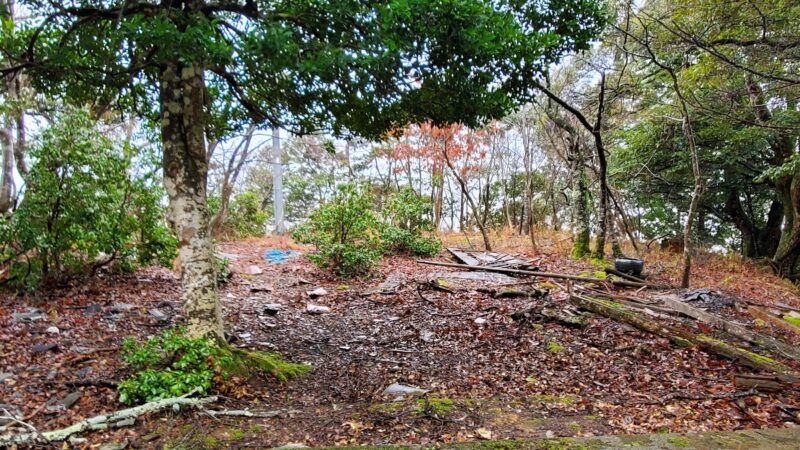
Kuge Castle possesses the typical structure of a medieval mountain castle. The main enclosure (honmaru) is located on the mountaintop at an altitude of approximately 300 meters, surrounded by multiple enclosures (kuruwa), creating a linear layout.
The main enclosure is the central part of the castle and is thought to have housed the lord’s residence and command post. Surrounding the main enclosure are the second and third enclosures, arranged in a stepped pattern, creating a multi-layered defensive structure to prevent enemy intrusion.
Earthworks and steep slopes are constructed between the enclosures, demonstrating ingenuity in restricting the attacker’s movements. The layout, skillfully utilizing the unique terrain of a mountain castle, can be considered a culmination of medieval castle construction technology.
Defensive Structures such as Moats
The most clearly identifiable structure at the current Kuge Castle site is the moat (horikiri). A moat is a dry ditch dug to cut across a ridge, serving as an important defensive structure to prevent enemy intrusion.
Multiple moats have been identified at Kuge Castle, with a particularly large one located behind the castle (continuing along the ridge). This was a structure designed to stop enemies from the most vulnerable direction.
The depth of the moats still reaches several meters in some places, attesting to the high level of defense at the time. Furthermore, the soil excavated from the moats was piled up to form earthen ramparts, creating a double defensive line.
These remains are still clearly visible after nearly 500 years, providing valuable information for understanding the structure of medieval mountain castles.
Vertical and Horizontal Moats
In addition to moats, traces of vertical and horizontal moats remain at Kuge Castle. Vertical moats were dug vertically along the slope, serving to prevent enemies from climbing the incline.
Horizontal moats were dug horizontally along the contour lines, surrounding the baileys to enhance defensive capabilities. These moats worked together to form the overall defensive system of the castle.
The remains of Kuge Castle, a culmination of medieval mountain castle technology, are a fascinating subject for castle researchers and history enthusiasts.
Kuge Clan’s Family Temple, Chokeiin
Family Temple Remaining at the Foot of the Mountain
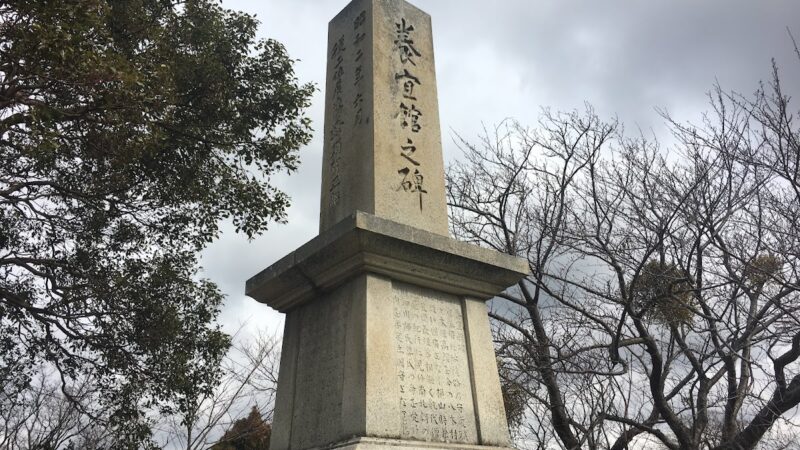
At the foot of Kuge Castle, Chokeiin Temple, the family temple of the Kuge clan, still remains. Chokeiin was a temple worshipped by the Kuge clan for generations and also served as their family burial ground.
Chokeiin contains historical materials and tombstones related to the Kuge clan, making it an important place for understanding their history. Visiting it along with the castle ruins allows one to learn about the Kuge clan’s religious life and cultural aspects.
The temple grounds are enveloped in a quiet and peaceful atmosphere, a space where one can reflect on the rise and fall of the former local lord family.
Commemoration and Preservation of the Kuge Clan
At Chokeiin Temple, memorial services for the Kuge clan continue to this day, preserving their memory as part of the region’s history. For the local people, the Kuge clan and Kuge Castle are a proud part of their hometown’s history.
When visiting Kuge Castle, we highly recommend also visiting Chokeiin Temple and reflecting on the history of the Kuge clan.
Access and Visiting Information for Kuge Castle
Location and Transportation Access
Location: Kasuga-cho, Tanba City, Hyogo Prefecture
Access by Public Transportation:
- Approximately 15 minutes by car from JR Fukuchiyama Line “Kuroi Station” or “Ishio Station”
- Due to limited bus service, using a taxi is recommended.
Access by Car:
- Approximately 10 minutes from Maizuru-Wakasa Expressway “Kasuga IC”
- There are a few parking spaces near the castle ruins.
Precautions for Visiting the Castle
Kuge Castle is a full-fledged mountain castle, and the following preparations and precautions are necessary for visiting.
Clothing and Equipment:
- Comfortable clothing and hiking boots or trekking shoes
- Insect repellent in summer, warm clothing in winter
- Drinking water and snacks
- Map or smartphone GPS app
Climbing Time: Approximately 30-40 minutes uphill, 20-30 minutes downhill (varies by individual)
Best Season: Spring (April-May) and autumn (October-November) are the most climatically suitable. Be aware of the heat and insects in summer, and there is a possibility of snow in winter.
Safety Precautions:
- Avoid climbing alone; visit with others if possible.
- Refrain from climbing in bad weather.
- Be careful not to damage the ruins.
- Check your cell phone signal strength beforehand.
Relationship with Surrounding Castles
Relationship with Kuroi Castle
When discussing Kuge Castle, its relationship with Kuroi Castle (Tanba City, Hyogo Prefecture) is essential. Kuroi Castle was the base of the Akai clan (Ogino clan), and during the Sengoku period, it was a castle under the control of the Kuge clan.
Kuroi Castle is famous as the residence of Ogino Naomasa, the “Red Demon of Tanba,” and was the greatest obstacle in Akechi Mitsuhide’s conquest of Tanba. Kuge Castle and Kuroi Castle are geographically close, and visiting both castles will provide a deeper understanding of the Sengoku history of Tanba Province.
Kuroi Castle is now designated as a national historical site, and its remains, such as the stone walls, are well-preserved. Visiting it together with Kuge Castle is recommended.
Yagami Castle and the Tanba Castle Network
Another important stronghold in Tanba Province is Yagami Castle (Tanba-Sasayama City, Hyogo Prefecture). Yagami Castle was the residence of the Hatano clan, and along with Kuroi Castle, it was the site of fierce battles during Akechi Mitsuhide’s conquest of Tanba.
Kuge Castle, Kuroi Castle, and Yagami Castle, as major castles in Tanba Province, influenced each other and shaped the history from the medieval period to the Sengoku period. Visiting these castles will allow you to experience the complex political and military situation of Tanba Province.
Historical Significance of Kuge Castle
Kuge Castle is not merely a local mountain castle, but a castle of significant importance in Japanese medieval history.
Firstly, it is a valuable example of samurai migration and localization. The process by which the Kuge clan, who migrated from Musashi Province to Tanba Province, built power in their new territory and rose to the position of shugodai (deputy governor), illustrates the dynamics of samurai society during the Kamakura period.
Secondly, it is important for understanding the local governance structure of the Muromachi Shogunate. The activities of the Kuge clan, who functioned as shugodai, are a good example of how the Muromachi Shogunate governed the provinces.
Thirdly, it tells the story of the changes in the power structure during the Sengoku period. The process from the fall of power during the Meio Coup to subjugation to the Akai clan, and finally to their downfall at the hands of Akechi Mitsuhide, symbolizes the power struggles and fluidity of power during the Sengoku period.
Fourthly, it holds value in the study of medieval mountain castle structures. The well-preserved remains are important resources for understanding the development of medieval castle construction technology.
Summary | The Value of Visiting Kuge Castle
Kuge Castle (Tamamaki Castle) was the residence of the Kuge clan, who migrated from Musashi Province, for 400 years. While they flourished as the deputy governor of Tanba Province, they ultimately perished amidst the turmoil of the Sengoku period.
The remains such as moats and baileys still standing in the mountains today are valuable historical sites that convey the appearance of a medieval mountain castle. While it lacks the grandeur of Himeji Castle or Takeda Castle, as a practical mountain castle built by a local lord, it is a castle site well worth visiting for medieval history enthusiasts and castle lovers.
Visiting the Kuge Castle ruins along with Chokeiin Temple at the foot of the mountain will allow you to gain a deeper understanding of the Kuge clan’s history. When you visit Tanba City, be sure to stop by the Kuge Castle ruins and experience the history of medieval Tanba.
Besides Kuge Castle, many other historical castles remain in Hyogo Prefecture. By visiting them along with surrounding castles such as Kuroi Castle and Yagami Castle, you will be able to experience the complex and fascinating Sengoku period history of Tanba Province.