The Complete Picture of the Tabuyama Chashi Site: The History and Value of Ainu Cultural Heritage Remaining in Shibetsu Town, Hokkaido
What is the Tabuyama Chashi Site?
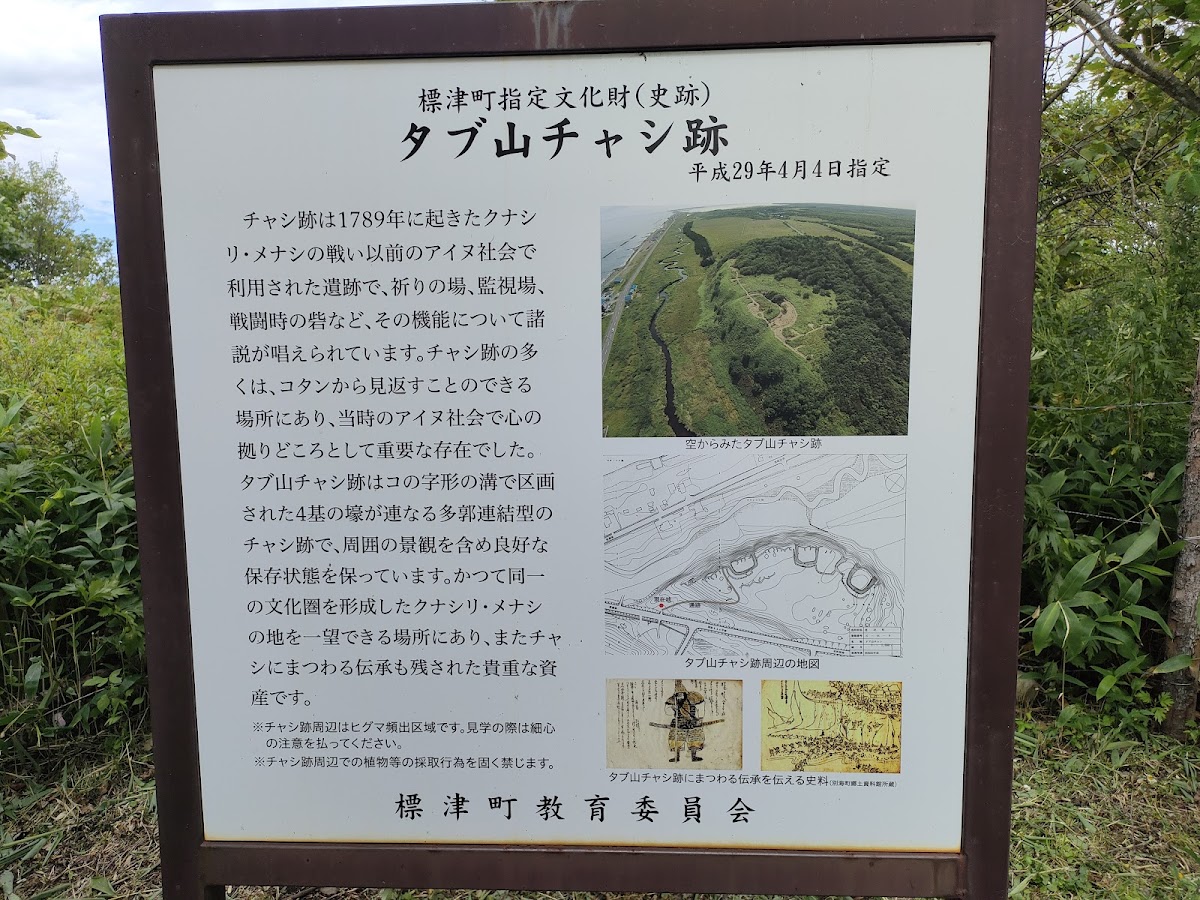
The Tabuyama Chashi Site is an important cultural heritage site of the Ainu people located in Shibetsu Town, Shibetsu District, Hokkaido. Among the numerous chashi sites scattered along the Nemuro Strait coast, it is known as an indispensable site for understanding the history of this region.
A chashi is a facility mainly built by the Ainu people in the early modern period. Built on high ground, it has a unique structure demarcated from its surroundings by moats and cliffs. While generally translated as “fort” or “fence,” it is believed to have actually served a more diverse range of roles.
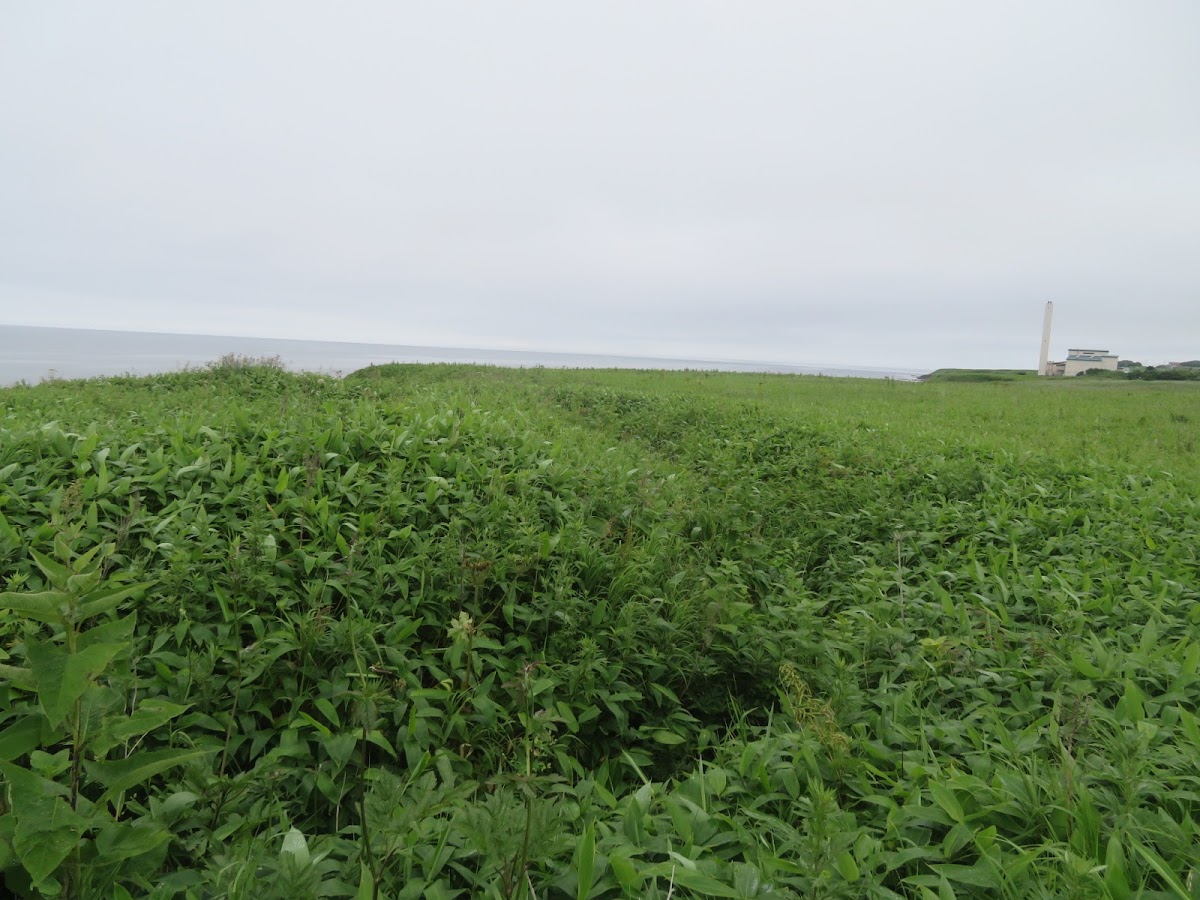
The Tabuyama Chashi Site was built in a strategic location overlooking the Nemuro Strait and played an important role as a base of activity for Ainu society in this region. Even today, remains can be observed as depressions on the ground, forming a unique archaeological landscape characteristic of Hokkaido.
Historical Background and Cultural Significance of Chashi
Origin and Development of Chashi
Chashi are archaeological sites distributed throughout Hokkaido. Currently, over 500 chashi sites have been identified, and some surveys have revealed approximately 700. A 1976 survey conducted by the Hokkaido Board of Education recorded 341 sites, and subsequent continuous surveys have uncovered many more.
The distribution of chashi is concentrated in southeastern Hokkaido, particularly in the eastern region. The Nemuro Strait coast around Shibetsu Town, where the Tabuyama Chashi site is located, is one area with a particularly high concentration of chashi. This distribution pattern is thought to be closely related to Ainu kotan (villages).
Role of Chashi in Ainu Society
Chashi are believed to have served diverse roles, not merely as military facilities. Their main functions include:
Role as a Defensive Facility
Located on high ground and partitioned by trenches, chashi had a structure well-suited for defense against external enemies. Particularly in the early modern period, these sites are thought to have served as important defensive strongholds in the various conflicts and tensions faced by Ainu society.
Function as a Lookout Post
Facilities like the Tabuyama Chashi ruins, built in a location overlooking the Nemuro Strait, may have been used as bases for monitoring maritime traffic and fishing activities. Marine resources, especially salmon, were a vital source of livelihood for the Ainu, and the role of these chashi as lookout posts for managing them is also conceivable.
Characteristics as a Sacred Site
Some chashi are thought to have been used as places for rituals and ceremonies. Built in locations important to Ainu spiritual culture, chashi also served as sacred sites.
Place for Charanke (Negotiation)
“Charanke” means discussion or negotiation in the Ainu language, and chashi were also used as places for negotiations and discussions between groups. Negotiations held in neutral and symbolic locations such as high ground were part of the Ainu society’s conflict resolution system.
Chashi Sites Along the Nemuro Strait
Archaeological Sites Surrounding the Tabuyama Chashi Site
Numerous other chashi sites remain along the Nemuro Strait coast besides the Tabuyama Chashi site. These are thought to have been interconnected, forming a network of Ainu society in this region.
Chashi Sites in Shibetsu Town
- Tabuyama Chashi Site: The subject of this article
- Honikoi Chashi Site: Another important chashi site within Shibetsu Town
- Nozomigaoka Chashi Site: A chashi site located on a hill with a good view in Shibetsu Town
Chashi Sites in Surrounding Areas
- Tachiniusu River North Bank Chashi Site (Rausu Town): A chashi site built in a strategic location facing the Nemuro Strait
- Tokotan Chashi Site (Betsukai Town): An important chashi site remaining in Betsukai Town
- Nemuro Peninsula Chashi Site Group (Nemuro City): A nationally designated historic site consisting of 24 chashi sites, designated as the first of Japan’s 100 Famous Castles
These chashi sites are thought to have been deeply involved in the utilization of marine resources, primarily salmon, against the backdrop of the common geographical environment of the Nemuro Strait.
Connection to the Japan Heritage Site “The Story of the Sacred Salmon Land”
The Chashi ruins along the Nemuro Strait are attracting attention as a component of the Japan Heritage Site “The Story of the Sacred Salmon Land.” For the Ainu people, salmon was not merely food, but something deeply intertwined with their spiritual culture and social organization.
The area around Shibetsu Town, where the Tabuyama Chashi ruins are located, has long been known as a rich salmon fishing ground and was an important region in Ainu society. The relationship between the distribution of the Chashi ruins and the rivers through which salmon migrate is an important perspective for understanding the cultural landscape of this region.
Structure and Characteristics of the Tabuyama Chashi Ruins
Topography and Location
The Tabuyama Chashi ruins are built on a hill overlooking the Nemuro Strait. This location offered the following advantages:
- Excellent Visibility: Its position overlooking the strait provided a clear view, making it ideal for monitoring maritime traffic and fishing activities.
- Defensive Advantage: Its elevated location offered a geographical advantage, making it advantageous for defense against external enemies.
- Access to Water Transport: Its proximity to the strait provided convenient access to water transport.
Characteristics of the Remains
A characteristic feature of Chashi sites is that they can be observed as depressions on the ground surface. These are traces of trenches (ditches) and form a unique archaeological landscape characteristic of Hokkaido. At the Tabuyama Chashi site, the presence of remains can be confirmed through such changes in the ground surface.
Similar to pit dwellings, the depressions on the ground surface of Chashi sites have remained intact for hundreds of years, preserving traces of the activities of the Ainu people to this day.
Comparison with Chashi Sites in Other Regions
Chashi Sites in the Kushiro River Basin
Approximately 40 chashi sites have been identified in the Kushiro River basin, and they are designated as an important cultural property under the name “Historic Site: Kushiro River Basin Chashi Sites.” These sites are partitioned off by digging moats into hills facing the sea, rivers, or wetlands, and have a similar structure to the Tabuyama Chashi site.
Moshiriya Chashi Site and Harutoru Charanke Chashi Site, among others, demonstrate the activities of Ainu society in a different environment: an inland river basin.
Nemuro Peninsula Chashi Sites
Approximately 30 chashi sites have been identified on the Nemuro Peninsula, and 24 of them are designated as a national historic site, “Nemuro Peninsula Chashi Sites.” This group of sites is selected as number 1 of Japan’s 100 Famous Castles and is introduced alongside other famous castles in Hokkaido such as Goryokaku and Matsumae Castle.
The Chashi sites on the Nemuro Peninsula and the Tabuyama Chashi site share a common geographical environment along the Nemuro Strait, yet each possesses distinct historical contexts.
Chashi Sites in the Hidaka Region
The Nibutani site in Biratori Town, Saru District, Hidaka Subprefecture, is known as a Chashi site where large-scale excavations and investigations have been conducted. Such detailed investigations have deepened our understanding of the structure and function of the Chashi.
Preservation and Utilization of the Tabuyama Chashi Site
Value as a Cultural Property
The Tabuyama Chashi site is an important site for unraveling the history of the Ainu people. Among the more than 500 Chashi sites in Hokkaido, this site, located in the distinctive environment along the Nemuro Strait, is indispensable for understanding the region’s history and culture.
Contribution to Local History Education
The Tabuyama Chashi site also plays an important role in local history education. It is used as teaching material to deepen understanding of Ainu culture and to learn about the diverse history of Hokkaido.
Potential as a Tourism Resource
As a component of the Japan Heritage site “The Story of the Sacred Salmon Land,” the Tabuyama Chashi ruins also possess potential as a tourism resource. As a historical heritage site linked to the beautiful scenery of the Nemuro Strait, it can offer visitors a unique experience.
Contemporary Significance of Ainu Culture and Chashi
Re-evaluation of Ainu Culture
In recent years, the value of Ainu culture has been re-evaluated, and the importance of its preservation and transmission has become widely recognized. In 2019, the “Act on the Promotion of Measures to Realize a Society Where the Pride of the Ainu People is Respected” (Ainu Policy Promotion Act) was enacted, and efforts toward the promotion of Ainu culture are progressing.
Ruins like the Tabuyama Chashi ruins serve as important evidence concretely demonstrating Ainu history and culture within this cultural re-evaluation.
Implications for a Multicultural Society
The image of Ainu society shown by the Chashi ruins is highly suggestive for considering a modern multicultural society. The role of the Chashi (fortified settlement) as a place for negotiation (Charanke) embodies the universal value of problem-solving through dialogue and consultation.
Visiting and Access Information
Access to Shibetsu Town
Shibetsu Town, where the Tabuyama Chashi ruins are located, is situated in the eastern Hokkaido region. Access from major cities is as follows:
From Nakashibetsu Airport
Nakashibetsu Airport is the nearest airport, and it’s about a 30-minute drive from there.
From Kushiro City
It’s about a 2-hour and 30-minute drive from Kushiro City.
From Nemuro City
It’s about a 1-hour drive from Nemuro City.
Points to Note When Visiting
The Chashi ruins are a valuable cultural asset, and the following points should be noted:
- Protection of the Remains: Please be careful not to damage the remains, such as depressions in the ground.
- Safety Assurance: As it is located on a hill, please watch your step and take safety precautions.
- Prior Confirmation: We recommend that you confirm with the Shibetsu Town Cultural Properties Department in advance before visiting.
Related Facilities and Tourist Spots in the Surrounding Area
Shibetsu Salmon Science Museum
Shibetsu Town is known as a salmon town, and at the Shibetsu Salmon Science Museum, you can learn about salmon ecology and the local fishing culture. Visiting in conjunction with the Tabuyama Chashi ruins will allow you to gain a deeper understanding of the relationship between Ainu culture and salmon in this region.
Natural Scenery of the Nemuro Strait
The Nemuro Strait is known for its beautiful scenery overlooking Kunashir Island. The view from the Tabuyama Chashi ruins is also one of the elements that allows you to feel the natural charm of this region.
Visiting Other Chashi Sites
Several Chashi sites exist around Shibetsu Town, including the Honikoi Chashi site and the Nozomigaoka Chashi site. Visiting these sites allows for a comprehensive understanding of the Chashi sites along the Nemuro Strait coast.
Current Status and Future Challenges of Chashi Research
Progress in Archaeological Investigations
Archaeological investigations of Chashi sites are continuously progressing, accumulating new discoveries and knowledge. However, of the more than 500 Chashi sites distributed throughout Hokkaido, detailed excavation surveys have only been conducted on a limited number.
Regarding the Tabuyama Chashi site, it is expected that more detailed information about its structure, function, and age will be obtained through future detailed investigations.
Challenges in Conservation and Management
Many Chashi sites are located outdoors and are susceptible to the effects of the natural environment. Weathering and changes in vegetation can damage the remains. The development and implementation of appropriate conservation and management plans are required.
Utilization of Digital Technology
In recent years, the recording and publication of archaeological sites using digital technologies such as 3D scanning and drone photography has been progressing. These technologies can contribute to detailed documentation of Chashi sites and to providing information to a wider audience.
Summary
The Tabuyama Chashi site is an important heritage of Ainu culture located in Shibetsu Town, Hokkaido. Situated in the distinctive geographical environment along the Nemuro Strait, this site, which served as a stage for diverse activities of Ainu society, is believed to have played multiple roles, including defensive structures, lookout posts, sacred sites, and negotiation sites.
Among the more than 500 Chashi sites throughout Hokkaido, the Tabuyama Chashi site is indispensable for understanding the history and culture of this region as part of the Chashi site group along the Nemuro Strait. It is also positioned as a component of the Japan Heritage site “The Story of the Sacred Salmon Land,” providing evidence of the deep connection between Ainu culture and salmon.
Currently, as the value of Ainu culture is being re-evaluated, the importance of sites like the Tabuyama Chashi site is increasing. Proper preservation, management, and utilization are essential to passing on this valuable cultural heritage to future generations.
When visiting Shibetsu Town, why not explore the local Chashi (fortified settlement) sites, including the Tabuyama Chashi ruins, and experience the history and culture of the Ainu people? These historical sites, intertwined with the beautiful scenery of the Nemuro Strait, will provide visitors with an unforgettable experience.