Hoinashiri Chashi (Shinhidaka Town, Hokkaido) Complete Guide | A Historical Site that Tells the Story of Shakushain’s Rebellion
What is Hoinashiri Chashi?
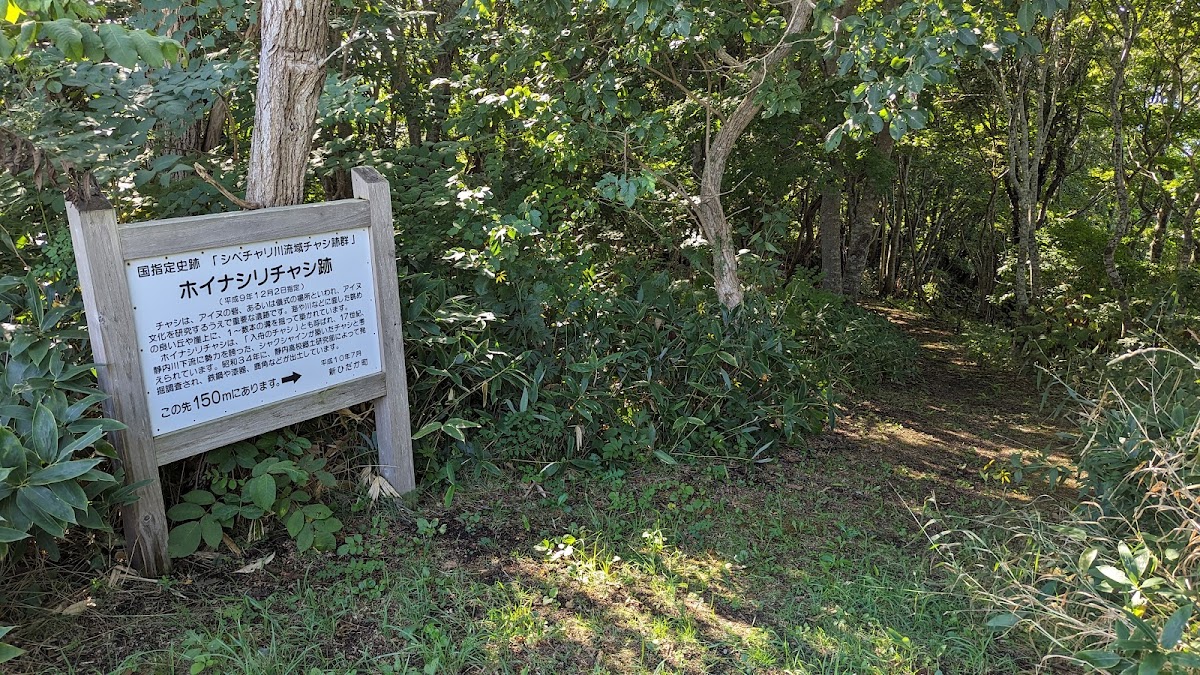
Hoinashiri Chashi is the site of an Ainu fort located in the Shizunai Irifune district of Shinhidaka Town, Hidaka District, Hokkaido. “Hoinashiri” means “cliff on the cape” in the Ainu language, reflecting the site’s geographical features. Also known as “Irifune Chashi,” it is a historical site cherished by local residents.
Chashi is an Ainu word meaning “fence,” “fort,” or “mansion.” From the 16th to the 18th centuries, these forts were built throughout Hokkaido, functioning as defensive structures, ritual sites, and meeting places. Over 500 chashi sites have been identified throughout Hokkaido, and among them, Hoinashiri Chashi is known as a site of extremely high historical value.
Background and Importance of the Historic Site Designation
Hoinashirichashi was designated a national historic site in 1997 as part of the “Historic Site of the Shibechari River Basin Chashi Ruins and Appetsuchashi Ruins.” This group of historic sites consists of six locations: Shibechari Chashi Ruins, Hoinashirichashi Ruins, Menachashi Ruins, Ochirishi Chashi Ruins, Ruiopirachashi Ruins, and Appetsuchashi Ruins in Hidaka Town.
The reason these chashi ruins were designated a national historic site is their deep connection to the “Shakushain’s War” that took place in the late 17th century. Records from the Edo Shogunate, the Matsumae Domain, and the Hirosaki Domain reveal that these chashi were used as “mansions,” “residences,” “castles,” “residences,” and “fortresses” by Shakushain, Kamokutain, and Onibishi, the central figures of the war.
Shakushain’s Rebellion and Hoinashirichashi
Background of Shakushain’s Rebellion
Shakushain’s Rebellion was a large-scale armed conflict that erupted in 1669 between the Ainu people and the Matsumae Domain. This conflict is not merely a regional dispute, but is positioned as a historical resistance movement fought for the independence and dignity of the Ainu people.
The direct trigger for the conflict was a conflict between two Ainu chiefs: Shakushain, based in Shibechari (present-day Shizunai district, Shinhidaka town), and Onibishi, based in Hae (present-day Hidaka town). However, behind this conflict lay more serious structural problems, including unfair trade practices by the Matsumae Domain, encroachment on the Ainu people’s living areas, and disputes over gold mining rights.
The Role of Hoinashirichashi
According to historical records, Hoinashirichashi functioned as an important base for Shakushain’s forces. Along with Shibechari Chashi, Hoinashiri Chashi is considered a core defensive fort of Shakushain’s forces, a place where strategic meetings and military operations were planned.
Contemporary records describe Hoinashiri Chashi as the “Irifune no Yakata” (Irrigate House), a place where Shakushain and his warriors gathered to prepare for battle against the Matsumae Domain. The Chashi’s location offered excellent visibility, making it ideal for monitoring enemy movements. It is presumed to have played a crucial role not only as a defensive structure but also as an intelligence gathering base.
The Course and Outcome of the Battle
Initially, Shakushain was in conflict with Onibishi, but feeling threatened by Onibishi’s expansion of power with the support of the Matsumae Domain, he called upon Ainu chiefs throughout Hokkaido to form a large-scale anti-Matsumae Domain coalition. This coalition force, for a time, launched a series of attacks on Matsumae Domain trading posts, killing many Japanese and inflicting significant damage on the Matsumae Domain.
However, the Matsumae Domain, with the support of the shogunate, launched a counterattack. With overwhelming military force and cunning diplomatic tactics, the Ainu allied forces were gradually pushed into a disadvantageous position. Ultimately, Shakushain was assassinated during peace negotiations, and the battle ended in victory for the Matsumae Domain. As a result, the Ainu people came under the rule of the Matsumae Domain, which would have a significant impact on subsequent history.
Structure and Characteristics of Hoinashiri Chashi
Location and Topography
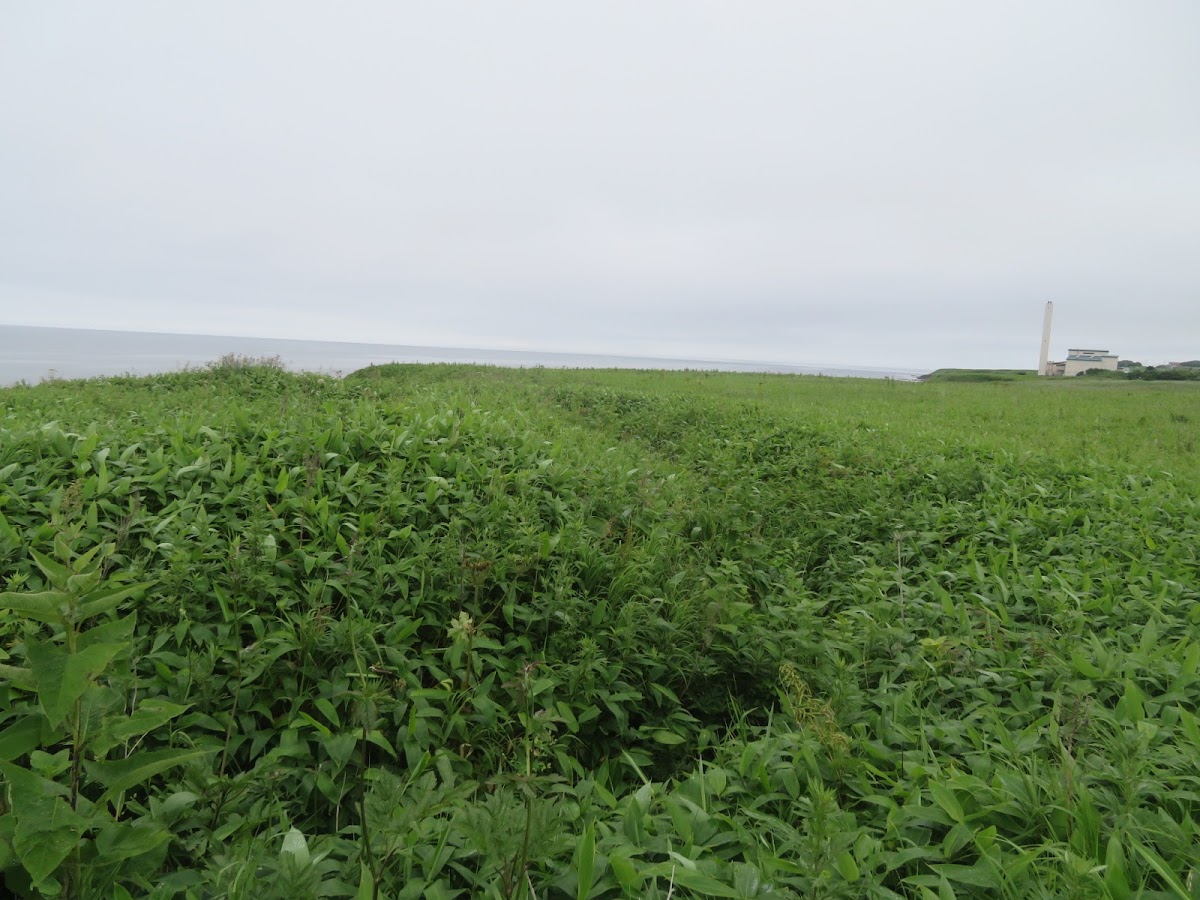
Hoinashiri Chashi is located on a plateau near the mouth of the Shizunai River. It boasts an excellent view of the Pacific Ocean and was built in an ideal location for monitoring approaches from the sea. As the name “Hoinashiri” suggests, it is a defensive structure that cleverly utilizes the cliff topography that juts out like a cape.
The area surrounding the chashi is a relatively flat plateau, with hilly terrain behind it. This topographical feature created a dual defense system: cliffs served as a natural barrier against attacks from the sea, while artificial defensive structures countered incursions from the land.
Structure of the Chashi
Hoinashiri Chashi is classified as a typical “cliff-faced chashi.” A cliff-faced chashi is a type of fortification that utilizes cliffs facing the sea or a river, with moats and earthworks constructed on the opposite side (land side) to enhance its defenses.
The following specific structural features have been identified:
- Dry Moat: A moat dug on the landward side, serving to prevent enemy intrusion.
- Earthwork: A wall of earth built inside the moat, enhancing defensive capabilities and functioning as a lookout post.
- Flat Area: A flat space within the Chashi, where buildings were constructed and ceremonies and meetings were held.
- Platform: Traces remain suggesting the presence of wooden fences.
Even today, traces of moats and earthworks can be observed on the ground surface, allowing us to imagine the structure at the time.
Comparison with Other Chashi
Among the Chashi sites in the Shibechari River basin, Hoinashiri Chashi is relatively large in scale and is thought to have had a more comprehensive defensive function. Compared to Shibechari Chashi, another base of Shakushain’s forces, Hoinashiri Chashi is closer to the sea and likely played a crucial role as a hub for communication and material transport via sea routes.
On the other hand, compared to Menachashi and Ochirishi Chashi, both bases of Onibishi’s forces, there are many similarities in location and structure, suggesting that the construction techniques for chashi (fortified settlements) were shared throughout the region. This is important evidence that a system of transmission of advanced architectural and civil engineering techniques and knowledge existed among the Ainu people.
About the Shibechari River Basin Chashi Sites
Overview of the Constituent Sites
The “Shibechari River Basin Chashi Sites and Appetsu Chashi Sites” is a large-scale historical site complex spanning Shinhidaka Town and Hidaka Town. This complex is preserved and utilized as a single, integrated heritage site, telling the story of the historical event known as Shakushain’s War.
Shakushain’s Chashi Sites:
- Shibechari Chashi Site: The most important base, considered to be Shakushain’s headquarters.
- Hoinashiri Chashi Site (Irifune Chashi): A defensive base on the seaward side.
Onibishi’s Chashi Sites:
- Menachashi Site: One of the main bases of the Onibishi forces.
- Ochirishi Chashi Site (Sumiyamazawa Entrance Chashi): An inland defensive facility.
- Ruiopirachashi Site: A fort located at a strategic point.
- Appetsu Chashi Site (Hidaka Town): An important base for Onibishi.
These chashi sites each have different topographical features and are thought to have formed a wide-area defensive network through mutual cooperation.
Historical and Academic Value
The Shibechari River Basin Chashi Sites possess extremely high historical and academic value in the following respects:
- Correspondence with Documentary Records: This is a valuable example of identifying Chashi sites described in official Edo period records as actual archaeological sites.
- Important Resource for Ainu History Research: This is indispensable material for understanding the political structure, military organization, and living arrangements of Ainu society in the 17th century.
- History of Relations with the Wajin: This site concretely demonstrates the history of contact, interaction, and conflict between the Ainu people and the Wajin (Japanese).
- Archaeological Value: Excavations have yielded artifacts such as daily life tools, weapons, and trade goods from that period, contributing to the elucidation of material culture.
Preservation and Utilization Efforts
Shinhidaka Town and Hidaka Town are undertaking various initiatives to appropriately preserve these Chashi sites and pass them on to future generations. Maintenance work, including mowing the grass at the historical site, environmental improvements, installation of explanatory signs, and maintenance of viewing paths, is continuously carried out, ensuring a safe environment for visitors to explore the site.
Furthermore, local schools utilize the Chashi ruins for local history education, providing children with a valuable opportunity to learn about the region’s history and culture. Local residents are also actively involved in preservation efforts, fostering a shared awareness throughout the community of the value of the historical site and a commitment to protecting it.
Ainu Culture and the Role of Chashi
Diverse Functions of Chashi
Chashi were not merely military facilities, but important institutions with diverse functions within Ainu society. Its main roles were as follows:
Military Functions:
- Serving as a defensive stronghold and fort during wartime
- A lookout post to monitor enemy movements
- A storage place for weapons and food
- A gathering point for warriors
Political Functions:
- The residence of the chief (Kotankorokuru in Ainu)
- A place for inter-tribal meetings and negotiations (Charanke)
- A political center for making important decisions
- A symbolic presence indicating the sphere of influence
Religious and Ritual Functions:
- A sacred place for performing rituals and ceremonies
- A place for offering prayers to Kamuy (gods)
- A stage for important rituals
- The spiritual center of the community
Social Functions:
- A meeting place for the people of the Kotan (settlement)
- A venue for feasts and ceremonies
- A place for information exchange and interaction
- A place to strengthen community bonds
Hoinashirichashi is also believed to have been a complex facility combining these diverse functions.
Structure of Ainu Society and Chashi
Ainu society was structured around settlements called kotan as its basic unit. Each kotan had a chief, and chashi were built as facilities symbolizing the chief’s authority and power. Particularly powerful chiefs controlled multiple chashi and wielded wide-ranging influence.
Shakushain was a powerful chief who ruled several kotan, mainly in the Shibechari region. It is believed that he maintained and expanded his power by establishing a defensive network, including the Shibechari Chashi as his base and surrounding chashi such as Hoinashiri Chashi.
The size, structure, and location of the chashi reflected the chief’s power and social status. The relatively large structure of Hoinashiri Chashi can be considered one piece of evidence illustrating Shakushain’s immense power.
Trade and Chashi
The Ainu people actively traded with the Japanese on Honshu, as well as with people from China, Sakhalin, and the Kuril Islands. Chashi played a crucial role in these trading activities.
Chashi functioned as storage places for trade goods and as venues for negotiations with trading partners. In the case of Hoinashiri Chashi, its proximity to the sea suggests it likely also functioned as a trading hub via sea routes.
The Shakushain Rebellion also had trade-related issues as a backdrop. Unfair trade conditions imposed by the Matsumae Domain, exploitation by Japanese merchants, and infringement of the Ainu people’s traditional trading rights were contributing factors to the conflict.
Information on Visiting Hoinashiri Chashi and Surrounding Areas
Access
Hoinashiri Chashi is located in the Shizunai-Irifune area of Shinhidaka-cho, Hidaka-gun, Hokkaido.
Access by Car:
- From Sapporo: Approximately 2 hours 30 minutes via National Route 274 and National Route 235
- From New Chitose Airport: Approximately 2 hours via the Hokkaido Expressway and Hidaka Expressway
- From Tomakomai: Approximately 1 hour 30 minutes via National Route 235
Public Transportation:
- The JR Hidaka Main Line was discontinued in 2021, so currently, only local buses are available.
- Access to the Shizunai area is possible via Donan Bus’s local buses.
- You will need to walk from the nearest bus stop to the Chashi ruins.
Points to Note When Visiting
When visiting Hoinashiri Chashi, please note the following:
- Protection of Historic Sites: As it is a nationally designated historic site, damaging or taking away any remains is prohibited by law.
- Ensuring Safety: As it is located on a cliff, please be very careful of your footing and do not approach the edge of the cliff.
- Weather Check: We recommend refraining from visiting in rainy weather as the ground may become slippery.
- Clothing: Wearing comfortable shoes, long sleeves, and long pants is recommended (insect repellent is also necessary in summer).
- Take Your Trash Home: For environmental protection, please be sure to take your trash home with you.
- Prior Confirmation: We recommend contacting the Shinhidaka Town Board of Education before your visit.
Nearby Attractions
In addition to visiting Hoinashiri Chashi, we recommend visiting the following facilities and historical sites:
Shibechari Chashi Ruins:
The most important chashi, considered to be Shakushain’s base. It is approximately a 10-minute drive from Hoinashiri Chashi.
Shinhidaka Town Ainu Folklore Museum:
It houses valuable materials and exhibits related to Ainu culture, allowing for a deeper understanding of the historical background of the chashi.
Shakushain Memorial Museum:
It features detailed exhibits on Shakushain’s battles, allowing you to learn about the history of that time.
Shizunai Nijukken Road Cherry Blossom Avenue:
A popular tourist spot known as Japan’s longest cherry blossom avenue. Approximately 3,000 cherry trees bloom here in spring.
Makakuta Park:
A park featuring a statue of Shakushain, offering scenic views of the Shizunai River.
Best Time to Visit
While Hoinashiri Chashi can be visited year-round, the following times are especially recommended:
Spring (May-June):
- The cherry blossom trees are in full bloom, making it enjoyable in conjunction with other sightseeing in the area.
- The weather is mild and ideal for visiting.
- The fresh greenery is beautiful, making it perfect for photography.
Summer (July-August):
- Longer daylight hours allow for a more leisurely visit.
- However, insect repellent is essential due to the abundance of insects.
- On clear days, the view of the Pacific Ocean is magnificent.
Autumn (September-October):
- The autumn foliage is beautiful, making the scenery around the chashi even more captivating.
- The temperature is moderate, making it suitable for extended visits.
- There are relatively few tourists, allowing for a peaceful visit.
Winter (November-March):
- Heavy snowfall may make visits difficult.
- For safety reasons, it is recommended to avoid visiting during this period.
Research and Future Prospects of Hoinashiri Chashi
Archaeological Survey Results
Multiple archaeological surveys have been conducted at Hoinashirichashi. These investigations have yielded the following important findings:
Confirmation of Archaeological Sites:
- Detailed structures of moats and earthworks have been revealed.
- Traces of fence lines and structures potentially resembling buildings have been identified.
- Clues have been obtained regarding the construction period and duration of use of the Chashi (fortified settlement).
Excavated Artifacts:
- Fragments of Ainu pottery and stone tools have been unearthed.
- Fragments of ceramics and iron artifacts indicating trade with the Japanese have also been discovered.
- These artifacts shed light on the lifestyle and trade activities of Ainu society in the 17th century.
Dating:
- Radiocarbon dating of charred material has scientifically confirmed the period of use of the Chashi.
- Consistency with historical records has been confirmed, demonstrating a connection to Shakushain’s Rebellion.
Preservation and Management Plan
Shinhidaka Town has formulated the “Preservation and Management Plan for the Shibechari River Basin Chashi Sites and Appetsu Chashi Sites,” promoting the preservation and utilization of the historical site from a long-term perspective.
This plan outlines the following policies:
- Appropriate preservation measures: Prevent deterioration of the remains and maintain the intrinsic value of the historical site.
- Promotion of public use: Improve the viewing environment and make the historical site easily accessible to many people.
- Continuation of research: Enhance academic value and accumulate new knowledge.
- Collaboration with the local community: Cooperate with local residents and utilize the historical site as a local resource.
- Educational outreach activities: Utilize the historical site in school education and lifelong learning settings.
Future Challenges and Prospects
Several challenges exist in the preservation and utilization of the Shibechari River Basin Chashi Site Group, including Hoinashirichashi:
Preservation challenges:
- Measures against weathering and erosion of the remains due to the natural environment
- Balancing vegetation management and remains protection
- Addressing the impacts of climate change
Utilization challenges:
- Balancing improved access and historical site protection
- Development of easy-to-understand explanations and exhibition methods
- Enhancing its appeal as a tourist resource
- Information Dissemination Utilizing Digital Technology
Research Challenges:
- Conducting More Detailed Excavation Surveys
- Comparative Study with Chashi Sites in Other Regions
- Clarifying the Connection to Ainu Oral Culture
- Analysis Using the Latest Scientific Technology
In the future, it is important to address these challenges while conveying the value of Hoinashiri Chashi to a wider audience and ensuring its transmission to future generations.
Chashi Culture in Hokkaido and Hoinashiri Chashi
Distribution of Chashi Sites Throughout Hokkaido
There are currently over 500 confirmed Chashi sites throughout Hokkaido. These sites differ in characteristics depending on the region, reflecting the diversity of Ainu culture in each area.
Major Chashi Sites:
Nemuro Peninsula Chashi Sites:
- The area with the highest concentration of chashi in Hokkaido
- 24 out of 32 chashi are designated as national historic sites
- Selected as the first of Japan’s 100 Famous Castles
- Representative sites include Onnemoto Chashi and Notsukamafu Chashi
Kushiro River Basin Chashi Sites:
- Includes sites such as Moshiriya Chashi and Harutoru Charanke Chashi
- A distinctive group of chashi that developed along inland rivers
Shibechari River Basin Chashi Sites:
- A historically important group of chashi, including Hoinashiri Chashi
- Particularly valuable due to its connection to Shakushain’s Rebellion
Types and Characteristics of Chashi
Chashi are classified into several types based on their location and structure:
Cliff-faced type:
- The most common type, utilizing cliffs
- Hoinashirichashi also belongs to this type
- Skillfully utilizes cliff terrain facing the sea or river
Isolated Hill Type:
- Built on a hill isolated from the surrounding area
- Offers the advantage of a 360-degree view
Hilltop Type:
- Utilizes the tip of a hill
- Balances defense and view
Climbtop Type:
- Built on the top of a hill
- Possesses high defensive capabilities
Flatland Type:
- Surrounded by artificial moats or earthworks on flat ground
- Relatively minority
These types were selected based on regional topographical conditions, construction purpose, and era.
The Positioning of Hoinashiri Chashi
Among all the chashi (fortified sites) in Hokkaido, Hoinashiri Chashi holds a noteworthy position for the following reasons:
- Historical Clarity: One of the few chashi whose connection to specific historical events is clear through documentary records.
- Preservation: The remains are relatively well-preserved, making it easy to understand the structure at the time.
- Academic Value: A valuable heritage site that tells the story of the important historical event, Shakushain’s Rebellion.
- Cultural Significance: As a symbol of Ainu resistance and independence, it continues to send an important message to the present day.
Summary: The Historical Lessons of Hoinashiri Chashi
Hoinashiri Chashi is not merely an ancient ruin. It is a living witness that conveys the history of Ainu pride and resistance, and a valuable cultural heritage site that offers us many lessons.
Shakushain’s Rebellion in the 17th century illustrates the history of friction and conflict that arises when people with different cultures meet. However, at the same time, it is a history that teaches us the importance of mutual understanding and coexistence.
Visiting Hoinashiri Chashi is an opportunity to learn about the richness and depth of Ainu culture, and a valuable experience in learning about the true history of Hokkaido. We sincerely hope that this historical site will be passed down to future generations and continue to convey its value to many people.
When you visit Shinhidaka Town, be sure to visit Hoinashiri Chashi and feel the spirit of the Ainu people from 400 years ago. Standing quietly at the site of the chashi, gazing out at the Pacific Ocean, imagine what Shakushain and his followers were thinking and what they fought for. There, you will find a universal message that is important even for us living today.