

Kagi Castle (Hiroshima Prefecture) Complete Guide | A Thorough Explanation of the History and Highlights of Ura Munekatsu’s Naval Castle
Kagi Castle is a naval castle from the Sengoku period located in Tokoura, Tadahama, Takehara City, Hiroshima Prefecture. Also known as “Kagi Castle” and “Kagiyama Castle,” it was built on a small hill approximately 20 meters above sea level facing the Seto Inland Sea. This castle is known as the residence of Ura Munekatsu (Nomi Munekatsu), the commander-in-chief of the Kobayakawa navy, who played a crucial role in Mori Motonari’s “Battle of Itsukushima.”
History of Kagi Castle
Construction and the Establishment of the Ura Clan
The exact construction date of Kagi Castle is unknown, but it is said to have been built by the Ura clan in the mid-Muromachi period. The Ura clan originated from a branch of the Kobayakawa clan, which traced its lineage back to the Kanmu Taira clan.
The Ura clan is believed to have originated when Kobayakawa Ujizane, the seventh son of Kobayakawa Nobuhira, ruled Ura-go in Toyoda District (present-day Tadahama area of Takehara City) and adopted the name “Ura.” Ura Ujizane branched off from the Kobayakawa family, which originated from the Doi clan in Sagami Province. Upon arriving in Ura-go, he adopted the name “Ura Ujizane” and is thought to have built Kagi Castle in this area.
The Ura clan had long possessed its own navy and served the Kobayakawa clan as a guard force (naval force). By establishing a base in Tadahama, a key point for maritime traffic in the Seto Inland Sea, they were responsible for maritime security and the management of shipping.
Ura Munekatsu (Nomi Munekatsu) and the Battle of Itsukushima
Kagi Castle first appears on the historical stage around 1565 (Eiroku 8) during the Sengoku period. The lord of the castle at this time was Ura Munekatsu, later known as Nomi Munekatsu. Ura Munekatsu, as the commander-in-chief of the Kobayakawa Guard, held a position of authority over the Kobayakawa clan’s navy. During the Battle of Itsukushima in 1555, Munekatsu was tasked by Mori Motonari with a crucial diplomatic mission: to win over the Murakami navy, which controlled the Seto Inland Sea, to the Mori side.
Mori Motonari’s strategy involved luring the large army led by Sue Harukata to Itsukushima and cutting off their sea supply lines. The cooperation of the Murakami navy was essential for this. Ura Munekatsu’s diplomatic skills secured the Murakami navy’s support, significantly contributing to the Mori victory at the Battle of Itsukushima.
For this achievement, Ura Munekatsu later inherited the Nomi clan name and became known as “Nomi Munekatsu.” The Nomi clan was based in the area stretching from Ondo-cho to Nifata-cho in Kure City, and Munekatsu had a complex family history, being involved with both the Ura and Nomi clans.
The Role and Transformation of Kagi Castle
Kagi Castle functioned as a typical naval castle. Built on a low hill with an elevation of 20m and a relative height of approximately 20m, this castle’s structure prioritized surveillance and ship management from the sea over land defense.
It is said that there was an inlet called “Funagakure” (Ship Hiding Place) at the foot of the castle, clearly demonstrating its function as a naval base. Its location on a rocky hill jutting out into Tadanoumi Port was ideal for monitoring maritime traffic in the Seto Inland Sea and anchoring the Kobayakawa naval fleet.
Kagi Castle served as the residence of successive generations of the Ura clan throughout the Sengoku period, but was abandoned in the Edo period. Currently, it is maintained as a park and preserved as a local historical heritage site.
Structure and Layout of Kagi Castle
Basic Structure of the Castle
Kagi Castle has the typical form of a small-scale naval castle in Aki Province (present-day Hiroshima Prefecture). The castle’s structure features a main enclosure (honmaru) situated on a hill approximately 20 meters above sea level, surrounded by other enclosures such as the second enclosure (ninomaru).
The castle grounds are not particularly large, and its design is specifically tailored to function as a naval command center and residence. Unlike mountain castles built for large-scale battles, it was a practical castle primarily intended for daily maritime security and fleet management.
Existing Remains
Currently, the following remains are preserved at the Kagi Castle site:
Earthworks
A clear earthwork remains on the north side of the second enclosure. This earthwork was constructed as a defensive structure for the castle and is a valuable relic that conveys the castle-building techniques of the time. The height and shape of the earthwork indicate that it was a small but systematically constructed castle.
Enclosures
Traces remain of multiple enclosures arranged around the main enclosure. Each enclosure was demarcated by elevation changes that utilized the natural terrain.
Traces of a Boat Hiding Place
It is believed that there was a boat hiding place, an inlet, at the foot of the castle. Although the topography has changed, it is an important element that tells the story of its function as a naval castle.
Characteristics of the Castle Layout
The layout of Kagi Castle makes the most of the topography of a hill facing the sea. The castle’s location overlooks Tadanoumi Port, making it ideal for monitoring maritime traffic in the Seto Inland Sea.
It has few complex defensive structures like a mountain castle, and rather a practical structure suitable for port management and commanding a fleet. This clearly indicates its character as a naval castle.
Highlights of Kagi Castle
Earthen Embankment on the North Side of the Second Bailey
The most noteworthy remains when visiting Kagi Castle are the earthen embankments remaining on the north side of the second bailey. Although weathered, it is a valuable remains that allows you to directly observe the castle construction techniques of the Sengoku period, making it a must-see point for castle enthusiasts.
The shape and height of the embankment allow us to understand the defensive philosophy and castle construction techniques of the time. Despite being a small naval castle, it’s clear that it possessed all the necessary defensive features.
View of the Seto Inland Sea
From the castle ruins, you can enjoy a panoramic view of the beautiful Seto Inland Sea. You can imagine Ura Munekatsu monitoring maritime traffic and commanding the Kobayakawa navy from this location.
The location, overlooking Tadanoumi Port and the surrounding islands, makes it clear that it was an ideal base for a naval force. On a clear day, you can see the islands of the Seto Inland Sea in the distance, making it a truly spectacular viewpoint.
Tokoura Shrine
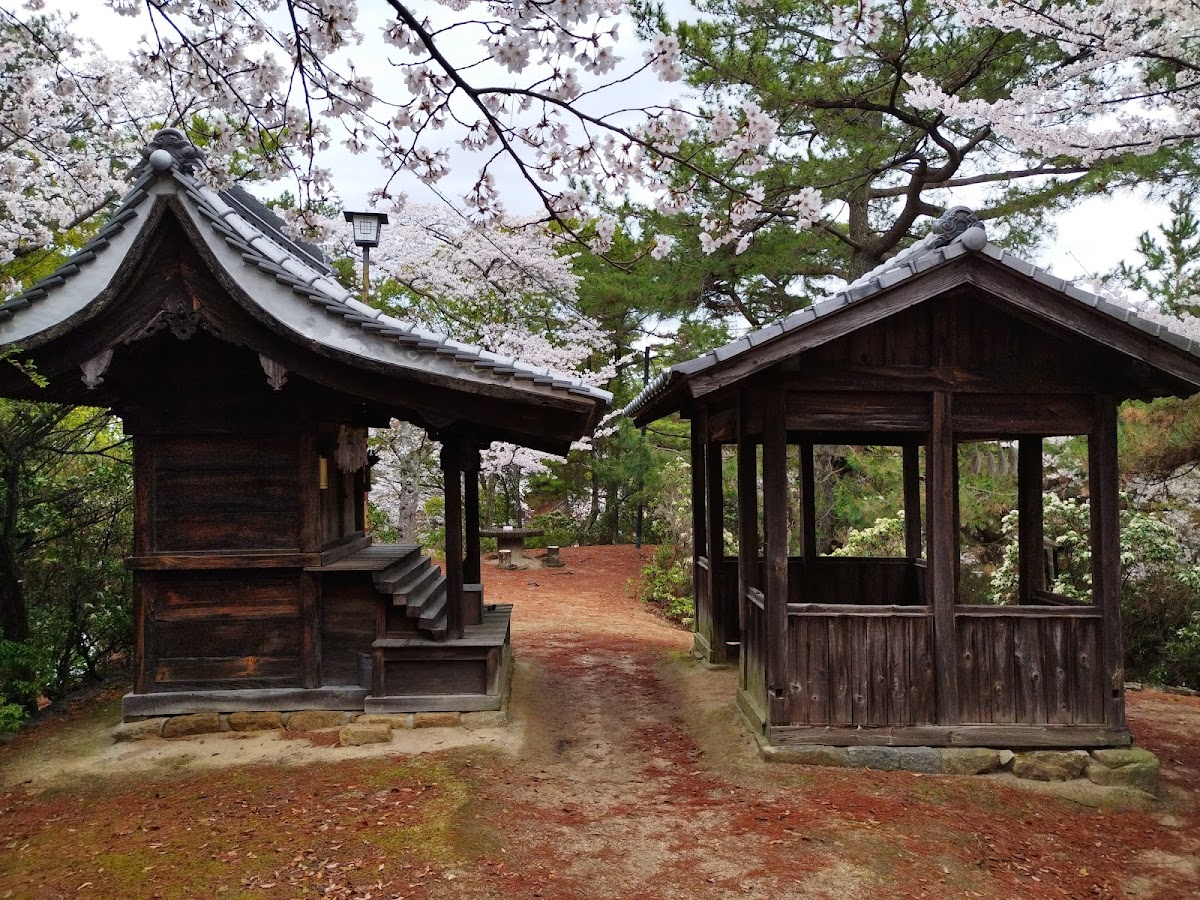
Tokoura Shrine, located approximately 100 meters west of Kagi Castle, is another spot worth visiting. This shrine is deeply connected to the local history and is an important place for understanding the history of Kagi Castle.
The road to the shrine is narrow, so caution is needed when visiting by car, but parking is available.
The Grave of Ura Munekatsu at Shōunji Temple
The grave of Ura Munekatsu (Nomi Munekatsu), the lord of Kagi Castle, is located at the nearby Shōunji Temple. As the burial site of a warrior who played a crucial role in the Battle of Itsukushima, it is a place of great historical value.
When visiting Kagi Castle, we highly recommend also visiting Shōunji Temple to commemorate the achievements of Ura Munekatsu.
Access and Visiting Information
Location
Address: 1 Tokoura, Tadahama, Takehara City, Hiroshima Prefecture
Access by Train
Approximately 15-20 minutes on foot from JR Kure Line “Tadahama Station”. Tadahama Station is located between Takehara Station and Mihara Station and is accessible from Hiroshima City.
From the station to the castle ruins, walk towards Tadahama Port. As you approach the port, you will see a small hill jutting out into the sea.
Access by Car
Use National Route 185. Heading east from Takehara city center towards Mihara, you’ll see signs for the Kagi Castle ruins near Tadanoumi Port.
If using a car navigation system, setting “Tokoura Shrine” as your destination is convenient.
Parking
There is no dedicated large-scale parking lot, but there are a few parking spaces near Tokoura Shrine. However, the road to the shrine is narrow, and there are places where it is difficult to pass oncoming vehicles, so please drive carefully.
Visiting in a large vehicle is not recommended. If possible, it is recommended to use a parking lot near Tadanoumi Station and visit on foot.
Notes for Visitors
- The castle ruins are maintained as a park, but some areas have uneven footing. Wearing comfortable shoes is recommended.
- In summer, vegetation grows thickly, making it difficult to see the remains. Visiting in spring or autumn is recommended.
- Information boards and explanatory signs are limited, so researching the history and structure beforehand will deepen your understanding.
- Since it is close to the living area of local residents, please be considerate of the surrounding area, such as noise.
Estimated Visiting Time
The castle ruins themselves take about 30 minutes to 1 hour to visit. If you also plan to visit the nearby Tokoura Shrine and Shounji Temple, it is recommended to allow about 2 hours.
Nearby Tourist Attractions
Takehara City Historic Townscape Preservation District
Located about 10 minutes by car from Kagi Castle, the Takehara City Historic Townscape Preservation District is a beautiful historical townscape known as “Aki’s Little Kyoto.” Buildings that retain the atmosphere of the Edo period, when it prospered from salt production, line the streets, and it has been designated as a National Important Traditional Buildings Preservation District.
Chinkaiyama Castle
Another important castle ruin located within Takehara City. Visiting it together with Kagi Castle will give you a deeper understanding of the Sengoku period history of this region.
Tadami Port
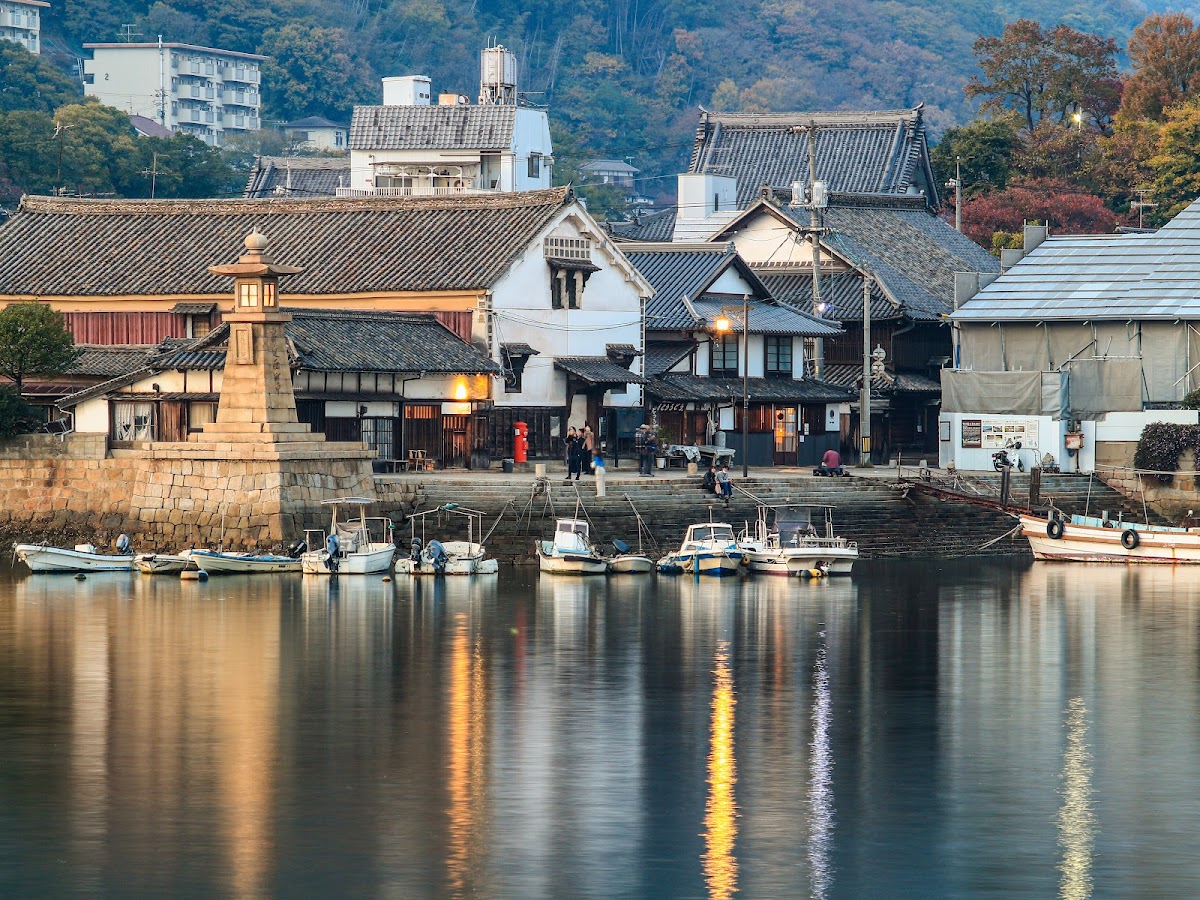
Tadami Port, which spreads out in front of Kagi Castle, still functions as a port for boats to and from Okunoshima (Rabbit Island). This is a spot where you can enjoy the beautiful scenery of the Seto Inland Sea.
Okunoshima Island
Located about 15 minutes by ferry from Tadanoumi Port, Okunoshima Island is a famous tourist destination known for its large population of wild rabbits. It is also a historical site, once known as an island for the manufacture of poison gas.
Historical Significance of Kagi Castle
Position in the History of Seto Inland Sea Naval Forces
Kagi Castle holds an important position in the history of naval forces in the Seto Inland Sea. As one of the bases of the Kobayakawa navy, it was responsible for the safety and management of maritime traffic in the region.
During the Sengoku period, the Seto Inland Sea was a sea area where various naval forces, including the Murakami navy, were active. Within this context, the Kobayakawa navy played a crucial role as the naval power of the Mori clan, and Kagi Castle was one of its command centers.
The Battle of Itsukushima and the Importance of Diplomacy
The diplomatic role played by Ura Munekatsu in the Battle of Itsukushima demonstrates that battles during the Sengoku period were not merely about military force, but also about the importance of diplomacy and information warfare. The task of winning over the Murakami naval force could not have been accomplished without a thorough understanding of the complex power dynamics and naval networks within the Seto Inland Sea. Ura Munekatsu’s activities, based at Kagi Castle, were only possible because of his strength and trustworthiness as a regional maritime power.
Genealogy of the Kobayakawa and Doi Clan
Through the history of Kagi Castle, we can see that the lineage of the Kobayakawa clan, originating from Doi-go in Sagami Province, extended to the Seto Inland Sea. The development of a samurai group descended from the Doi clan as a naval force in the distant Aki Province is an interesting example illustrating the history of migration and settlement of medieval samurai.
The history of the Ura clan, who built an independent power while maintaining their identity as a branch of the Kobayakawa clan, is a valuable resource for understanding the complex family structures and lord-vassal relationships of the Sengoku period.
The Value of Visiting Kagi Castle
Unlike castles with large stone walls and keeps, Kagi Castle has limited remains. However, this castle offers the following reasons for visiting:
- Understanding the Reality of a Naval Castle: You can gain firsthand understanding of the characteristics of a naval castle, which differ from land-based mountain castles.
- Behind the Scenes of the Battle of Itsukushima: This is a place where you can imagine the diplomacy and naval activities that supported the famous Battle of Itsukushima.
- History of the Seto Inland Sea: You can experience the history of maritime traffic and naval forces in the Seto Inland Sea.
- A Quiet Historical Stroll: You can reflect on history in a quiet environment that is not commercialized for tourism.
- Beautiful Scenery: It is also a scenic spot where you can enjoy the beautiful scenery of the Seto Inland Sea.
Summary
Kagi Castle (Kagi Castle) is a naval castle from the Sengoku period remaining in Tadami, Takehara City, Hiroshima Prefecture. As the residence of Ura Munekatsu (Nomi Munekatsu), the commander of the Kobayakawa Guard Corps, it became an important diplomatic base during the Battle of Itsukushima.
Built on a small hill 20 meters above sea level, this castle served as a base for monitoring maritime traffic in the Seto Inland Sea and commanding the Kobayakawa naval force. Currently, it is maintained as a park, with remnants such as the earthworks on the north side of the second bailey remaining.
While large-scale castle remains are not present, its historical value as a naval castle is high, making it a valuable historical site for understanding the realities of maritime power in the Seto Inland Sea during the Sengoku period. Visiting it in conjunction with sightseeing in the Takehara townscape preservation area and Okunoshima Island allows you to experience the rich history and culture of the region.
Its convenient access, within walking distance of JR Tadano-umi Station, is another attractive feature. Why not reflect on the history of the naval force that supported the Battle of Itsukushima while enjoying the beautiful scenery of the Seto Inland Sea?
.png)