Katakari Castle (Hiroshima Prefecture) Complete Guide: A Thorough Explanation of the History of the Innoshima Suigun Castle and the Murakami Suigun
Located in Nakasho-cho, Innoshima, Onomichi City, Hiroshima Prefecture, Katakari Castle is a mountain castle associated with the Murakami Suigun, a renowned naval force of the Seto Inland Sea. Currently, the castle ruins house the “Innoshima Suigun Castle,” a rare castle-shaped museum, making it a valuable historical site where visitors can experience the history and culture of the Murakami Suigun.
This article provides a detailed explanation of everything you need to know before visiting, from the historical background and highlights of Katakari Castle to the exhibits at Innoshima Suigun Castle and access information.
Basic Information on Katakari Castle
Alternate Names: Katakariyama Castle, Katakari Castle, Innoshima Suigun Castle
Location: 3228-2 Nakasho-cho, Innoshima, Onomichi City, Hiroshima Prefecture
Classification: Mountain Castle
Construction Period: Details unknown (estimated to be the medieval period)
Builder: Said to be Kiyohara Moritaka
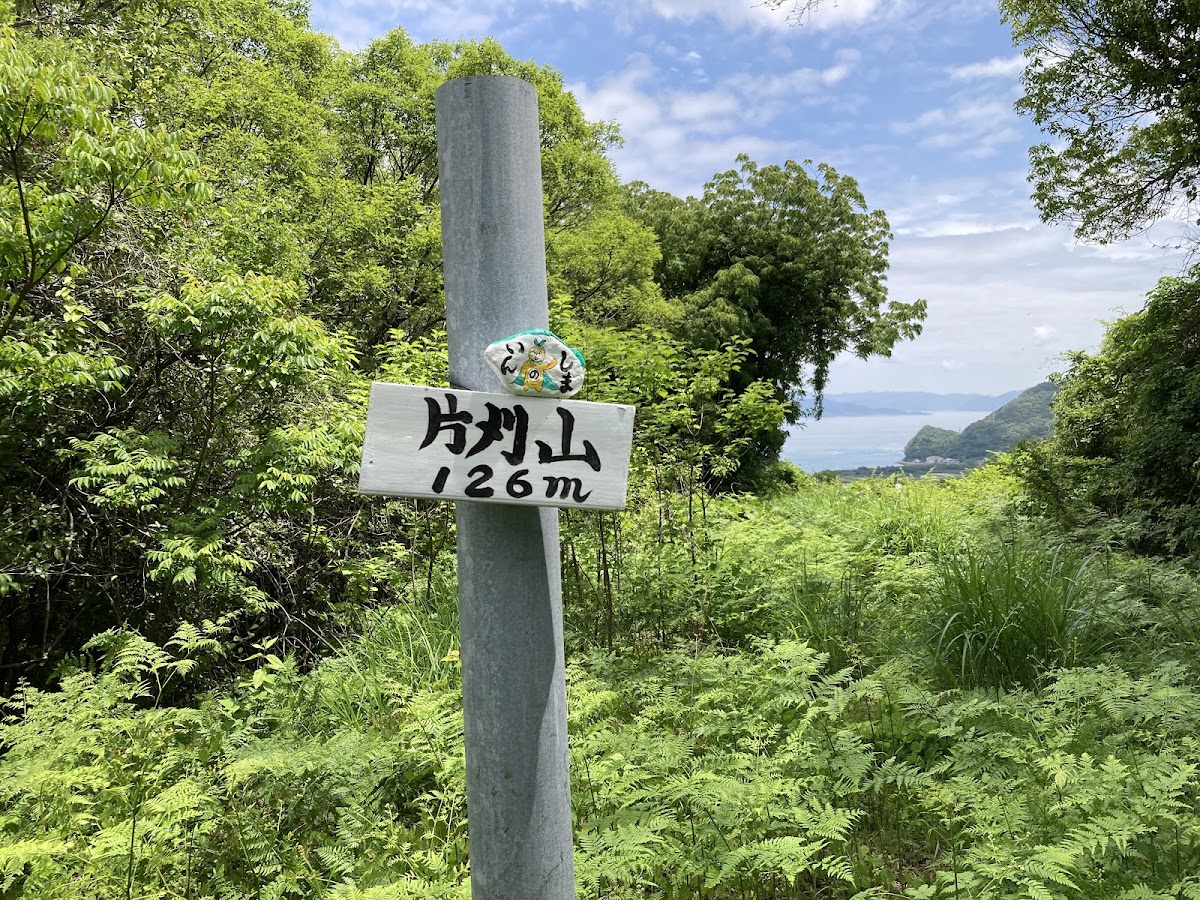
Elevation: Approximately 126 meters
Relative Height: Approximately 120 meters
Remains: Stone walls, well, remains of baileys
Designated Cultural Properties: None (However, the white, purple, and crimson thread-laced haramaki (a type of armor) owned by Innoshima Suigun Castle is a Prefectural Important Cultural Property)
History of Katakari Castle
Construction History and Lord
Katakari Castle is traditionally believed to be the residence of Kiyohara Moritaka, but historical records regarding the detailed construction date and circumstances are scarce, and much remains a mystery. The Kiyohara clan was based on Innoshima Island and held a strategic position controlling a key point in maritime traffic in the Seto Inland Sea.
The castle’s location is in the central part of Innoshima Island, a strategically important location overlooking the Seto Inland Sea. From the mountaintop, one could see the surrounding sea area, providing an ideal environment for a naval base.
Relationship with the Murakami Naval Force
Innoshima Island is known as the base of the Innoshima Murakami clan, a branch of the Murakami Naval Force. The Murakami Naval Force was a group of pirates (naval forces) that controlled the Seto Inland Sea from the Muromachi period to the Sengoku period, and together with the Noshima Murakami clan and the Kurushima Murakami clan, they were known as the “Three Island Murakami Clans.”
Katakari Castle is thought to have been closely related to the activities of the Innoshima Murakami clan, and is presumed to have played a role in monitoring maritime traffic and as a defensive base. The Murakami Naval Force was not merely pirates; they engaged in diverse activities such as ensuring the security of shipping lanes, managing checkpoints, and operating a shipping business.
Developments during the Sengoku Period
During the Sengoku period, the Innoshima Murakami clan forged a deep relationship with the Mori clan. Especially during the time of Mori Motonari, the naval power of the Murakami navy greatly contributed to the expansion of the Mori clan’s influence. In the Battle of Itsukushima (1555), the support of the Murakami navy played a decisive role in the Mori clan’s victory.
Katakari Castle was also within the Mori clan’s sphere of influence and is thought to have functioned as an important base for securing control of the Seto Inland Sea.
After the Edo Period
With the arrival of the Edo period, the Murakami navy was disbanded, and Innoshima became part of the Fukuyama Domain. Katakari Castle was also abandoned and lost its function as a castle. The castle ruins were neglected for a long time, but were recognized locally as an important historical site that conveyed the history of the Murakami navy.
Structure and Remains of Katakari Castle
Layout and Enclosure Arrangement
The original site of Katakari Castle is not where Innoshima Suigun Castle now stands, but on the mountaintop behind Chofuku-ji Temple to the north. It possesses a typical mountain castle structure, with multiple enclosures arranged around the main enclosure.
It is presumed that the main enclosure was located on the mountaintop, surrounded by the second and third enclosures. The defensive structure, utilizing the steep terrain, made it a formidable stronghold that was difficult for attackers to conquer.
Stone Walls and Well
Remains of stone walls can be found at the castle site. The relatively solid stonework for a medieval mountain castle indicates the castle’s importance. Furthermore, the remains of a well have been confirmed on the mountaintop, suggesting that water supply was considered during sieges.
Securing a water source was crucial for a mountain castle, and the presence of a well indicates a design philosophy prepared for prolonged sieges.
The remains of stone walls are preserved at the castle site. The relatively solid stonework for a medieval mountain castle speaks to the castle’s importance. Furthermore, the remains of a well have been confirmed on the mountaintop, indicating that water supply was considered during sieges.
Securing a water source was vital for a mountain castle, and the presence of a well indicates a design philosophy prepared for long-term sieges.
Current State of Existing Remains
Currently, the remains of Katakari Castle are covered by natural forest, but the terraces of the baileys, the cut slopes, and parts of the earthworks can still be seen. While some alterations have been made due to the construction of Innoshima Suigun Castle, the mountaintop, the original castle site, retains traces of a medieval mountain castle.
Innoshima Suigun Castle: Japan’s Only Castle-Type Museum
Overview of Innoshima Suigun Castle
Innoshima Suigun Castle, opened in 1983 (Showa 58), is a rare castle-type museum in Japan. Built on a corner of the Katakari Castle site, it functions as a museum showcasing the history and culture of the Murakami Suigun (Murakami Naval Force).
Its exterior is a three-story building modeled after a Sengoku period castle keep, making it a prominent landmark visible from afar. However, there is no historical record of a castle keep existing at Katakari Castle; it is merely a replica built as a museum.
Exhibition Contents
Innoshima Suigun Castle displays numerous valuable artifacts related to the Murakami Suigun (Murakami Naval Force).
Main Exhibits:
- White, Purple, and Scarlet Striped Laced Belly Armor: This armor, designated as an Important Cultural Property of Hiroshima Prefecture, is a valuable relic believed to have been used by a Murakami Suigun general. It is characterized by its exquisite craftsmanship and beautiful colors.
- Weapons and Armor: Swords, spears, bows and arrows, and other weapons used by the naval force are on display. Specialized weapons for naval battles are also included, providing clues to understanding the naval force’s combat methods.
- Ship Models: Models of ships used by the Murakami Suigun, such as Atakebune and Sekibune, are on display, allowing visitors to learn about the shipbuilding technology of the time.
- Historical Documents and Maps: A wealth of historical materials, including ancient documents related to the Murakami clan and old maps of Innoshima, are also available.
- Everyday Items: The exhibits include ceramics and everyday tools that convey the daily life of the naval forces, allowing visitors to learn not only about their warrior lives but also about the lives of the people.
Points to Note During Your Visit
The exhibits at Innoshima Suigun Castle are designed not simply to display documents, but to provide a three-dimensional understanding of the activities of the Murakami Suigun. The actual displays of armor and weapons are particularly impressive, giving a real sense of the Sengoku period.
From the top floor, you can enjoy a panoramic view of Innoshima town and the Seto Inland Sea, allowing you to truly appreciate why the Murakami Suigun dominated this area. On clear days, you can even see the islands on the opposite shore, making it a popular spot for its spectacular views.
Opening Information
Opening Hours: 9:30 AM – 5:00 PM (Last entry at 4:30 PM)
Closed: Thursdays (or the following day if Thursday is a public holiday), New Year’s holidays
Admission Fee: General admission 330 yen, Elementary and junior high school students 160 yen (Group discounts available)
Estimated Time Required: Approximately 40-60 minutes
Highlights of Katakari Castle
View from the Main Keep Ruins
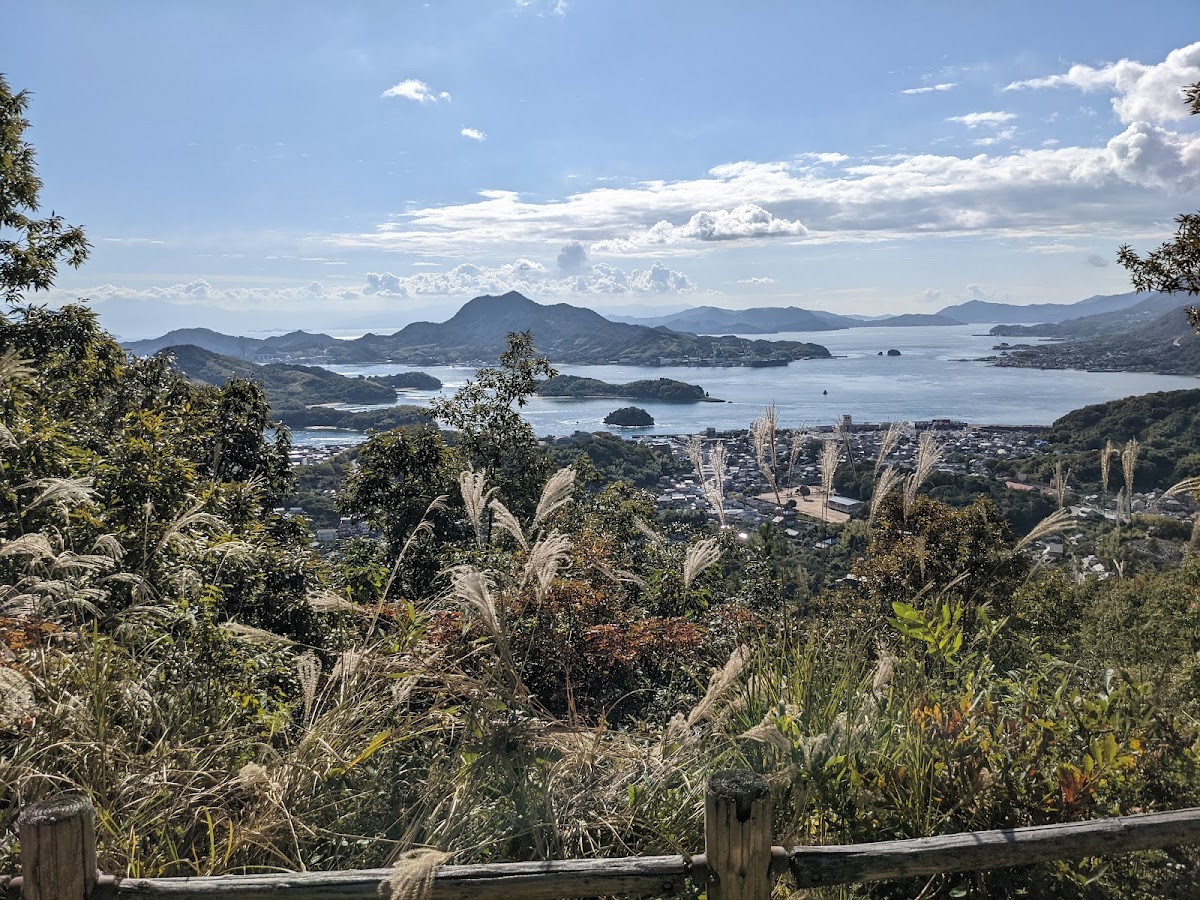
The greatest attraction of Katakari Castle is the view from the mountaintop. You can enjoy a panoramic view of the beautiful islands of the Seto Inland Sea, and on a clear day, you can even see distant islands. Seeing this view will help you understand why the Murakami Suigun (Murakami Naval Force) chose this location as their base.
The location, overlooking a key point of maritime traffic, was strategically crucial for the navy. This high vantage point was essential for detecting enemy ship movements early and commanding friendly fleets.
Stone Walls and Defensive Structures
The stone walls remaining at the castle ruins are valuable relics demonstrating the technical level of medieval mountain castles. The use of natural stone masonry techniques is evident, allowing us to learn about castle construction techniques from the Sengoku period.
The steep cliffs between the baileys reveal a design philosophy that prioritized defense. The angle of the slopes and the arrangement of the baileys were carefully calculated to prevent enemies from easily climbing.
Surrounding Historical Sites
Near Katakari Castle, there are several historical sites associated with the Murakami Suigun (Murakami Naval Force).
Chofuku-ji Temple: A temple located at the foot of Katakari Castle, with deep ties to the Murakami clan. Historical stone structures remain within the temple grounds.
Innoshima Suigun Skyline: A scenic road traversing Innoshima Island, offering stunning views of the Seto Inland Sea. There are observation decks along the way where you can enjoy the scenery of the islands.
Murakami Suigun Burial Sites: Several burial sites of the Murakami clan remain on Innoshima Island, and can be included in historical walking tours.
Access and Visiting Information
Access by Public Transportation
By Train and Bus:
- Take the “Innoshima-bound” bus from JR Onomichi Station (approx. 40 minutes)
- Get off at the “Innoshima Ohashi” bus stop
- Take a taxi or walk (approx. 15 minutes) to Innoshima Suigun Castle
By Ferry:
- You can also take a ferry from Onomichi Port to Innoshima Habu Port (approx. 30 minutes)
- Take a taxi or bus from Habu Port to Innoshima Suigun Castle
Access by Car
Via Shimanami Kaido:
- Exit the Nishiseto Expressway (Shimanami Kaido) at “Innoshima Kita IC” or “Innoshima Minami IC”
- Approximately 10-15 minutes via prefectural roads
- Free parking is available at Innoshima Suigun Castle (50 regular cars)
The Shimanami Kaido is a popular tourist route connecting Honshu and Shikoku, and is also a popular course for cyclists. In addition to visiting Katakari Castle, you can also enjoy sightseeing along the Shimanami Kaido islands.
Parking Information
Innoshima Suigun Castle has a free parking lot. It can accommodate approximately 50 regular cars and several large buses. It can get crowded during peak tourist season and on weekends, so early arrival is recommended.
Notes for Visitors
- Clothing: If visiting the original castle ruins (mountaintop), appropriate hiking attire and shoes are necessary. If visiting only Innoshima Suigun Castle, regular tourist clothing is fine.
- Time Required: Visiting Innoshima Suigun Castle alone takes approximately 40-60 minutes. Including a stroll through the original castle ruins, allow 1.5-2 hours.
- Season: Spring and autumn are the best times to visit. Summer requires heat protection, and winter requires warm clothing.
- Insect Repellent: When exploring mountain castles, especially in summer, it is recommended to bring insect repellent spray.
The History and Culture of Innoshima and the Murakami Suigun
What is the Murakami Suigun?
The Murakami Suigun was a general term for a group of pirates that controlled the Seto Inland Sea from the Muromachi period to the Sengoku period. Despite the name “pirates,” they were not plundering bandits, but rather a maritime security organization that guaranteed the safety of maritime traffic and collected tolls.
The Murakami Suigun was divided into three families, each based on a different island:
- Noshima Murakami clan: Based on Noshima (present-day Imabari City, Ehime Prefecture)
- Kurushima Murakami clan: Based on Kurushima (present-day Imabari City, Ehime Prefecture)
- Innoshima Murakami clan: Based on Innoshima (present-day Onomichi City, Hiroshima Prefecture)
These three families maintained a cooperative relationship, but each also had its own distinct sphere of influence.
Characteristics of the Innoshima Murakami clan
The Innoshima Murakami clan controlled maritime traffic in the central part of the Seto Inland Sea. Located at a crucial point on the sea route connecting Bingo and Aki provinces, the Innoshima Murakami clan built its economic base by collecting tolls from trading ships.
The Innoshima Murakami clan had close ties with the Mori clan and played an important role as a naval force during the time of Mori Motonari. In the Battle of Itsukushima, the Murakami naval fleet attacked Sue Harukata’s forces from the sea, contributing to the Mori’s victory.
Murakami Naval Tactics and Ships
The Murakami naval force developed its own unique naval tactics. Their main vessel was a large warship called the “Atakebune,” capable of carrying numerous oarsmen and combatants.
Main Tactics:
- Horokuhiya (Fire Arrow): A fire attack using ceramic containers filled with gunpowder thrown at enemy ships.
- Fleet Tactics: A group tactic where multiple ships work together to surround the enemy.
- Utilizing Tidal Currents: A deep understanding of the complex tidal currents of the Seto Inland Sea to secure advantageous positions.
The tidal currents of the Seto Inland Sea are complex, making safe navigation difficult for anyone other than local naval forces. This geographical knowledge was a strength of the Murakami Suigun (Murakami Naval Force).
Culture and Traditions of Innoshima
The traditions of the Murakami Suigun remain strong in Innoshima. Local festivals feature events themed around the naval force and are utilized as tourist attractions.
Innoshima Suigun Festival: Held every August, this festival features floats modeled after naval ships parading through the streets, along with fire festivals and other events. It is the largest event in the region and attracts many tourists.
Tradition of Shipbuilding: Innoshima still thrives on shipbuilding, preserving the tradition of shipbuilding technology from the Murakami Suigun (Murakami Naval Force) era.
Tourist Spots to Enjoy in Combination with a Visit to Katakari Castle
Innoshima Flower Center
This botanical garden is located about a 10-minute drive from Innoshima Suigun Castle. You can enjoy seasonal flowers, with the azaleas in spring and the cosmos in autumn being particularly beautiful. There’s also an observation deck overlooking the Seto Inland Sea, making it an ideal rest stop.
Shirataki Mountain
This mountain, located in the southern part of Innoshima, is 227 meters high and features a group of 500 stone Buddha statues at its summit. It’s a popular viewpoint offering stunning views of the Seto Inland Sea, and hiking trails are well-maintained.
Oyama Shrine
This shrine was revered as the tutelary deity of the Innoshima Murakami clan. The grounds contain centuries-old trees, creating a historically significant atmosphere. This is a must-see spot for history buffs, as it’s a place where the Murakami Suigun (Murakami Naval Force) prayed for military success.
Shimanami Kaido Cycling
Innoshima Island is located on the Shimanami Kaido cycling route, and cycling around the islands is a popular tourist activity. You can enjoy beautiful scenery while crossing the bridges connecting the islands of the Seto Inland Sea. Rental bicycles are readily available, making it enjoyable even for beginners.
Innoshima’s Local Products and Cuisine
Hassaku: Innoshima is known as the birthplace of hassaku oranges, and this sweet and sour citrus fruit is a local specialty. Sweets and juices made with hassaku are also popular.
Seafood Cuisine: You can enjoy dishes made with fresh seafood from the Seto Inland Sea. Octopus, sea bream, and conger eel are particularly famous.
Innoshima Okonomiyaki: As is typical of Hiroshima Prefecture, Innoshima has many okonomiyaki restaurants. You can enjoy the unique local flavor.
Historical Value and Future Preservation of Katakari Castle
Importance as a Historic Site
Katakari Castle is a valuable historical site that conveys the activities of the Murakami Suigun (Murakami Naval Force). It is an important site for understanding the history of maritime traffic in the Seto Inland Sea and the naval culture of medieval Japan, and it also symbolizes the historical identity of the region.
Nationwide, naval castle ruins are limited, and among them, few have attached museums and are open to the public, making it of high educational value.
Challenges in Preservation and Utilization
The original remains of Katakari Castle are located in the mountains and are being deteriorated by being covered by natural forest. Preservation challenges have been pointed out, such as the collapse of stone walls and the burial of remains.
On the other hand, Innoshima Suigun Castle has succeeded in attracting a certain number of visitors as a tourist facility, contributing to increasing the recognition of the Murakami Suigun. In the future, it will be necessary to strike a balance between utilizing the replica castle tower as a tourist resource and the academic preservation of the original castle ruins.
Connection to Regional Development
Katakari Castle and Innoshima Suigun Castle contribute to the local economy as important tourist resources in Innoshima. The opening of the Shimanami Kaido has increased the influx of tourists, leading to a growing demand for historical tourism, including visits to castle ruins.
Locally, town revitalization efforts are underway, leveraging the history of the Murakami Suigun (Murakami Naval Force), including festivals, events, and the development of local specialty products. It is attracting attention as a model case for sustainable regional development centered on historical heritage.
How to Enjoy Visiting Katakari Castle
Recommended Sightseeing Route for History Enthusiasts
- Gain Background Knowledge at Innoshima Suigun Castle: First, learn about the history of the Murakami Suigun and an overview of Katakari Castle at the museum.
- Climb to the Main Keep Ruins: Climb from Innoshima Suigun Castle to the original castle ruins (mountaintop) and examine the remains.
- Visit Chofuku-ji Temple: Visit the temple at the foot of the castle ruins and experience the region’s history.
- Exploring nearby Murakami Suigun-related historical sites: If time permits, visit other historical sites on Innoshima Island.
Family-friendly activities
- Viewing armor and weapons at Innoshima Suigun Castle: The exhibits are engaging and likely to interest children.
- Enjoying the view from the observation deck: The beautiful scenery of the Seto Inland Sea can be enjoyed by the whole family.
- Combining with nearby parks and tourist facilities: Visiting child-friendly facilities such as the Innoshima Flower Center is recommended.
Photography tips
- Exterior of Innoshima Suigun Castle: Although a replica, it’s a picturesque building. Taking photos with a blue sky as a backdrop is recommended.
- Seto Inland Sea from the observation deck: The view of the many islands is especially beautiful at sunset.
- Stone walls and ruins: Photographing the ruins that convey a historical atmosphere is also appealing.
Summary: Rediscovering the Charm of Katakari Castle
Katakari Castle (Innoshima, Onomichi City, Hiroshima Prefecture) is a valuable historical site that preserves the history of the Murakami Suigun (Murakami Naval Force). It features the Innoshima Suigun Castle, a rare castle-type museum, making it a tourist spot enjoyable for everyone from beginners to history buffs.
Katakari Castle boasts diverse attractions, including the beautiful scenery of the Seto Inland Sea, the remains of a medieval mountain castle, and cultural artifacts of the Murakami Suigun. Visiting it in conjunction with sightseeing along the Shimanami Kaido will provide an even more fulfilling travel experience.
Learning about the history of the Bingo region, enjoying the nature of the Seto Inland Sea, and experiencing local culture—a visit to Katakari Castle will be a journey with such multifaceted charms. Please visit this historically romantic castle site at least once.