Momoi Castle (Gunma Prefecture) Complete Guide: The Full Picture of the Medieval Castle Built by Momoi Naotsune, a Famous General of the Nanboku-cho Period
Located in Yoshioka-machi, Kitagunma-gun, Gunma Prefecture, Momoi Castle is a medieval castle believed to have been built by Momoi Naotsune, a powerful general of the Northern Court during the turbulent Nanboku-cho period. While much of the remains are now lost, it was once an important stronghold boasting a defensive system consisting of two castle fortifications, east and west. This article comprehensively explains everything you need to know before visiting Momoi Castle, from its history, structure, highlights, to access methods.
Basic Information on Momoi Castle
Alternate Names: Oyabu Castle, Momoi East Castle
Location: Near 187 Minamishita, Yoshioka-machi, Kitagunma-gun, Gunma Prefecture
Builder: Momoi Naotsune
Construction Period: Nanboku-cho period (mid-14th century)
Castle Structure: Hill castle (flatland castle)
Main Remains: Traces of baileys, earthworks, and dry moats
Designated Cultural Property: Not designated
Current Status: Farmland, residential land, water supply facilities
Momoi Castle is a medieval castle built on the hilly area behind Kamihachiman Shrine (commonly known as “Shiroyama”). It is believed to have worked in conjunction with Momoi West Castle (Yamakoda Castle), also built by the Momoi clan, for defense.
The History of Momoi Castle and its Builder, Momoi Naotsune
Who was Momoi Naotsune?
Momoi Naotsune was a samurai who was active during the Nanboku-cho period (1336-1392). He was a powerful general on the Northern Court side, serving Ashikaga Takauji. Based in Kozuke Province (present-day Gunma Prefecture), he played a crucial role in the battles against the Southern Court. The Momoi clan was originally a samurai family based in Echigo Province (Niigata Prefecture), but during Naotsune’s time, they expanded into Kozuke Province and established their power there.
Kozuke Province during the Nanboku-cho Period
During the Nanboku-cho period (1336-1392), Kozuke Province was one of the front lines where the forces of the Northern and Southern Courts fiercely clashed. Momoi Naotsune, on the Northern Court side, confronted Southern Court forces such as the Nitta clan. Momoi Castle is thought to have been a strategic base built amidst this military tension, functioning as a key point for controlling and defending the surrounding region.
Castle History and Abandonment
While there are no clear records of when Momoi Castle was last used, it is presumed that it gradually lost its military importance after the end of the Nanboku-cho period (Northern and Southern Courts period) in the Muromachi era. It is highly likely that it was already abandoned during the Sengoku period (Warring States period), and was subsequently used as farmland.
Structure and Layout of Momoi Castle
Structure of Momoi Higashi Castle (Momoi Castle in this section)
Momoi Higashi Castle is a typical medieval hill castle with its main enclosure located at the highest point of the hill. The features of its layout are as follows:
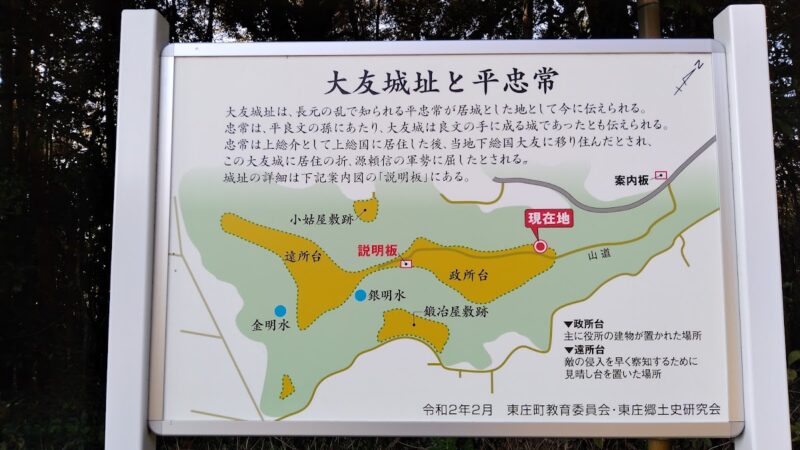
Main Enclosure: Located at the highest point of the hill, the western half was surrounded by a horseshoe-shaped earthen rampart. This rampart is thought to have functioned as a defensive structure and also served to demarcate the interior of the main enclosure.
Watchtower: A watchtower was located at the eastern end of the main enclosure. Currently, an information board and marker post stand at this location, making it one of the few remaining traces indicating that it was a castle site.
Scale: The castle grounds were relatively compact, with a layout that skillfully utilized the hilly terrain.
Relationship with Momoi West Castle (Yamakoda Castle)
The Momoi clan built two castles, one in the east and one in the west, and established a coordinated defensive system.
Momoi West Castle (Yamakoda Castle): Located in Yamakoda, Shinto Village, it had a flatland-style structure with a water moat running from the north to the east. Water was drawn from the Goōzu River (Ōtazawa) and merged with the Nanjōji River to the south, with a dry moat on the west side. It boasted a size of approximately 210 meters east-west and 190 meters north-south, with the main gate (Oite-koguchi) located slightly south of the center on the east side.
This two-castle system likely allowed the Momoi clan to efficiently control and defend a wide area. It’s possible that Momoi East Castle served as a fortified outpost on the hill, while Momoi West Castle functioned as the daily residence and administrative center.
Current Highlights and Remains of Momoi Castle
Current Status and Remaining Remains
Unfortunately, most of the remains of Momoi Castle have been lost due to years of development. The current state of the castle site is as follows:
Agricultural Conversion: Much of the castle area, including the main enclosure, has been converted to farmland and fields.
Water Supply Facilities: Water supply facilities have been constructed on part of the hill, making it difficult to confirm the remains.
Residential Development: The area surrounding the castle has become a residential area, making it difficult to imagine the topography of the time.
Identifiable Remains
Nevertheless, with careful observation, the following traces can be found:
Traces of Enclosures: Slight elevation changes remain, indicating the shape of the enclosures.
Remnants of Earthworks: A portion of the horseshoe-shaped earthwork on the west side of the main enclosure can be seen as a slightly elevated area.
Traces of Dry Moats: Depressions in the terrain allow for the estimation of the former dry moat’s location.
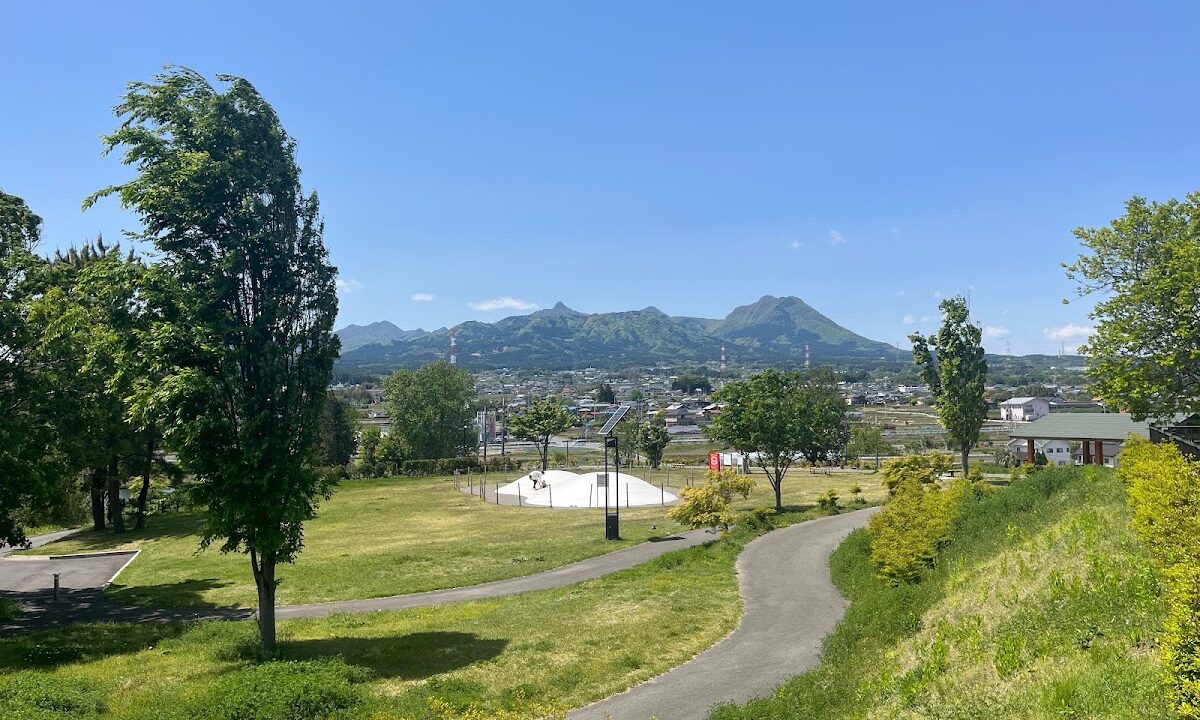
Information Board and Marker Post: An information board and marker post are installed at the site believed to be the remains of a lookout post, indicating that it is a castle site.
Momoi Mound and Five-Ring Pagoda
As historical sites related to Momoi Castle, five-ring pagodas remain in the surrounding area. These are thought to be memorial towers for the Momoi clan and their retainers, and are estimated to have been erected during the Nanboku-cho period to the early Muromachi period.
Along the bypass south of Yoshioka Town, there is also a small stone pagoda commonly known as the “Maruyama Five-Ring Pagoda,” which is also thought to have some connection to Momoi Castle, but the details are unknown.
How to Access Momoi Castle
Location
Near 187 Minamishita, Yoshioka-machi, Kitagunma-gun, Gunma Prefecture
Access by Car
From the Kan-Etsu Expressway:
- Approximately 10 minutes from Shibukawa-Ikaho IC
- Approximately 20 minutes from Maebashi IC
From National Route 17:
- Proceed towards the Yoshioka town center and follow the signs to the Minamishita area.
Parking: There is no dedicated parking lot. There may be street parking spaces around Kami-Hachiman Shrine, but please be considerate of the neighbors.
Access by Public Transportation
From JR Joetsu Line “Shibukawa Station”:
- Take the Gunma Bus bound for “Yoshioka Town Hall”
- Get off at the “Minamishita” bus stop and walk for approximately 10 minutes.
Note: Since the number of buses is limited, it is recommended to check the timetable in advance.
Landmarks in the Surrounding Area
- Kamihachiman Shrine: Located immediately south of the castle ruins
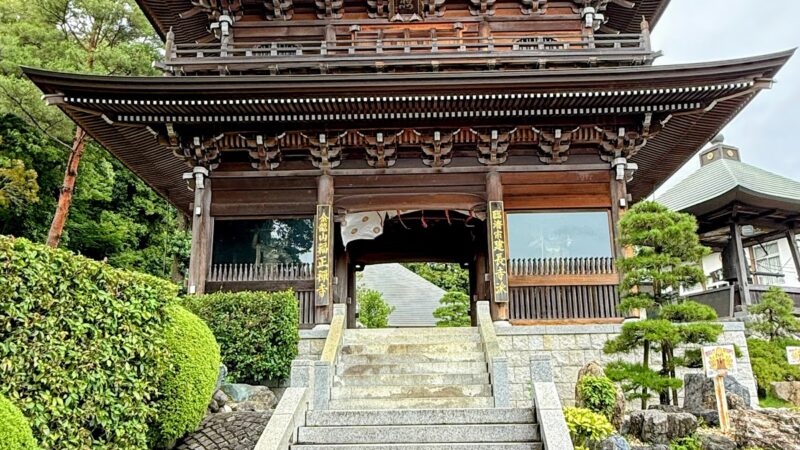
- Kongoji Temple: Adjacent to the south side of the castle ruins
- Yoshioka Town Hall: Located in the center of the Minamishita district
Points to Note and Manners When Visiting
Consideration for Private Property
Most of the Momoi Castle ruins are private property (farmland and residential land). Please observe the following points when visiting:
- Do not trespass on farmland or private property
- Do not damage crops or facilities
- Visit quietly so as not to disturb the lives of residents
- Always take your trash with you
Estimated Visiting Time
The average visiting time is approximately 25 minutes. Since the remains are limited, 30 to 40 minutes should be sufficient even for a thorough visit.
Photography
Photography of information boards, markers, and surrounding scenery is permitted, but please be careful not to include private homes or people in your photos.
Suitable Attire
- Comfortable walking shoes (as you may be walking on hilly terrain)
- Insect repellent in summer
- Hat and sunscreen during periods of strong sunlight
Related Historical Sites and Recommended Spots in the Surrounding Area
Momoi Nishi Castle (Yamakoda Castle Ruins)
Location: Mihori, Yamakoda, Shinto Village, Kitagunma District
Momoi Nishi Castle, which is paired with Momoi Higashi Castle, is an important historical site for understanding the history of the Momoi clan. The traces of the moat are more clearly preserved here, and it is known as the “Mihori Ruins.” It is about a 15-minute drive from Momoi Higashi Castle, so we recommend visiting both together.
Other Surrounding Castles
Shirai Castle: A Sengoku period castle located in Shirai, Shibukawa City. Known as the residence of the Nagao clan, it has better-preserved remains.
Ikaho Onsen: Ikaho-machi, Shibukawa City. A popular hot spring resort to visit after touring the castles. ### Historical Museum
Shibukawa City Buried Cultural Properties Center: Exhibits materials related to the medieval history of Kozuke Province. Information about Momoi Castle may also be available.
Momoi Castle’s Evaluation and Visitor Feedback
The average rating by castle enthusiasts is 2.33 (out of 5), which is not high, mainly due to the limited remaining structure. However, for those interested in the history of the Nanboku-cho period or those who want to learn about the location and layout of medieval castles, it is a historical site worth visiting.
Visitor Comment Trends
- “Although there are hardly any remains, I was able to learn about history from the information boards.”
- “Visiting it together with Momoi West Castle deepens understanding.”
- “It’s fun to imagine what it was like in the past from the surrounding topography.”
- “You can reflect on history in a quiet environment.”
Current Status and Future Challenges of Momoi Castle Research
Archaeological Excavation Status
There have been very few full-scale archaeological excavations of Momoi Castle, and historical documents are limited. Therefore, much of the information regarding the castle’s construction date, changes over time, and abandonment period remains speculative.
Challenges in Preservation and Utilization
Many of the remains are on private land, hindering preservation and development. The following initiatives are expected in the future as a regional historical resource:
- Detailed layout surveys
- Improvement of information boards and explanatory signs
- Preservation activities in cooperation with local residents
- Integrated historical site development with Momoi Nishi Castle
- Creation of a reconstruction drawing of the castle using digital technology
Momoi Castle and the Medieval History of Gunma Prefecture
The Nanboku-cho Wars in Kozuke Province
During the Nanboku-cho period, when Momoi Castle was built, Kozuke Province became the stage for fierce conflicts between the Northern and Southern Courts. The family of Nitta Yoshisada sided with the Southern Court, while the warriors loyal to Ashikaga Takauji sided with the Northern Court, resulting in numerous battles in this region.
Momoi Naotsune fought as a core member of the Northern Court forces against the remnants of the Nitta clan and the Southern Court forces. Amidst these military tensions, Momoi Castle played a crucial role as a base in northern Kōzuke Province.
Medieval Gunma Castle Network
Momoi Castle did not exist in isolation; it was part of a network of surrounding castles. Many medieval castles were built in Kōzuke Province, including Shirai Castle, Numata Castle, and Minowa Castle, each functioning as a center of regional control.
When visiting Momoi Castle, being aware of its position within this broader medieval castle network will lead to a deeper understanding.
Tips for Enjoying Castle Tours
Recommended Pre-Visit Study
Since Momoi Castle has limited remains, the following preparations before your visit will make your experience more fulfilling:
- Learn the basics of the Nanboku-cho period: Gain basic knowledge about figures such as Momoi Naotsune, Ashikaga Takauji, and Nitta Yoshisada.
- Understand the structure of medieval castles: Learn basic castle terminology and functions such as baileys, earthworks, and dry moats.
- Check the topographic map: Check the topography around the castle site in advance using the topographic map from the Geospatial Information Authority of Japan.
- Read related books: Gain background knowledge from books about castles in Gunma Prefecture.
Observation Points During Your Visit
- Utilization of Topography: Observe how the hills were used to construct the defensive system.
- Check the View: Check how the surrounding area can be seen from the watchtower site.
- Infer the Water Source: Infer the location of the water source within the castle from the topography.
- Relationship with Transportation Routes: Consider the location relative to ancient roads and highways.
How to Record Your Visit
- Take photos of the information boards.
- Photograph the surrounding terrain from multiple angles.
- Note down the date and time of visit, weather, and duration.
- Record any observations or impressions.
Summary: The Historical Value of Momoi Castle
Although the remains of Momoi Castle are not in the best condition, it is a valuable historical site that tells the story of the important historical turning point of the Nanboku-cho period. Its value is considerable as a place where one can trace the footsteps of the warrior Momoi Naotsune and reflect on the lives of the people who lived during that turbulent era.
Momoi Castle is an important piece in understanding the medieval history of Gunma Prefecture and in studying the history of Japanese castles. While not flashy, it is a historical site that quietly speaks of history, making it a worthwhile place to visit for castle enthusiasts and history buffs.
Visiting Momoi Nishijo (Yamakoda Castle) along with Momoi Castle will allow you to experience the Momoi clan’s two-castle system and gain a deeper understanding and appreciation. When touring castles in Gunma Prefecture, be sure to add Momoi Castle to your list.
When visiting, please be considerate of local residents and observe proper etiquette.