Complete Guide to Makabe Castle (Shibukawa City, Gunma Prefecture) | Thorough Explanation of Sengoku Period Remains and History
What is Makabe Castle?
Makabe Castle is a Sengoku period castle site located on Makabe Castle Mountain in Kitatachibana-cho, Shibukawa City, Gunma Prefecture. Built on a hilly area on the left bank of the Tone River, this castle played an important role as a subsidiary castle of Shirai Castle and functioned for a long time under the influence of the Echigo Uesugi clan. Currently protected as a Shibukawa City designated historical site, it retains valuable remains that convey the structure of a Sengoku period castle.
Location and Geographical Characteristics
Makabe Castle is located near 2212 Makabe-ko, Kitatachibana-cho, Shibukawa City, Gunma Prefecture. It was built on “Shiroyama” (elevation 209.5 meters), a small hill formed by volcanic mudflow overflow on the cliff at the foot of a mountain, at the western end of a tongue-shaped plateau formed by the Kiso River and Benten River. This location was extremely advantageous defensively, making it a formidable stronghold protected by the surrounding natural terrain.
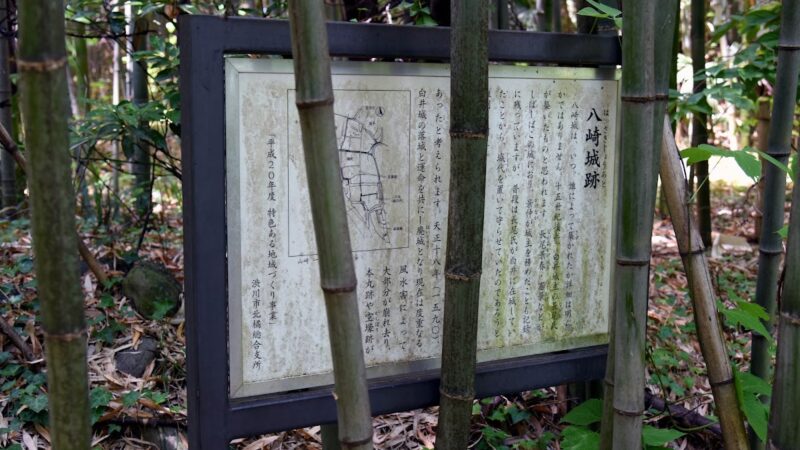
The castle is a small, single-enclosure hill castle, measuring approximately 50 meters east-west and 70 meters north-south, situated at an elevation of approximately 220 meters with a relative height of about 20 meters. Its strategic location—approximately 4.6 kilometers south-southeast of Shirai Castle, 2 kilometers south-southeast of Hachizaki Castle, and 800 meters north-northwest of Hakoda Castle—indicates its role as part of the regional defense network.
History of Makabe Castle
Construction History and Period
Makabe Castle is believed to have been built during the Tenbun era (1532-1555). It was systematically constructed as a defensive stronghold in the region during the turbulent Sengoku period. It functioned as a branch castle of the Sōja Nagao clan (later the Shirai Nagao clan), whose base was Shirai Castle, and played a crucial role in protecting the northern edge of their territory.
Historical documents, such as letters from that time, indicate that Makabe Castle was positioned as a branch castle of Maebashi Castle (Umayabashi Castle) and was a strategic point for maintaining the sphere of influence of the Echigo Uesugi clan in Kozuke Province (present-day Gunma Prefecture).
Lord Kamiya Mikawa-no-kami and the Kamiya Clan
The lord of Makabe Castle was Kamiya Mikawa-no-kami, who was highly valued as a senior retainer second only to the Four Heavenly Kings of the Shirai Nagao clan. The Kamiya clan was one of the powerful retainers serving the Soja Nagao clan and was entrusted with the construction and operation of Makabe Castle.
The site of Kamiya Mikawa-no-kami’s residence is believed to have been located at Keisho-ji Temple, southeast of Makabe Castle, and remains such as dry moats still exist today. This is a typical castle layout from the late medieval to the Sengoku period, separating the castle grounds from the residence, indicating that the living space was used in peacetime and the defensive base was used in wartime.
Role in the Sengoku Period
Makabe Castle functioned as a frontline base for the Uesugi clan during the Sengoku period, a time when Uesugi Kenshin of Echigo, the Hojo clan of Kanto, and the Takeda clan of Kai vied for supremacy. Particularly after the Eiroku era (1558-1570), when Uesugi Kenshin frequently campaigned in the Kanto region as Kanto Kanrei (governor of Kanto), its importance as a key fortress in the area increased.
The moat and earthen rampart on the northwest side of the castle have a screen-fold design, suggesting that it was constructed or extensively repaired in the late Sengoku period. This screen-fold design was an advanced defensive technique that hindered enemy lateral movement and enabled flanking attacks, indicating the adoption of the latest castle-building technology of the time.
Abandonment and Aftermath
Makabe Castle is believed to have been abandoned in 1590 (Tensho 18) due to Toyotomi Hideyoshi’s siege of Odawara and the subsequent reorganization of territories in Kanto. During this period, the Uesugi clan was transferred to Aizu, and the Shirai Nagao clan also declined, thus ending the role of Makabe Castle, which had been their branch castle.
After its abandonment, the castle site was left as a forest for a long time, but the main enclosure area was later used as farmland and a gateball field. Nevertheless, important remains have been preserved in relatively good condition and remain so to this day.
Castle Structure and Remains
Layout and Enclosure Arrangement
While Makabe Castle was based on a single-enclosure design, it actually had a complex structure composed of multiple enclosures. The main enclosure was located on the top of the hill, surrounded by outer and lower enclosures.
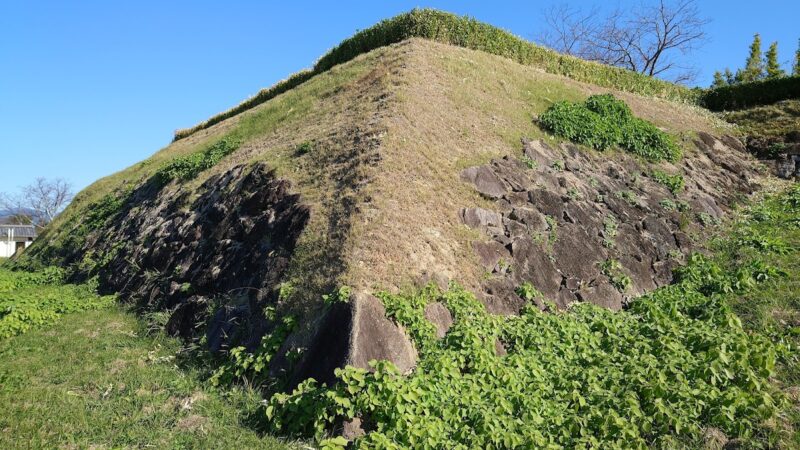
The main enclosure was roughly oval-shaped, measuring approximately 50 meters east-west and 70 meters north-south, and was surrounded by an earthen rampart. This rampart remains relatively well-preserved today, maintaining a height of about 2 to 3 meters. Although the enclosure is currently leveled as a gateball field, the basic topography of the castle remains. ### Characteristics of the Dry Moat and Earthen Embankment
The most prominent remains of Makabe Castle are the dry moat and earthen embankment surrounding the main enclosure. The dry moat is approximately 3 to 5 meters deep and 5 to 8 meters wide. The moat on the northwest side, in particular, employs a technique called “byobu-ori” (folding screen), resulting in a curved shape rather than a straight one.
This byobu-ori technique is a defensive technique that exposed the sides of the castle to enemies moving along the moat, making them vulnerable to attacks from within. This technique developed during the late Sengoku period, especially from the Tenbun to Eiroku eras, and is an important clue in estimating the construction or renovation period of Makabe Castle.
The earthen embankment is built inside the dry moat and surrounds the entire main enclosure. The top of the embankment is approximately 2 to 3 meters wide, and it is presumed that a fence or wall was once erected there. The outer side of the embankment has a steep slope, a design intended to make climbing difficult.
Entrance and Barbican
It is believed that Makabe Castle had multiple entrances (koguchi), but only the entrances on the south and east sides can be clearly identified today. The southern entrance, in particular, is accompanied by a small enclosure called a barbican, creating a complex structure designed to prevent enemy intrusion.
The barbican is a small enclosure built in front of the entrance, preventing the enemy from directly reaching the entrance and also serving as a gathering point for sorties. While the barbican at Makabe Castle is relatively small, it is a defensive structure widely seen in castles of the Sengoku period, indicating that this castle was constructed based on standard castle-building techniques of the time.
Belt Enclosure and Lower Enclosure
A long, narrow enclosure called a belt enclosure (obiguruma) surrounds the main enclosure. The belt enclosure served as a secondary line of defense for the main enclosure and was also used for troop deployment and storage of supplies.
Further outside is the lower enclosure, a larger area that is presumed to have housed living quarters, stables, and warehouses during peacetime. A clear difference in elevation existed between the lower and main enclosures, clearly establishing a defensive division.
Relationship with Residence Site
As mentioned above, the residence of Kamiya Mikawa-no-kami was located southeast of Makabe Castle, near the present-day Keisho-ji Temple. A dry moat remains at the site of this residence, indicating that a separate area for daily life existed, distinct from the castle.
This separation of the castle and residence is a typical pattern of castle layouts during the Sengoku period. During peacetime, the residence served as the primary residence, while during wartime, the strong castle was used for siege. The distance from the residence to the castle was approximately 500 meters, allowing for rapid movement in emergencies.
Current Status and Highlights
Preservation Status and Historic Site Designation
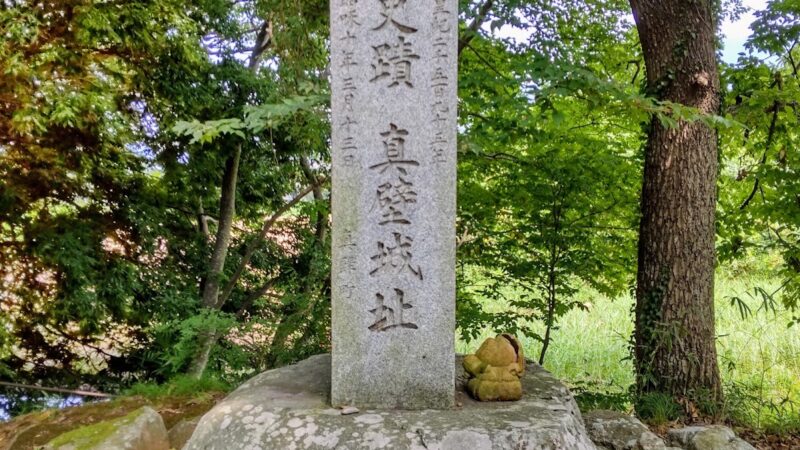
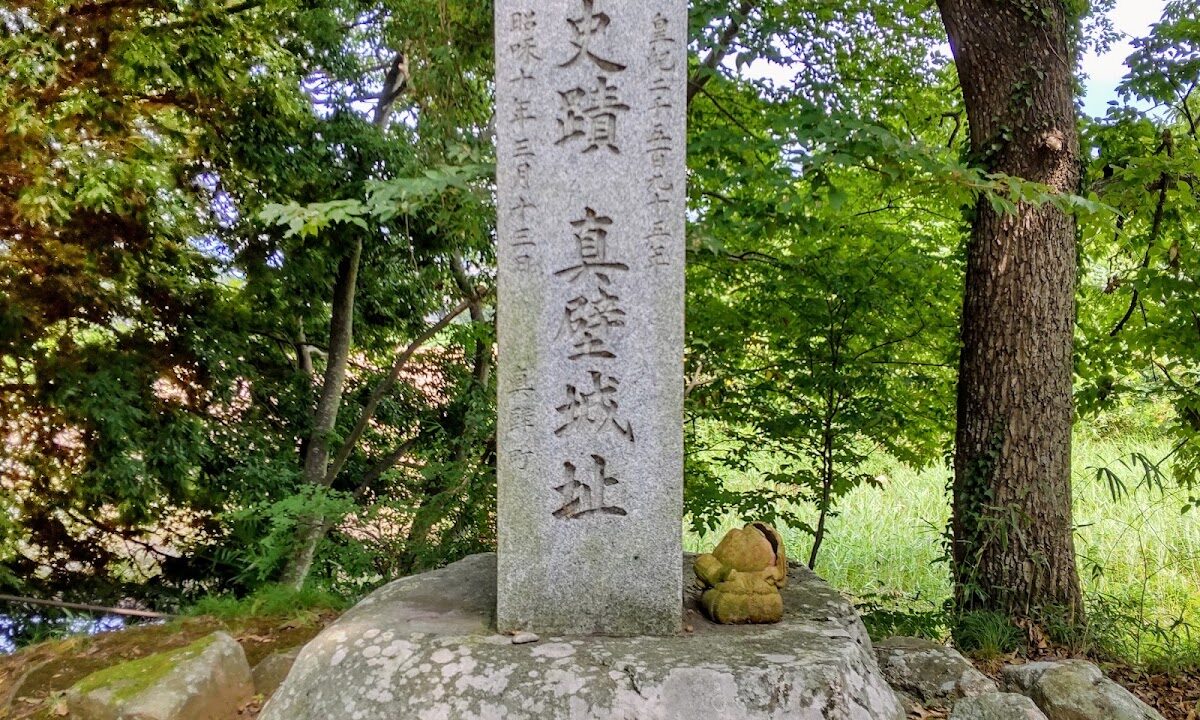
Makabe Castle Ruins are protected as a Shibukawa City designated historic site, and the main remains are preserved in relatively good condition. While the main enclosure area is used as a gateball field and the surface has been leveled, the surrounding earthworks and dry moats retain their original appearance.
There are no signs prohibiting entry to the gateball field in the second enclosure (Ninokuruwa), and visitors are welcome. However, since it is a facility used by local residents, consideration should be given to others when visiting.
Highlights of Your Visit
The main highlights of Makabe Castle are as follows:
Earthworks of the Main Enclosure: The earthworks surrounding the main enclosure are the best-preserved remains of Makabe Castle. The earthworks on the north and west sides, in particular, retain their height and vividly preserve the appearance of the castle. Walking along the top of the earthworks allows you to experience the view from the watchtower of that time.
Screen-Fold Dry Moat: The screen-fold dry moat on the northwest side is a valuable relic demonstrating the castle-building techniques of the Sengoku period. By observing the bent shape of the moat, you can understand the defensive measures taken.
Gate and Barbican: The structure of the gate and barbican on the south side shows how strictly entry and exit to the castle were controlled. Observing how the terrain changes before and after the castle gate reveals the defensive intentions.
View: From the main enclosure, you can overlook the surrounding terrain, allowing you to appreciate the strategic importance of this location and understand why the castle was built here. The view towards the Tone River and Shirai Castle evokes the defensive network of the time.
Access Information
Access to Makabe Castle Ruins is most convenient by car. It’s approximately 15 minutes from the Shibukawa-Ikaho Interchange on the Kan-Etsu Expressway, or about 10 minutes from the Komayose Smart Interchange.
If using public transportation, you will need to take a bus or taxi from Shibukawa Station on the JR Joetsu Line. However, since the number of services is limited, it is recommended to check the timetable in advance.
There is no dedicated parking lot around the castle ruins, but there are a few parking spaces along the roadside. However, since this is also a local road, please be careful not to obstruct the passage of local residents when parking.
Points to Note When Visiting
Makabe Castle Ruins are not a park-like castle site, but a space used by local residents. Please note the following points when visiting:
- When the site is used as a gateball field, please be considerate and avoid interfering with play.
- Some slopes of the earthworks and dry moats can be slippery, so please wear comfortable shoes.
- In summer, vegetation can grow thickly, making it difficult to see the remains.
- Information boards and explanatory signs are limited, so gathering information beforehand will deepen your understanding.
- Please be sure to take your trash with you and be careful not to damage the remains.
Related Historical Sites in the Surrounding Area
Shirai Castle
Shirai Castle, the main castle of Makabe Castle, is located approximately 4.6 kilometers north-northwest of Makabe Castle. As the residence of the Nagao clan, it was a central castle in this region. Shirai Castle is larger than Makabe Castle and is a flatland castle with a complex layout. When visiting Makabe Castle, we highly recommend also visiting Shirai Castle.
Hachizaki Castle
Located approximately 2 kilometers north-northwest of Makabe Castle, Hachizaki Castle was also one of the branch castles of the Shirai Nagao clan. Makabe Castle, Hachizaki Castle, and Shirai Castle formed a single defensive network, and visiting these sites provides insight into the realities of regional control during the Sengoku period.
Hakoda Castle
Located approximately 800 meters south-southeast of Makabe Castle, Hakoda Castle is a castle ruin with a similar scale and structure to Makabe Castle. The two castles are close together, suggesting they cooperated in defense. Hakoda Castle also sits on a low, oval-shaped hill, and comparing it to Makabe Castle provides insight into the typical form of branch castles in this region.
Keisho-ji Temple (Residence Site)
Keishoji Temple, the site of the residence of Kamiya Mikawa-no-kami, is located southeast of Makabe Castle. Remains such as dry moats still exist, making it an important historical site for understanding the relationship between castles and residences. Visiting it together with Makabe Castle provides a more comprehensive understanding of the living spaces of Sengoku period warlords.
Historical Significance of Makabe Castle
The Uesugi Clan’s Sphere of Influence in Kozuke Province
Makabe Castle played a crucial role in the Echigo Uesugi clan’s expansion of power into Kozuke Province. Uesugi Kenshin, as the Kanto Kanrei (governor of the Kanto region), frequently campaigned in the Kanto region, vying for supremacy with the Hojo clan. During this time, the Shirai Nagao clan became a vital support base.
Makabe Castle, positioned as a frontline subsidiary castle, served as a base to prepare for invasions by the Hojo and Takeda forces. Though small in scale, its strategically important location made it indispensable for maintaining control of the region.
Castle Construction Techniques of the Sengoku Period
The screen-fold moats and complex gate structures found at Makabe Castle are valuable examples demonstrating the development of castle construction techniques in the late Sengoku period. During this period, castles evolved from mere defensive structures to more advanced military bases, and Makabe Castle preserves this transitional form.
Particularly from the Tenbun era to the Eiroku era, castle structures became more complex in response to the spread of firearms and the development of siege techniques. The remains of Makabe Castle reveal the efforts of the people of that time to adapt to these changes.
Position in Local History
Makabe Castle is a historical site symbolizing the transition period from the medieval to the early modern period in the Kitatachibana region of Shibukawa City. This region has long been a transportation hub, a crucial point where water transport on the Tone River intersected with land routes. Makabe Castle was built taking advantage of these geographical conditions and functioned as the political and military center of the region.
Even after the castle’s abandonment, this region continued to develop as an important agricultural area, and remains so to this day. The Makabe Castle ruins are a valuable cultural asset that demonstrates the multifaceted history of this region and are part of its regional identity.
Current Status of Research and Investigation
Archaeological Investigation
While no full-scale excavation has been conducted at the Makabe Castle ruins, surface surveys and measurements have revealed the layout and arrangement of the remains. Distribution surveys conducted by Gunma Prefecture and Shibukawa City have recorded the extent of the castle ruins and the state of preservation of the remains. This information is included in publications such as the “Gunma Prefecture Municipal Distribution Map 2008” and “Comprehensive Survey of Japanese Castles, Vol. 4.”
Further detailed excavations may yield more specific information about the castle’s construction period, the lord’s life, and its functions. In particular, many aspects of its relationship to the residence ruins and its network with surrounding subsidiary castles remain unclear, and further research is anticipated.
Research Based on Historical Documents
While historical documents concerning Makabe Castle are limited, references to Makabe Castle and the Kamiya clan can be found in documents related to the Shirai Nagao and Uesugi clans. Sengoku period letters, in particular, contain sections describing the military situation in the region and the role of castles, providing important clues to understanding Makabe Castle’s historical position.
Further excavation and analysis of these documents are expected to clarify the specific historical picture of Makabe Castle.
Summary
Makabe Castle (Shibukawa City, Gunma Prefecture) is a small but strategically important castle built during the Sengoku period as a branch castle of the Shirai Nagao clan. Built on a hill approximately 220 meters above sea level, the castle measures approximately 50 meters east-west and 70 meters north-south, and its remains, including earthworks, dry moats, gates, and barbicans, are well-preserved.
The castle lord, Kamiya Mikawa-no-kami, was a senior retainer of the Shirai Nagao clan and was responsible for the defense of this region under the influence of the Echigo Uesugi clan. Even after its abandonment in 1590, the main remains were preserved and it is now protected as a Shibukawa City designated historical site.
Visiting the Makabe Castle ruins allows you to experience firsthand the castle structure, defensive techniques, and history of this region during the Sengoku period. Visiting nearby castles such as Shirai Castle, Hachizaki Castle, and Hakoda Castle will provide a deeper understanding of the realities of regional control during the Sengoku period.
Access is most convenient by car, approximately 15 minutes from the Shibukawa-Ikaho Interchange. When visiting, please be considerate of local residents and visit with the mindset of carefully preserving this valuable cultural property. Makabe Castle is an important historical site indispensable for understanding the medieval history of Gunma Prefecture, and further research and preservation activities are expected in the future.