The History and Complete Excavation of the Hinata-tate Site (Tomioka Town, Fukushima Prefecture) | Medieval Castle Site of the Iwaki Clan
The Hinata-tate Site, located in Tomioka Town, Futaba District, Fukushima Prefecture, is an important historical site in the history of Fukushima Prefecture, as it is a medieval castle site built during the Sengoku period. Built on a hill between the Tomioka River and the Negoya River, this site functioned as a base for the Iwaki clan’s control of the Hamadori region. This article comprehensively explains the historical background of the Hinata-tate Site, the details of the remains revealed by excavation, the characteristics of the unearthed artifacts, and the current state of preservation.
Location and Geographical Characteristics of the Hinata-tate Site
Location and Topography of the Site
The Hinata-tate Site is located in Hinata, Oaza Kohama, Tomioka Town, Futaba District, Fukushima Prefecture, approximately 2.5 km northwest of Tatsuta Station on the JR Joban Line. The ruins are located on a long, narrow hill stretching east to west, sandwiched between the Tomioka River and the Negoya River, at an elevation of approximately 40-50 meters. This hill was a strategically important location overlooking the surrounding plains, making it ideally suited for a military base in the medieval period.
Surrounding Environment and Transportation Hub
The area where Hyuga-kan was built was a crucial point on the transportation routes connecting the Hamadori and Nakadori regions since ancient times. The Tomioka River basin served as a route for transporting goods inland, and controlling this area meant controlling the regional economy. While present-day Tomioka Town was affected by the Great East Japan Earthquake and the nuclear power plant accident, historically it flourished as one of the central settlements in the Hamadori region.
Historical Background of the Hyuga-kan Site
Construction History and the Iwaki Clan
The exact construction date of Hyuga-kan is uncertain, but it is believed to have been built during the Eisho era (1504-1521) by Tomioka Yamato-no-kami Takatoki (also known as Iwaki Kuro). The Iwaki clan was a Sengoku daimyo (feudal lord) based in Iwaki County, Mutsu Province (present-day Iwaki City area), and their family expanded their power by establishing multiple branch castles in the Hamadori region.
Tomioka Yamato-no-kami Takatoki is thought to have been entrusted with governing this region as a member of the Iwaki clan. Hyuga-kan functioned as a base of operations, playing a role in governing the surrounding area and providing military defense.
Situation in the Hamadori Region during the Sengoku Period
In the 16th century, the Hamadori region was in a complex political situation with various forces such as the Iwaki, Soma, and Tamura clans competing for power. While the Iwaki clan was based at Iwaki-Taira Castle, they needed to establish branch castles around Tomioka, a border region with the Soma clan to the north. It is presumed that Hyuga-kan served as a forward base to prepare for invasions from the north, amidst the tensions of the Sengoku period.
Abandonment Period and Aftermath
There are no clear records of when Hyuga-kan was abandoned, but it is thought that many branch castles lost their function during the reorganization of the Iwaki clan’s power as a Sengoku daimyo after Toyotomi Hideyoshi’s pacification of Oshu in 1590. In the Edo period, this region came under the control of the Iwaki-Taira Domain, and it is presumed that Hyuga-kan ceased to function as a military base.
Summary of the Hyuga-kan Site Excavation Report
1986 Excavation
The first full-scale excavation of the Hyuga-kan site was conducted in 1986 (Showa 61) by the Tomioka Town Board of Education. A research team led by Mr. Hiroshi Yamada conducted excavations with the aim of confirming the extent of the ruins and clarifying the nature of the remains. The results of these investigations were published as “Tomioka Town Buried Cultural Properties Survey Report 6: Hyuga-kan Site Excavation Report,” and serve as important academic documentation confirming the historical value of the Hyuga-kan site.
Remains Confirmed in the Survey
The excavation revealed several remains characteristic of medieval castles. The main remains are as follows:
Arrangement of Enclosures (Kuruwa)
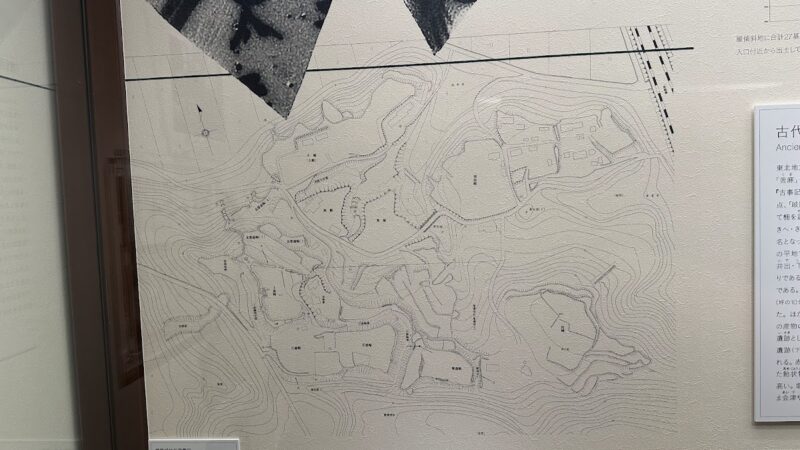
It was confirmed that multiple flat areas (enclosures) were constructed utilizing the hilly terrain. These enclosures are thought to have been used as defensive structures and living spaces.
Moats and Earthworks
Traces of moats excavated to divide the hills and earthworks for defense were detected. These functioned as defensive structures to prevent enemy intrusion.
Postholes and Building Remains
Multiple postholes were confirmed within the enclosures, revealing the existence of a post-and-beam building. These are presumed to be the main buildings and ancillary facilities of the mansion.
Characteristics of Excavated Artifacts
The excavation unearthed artifacts dating from the medieval to early modern periods. The main unearthed items include the following:
Ceramics
Fragments of pottery and porcelain from the 15th and 16th centuries were unearthed, providing important clues to estimating the period of the mansion’s use. In particular, Seto-Mino style pottery and fragments of Chinese celadon were found, indicating the extent of trade at that time.
Iron Products
Iron products such as knives and nails were unearthed, indicating their use in daily life and construction.
Earthenware (Haji-type)
Numerous fragments of earthenware (kawarake), used for rituals and daily tableware, were unearthed, providing insights into life at the mansion.
Details of the Remains at Hyuga-kan Site
Structure of the Main Enclosure
The main enclosure, the central part of Hyuga-kan, is located at the highest point of the hill and has been identified as a flat surface at an elevation of approximately 50m. The main enclosure is estimated to be approximately 40m east-west and 30m north-south, a medium size for a medieval residence. From the main enclosure, a wide view of the surrounding plains was possible, indicating its military surveillance function.
Arrangement of Defensive Facilities
Hyuga-kan featured a defensive system that skillfully utilized the natural terrain. The trenches cutting along the ridge of the hill functioned as important defensive lines to prevent enemy incursions. Furthermore, earthen ramparts surrounded the enclosures, forming a multi-layered defensive structure.
Arrangement and Function of the Enclosures
Several enclosures were arranged in a stepped pattern around the main enclosure, each presumably having a different function. The upper enclosures may have been used as living quarters for the lord and his family, while the lower enclosures may have served as living quarters for retainers, warehouses, stables, and other auxiliary facilities.
Hyuga Castle Site and Surrounding Medieval Castles
Castle Network in the Tomioka Region
Several medieval castle sites have been confirmed in the vicinity of Tomioka Town, in addition to Hyuga Castle. These formed a castle network that supported the Iwaki clan’s rule. The strategically placed castles, including Tomioka Castle and Obama Castle, stretching from the coast to the inland areas, cooperated with each other to defend and govern the region.
Iwaki Clan’s Castle Placement Strategy
The Iwaki clan adopted a strategy of placing numerous branch castles in the Hamadori region, centered around their base, Iwaki-Taira Castle. Hyuga Castle is thought to have been positioned as a key base on their northern defense line, playing an important role in the border region with the Soma clan.
Medieval Life as Seen from Archaeological Excavations
Daily Life at the Castle
Excavated artifacts reveal that the life of the samurai class was lived at Hyuga Castle. The discovery of ceramics indicates that the lord possessed a certain level of economic power and had access to a trade network with distant regions. Furthermore, the discovery of earthenware suggests that social activities such as rituals and banquets took place.
Diet and Livelihood
Analysis of animal bones and plant remains reveals aspects of the diet of the time. The discovery of fish bones indicates fishing activities in the Tomioka River and the use of marine products, showing that even in an inland area, the bounty of the sea was utilized. Agricultural production in the surrounding area was also important as a basis for livelihood.
Trade and Distribution of Goods
The discovery of Chinese celadon and Seto-Mino style pottery indicates that the Hyuga Castle was integrated into a wide-area trade network. These luxury goods also functioned as status symbols indicating the social standing of the lord.
Current Status and Preservation of the Hyuga-kan Site
Current State of the Site
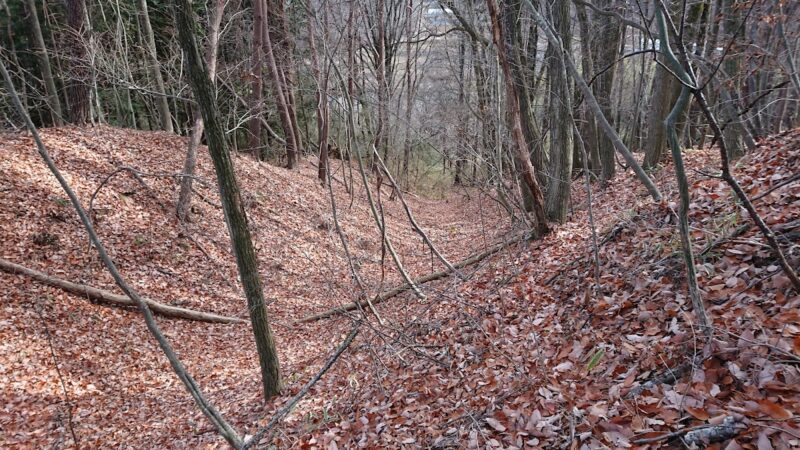
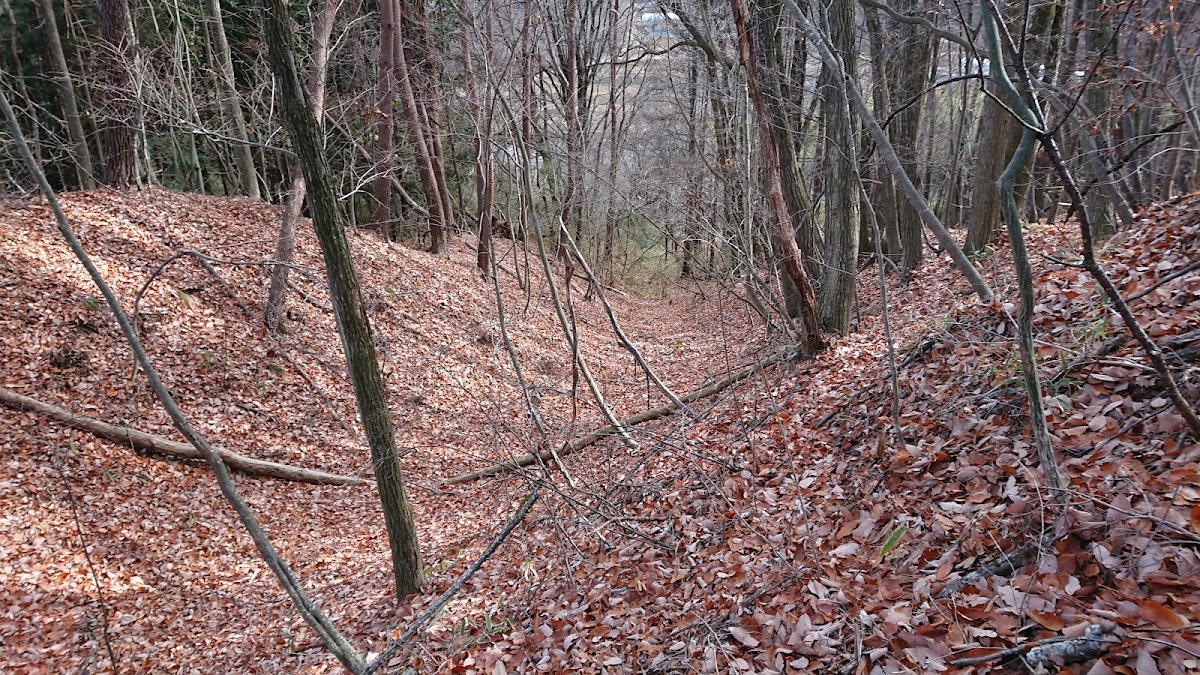
The Hyuga-kan site currently retains remains on a hilltop, but some parts have been altered by later development and natural erosion. However, the basic structures such as the main enclosures and moats can be confirmed as part of the topography, allowing us to reconstruct its original form.
Situation After the Great East Japan Earthquake
The Great East Japan Earthquake of 2011 and the Fukushima Daiichi Nuclear Power Plant accident resulted in Tomioka Town becoming a long-term evacuation zone. The Hyuga-kan site was also included in the affected area, but with the gradual lifting of evacuation orders, efforts toward the preservation and utilization of cultural properties are resuming.
Challenges in Preservation and Utilization
Preserving medieval castle sites like the Hyuga-kan site requires continuous efforts such as preventing weathering of the remains and managing vegetation. Furthermore, utilization as a resource for local history education and tourism is also an important issue. The formulation of a cultural property preservation and utilization plan is expected to proceed in parallel with the reconstruction of Tomioka Town.
Access and Visiting Information for the Hyuga-kan Site
Access Methods
Using Public Transportation
The site is approximately 2.5 km northwest of Tatsuta Station on the JR Joban Line, about a 30-40 minute walk. A taxi ride from Tatsuta Station takes about 5-10 minutes.
Using a Car
The site is accessible in about 10 minutes from the Tomioka Interchange on the Joban Expressway. However, there is no dedicated parking lot near the site, so please check the surrounding conditions before visiting.
Precautions During Visits
While the Hyuga-kan Site is protected as a historical site, it is not a well-maintained visitor facility. Please note the following points when visiting.
- Do not enter private property or restricted areas.
- Do not damage the ruins or take any artifacts.
- Wear appropriate clothing and shoes as there are uneven areas.
- In summer, long sleeves and long pants are recommended due to the lush vegetation.
Related Historical Sites in the Surrounding Area
When visiting the Hyuga-kan ruins, visiting related historical sites in Tomioka town and the surrounding area will allow you to gain a deeper understanding of the region’s history. Tomioka Castle ruins and Obama Castle ruins are also known as sites related to the Iwaki clan.
Significance and Future Challenges of Hyuga-kan Ruins Research
Academic Value
The Hyuga-kan ruins are a valuable site that shows the reality of regional control in the Hamadori region during the Sengoku period. It provides important materials for studying the Iwaki clan’s branch castle system and the lifestyle and culture of local samurai in the medieval period. Furthermore, the data obtained from the excavation surveys is essential basic information for the study of medieval history in Fukushima Prefecture.
Unresolved Issues
Many aspects of the Hyuga-kan site remain unclear. Further research is expected, particularly regarding the following issues:
- Detailed structure and transformation process of the castle
- Specific activities and lineage of Tomioka Yamato-no-kami Takatoki
- Relationship with surrounding castles and the reality of the defense network
- The exact timing and circumstances of the castle’s abandonment
- Specific living conditions of the people involved with the castle
Future Research Directions
To further clarify the value of the Hyuga-kan site, additional archaeological excavations and a thorough examination of historical documents are necessary. In particular, detailed recording of the remains using the latest surveying technologies such as GPS and drones, scientific analysis of excavated artifacts, and comparative studies with surrounding sites would be effective. Furthermore, recording the memories and traditions of local residents is also important for understanding the historical context of the site.
Positioning within Medieval Castle Research in Fukushima Prefecture
Characteristics of Medieval Castles in Fukushima Prefecture
Fukushima Prefecture has confirmed over 1,000 medieval castle sites, making it a region with a high density of castles compared to the rest of the country. This reflects the complex political situation in the Middle Ages, where the Aizu, Nakadori, and Hamadori regions each belonged to different spheres of influence. The Hyuga-kan site, as a representative medieval castle in the Hamadori region, is indispensable for understanding the region’s history.
Research on Castles in the Hamadori Region
Many medieval castles in the Hamadori region were built by local powers such as the Iwaki and Soma clans, each functioning as a base for regional control. Research on the Hyuga-kan site provides important clues for elucidating the medieval history of the Hamadori region. In particular, it is a valuable case study for understanding the Iwaki clan’s system of rule and the structure of the local community.
Summary
The Hyuga-kan site, located in Tomioka Town, Fukushima Prefecture, is a medieval castle site from the Sengoku period, and was an important base for the Iwaki clan’s control of the Hamadori region. Excavations in 1986 confirmed the remains of baileys, moats, and building foundations, and the unearthed artifacts shed light on aspects of the lifestyle and culture of the time.
Located on a hill between the Tomioka River and the Negoya River, the Hyuga-kan (Hyuga Castle) held a strategically important position both militarily and economically. Built during the Eisho era by Tomioka Yamato-no-kami Takatoki, it played a crucial role in northern defense amidst the tense relations of the Sengoku period (Warring States period).
Although the Hyuga-kan ruins are located in an area affected by the Great East Japan Earthquake and the nuclear disaster, its historical value is expected to be re-recognized, preserved, and utilized alongside the reconstruction of Tomioka Town. This site, which holds a significant place in the study of medieval history in Fukushima Prefecture, is expected to have its full scope revealed through further research and investigation.
Visiting the Hyuga-kan ruins offers more than just a chance to see the ruins; it provides an opportunity to reflect on the history of the Hamadori region during the Sengoku period and reaffirm the value of the region’s cultural heritage. As one of Fukushima Prefecture’s rich historical assets, the Hyuga-kan ruins are a valuable cultural property that should continue to be carefully preserved, researched, and utilized.