Takatama Castle (Fukushima Prefecture) Complete Guide | History, Remains, and Access Explained in Detail
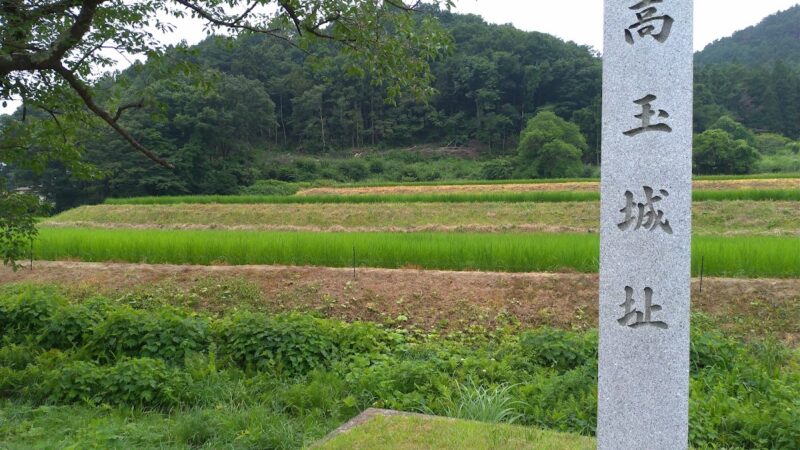
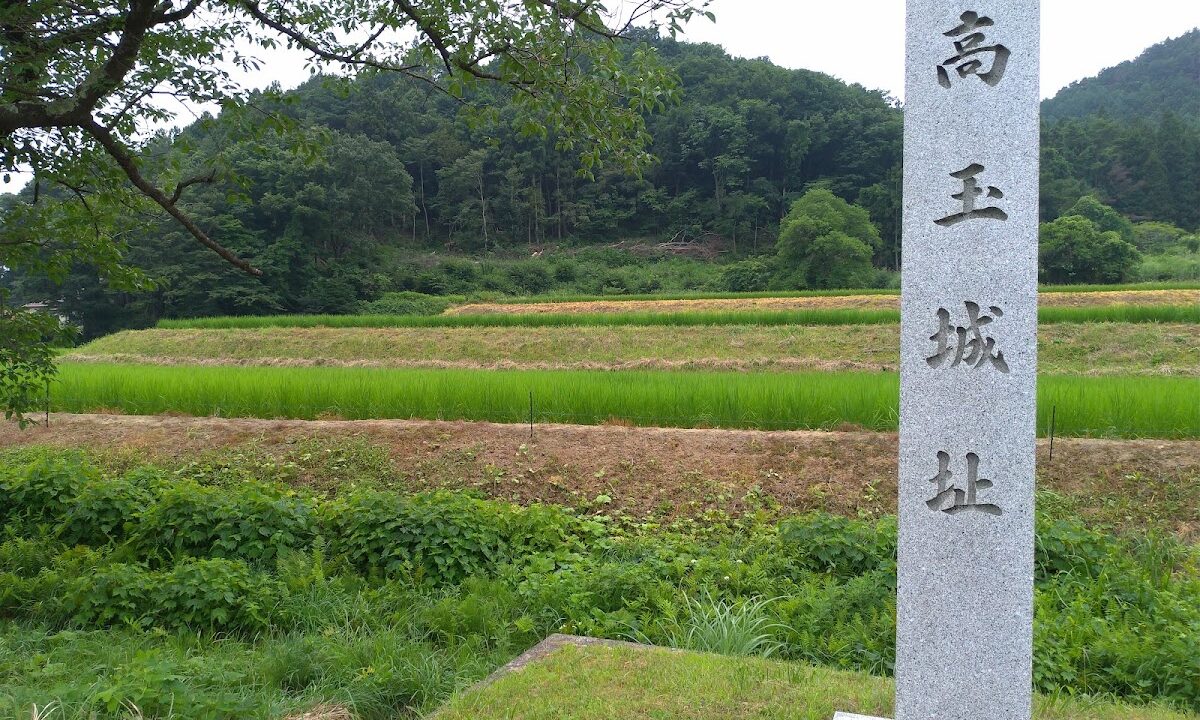
Takatama Castle (Takatama-jo) is a Japanese mountain castle located in Takatama, Atami-machi, Koriyama City, Fukushima Prefecture. During the Sengoku period, it served as the residence of the Takatama clan, a branch of the Nihonmatsu clan, and fell in 1589 during an invasion by Date Masamune. Although no buildings remain today, the remains such as earthworks and baileys are well-preserved, making it a valuable historical site that conveys the appearance of a Sengoku period mountain castle.
Basic Information on Takatama Castle
Takatama Castle is a mountain castle built on a hill approximately 40-50 meters high, located about 600 meters west of the Bandai-Atami Interchange on the Ban-etsu Expressway. Its elevation is approximately 380 meters, situated in a strategic location overlooking the surrounding area.
Location and Access
Location: Kitanashikodaira, Takatama, Atami-machi, Koriyama City, Fukushima Prefecture
Access Method:
- By Car: Approximately 5 minutes from the Bandai-Atami Interchange on the Ban-etsu Expressway
- By Public Transportation: Approximately 20 minutes on foot from Bandai-Atami Station on the JR Ban-etsu West Line
- When you reach Prefectural Road 24, you will see the mountain ridge of the castle ruins on your right.
Castle Classification and Scale
Castle Classification: Mountain Castle (Hill Castle)
Former Province: Mutsu Province
Common Name/Alternate Name: Takatama-kan
Relative Height: Approximately 40-50 meters
Elevation: Approximately 380 meters
History of Takatama Castle
Construction History and Builder
While there are no clear records regarding the construction date of Takatama Castle, it is believed to have been built during the Sengoku period by the Takatama clan, a branch of the Nihonmatsu clan. The Takatama clan was a branch of the Nihonmatsu clan, and they built Takatama Castle as a base to control this region.
The Nihonmatsu clan was a powerful family that held sway primarily in Adachi County from the Muromachi period to the Sengoku period, and its branches dispersed to surrounding areas, solidifying their control. The Takatama clan was one of these branches, functioning as a regional lord governing the area around Atami-cho in Koriyama City.
Takatama Castle in the Sengoku Period
During the Sengoku period, Takatama Castle was used as the residence of the Takatama clan. As the lords of the castle, the Takatama clan, as a branch of the Nihonmatsu clan, played a part in the sphere of influence centered around the main Nihonmatsu Castle (Nihonmatsu City, Fukushima Prefecture).
At that time, the Tohoku region was in a turbulent era where daimyo such as the Date, Ashina, and Satake clans vied for supremacy. Takatama Castle also became entangled in these conflicts between the Sengoku daimyo. In particular, during the Tensho era (1573-1592), the conflict with Date Masamune, who was rapidly expanding his power, deepened.
Fall of Takatama Castle in Tensho 17
The most important event in the history of Takatama Castle is its fall in Tensho 17 (1589). In that year, Date Masamune destroyed the Ashina clan of Aizu (Battle of Suriagehara) and then advanced southward, beginning his invasion of the Nihonmatsu clan’s territory.
Katakura Kagetuna (Katakura Kojuro), a retainer of Date Masamune, attacked Takatama Castle, and after a fierce battle, the castle fell. In this battle, the castle lord, Takatama Tsuneyori, was killed, and the Takatama clan was destroyed. Katakura Kagetuna was a renowned general known as a close confidant of Date Masamune, and it was his military talent that led to the capture of Takatama Castle.
Following this fall, Takatama Castle was abandoned and never used again. 1589 (Tensho 17) was a time when Date Masamune wielded the greatest power in the Tohoku region, and the fall of Takatama Castle is seen as part of his expansionist policies.
History after the Fall of the Castle
After Takatama Castle fell, the region came under the control of the Date clan. However, due to Toyotomi Hideyoshi’s pacification of Oshu, Date Masamune’s Aizu territory was confiscated. Subsequently, the region became the territory of the Gamo and Uesugi clans, who ruled Aizu, and during the Edo period, it was governed as part of the Aizu Domain.
Having lost its function as a castle, Takatama Castle was left abandoned, and although the buildings decayed, the remains of earthworks and baileys continued to exist as part of the topography. To this day, having escaped large-scale development, it has preserved the appearance of a Sengoku period mountain castle in relatively good condition.
Remains and Layout of Takatama Castle
Existing Remains
The following remains still exist at Takatama Castle:
Earthworks: Earthworks built as defensive structures for the castle remain in various places. The earthworks around the main enclosure are particularly well-preserved, providing valuable information about the castle construction techniques of the time.
Enclosures (Kuruwa): Multiple enclosures are arranged in a stepped fashion, demonstrating a layout that utilizes the unique terrain of a mountain castle. It is believed that the main enclosure was at the center, with second and third enclosures arranged around it.
Moat: Traces of moats cut across the ridge can be seen. This was an important defensive structure to prevent enemy intrusion.
Cliffs: Steep cliffs surround the enclosures, demonstrating a design intended to make it difficult for attackers to approach.
Castle Layout and Structure
Takayama Castle is a mountain castle built on a hill approximately 40-50 meters high, with a layout that skillfully utilizes the natural terrain. The castle is built on a long, narrow ridge running north-south, and has a linear structure with multiple enclosures surrounding the main enclosure.
The main enclosure is located in the center of the castle, at the highest point. From here, one can overlook the surrounding area, making it an ideal location for monitoring enemy movements. Earthen ramparts surrounded the main enclosure, strengthening its defenses.
The second and third enclosures are positioned in front of and behind the main enclosure, forming a stepped defensive line. Each enclosure is demarcated by moats and steep slopes, ensuring that even if one enclosure is breached, the next enclosure can provide defense.
This layout is typical of mountain castles from the Sengoku period, and demonstrates ingenuity in maximizing defensive effectiveness with limited resources.
The Takatama and Nihonmatsu Clans
Genealogy of the Nihonmatsu Clan
The Nihonmatsu clan was a powerful local family that held sway primarily in Adachi District, Mutsu Province, from the Muromachi period to the Sengoku period. Originally a branch of the Hatakeyama clan, they established themselves in this region from the Nanboku-cho period to the Muromachi period.
The Nihonmatsu clan used Nihonmatsu Castle (present-day Nihonmatsu City, Fukushima Prefecture) as their base and consolidated their control by placing family members in the surrounding areas. The Takatama clan, as one of its branches, is believed to have been entrusted with governing the area around Atami-cho, Koriyama City.
Role of the Takatama Clan
As a branch of the Nihonmatsu clan, the Takatama clan played an important role in supporting the main family. Takatama Castle was located south of Nihonmatsu Castle and is thought to have functioned as a defensive base against invasions from the Aizu region.
As a regional lord during the Sengoku period, the Takatama clan was responsible for governing their territory, collecting taxes, and mobilizing military forces. Furthermore, when the main branch of the Nihonmatsu clan fought against other daimyo, they likely had an obligation to lead troops and participate in the battles.
Takatama Tsuneyori and the Fall of the Castle
At the time of the castle’s fall in 1589 (Tensho 17), the lord was Takatama Tsuneyori. Tsuneyori fought to defend the castle against an attack by Katakura Kagetuna, a retainer of Date Masamune, but was ultimately killed in battle.
With Tsuneyori’s death, the Takatama clan became extinct, and Takatama Castle was abandoned. This fall was part of the overall decline of the Nihonmatsu clan’s power, and eventually, the Nihonmatsu clan surrendered to Date Masamune.
Date Masamune and Katakura Kagetuna
Date Masamune’s War to Unify Tohoku
After inheriting the family headship in 1584 (Tensho 12), Date Masamune rapidly expanded his power. He successively conquered the surrounding powerful clans, and in 1589, he destroyed the Ashina clan of Aizu, becoming the largest force in Tohoku.
Masamune’s strategy was to first conquer large forces and then gradually subdue the smaller forces surrounding them. The capture of Takatama Castle is thought to have been part of a strategy to isolate the Nihonmatsu clan.
The Achievements of Katakura Kagetuna
Katakura Kagetuna (Katakura Kojuro) was a renowned general known as a close confidant of Date Masamune, playing a crucial role in Masamune’s military operations. Kagetuna was exceptionally intelligent and courageous, achieving great success in many battles.
In the capture of Takatama Castle, Kagetuna skillfully used tactics to capture the castle. Capturing mountain castles is more difficult than capturing castles on flat ground, but it is believed that Kagetuna’s military talent allowed him to capture the castle in a relatively short period.
Kagetuna continued to serve Masamune, distinguishing himself in the Battle of Sekigahara and the Siege of Osaka, and becoming a key retainer of the Sendai Domain. ## Highlights of Takatama Castle
Observation Points for the Ruins
The following are highlights to look out for when visiting Takatama Castle:
Observation of Earthworks: The earthworks remaining around the main enclosure are valuable for understanding the castle construction techniques of the Sengoku period. By observing the height, width, and construction method of the earthworks, you can understand the defensive thinking of the time.
Arrangement of Enclosures: You can see how multiple enclosures are arranged in a stepped pattern. From the size and arrangement of each enclosure, you can infer the function and importance of the castle.
Moats: Moats cutting across the ridge are defensive structures unique to mountain castles. From their size and location, you can decipher the castle’s defensive plan.
View: From the castle ruins, you can overlook the surrounding area and truly understand why the castle was built in this location. The castle lords of the Sengoku period likely saw the same view.
Points to Note When Visiting
When visiting Takatama Castle Ruins, please note the following:
- As it is a mountain castle, please wear appropriate clothing and shoes for hiking.
- The undergrowth can be dense in summer, so visiting in spring or autumn is recommended.
- Please do not stray from designated routes to avoid damaging the ruins.
- Visiting in a group is safer than visiting alone.
- Be aware of wild animals such as bears, and it is recommended to carry a bell or similar device.
Related Historical Sites in the Surrounding Area
Nihonmatsu Castle
This was the residence of the Nihonmatsu clan, the main branch of the Takatama clan. Located in Nihonmatsu City, Fukushima Prefecture, it is currently maintained as Kasumigajo Park. It features stone walls and reconstructed turrets, allowing visitors to see a larger castle complex than Takatama Castle.
Bandai Atami Onsen
Bandai Atami Onsen is located near Takatama Castle, allowing you to enjoy the hot springs after visiting the castle ruins. A travel plan combining historical sightseeing and hot springs is also recommended.
Other Castle Sites in Koriyama City
Koriyama City also has many other medieval castle sites, including Yasugashima Castle, Maedazawa Castle, Katahira Castle, and Otsuki Castle. Visiting these along with Takatama Castle will allow you to gain a deeper understanding of the medieval history of this region.
Historical Significance of Takatama Castle
Remains Demonstrating Regional Governance in the Sengoku Period
Takatama Castle is an important remains that demonstrates the nature of regional governance in the Sengoku period. It concretely illustrates the governing system of the time, where branch families of daimyo were stationed in surrounding areas, each constructing castles and governing their territories.
Telling the Story of Date Masamune’s Unification of Tohoku
The fall of Takatama Castle in 1589 (Tensho 17) is positioned as one event in Date Masamune’s process of unifying Tohoku. Takatama Castle holds significant importance as a historical site that concretely shows how Masamune became the most powerful force in Tohoku.
Resources for Mountain Castle Research
The remains of Takatama Castle are valuable resources for the study of mountain castles in the Sengoku period. The remains of earthworks, baileys, and moats are well-preserved, making it important for understanding the castle-building techniques and defensive philosophies of the time.
Summary
Takayama Castle is a Sengoku period mountain castle located in Atami-cho, Koriyama City, Fukushima Prefecture. It was used as the residence of the Takayama clan, a branch of the Nihonmatsu clan. In 1589, it was captured by Katakura Kagetuna, a retainer of Date Masamune, and fell after the death of its lord, Takayama Tsuneyori, leading to its abandonment.
Although no buildings remain today, the remains of earthworks, baileys, and moats are well-preserved, conveying the appearance of a Sengoku period mountain castle. It is relatively easy to access, being close to the Bandai-Atami Interchange on the Ban-etsu Expressway.
Takayama Castle is an important historical site for understanding the history of the Tohoku region during the Sengoku period, particularly Date Masamune’s unification of Tohoku, and is also a valuable resource for mountain castle research. It is a historical spot that you should definitely visit when you are in Fukushima Prefecture.