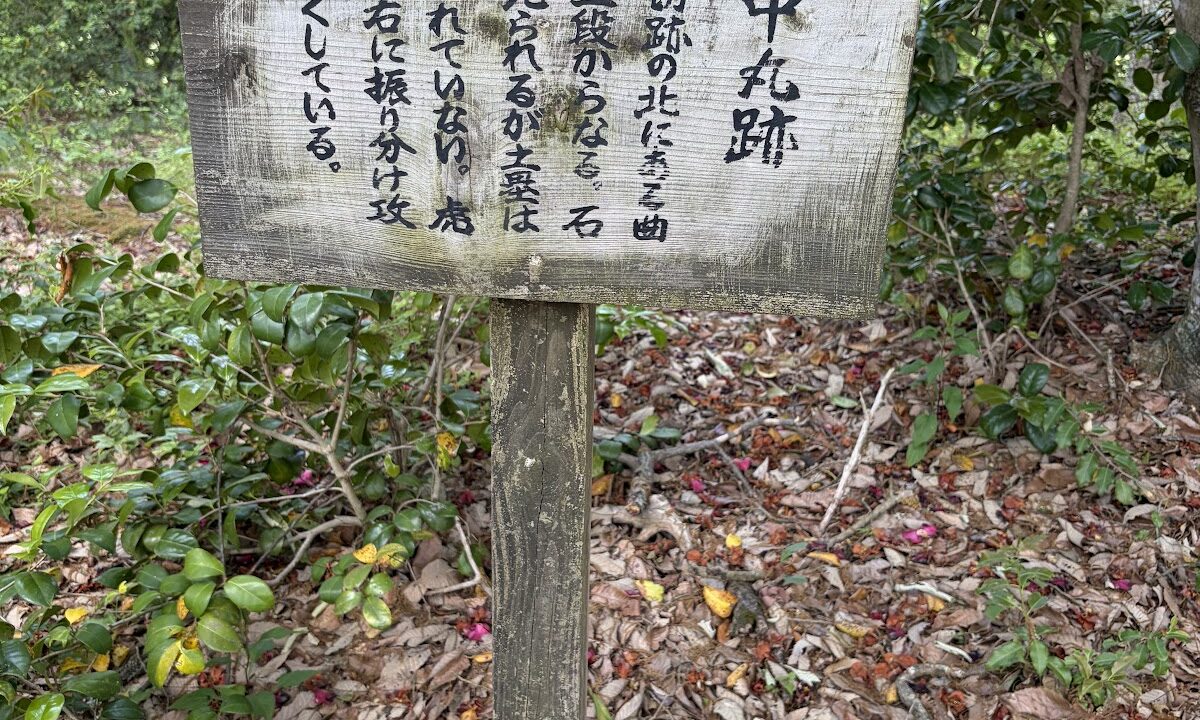
Nakamaru-kan Ruins (Fukushima Prefecture): A Thorough Explanation of History and Remains
There are several medieval castle ruins in Fukushima Prefecture that bear the name “Nakamaru-kan.” These are residences and fortresses built by medieval samurai, and are valuable cultural assets that convey the history of the region to the present day. This article provides a comprehensive explanation of Nakamaru-kan ruins in the prefecture, based on research findings including the Fukushima Prefectural Board of Education’s survey report, “Medieval Castle Ruins in Fukushima Prefecture” (Fukushima Prefectural Cultural Property Survey Report No. 197, 1988).
Overview of Medieval Castle Ruins in Fukushima Prefecture
In the medieval period, Fukushima Prefecture was divided into three regions: Aizu, Nakadori, and Hamadori, each ruled by different forces. Therefore, more than 1,200 archaeological sites have been identified within the prefecture, including numerous medieval castle ruins.
Classification and Characteristics of Medieval Castle Ruins
Medieval castles can be broadly classified into the following types:
Mountain Castles: Defensive fortresses utilizing mountainous terrain, functioning as bases during wartime. Characterized by steep terrain and defensive structures such as baileys and moats.
Flatland Castle/Residence: A residence built on flat land, used as an everyday living space. Typical examples are rectangular residences surrounded by earthworks and moats.
Hirayama Castle: Built on hills or plateaus, possessing characteristics intermediate between mountain castles and flatland castles.
The Nakamaru Residence site in Fukushima Prefecture is often classified as a flatland castle/residence, functioning as a residence for influential samurai in the region.
Nakamaru Residence Site, Ishikawa Town, Ishikawa District
The Nakamaru Residence site, located in Shimoizumi, Ishikawa Town, Ishikawa District, is a flatland castle situated around the Hachiman Shrine. This residence site has relatively well-preserved remains and is an important case study in the study of medieval castles.
Characteristics of the Remains
The following remains have been confirmed at the Nakamaru Manor site in Ishikawa Town:
- Earthwork: An earthen embankment surrounding the manor, serving a defensive function.
- Enclosure (Kuruwa): A partitioned, flat area where buildings were constructed.
- Moat: A ditch surrounding the manor, serving both defensive and demarcative purposes.
These remains exhibit the typical structure of a rectangular residence and are valuable resources for understanding the residence forms of local samurai during the medieval period.
Historical Background
Ishikawa County was under the control of the Ishikawa clan during the medieval period, and many residences of their retainers were built in the surrounding area. Nakamaru Manor is thought to have been built as part of this regional control system. While historical records regarding the specific construction date and lord are limited, its relationship with surrounding castle sites suggests it functioned between the 14th and 16th centuries.
Nakamaru Manor Site, Tanagura Town, Higashishirakawa District
The Nakamaru Manor site, located in Tanagura Town, Higashishirakawa District, is a rectangular residence situated approximately 3.1 km north of Tanagura Castle. This manor is an important castle site, with records preserved in historical documents.
Construction and Changes in Lords
The history of Nakamaru Manor unfolded as follows:
Bunki Era (1501-1504): It served as the residence of Nakamaru Sakyo-dayu, a member of the Tamura clan. The Tamura clan was a powerful Sengoku daimyo based in Miharu, indicating that their family extended their influence to the Tanagura region.
Mid-Sengoku Period: It became the residence of Kamitono Mino-no-kami Morihide, a vassal of the Shirakawa Yuki clan. The Shirakawa Yuki clan was a Sengoku daimyo ruling the Shirakawa region, and the Tanagura region was located at the northern edge of their sphere of influence.
Eiroku 3 (1560): In preparation for an invasion by the Satake clan, the Shirakawa Yuki clan constructed Akadate Castle. When Kamitono Morihide moved to Akadate as its lord, Nakamaru Castle was abandoned.
Location and Structure
Nakamaru Castle in Tanagura Town is thought to have been a typical rectangular residence, surrounded by earthworks and a moat. Located north of Tanagura Castle, it may have played a role in the defense line of the Tanagura region.
Historical Significance
This castle site is an important historical site that tells the story of the political situation during the Sengoku period, specifically the shift in power from the Tamura clan to the Shirakawa Yuki clan. It is also noteworthy as an example of a change in the defense system in response to the Satake clan’s southward expansion policy.
Relationship with Nakamaru Castle Ruins in Kaneyama Town
There are also castle ruins named “Nakamaru Castle” within Fukushima Prefecture. Nakamaru Castle (also known as Yokota Nakamaru Castle or Tateiwa Castle), located in Yokota, Kaneyama-cho, Onuma-gun, is a mountain castle and differs in character from “Nakamaru-kan.”
Overview of Nakamaru Castle
- Location: Yokota, Kaneyama-cho, Onuma-gun
- Builder: Yamauchi Toshiaki (Nanboku-cho period)
- Main Lords: Yamauchi clan (Yamanouchi clan)
- Remains: Enclosures, stone walls, earthworks, moats
- Designation: Town-designated historical site
Nakamaru Castle was built during the Nanboku-cho period, and during Date Masamune’s invasion of Aizu in 1589, a fierce battle unfolded there during the time of the 18th head of the Yamanouchi clan, Yamanouchi Ujikatsu. Marishiten is enshrined at the top of the main enclosure.
Differences Between “Mansion” and “Castle”
While “Nakamaru Mansion” and “Nakamaru Castle” have similar names, they differ in the following ways:
Nakamaru Mansion (Flatland Castle/Residence):
- A residential facility built on flat land
- A space for everyday living
- Relatively simple defensive facilities
- Rectangular enclosure formed by earthworks and moats
Nakamaru Castle (Mountain Castle):
- A military facility utilizing mountainous terrain
- A base during wartime
- Full-fledged defensive facilities (stone walls, moats, baileys, etc.)
- Complex layout
This difference is important for understanding the lifestyle of samurai in the Middle Ages. They lived in mansions on flat land during peacetime and fortified themselves in mountain castles during wartime.
History of Medieval Castle Site Surveys in Fukushima Prefecture
The full-scale survey of medieval castle sites in Fukushima Prefecture advanced significantly with the publication of “Medieval Castle Sites in Fukushima Prefecture” (Fukushima Prefecture Cultural Property Survey Report No. 197) by the Fukushima Prefectural Board of Education in 1988.
Contents of the Survey Report
This report comprehensively surveys medieval castle sites within the prefecture and records the following information:
- Location and topography of each castle site
- Current state of remains (earthworks, moats, baileys, etc.)
- History as seen in historical documents
- Information on castle lords and construction dates
- Survey maps and photographs
This survey has revealed the actual state of many castle sites whose details were previously unknown.
Significance of the Survey
The survey of medieval castle sites in Fukushima Prefecture has significant importance in the following respects:
Elucidation of Regional History: It has become possible to understand the political and military situation in each region during the medieval period in concrete terms.
Cultural Property Protection: By recording the location and current state of the ruins, it has become basic data to prevent destruction due to development, etc.
Establishment of Research Foundation: The prefecture-wide survey has made it possible to position individual castle sites from a broader regional perspective.
Regional Identity: They are recognized as local historical heritage and have become a source of regional pride.
Current Status and Preservation of Nakamaru Castle Ruins
Many Nakamaru castle ruins in Fukushima Prefecture still exist in their respective regions, but their preservation status varies.
Preservation Challenges
Disappearance due to Development: Some castle ruins have already disappeared due to urbanization and agricultural land development.
Deterioration of Remains: Earthworks and moats are weathering over time and losing their original form.
Low Awareness: Even locally, the existence of castle ruins is sometimes not well known.
Difficulty in Management: When located on private land, proper management can be difficult.
Preservation Efforts
The following preservation activities are being carried out at some Nakamaru castle ruins:
Cultural Property Designation: Important castle ruins are designated as municipal historical sites and receive legal protection.
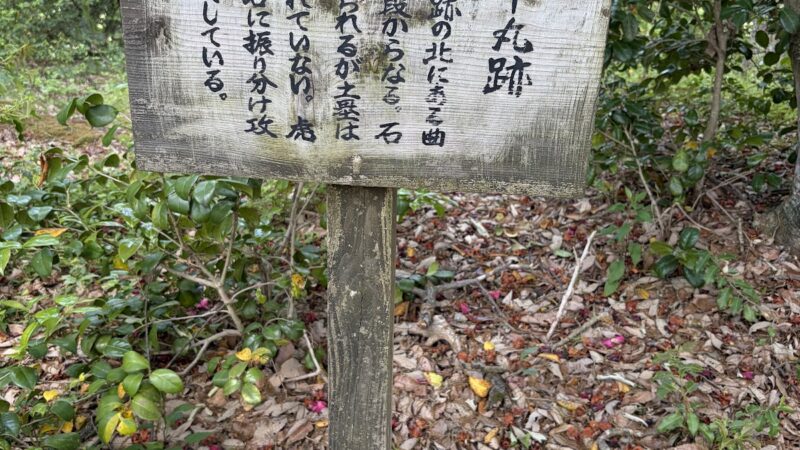
Installation of Information Boards: Information boards explaining the history and remains are installed for visitors.
Collaboration with the Community: Local history enthusiasts and local governments are cooperating in preservation activities.
Continued Research and Investigation: Academic research is continuously being conducted by universities and research institutions.
Points to Note When Visiting the Nakamaru Manor Site
When actually visiting the Nakamaru Manor site, paying attention to the following points will lead to a deeper understanding.
Points to Note During Your Visit
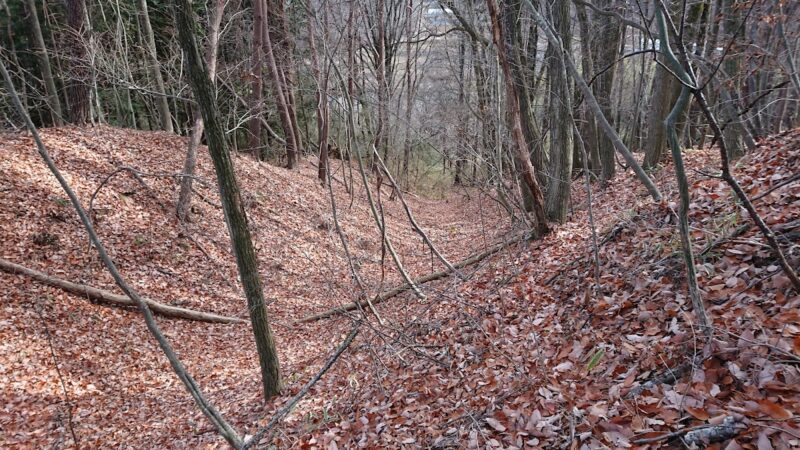
Checking for Earthworks: Look for the raised areas of earth remaining around the manor. These are remnants of earthworks.
Traces of Moats: Although they may now be filled in or covered by rice paddies or roads, areas lower than the surrounding area may be traces of moats.
Observing the Topography: By observing the terrain on which the manor was built, you can understand the intention behind its location.
Surrounding Place Names: Place names such as “manor,” “castle,” “fortification,” and “fortified residence” suggest the presence of castle or manor sites.
Precautions During Your Visit
Respect for Private Property: Many manor sites are located on private property. Please refrain from trespassing.
Safety Precautions: Appropriate equipment and preparation are necessary when visiting sites in forests or dense undergrowth.
Protection of Historical Structures: Act carefully to avoid damaging earthworks and moats.
Prior Research: Obtaining information from the local education board or local history museum before your visit will lead to a more fulfilling experience.
Historical Background of Medieval Fukushima
Understanding the Nakamaru Manor Site requires knowledge of the historical background of medieval Fukushima.
From the Kamakura Period to the Nanboku-cho Period
During the Kamakura period, samurai clans such as the Date, Ishikawa, Tamura, Iwaki, and Soma clans were established in the Fukushima Prefecture area. These samurai served as retainers of the Kamakura Shogunate, governing their respective territories. During the Nanboku-cho period, they were divided into the Northern and Southern Courts, fighting each other and many castles and manors were built.
Sengoku Period
During the Sengoku period (Warring States period), powerful clans such as the Ashina clan of Aizu, the Tamura clan of Miharu, the Yuki clan of Shirakawa, the Soma clan, and the Date clan vied for supremacy. During this time, each power built numerous castles and fortified residences to defend and expand their territories, deploying their vassal groups. Many of the Nakamaru residences are believed to have played an important role during this period.
The Turmoil of the Tensho Period
The Tensho period (1573-1592), particularly Date Masamune’s invasion of Aizu in 1589, had a significant impact on castles and fortified residences in the Fukushima Prefecture area. Many castles became battlefields or were strategically abandoned.
Edo Period and Beyond
With the advent of the Edo period, modern castles (such as Aizu-Wakamatsu Castle, Shirakawa-Komine Castle, and Nihonmatsu Castle) were developed, and many medieval castles and fortified residences ceased to serve their purpose and were abandoned. Subsequently, these areas became farmland or forests, remaining so to this day.
Future Prospects for Research on the Nakamaru Castle Site
Research on medieval castle sites in Fukushima Prefecture, including the Nakamaru Castle site, has the potential for further development.
New Research Methods
Laser Surveying (LiDAR): Aerial laser surveying allows for accurate identification of remains even within forested areas covered by trees.
Ground Penetrating Radar Survey: Technology for exploring underground remains without excavation is advancing.
Drone Photography: Aerial photography makes it easier to grasp the overall structure of remains.
GIS (Geographic Information System): Analyzing the positional relationships of multiple castles allows for the elucidation of regional control structures.
Expected Results
Determination of Construction Date: Excavation and analysis of unearthed artifacts may reveal more accurate dates.
Identification of Castle Lord: Excavation of historical documents may reveal previously unknown castle lords.
Unraveling Regional Networks: Analyzing the relationships between multiple castle sites reveals the regional power structure of the Middle Ages.
Reconstructing Daily Life: Artifacts unearthed through archaeological excavations provide concrete insights into the lifestyle of the time.
Summary: Medieval Fukushima as Told by the Nakamaru Castle Site
The Nakamaru Castle site in Fukushima Prefecture is a valuable cultural asset that conveys the lives and activities of the samurai who ruled the region during the Middle Ages. The existence of castle sites named “Nakamaru Castle” in multiple areas, such as Ishikawa Town and Tanagura Town, indicates that this name was common during the Middle Ages.
These castle sites are often overlooked as mere mounds of earth or depressions, but they are actually indispensable historical materials for understanding medieval politics, military affairs, and society. Research findings, including the survey report by the Fukushima Prefectural Board of Education, are gradually revealing their true nature.
By visiting the Nakamaru Castle site and seeing the remains firsthand, we can feel the presence of the samurai from hundreds of years ago. It is our responsibility to properly preserve these castle ruins as regional historical heritage and pass them on to future generations.
The study of medieval castle ruins is an interdisciplinary field involving diverse disciplines such as archaeology, history, and geography. It is expected that the introduction of new research methods and the discovery of historical materials will reveal even more about the Nakamaru Castle ruins. It is crucial that local residents, researchers, and the government cooperate to protect and utilize these valuable cultural assets.