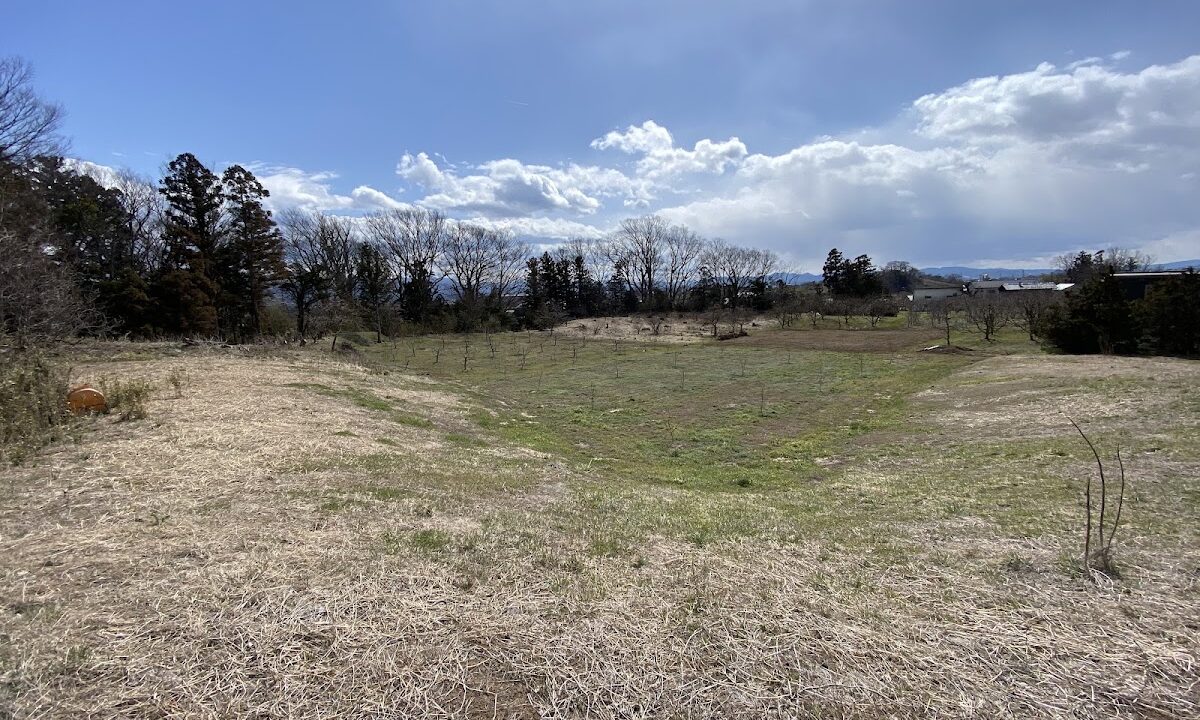
Complete Guide to Ishimoda Castle (Fukushima Prefecture) | The Residence of a Key Vassal of the Date Clan and the Site of a Fierce Battle During the Tenbun Rebellion
Ishimoda Castle (Ishimoda-jō) was a flatland castle from the Sengoku period located in Ishimoda, Kunimi-machi, Date-gun, Fukushima Prefecture. It functioned as the base of the Ishimoda clan, a powerful vassal of the Date clan, and became a particularly important military base during the Tenbun Rebellion, a conflict between Date Tanemune and Date Harumune. Even today, parts of the moat and earthworks remain, making it a valuable historical site that conveys the atmosphere of the Sengoku period and attracting attention from castle enthusiasts and history buffs.
Basic Information on Ishimoda Castle
Location: 1-1 Ishimoda Tatenouchi, Kunimi-machi, Date-gun, Fukushima Prefecture
Former Province: Mutsu Province (Iwashiro Province)
Common Name/Alternate Name: None in particular
Classification/Structure: Flatland castle, multi-enclosure type
Builder: Ishimoda clan
Year of Construction: Estimated to be from the Kamakura period to the early Muromachi period (details unknown)
Main Lords: Ishimoda clan, Ishimoda Kageyori (Kuwori Kageyori)
Keep Structure: None (residence) (Castle Type)
Year of Abandonment: Tensho 18 (1590)
Remains: Enclosures, earthworks, moats, dry moats, earthen bridges, gate
Designated Cultural Property: Not designated
Access: Approximately 5 minutes by car or 20 minutes on foot from JR Tohoku Main Line “Fujita Station”
Parking: No designated parking (use nearby public facilities)
Visiting Hours: Open access (consideration for private property is necessary as the area includes residential areas and orchards)
History of Ishimoda Castle
Construction History and the Ishimoda Clan
The exact construction date of Ishimoda Castle is not clearly stated in historical records, but it is believed to have been built by the Ishimoda clan, a senior retainer of the Date clan, sometime between the Kamakura period and the early Muromachi period. The Ishimoda clan served the Date clan as hereditary vassals for generations and wielded considerable power as a powerful local lord in Date County.
The Ishimoda clan played a crucial role in the military and political affairs of the Date clan, holding a high rank within the Date family. Ishimoda Castle served as their base, functioning as both the center of their territorial management and a strategic military defense.
The Tenbun Rebellion and Ishimoda Castle
Ishimoda Castle first appears on the historical stage during the Tenbun Rebellion, which lasted from 1542 to 1548. This civil war was a large-scale internal conflict between Date Tanemune, the 14th head of the Date clan, and his eldest son, Date Harumune, resulting in the Date retainers splitting into two factions.
The Ishimoda clan sided with Date Tanemune, and Ishimoda Castle became an important military base for the Tanemune faction. During the Tenbun Rebellion, fierce battles unfolded between the Tanemune and Harumune factions, and the castle is said to have been repeatedly ravaged by fighting.
This civil war ultimately ended in victory for Date Harumune, but the Ishimoda clan continued to exist as vassals of the Date family after the war, and continued to use Ishimoda Castle as their base. The Tenbun Rebellion temporarily weakened the Date clan’s power, but it also served as an opportunity for the reorganization of their vassal group in preparation for the era of Date Masamune.
The Settlement of Oshu and the Abandonment of the Castle
In 1590, when Toyotomi Hideyoshi implemented the Settlement of Oshu, Date Masamune was ordered to relocate from Aizu to Iwadeyama (present-day Osaki City, Miyagi Prefecture). At this time, Ishimoda Kageyori (later renamed Kuwori Kageyori), the head of the Ishimoda clan, also followed Masamune and moved to Arayama Castle in Igu District (Miyagi Prefecture).
With no lord left, Ishimoda Castle was abandoned at this point, bringing an end to its approximately 400-year history. Subsequently, the castle site was gradually developed into farmland and residential areas, resulting in its current appearance.
Layout and Structure of Ishimoda Castle
Characteristics of a Multi-Enclosure Flatland Castle
Ishimoda Castle was built as a typical multi-enclosure flatland castle. A flatland castle is a castle built on flat land, and unlike mountain castles, its structure relies more on artificial defensive structures such as moats and earthworks than on defenses based on topographical elevation differences.
The basic structure of the castle employed a multi-layered defensive system: the central main enclosure (honmaru) was surrounded by earthworks and a moat, with the second and third enclosures and samurai residences located to the east and south, and further surrounded by a moat. This structure created a defensive system that gradually halted enemy incursions.
Structure of the Main Enclosure
The main enclosure was the core area where the lord’s residence was located, and it was heavily defended by earthworks and a water moat. Even today, some earthworks remain at the site of the main enclosure, allowing us to estimate its original scale.
The main enclosure is estimated to have measured approximately 100 meters east-west and 80 meters north-south, a standard size for a local lord’s residence during the Sengoku period. It is believed that the main hall, warehouses, and vassal quarters were located within the enclosure.
Second and Third Enclosures and Retainer Residences
The second and third enclosures were situated around the main enclosure, where the residences of senior retainers and vassals stood. These enclosures strengthened the defenses of the main enclosure and, in peacetime, functioned as living spaces for the vassals.
The retainer residences were the residential area for vassals serving the Ishimoda clan, and are presumed to have had characteristics of a castle town. It is thought that during wartime, vassals would sortie from here to defend the castle.
Moats and Earthen Bridges
The moats surrounding each enclosure were crucial to the defense of Ishimoda Castle. The inner moat surrounding the main enclosure is thought to have functioned as a water moat, while the outer moat is believed to have been a dry moat. Even today, some of the moat remains, allowing us to imagine the defensive system of the time.
Of particular note is the earthen bridge leading to the eastern entrance (koguchi). This earthen bridge was a passage built by piling up earth to cross the moat, and it was an important defensive structure that restricted access to the castle. The earthen bridge at Ishimoda Castle remains in good condition today, making it a valuable historical site for the castle.
Layout of the Entrance
The entrance to the castle was the point where defenses needed to be strongest. At Ishimoda Castle, the main entrance was located on the east side, and its defensive capabilities were enhanced by combining it with the earthen bridge.
It is presumed that the structure of the entrance was designed to be winding rather than straight to make enemy intrusion difficult. This prevented the attacking side from charging in with a large number of troops at once, giving the defending side an advantage.
Current State of Ishimoda Castle Ruins
Current Status of Remains
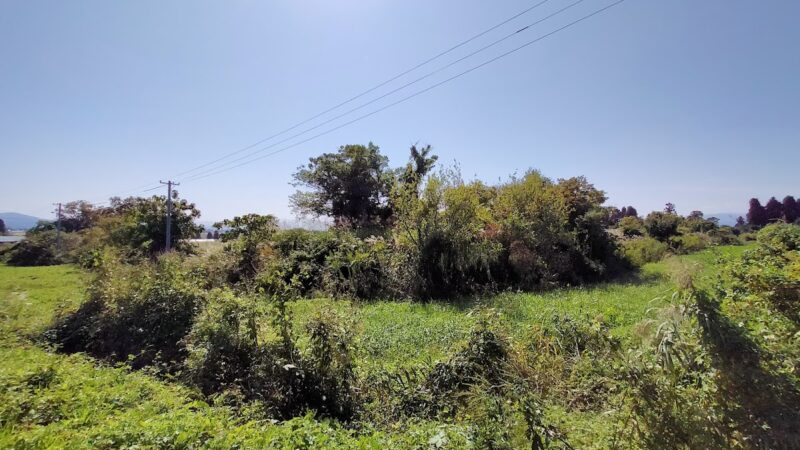
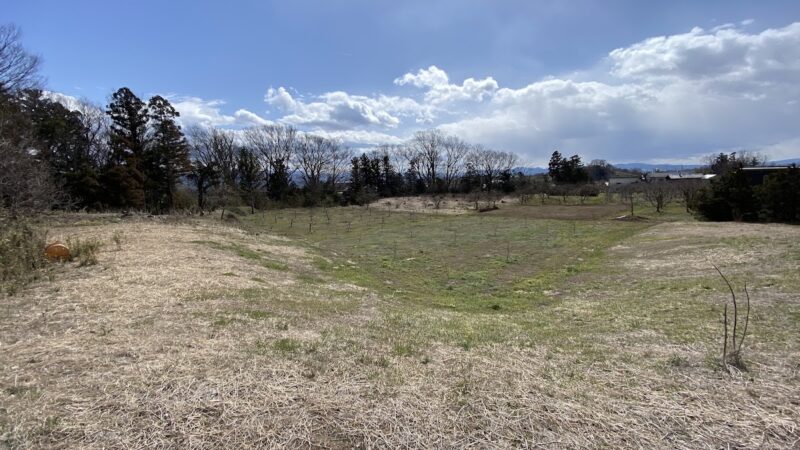
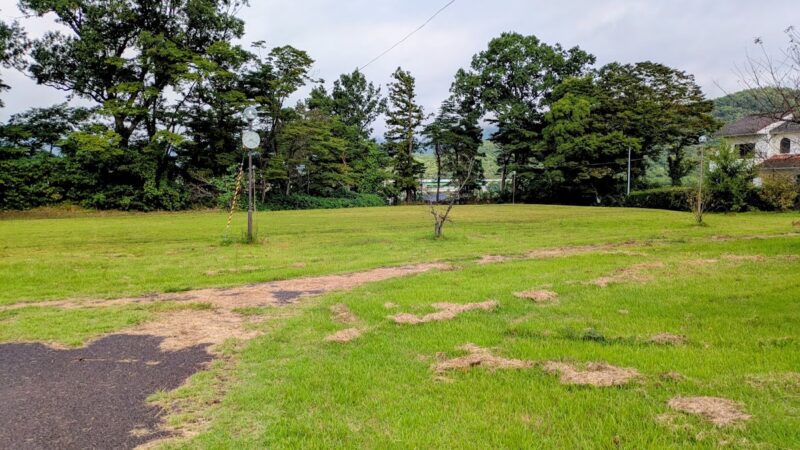
The current Ishimoda Castle ruins are largely used as residential areas and orchards, and do not retain their original appearance. However, the following remains still exist, conveying the atmosphere of a Sengoku period castle.
Water Moat: A water moat remains in part around the main enclosure, allowing visitors to experience the defensive system of the time. Water is still present, creating an atmosphere reminiscent of a castle.
Earthwork: Parts of earthwork remain around the main enclosure. Although only 1-2 meters high, it is clearly identifiable.
Earth Bridge: The earth bridge leading to the eastern gate is well-preserved. The bridge, approximately 3-4 meters wide, is one of the most impressive remains at the castle site.
Gate Remains: Traces of the eastern gate can be seen in the topography.
Enclosure Remains: The extent of the main enclosure and the second enclosure can be estimated to some extent from the current land divisions. ### Points to Note When Visiting
When visiting the Ishimoda Castle Ruins, please note the following:
- Respect for Private Property: Much of the castle ruins are on private property, so please be careful not to trespass.
- Orchard Season: Some areas are used as orchards, so special consideration is needed during harvest season.
- Information Boards: Detailed information boards are not installed at the castle ruins, so it is recommended to check the layout beforehand.
- Parking: There is no dedicated parking lot, so please use public transportation or parking lots at nearby public facilities.
- Visiting Hours: As it is located in a residential area, please avoid visiting early in the morning or late at night, and visit during reasonable hours.
The Ishimoda Clan and Their Descendants
Genealogy of the Ishimoda Clan
The Ishimoda clan was a prestigious family that served the Date family for generations as hereditary vassals. The Ishimoda clan played a crucial role in the Date clan’s expansion of power in Mutsu Province.
While the detailed genealogy of the Ishimoda clan is not fully understood due to limited historical records, it is certain that they held significant influence within the Date family from the Muromachi period to the Sengoku period.
Ishimoda Kageyori (Kuwori Kageyori)
Ishimoda Kageyori, the last lord of Ishimoda Castle, was a prominent retainer who served during the time of Date Masamune. After the pacification of Oshu, he followed Masamune to Iwadeyama and subsequently adopted the name Kuwori.
Known as Kuwori Kageyori, he continued to be highly valued as a senior retainer of the Date family and was granted Arayama Castle in Igu District. He continued to serve the Date family, and his descendants continued to serve the Sendai Domain throughout the Edo period.
Nearby Related Historical Sites
Atsugashiyama Fortifications
North of Ishimoda Castle lies the Atsugashiyama Fortifications, built by the Fujiwara clan during Minamoto no Yoritomo’s conquest of Oshu. It is one of Kunimi Town’s representative medieval historical sites and a must-visit along with Ishimoda Castle.
Koori Nishiyama Castle
Koori Nishiyama Castle, where Date Tanemune was imprisoned during the Tenbun Rebellion, is also nearby. As a castle deeply connected to Ishimoda Castle, it offers a deeper understanding within its historical context.
Castles of Date County
Numerous castles related to the Date clan are scattered around Kunimi Town. Visiting castles such as Atsugashiyama Castle and Kosaka Castle allows you to experience the Date clan’s sphere of influence.
Access to Ishimoda Castle
Public Transportation
The nearest station is Fujita Station on the JR Tohoku Main Line. The castle ruins are approximately 1.5 kilometers away, about a 20-minute walk from the station. A taxi ride takes about 5 minutes.
By Car
It’s about a 10-minute drive from the Kunimi Interchange on the Tohoku Expressway. It’s also accessible from National Route 4, about 30 minutes from Fukushima City and about 40 minutes from Sendai City.
There is no dedicated parking lot, but you can use public facilities in Kunimi Town. However, please be sure to check the facility’s usage rules before visiting.
Evaluation and Appeal of Ishimoda Castle
Value as a Castle
Although Ishimoda Castle is small in scale compared to large mountain castles and early modern castles, it possesses a typical structure for a local lord’s residence during the Sengoku period, making it a valuable historical site for understanding the life and defense systems of local samurai at that time.
The well-preserved moat and earthen bridge are particularly noteworthy. While many flatland castles have lost their remains due to residential and agricultural development, Ishimoda Castle preserves important historical structures to this day.
Historical Site of the Tenbun Rebellion
The Tenbun Rebellion was a crucial turning point in the history of the Date clan, and Ishimoda Castle, the main battlefield, is an indispensable historical site for understanding this civil war. This civil war, fought between Date Tanemune (grandfather of Date Masamune) and his father Harumune, had a significant impact on the later development of the Date clan.
Visitor Evaluation
According to data from Kojodan (a castle-visiting website), Ishimoda Castle has an average rating of ★3.00, with an average visit time of 23 minutes. With 56 visitors, it’s clear that despite being a relatively minor castle, it attracts a certain number of visitors.
Visitors have commented, “The moat and earthen bridge were impressive,” and “I felt the atmosphere of the Sengoku period in the remains quietly remaining amidst a residential area.” However, some have also pointed out areas for improvement, such as “More information boards would be helpful” and “The extent of the remains is unclear.”
Summary: The Significance of Visiting Ishimoda Castle
Ishimoda Castle is a valuable historical site that tells the story of the Tohoku region during the Sengoku period, serving as the residence of the Ishimoda clan, a senior retainer of the Date clan, and as an important stage in the Tenbun Rebellion. While it hasn’t been heavily commercialized for tourism, this makes it a place where one can quietly contemplate history.
The remaining structures, such as the moat, earthworks, and earthen bridge, are valuable resources that allow one to experience the structure of a flatland castle from the Sengoku period. These remains, blending seamlessly into residential areas and orchards, simultaneously convey a sense of both historical continuity and change.
For those interested in the history of the Date clan, those wanting to learn about the Tenbun Rebellion, or those interested in the castles of local samurai, Ishimoda Castle is a historical site worth visiting. When touring castles in Fukushima Prefecture, be sure to include Ishimoda Castle as one of your destinations.