Kawamata Castle (Fukushima Prefecture) Complete Guide | History and Remains of a Mountain Castle that Became a Strategic Base for Date Masamune
Located in Kawamata Town, Date District, Fukushima Prefecture, Kawamata Castle is a mountain castle that Date Masamune considered important as a base for expanding his power eastward during the Sengoku period. Even today, the remains of the castle, such as baileys, earthworks, and dry moats, are well-preserved, attracting attention from castle enthusiasts nationwide. This article provides a thorough explanation of Kawamata Castle, from its historical background to details of the existing remains and how to access the castle, with one of the largest amounts of information available in Japan.
Basic Information on Kawamata Castle
Kawamata Castle is a mountain castle built on Tateyama in Higashifukuzawa, Kawamata Town, Date District, Fukushima Prefecture, centered around the mountaintop at an altitude of approximately 323 meters. With a relative height of approximately 120 meters, it occupied a strategically important position despite its medium size.
Castle Overview Data
- Location: Higashifukuzawa Tateyama, Kawamata-machi, Date-gun, Fukushima Prefecture
- Former Province: Mutsu Province
- Classification/Structure: Mountain Castle
- Builder: Sakurada Sukechika (Sakurada Uhyoe-no-jo Sukechika)
- Construction Period: Sengoku period (estimated mid-16th century)
- Main Lords: Sakurada clan, Date clan
- Remains: Enclosures, earthworks, dry moats, trenches, well remains
- Keep Structure: None (No keep exists as it is a mountain castle)
- Common Names/Alternate Names: Mikagekan, Ushigajo, Gagyūjo
Kawamata Castle is also known by the alternative names “Mikagekan,” “Ushigajo,” and “Gagyūjo,” with different names used depending on the region. These alternative names are thought to originate from the castle’s location, shape, or legends.
History and Construction Background of Kawamata Castle
Construction by Sakurada Sukechika
Kawamata Castle is said to have been built by Sakurada Uhyoe-no-jo Sukechika, a powerful retainer of the Date clan. The Sakurada clan, as samurai serving the Date clan, were entrusted with governing this region. While there are no clear records of the exact construction date, it is estimated to have been built in the mid-16th century during the Sengoku period.
Sakurada Sukechika played a crucial role in the Date clan’s eastward expansion, and Kawamata Castle functioned as a front-line base. The castle’s location along the Hirose River, a tributary of the Abukuma River system, made it an ideal border castle for defending against eastern invasions.
Date Masamune and Kawamata Castle
Kawamata Castle played its most significant role in history during the time of Date Masamune. Between 1585 and 1586, Masamune, while expanding his power eastward, considered Kawamata Castle a strategically important base.
Of particular note is that Masamune established his headquarters at this castle and used it to attack and capture Koteshimori Castle and Shiomatsu Castle, the strongholds of Ouchi Sadatsuna. In November 1585, when Masamune attacked Koteshimori Castle, he used Kawamata Castle as a forward base and deployed his forces from there. The thorough annihilation campaign after the capture of Koteshimori Castle, known as the “Nade-giri” (slaughter), is a historical event that demonstrates Masamune’s ruthless strategy.
Importance as a Border Castle
Kawamata Castle was a “border castle,” located on the boundary between the sphere of influence of the Date clan and the spheres of influence of the Ouchi clan, Nihonmatsu clan, and others. In the Sengoku period, border castles were important not only as the front line to stop enemy invasions, but also as a base for launching offensives. To the east of Kawamata Castle lay the territory controlled by the Ouchi clan, making its control vitally important to the Date clan. The fact that Masamune himself established his headquarters there further demonstrates its high strategic value.
Abandonment and Aftermath
When Date Masamune was transferred to Iwadeyama (present-day Osaki City, Miyagi Prefecture) in 1591 by order of Toyotomi Hideyoshi, Kawamata Castle is believed to have ceased its function. After the Battle of Sekigahara in 1600, the region entered a period of stability under the shogunate system, and Kawamata Castle, as a mountain castle, fell into disuse.
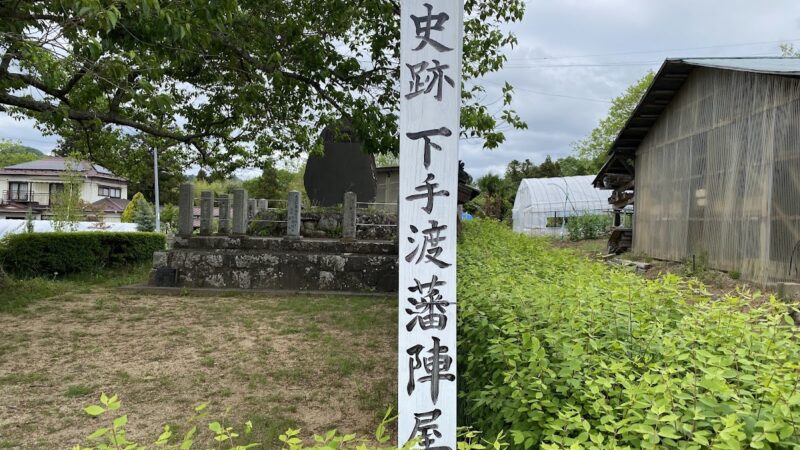
While the Kawamata Jinya (fortified residence) was later established in the present-day Kawamata town area, Kawamata Castle itself disappeared from the historical stage, leaving only its remains in the mountain forest.
Details of Kawamata Castle’s Layout and Remains
Kawamata Castle has a typical mountain castle structure, with multiple baileys arranged around the mountaintop. Even today, remnants such as earthworks, dry moats, and trenches remain in excellent condition, making them valuable examples for understanding the structure of castles during the Sengoku period.
Main Enclosure (Honmaru)
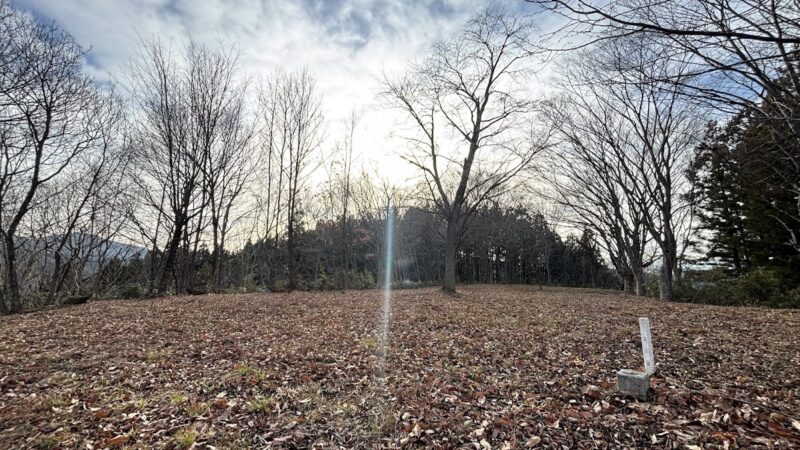
Located at the mountaintop, the main enclosure is the central area of the castle. It is believed that the lord’s residence and command post were located here. Earthworks surround the main enclosure, and some parts are still clearly visible today.
The main enclosure is relatively compact in size, which is typical for mountain castles. Efforts to maximize the use of the limited space on the mountaintop and enhance defensive capabilities are evident throughout.
Arrangement of Enclosures
Facing the main enclosure, multiple enclosures are arranged in a stepped fashion to the east, west, and north. These enclosures served to prevent enemy incursions in stages and also functioned as garrison spaces for soldiers.
Each enclosure is demarcated by steep slopes, creating a defensive structure that utilizes the difference in elevation. The group of enclosures on the east side, in particular, is positioned to prepare for attacks from the direction of the Ouchi clan, indicating the castle’s strategic direction. ### Earthworks and Dry Moats
The most noteworthy defensive features of Kawamata Castle are its well-preserved earthworks and dry moats. The earthworks were built along the edges of the enclosures, protecting soldiers from enemy arrows and firearms. Some of the earthworks are over 2 meters high, demonstrating the advanced castle-building techniques of the time.
The dry moats were defensive structures separating the enclosures, physically preventing enemy intrusion. Several dry moat remains can be found at Kawamata Castle, and the moats around the main enclosure are particularly deep, indicating their crucial defensive role.
Moats
Moats, a defensive feature unique to mountain castles, also remain in multiple locations at Kawamata Castle. These moats are large-scale dry moats dug to cut across ridges, effectively blocking enemy advance routes.
A particularly clear moat can be seen behind the main enclosure (to the north), demonstrating a strategy to prevent enemies from invading via the mountain. This moat is still over 3 meters deep, giving a glimpse into its original scale.
Well Site
Securing water was a matter of life and death for mountain castles. Kawamata Castle also has a depression believed to be the site of a well, possibly used as a water source during sieges. However, digging a well at the mountaintop would have been technically difficult, and it has been suggested that it may have actually been a facility for collecting rainwater.
Access Route
The main access route to the castle that can be confirmed today is the one from the east. This path leads to the mountaintop via baileys, indicating it was designed from a defensive perspective. There is also a flat area along the way where a guardhouse is believed to have been located, suggesting a strict security system was in place.
##Current Status and Maintenance of Kawamata Castle
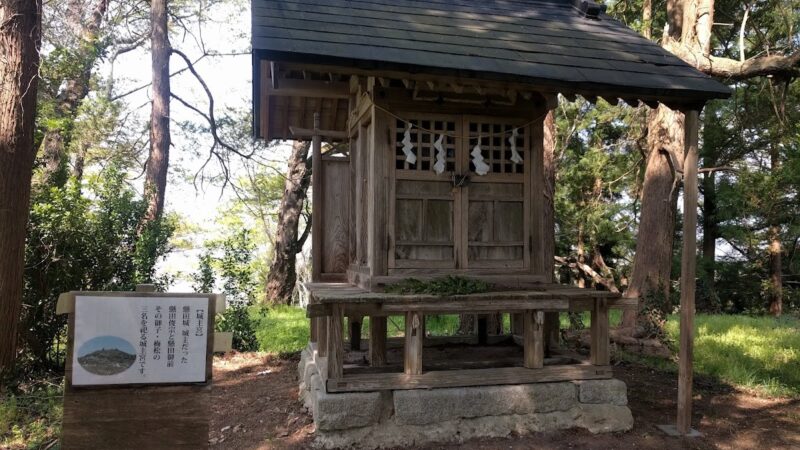
The current Kawamata Castle site stands quietly in the forest of Kawamata Town. Parts have been maintained, and a sign has been installed at the entrance to the castle site, confirming its existence.
Access Route to the Castle ### Preservation Status
The remains of Kawamata Castle are fortunately preserved in relatively good condition, thanks to the lack of development. The shape of the baileys, earthworks, and dry moats remain clearly visible, albeit covered by trees, making it a valuable site for experiencing the castle structure of the Sengoku period.
However, like many mountain castles throughout Japan, it faces challenges such as deterioration over time and collapse due to natural disasters. While regular inspections and minimal maintenance are carried out, full-scale preservation and restoration work has not yet been implemented.
Points to Note When Visiting
When visiting Kawamata Castle Ruins, please note the following:
- It is a mountain castle: The climb involves an elevation difference of 120 meters, so appropriate clothing and shoes are necessary.
- Trail Conditions: While there are well-maintained hiking trails, they can become slippery in rainy weather.
- Season: In summer, vegetation grows thick, making the ruins difficult to see. Visiting from late autumn to early spring is recommended.
- Avoid Solo Visits: Visiting in groups is safer if possible.
- Gather Information Beforehand: It is recommended to check the latest information with the local tourism association.
How to Access Kawamata Castle
Access by Car
The most convenient way to access Kawamata Castle Ruins is by car. It takes approximately 30 minutes from the Fukushima-Nishi IC or Fukushima-Iizaka IC on the Tohoku Expressway via National Route 114.
The entrance to the castle is located in the Higashi-Fukuzawa area along National Route 114; follow the signs. There are a few parking spaces near the castle entrance, but they are narrow, so caution is advised.
Access by Public Transportation
If using public transportation, you will need to take a bus from either Fukushima Station or Nihonmatsu Station on the JR Tohoku Main Line. However, the number of buses is limited, so it is recommended to check the timetable in advance. It is possible to walk from the nearest bus stop to the castle entrance, but it is a bit of a distance.
Estimated Time Required
From the castle entrance to the main enclosure, it takes about 30-40 minutes one way at a normal hiking pace. If you want to thoroughly explore the ruins, it is advisable to allow 2-3 hours round trip.
Historical Spots Around Kawamata Castle
When visiting Kawamata Castle, exploring the surrounding historical spots will give you a deeper understanding of the Sengoku period history of this region.
Kawamata Jinya Ruins
The site of the Kawamata Jinya, established during the Edo period, is located in the center of Kawamata Town. After Kawamata Castle was abandoned, it became the administrative center of the region.
Kotemori Castle Ruins
The ruins of Kotemori Castle, which Date Masamune conquered using Kawamata Castle as his base, are about a 30-minute drive away. This is the site of a significant historical event in the Sengoku period known as the “Kotemori Massacre.”
Nihonmatsu Castle
Nihonmatsu Castle, selected as one of Japan’s Top 100 Castles, is about a 40-minute drive from Kawamata Castle. Known as the site of fierce battles during the Boshin War, it boasts numerous points of interest, including its stone walls and the reconstructed Minowa Gate. While Kawamata Castle is a typical mountain castle, Nihonmatsu Castle exhibits characteristics of a modern castle, and comparing the two allows one to learn about the history of castle development.
Other Castle Ruins in Fukushima Prefecture
Fukushima Prefecture has many nationally famous castles, including Aizu-Wakamatsu Castle (Tsuruga Castle) and Shirakawa-Komine Castle. Visiting these castles along with Kawamata Castle allows you to experience Fukushima Prefecture’s rich castle culture.
Kawamata Castle: A Border Castle in the Sengoku Period
The historical significance of Kawamata Castle lies not merely in its status as a mountain castle, but in its role as a quintessential example of a “border castle” in the Sengoku period.
The Role of Border Castles
During the Sengoku period, castles located at the boundaries of a daimyo’s sphere of influence were called “border castles” and held special importance. These castles served multiple functions:
- Frontline of Defense: A fort that first stopped enemy invasions
- Information Gathering Base: A place to monitor enemy movements
- Launching Base for Offense: A forward base for launching offensives
- Symbol of Territorial Control: A base demonstrating control over the region
Kawamata Castle fulfilled all of these roles.
Its Strategic Positioning in Date Masamune’s Strategy
Date Masamune placed great importance on Kawamata Castle because he had a clear strategic objective: expanding his power eastward. In the grand plan to conquer the eastern forces such as the Ouchi and Nihonmatsu clans and open a path to the Aizu region, Kawamata Castle was an indispensable base.
The fact that Masamune himself established his headquarters there clearly demonstrates the strategic value of this castle. Normally, daimyo only stayed in their main residences, but Kawamata Castle held such importance.
Learning about Sengoku Period Castle Construction Techniques from the Remains of Kawamata Castle
The remains of Kawamata Castle are valuable resources that convey the castle construction techniques of the Sengoku period to the present day.
Layout Utilizing the Topography
The layout of Kawamata Castle skillfully utilizes the mountainous terrain. By using natural ridges and valleys, ingenuity is evident throughout, achieving maximum defensive effect with minimal effort. This is a characteristic of Sengoku period castle construction techniques and a different approach from the early modern castles that heavily relied on stone walls.
Level of Civil Engineering Technology
Construction of earthworks and dry moats required advanced civil engineering technology. Observing the remains of Kawamata Castle reveals the ingenuity of the engineers of the time, evident in techniques such as soil compaction and drainage.
In particular, the moats required excavating hard bedrock, which must have demanded considerable effort and skill. Their scale suggests that a large workforce was mobilized for the castle’s construction.
Kawamata Castle Reviews and Ratings
Nationwide castle enthusiasts and history buffs consistently praise Kawamata Castle for its excellent state of preservation and historical significance.
Many visitors point out the weight of the historical fact that “Date Masamune established his headquarters here.” Among the numerous mountain castles throughout Japan, only a limited number have a direct connection to Date Masamune, giving Kawamata Castle special value in this respect.
On the other hand, some point out the difficulty of access and the lack of information. To allow more people to appreciate the value of Kawamata Castle, improvements such as more signage and better access routes are desirable.
Summary: The Historical Value and Future Preservation of Kawamata Castle
Kawamata Castle is a valuable historical site among the many castle ruins in Fukushima Prefecture, directly connected to Date Masamune, a representative warlord of the Sengoku period. The existing remains are important resources for understanding the castle construction techniques and military strategies of the Sengoku period, and must be properly preserved.
Due to its nature as a mountain castle, it is not suited to large-scale tourism development, but it is a place well worth visiting for history enthusiasts and castle fans. Kawamata Town and Fukushima Prefecture have a responsibility to pass on this valuable historical heritage to future generations.
While there are many well-known castle ruins throughout Japan, it is small to medium-sized castle ruins rooted in local communities, like Kawamata Castle, that are important for conveying the true nature of the Sengoku period. Visitors can stand before the earthworks and dry moats remaining in the quiet mountain forest and contemplate the battles and maneuvers that once unfolded here.
Kawamata Castle may not be flashy, but it is a castle ruin with a profound historical weight. When you visit Fukushima Prefecture, be sure to stop by this hidden gem of a castle.