History and Remains of Katahira Castle (Koriyama City, Fukushima Prefecture) | A Thorough Explanation of the Mountain Castle of the Asaka Ito Clan
Overview of Katahira Castle
Katahira Castle (Katahira-jo) was a Japanese castle (mountain castle) located in Kamitate, Katahira-cho, Koriyama City, Fukushima Prefecture. Also known as “Kamitate Castle,” it was built by the Asaka Ito clan, who ruled this area during the Sengoku period (Warring States period). Situated on a hill approximately 290 meters above sea level, it functioned as a defensive mountain castle, utilizing the terrain with a relative height difference of approximately 30 meters.
Currently, remains such as earthworks, baileys, and moats remain, centered around the site where Atago Shrine is located, making it a valuable historical site that conveys the structure of a Sengoku period castle. As a medieval castle site in Koriyama City, it is an important cultural heritage that tells the story of the region’s history.
History of Katahira Castle
Construction and the Asaka Ito Clan
The exact construction date of Katahira Castle is unknown, but it is believed to have been built during the Sengoku period by the Asaka Ito clan to strengthen the defensive capabilities of their residence (Katahira Shimokan) located on the plains. According to tradition, it was built by Ito Rokurozaemon Sukenaga of the Asaka Ito clan.
The Asaka Ito clan were powerful local lords who ruled this region. They had their residence on the plains, but due to the need for defense during the turbulent Sengoku period, they built a castle on a mountaintop that was easier to defend. It is presumed that Katahira Castle was a typical example of a medieval castle, where administrative affairs were conducted at Katahira Shimokan during peacetime, and the castle on the mountaintop was used for siege during wartime.
Turmoil of the Sengoku Period
During the Sengoku period, Ito Yamato-no-kami, the lord of Katahira Castle, was under the control of the Ashina clan, a powerful daimyo of Aizu. The Ashina clan was a powerful daimyo family based in Aizu during the Sengoku period, wielding considerable influence in southern Oshu. The Ito clan, as a subordinate of the Ashina clan, is believed to have contributed to maintaining the Ashina’s power in the Asaka region.
However, in 1576 (Tensho 4), the situation changed dramatically. Tamura Kiyoaki, based at Miharu Castle, attacked Katahira Castle. The Tamura clan was a powerful daimyo family centered in Tamura County and was in conflict with the Ashina clan. This attack prevented Ito Yamato-no-kami from maintaining control of Katahira Castle, forcing him to flee to Aizu.
This incident was part of the power struggle in southern Oshu at the time, reflecting the historical context of a three-way conflict between the Ashina, Tamura, and later the rising Date clan.
Succession to the Katahira Clan
After the Ito clan fled to Aizu, Katahira Castle became the residence of the Katahira clan. The Katahira clan was a family that adopted the place name as their surname and acted as local lords rooted in this region.
The head of the Katahira clan is said to have served Ouchi Chikatsuna. The Ouchi clan was known as a family of important retainers of the Aizu Ashina clan, suggesting that the Katahira clan also operated within the Ashina clan’s sphere of influence. During this period, Katahira Castle is thought to have served as a southern defense base for the Ashina clan.
Toyotomi Hideyoshi’s Pacification of Oshu and the Abandonment of the Castle
In 1590 (Tensho 18), Toyotomi Hideyoshi implemented the Pacification of Oshu. This was a series of policies implemented by Toyotomi Hideyoshi in the process of completing the unification of Japan, in which he subjugated the various daimyo of Oshu (the Tohoku region) and reorganized their territories.
As a result of this Pacification of Oshu, the Katahira clan came to serve the Date clan and moved to Sendai. The Date clan, led by Date Masamune, moved their base from Aizu to Yonezawa and then to Sendai, following a ruling by Toyotomi Hideyoshi. During this process, many local lords were incorporated into the Date clan’s vassal group. The Katahira clan is one such example.
With the Katahira clan’s relocation to Sendai, Katahira Castle ceased to serve its purpose and was abandoned. From this point onward, Katahira Castle was never used as a military base, and its remains gradually returned to nature.
Structure and Remains of Katahira Castle
Layout and Arrangement
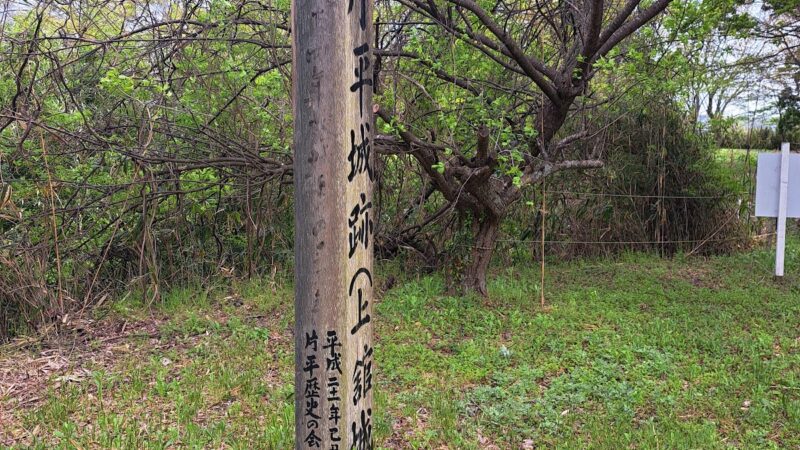
Katahira Castle was built on the hill where Atago Shrine is located and the hill to its west. According to a survey of medieval castle sites in Fukushima Prefecture, the location of Atago Shrine is estimated to be the main keep (honmaru), but local tradition suggests that the center of Katahira Castle was on the western mountaintop, where a marker for Katahira Castle (Kamikan Castle) currently stands.
The castle grounds consist of multiple baileys, and a defensive system arranged in stages around the main bailey can be observed. It exhibits a typical structure of a medieval mountain castle, with a layout that skillfully utilizes the natural terrain.
Baileys (Kuruwa)
Multiple baileys have been identified at Katahira Castle. A bailey is a flat area within the castle grounds, a space for constructing buildings or stationing troops. The baileys are arranged in stages around the main bailey, with the second and third baileys forming separate defensive lines.
Each bailey is positioned utilizing the difference in elevation, demonstrating a design intended to make attacks from lower baileys to higher baileys difficult. The size and shape of the baileys suggest their respective functions, such as living spaces, command posts, and troop garrisons.
Earthworks
Earthworks are particularly prominent among the remains of Katahira Castle. Earthworks are earthen walls constructed by piling up soil, preventing enemy intrusion and further enhancing defensive capabilities by allowing for the construction of fences on top.
Even today, traces of earthworks remain around each enclosure, and particularly around the main enclosure, clear earthworks can be observed. The height and width of these earthworks reveal the advanced castle-building techniques and defensive awareness of the time.
Moats and Dry Moats
Moats played a crucial role as defensive structures in mountain castles. Moats, dug to cut across ridges, effectively blocked enemy incursions. Katahira Castle also featured moats along the ridges, clearly defining the castle grounds.
Furthermore, dry moats have been identified between enclosures. Dry moats, which do not hold water, served as physical obstacles to hinder enemy advances. These remains still exist as part of the topography, providing clues to imagining the castle’s structure in its heyday.
Relationship with Katahira Nakadate
Separately from Katahira Castle (Kamidate Castle), the existence of Katahira Nakadate has also been confirmed. According to “Medieval Castle Sites in Fukushima,” Katahira Nakadate overlaps with the boundaries of Katahira Castle and is described as “part of the outer fortifications.” Its location is described as “hills and plains,” suggesting it may have been part of Katahira Castle’s defensive system.
It has been suggested that Katahira Nakadate may have been an intermediate facility connecting Katahira Shimodate (the peacetime residence) and Katahira Castle (the wartime mountain castle). Such a multi-layered castle structure is a typical defensive system adopted by local lords during the Sengoku period.
Fire Station Remains
Among the remains of Katahira Castle, there are sites believed to be fire stations (beacon towers). Fire stations were facilities for raising smoke signals, serving as a means of communication to transmit information to other castles or allied bases in emergencies.
Katahira Castle’s location on a hill overlooking the surrounding area was suitable for information transmission via smoke signals. During the Sengoku period, castles throughout the country were connected by a network of smoke signals, and Katahira Castle is thought to have played a part in this network.
Present Katahira Castle
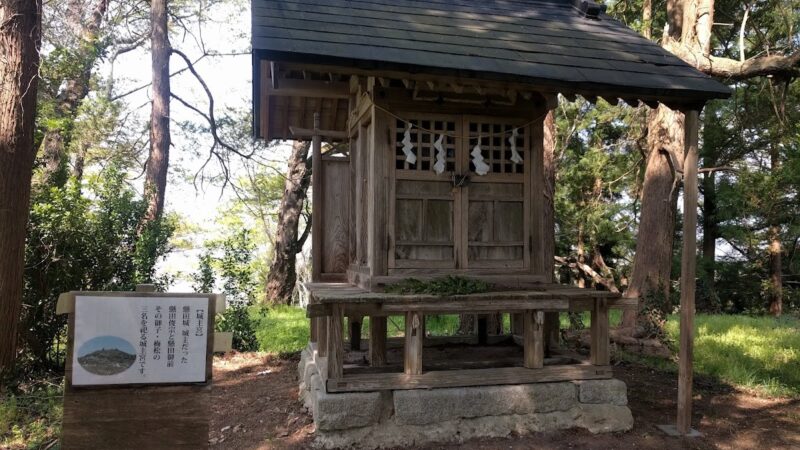
Atago Shrine and Castle Ruins
Currently, Atago Shrine stands on the site of the former main enclosure of Katahira Castle. Atago Shrine is a shrine revered as the god of fire prevention, and the construction of shrines on castle ruins is a common phenomenon throughout Japan. This indicates that the castle ruins were recognized as a sacred site in the region and became an object of worship.
Climbing the path to Atago Shrine, you can see traces of the former enclosures and earthworks. The shrine grounds themselves utilize the flat area of the main enclosure, preserving the topography of the castle ruins.
Preservation of Remains
Despite more than 400 years having passed since its abandonment, the remains of Katahira Castle are preserved in relatively good condition. In particular, the civil engineering remains such as earthworks and moats have retained their shape while blending into the natural terrain, and are valued as valuable historical sites by experts and castle enthusiasts.
On the other hand, some parts of the remains have become unclear due to tree growth and natural erosion. The site is now in a situation where proper preservation and management are required.
Marker Posts and Information Boards
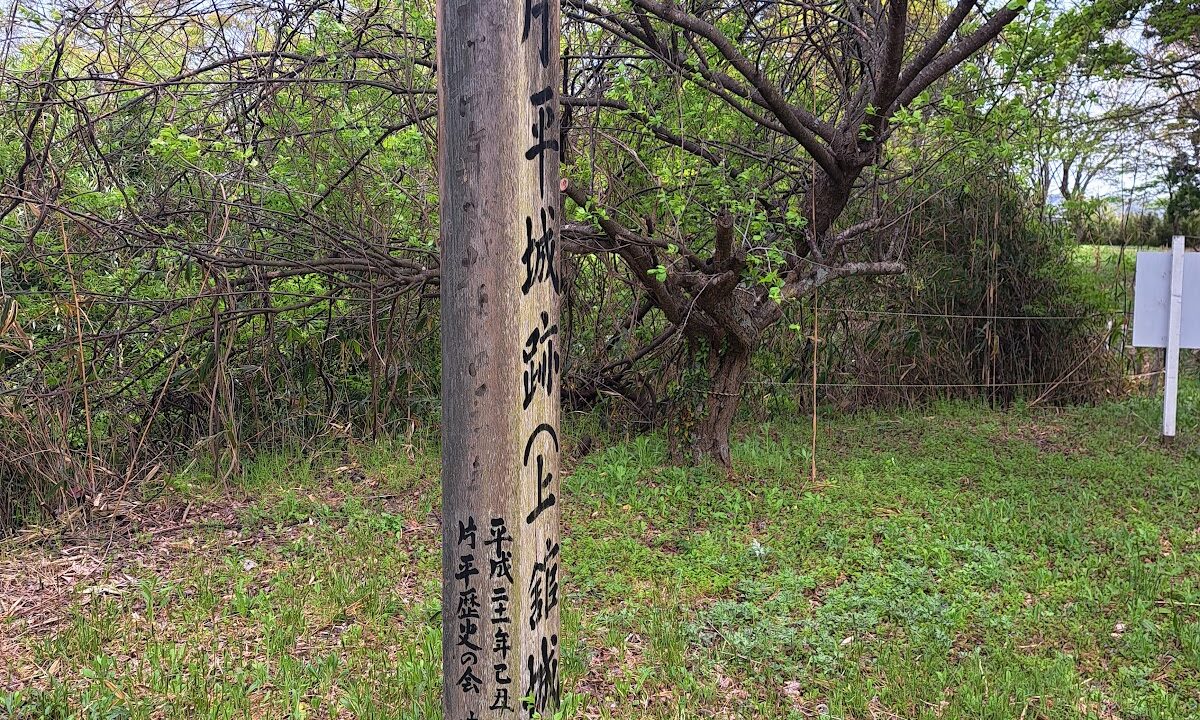
A marker post indicating Katahira Castle (Kamikan Castle) has been erected at the castle site, showing visitors that it is a castle ruin. Information boards have also been installed in the surrounding area, providing brief explanations of the history and structure of Katahira Castle.
These information facilities play a role in passing on Katahira Castle to future generations as a local historical heritage, and preparations are being made to welcome visitors from history enthusiasts and castle fans.
Transportation Access and Visitor Guide
Access Method
Katahira Castle is approximately a 15-minute drive from the center of Koriyama City. It is about 10 minutes from the Koriyama Interchange on the Tohoku Expressway. If using public transportation, take a bus from JR Koriyama Station towards Katahira-machi, and then walk from the nearest bus stop.
The easiest route to the castle ruins is to head towards Atago Shrine. The approach to the shrine is well-maintained, making it relatively easy to reach the main enclosure. However, since you will need to climb a mountain path, comfortable walking shoes are recommended.
Points to Note When Visiting
Katahira Castle Ruins are not a well-maintained tourist site; the remains are scattered throughout the forest. Please note the following points when visiting:
- Wear comfortable clothing and shoes for walking.
- Take insect repellent in the summer.
- Be careful as the ground can be slippery on bad weather days.
- Be considerate and avoid damaging the ruins.
- Take all your trash with you.
Also, Atago Shrine is a place of worship, so please be mindful of proper etiquette when visiting.
Points to Note When Visiting Katahira Castle
The following are points to note when visiting Katahira Castle:
Main Enclosure (Atago Shrine): This is the central part of the castle and the most important enclosure. Observe the surrounding earthworks and the extent of the flat areas.
Earthworks: The earthworks remaining around the main enclosure are important for understanding Katahira Castle’s defensive system. Observe their height and shape.
Moat: A moat built along the ridge is a typical defensive structure of a mountain castle. It can be found by carefully observing the changes in the terrain.
View: From the castle ruins, you can overlook the surrounding terrain. You can appreciate the geographical advantages that made it possible to build the castle in this location.
Nearby Tourist Attractions
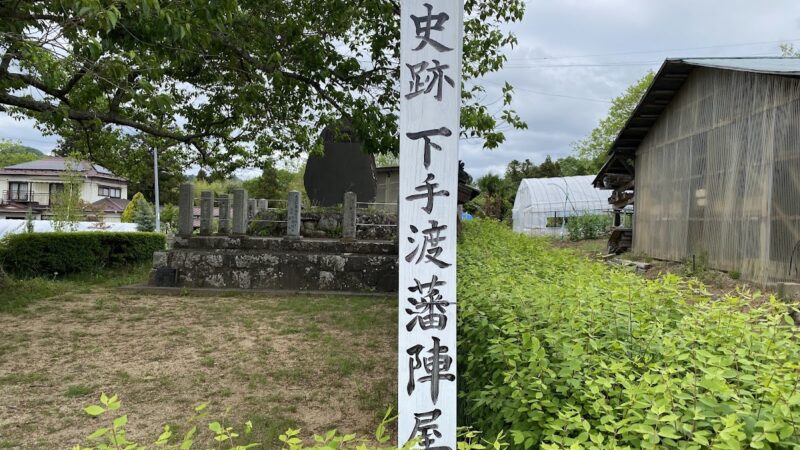
Historical Sites in Katahira Town
Besides Katahira Castle, Katahira Town has several other historical sites.
Ogu Izu Shrine: One of Katahira Town’s representative shrines, it has long been a center of local faith.
Watado Shrine: A shrine beloved as the guardian deity of the region.
Three Temples: A group of three temples, including the Katahira Castle lord’s family temple and Momiji-dera Temple, known for their close ties to the castle lord.
Jokyo-ji Temple: A historical temple that preserves the region’s Buddhist culture.
Koshuji Temple: One of Katahira Town’s temples, it preserves the region’s history.
Many of these shrines and temples share a history with Katahira Castle, and visiting them in conjunction with the castle ruins allows for a deeper understanding of the region’s history.
The Legend of the Uneme Tale
Katahira Village (present-day Katahira Town) is known as the setting for the “Uneme Tale,” a story about court ladies during the Nara period. This legend is part of the region’s cultural identity and is believed to be related to the origin of the place name Katahira.
The Uneme Tale is a story depicting the tragic love of a woman who served in the imperial court, and has deep ties to the Katahira area. Learning about these local legends in conjunction with visiting the castle ruins is important for understanding the charm of Katahira.
Other Castle Ruins in Koriyama City
Besides Katahira Castle, Koriyama City has several other medieval castle ruins.
Moriyama Castle: A castle located in Moriyama Town, Koriyama City, which functioned as a branch castle of the Tamura clan.
Castles and Fortifications Along the Abukuma River: Many medieval castles and fortifications were built along the Abukuma River in the Koriyama city area, each telling a story of the region’s history.
For castle enthusiasts, visiting these castle ruins, along with Katahira Castle, will provide insight into the power dynamics and castle network of the Koriyama region during the Sengoku period.
Historical Significance of Katahira Castle
Positioning in the Sengoku History of the Asaka Region
Katahira Castle was one of the important strongholds in the Asaka region during the Sengoku period. The Asaka region was situated between three major powers: the Ashina clan of Aizu, the Tamura clan of Miharu, and the Date clan of Yonezawa and Sendai. It was a frontline region in the power struggles between these daimyo.
The history of Katahira Castle directly reflects this three-way conflict. Its transition from being under the control of the Ashina clan to being attacked by the Tamura clan, and finally being incorporated into the Date clan’s sphere of influence, vividly illustrates the complex political situation of the time.
Characteristics as a Local Lord’s Castle
Katahira Castle was a castle operated by local lords, specifically the Asaka Ito and Katahira clans. Unlike the main castles of powerful daimyo (feudal lords), it served as a base for small, locally-rooted lords, making it a valuable historical site for understanding the role and life of local lords in medieval society.
Local lords occupied a position between daimyo and farmers, playing a crucial role in the stability and governance of local communities. Castles like Katahira Castle served as their power base and symbolized their regional control.
Value in Medieval Castle Research
Katahira Castle is a valuable archaeological site for castle research, serving as a typical example of a medieval mountain castle in the Tohoku region. Basic defensive structures such as earthworks, moats, and baileys remain well-preserved, providing important data for studying castle construction techniques and defensive philosophies of the Sengoku period (Warring States period).
Furthermore, the three-tiered castle system—Katahira Lower Castle, Katahira Middle Castle, and Katahira Castle (Upper Castle)—is an interesting example for understanding the usage patterns of medieval castles. The way castles were used differently in peacetime and wartime provides clues to understanding the lifestyle of samurai at the time.
Materials and Research on Katahira Castle
Main References
The following are the main materials for learning about Katahira Castle:
“Medieval Castle Sites of Fukushima”: A survey report of medieval castles by the Fukushima Prefectural Board of Education, which includes detailed information on Katahira Castle. It records the layout and characteristics of the remains, serving as fundamental research material.
Koriyama City History: A comprehensive history of Koriyama City, which includes descriptions of Katahira Castle and the Asaka Ito clan.
Various Castle-Related Books: Some books introducing castles throughout Japan also feature Katahira Castle.
Information from Castle Databases
Currently, several database sites containing information on castles exist on the internet, and information on Katahira Castle is also available. Websites such as Kojodan and Jōkaku Hōrōki share photos, impressions, and evaluations from people who have actually visited the castles, making them useful for gathering information before a visit.
These sites provide detailed information on the remains, access, and points of interest, functioning as a community for castle enthusiasts.
Future Research Issues
Many aspects of Katahira Castle remain unresolved.
- Determining the exact construction date
- Detailed investigation and drawing of the castle’s layout
- Estimating the age based on excavated artifacts
- Clarifying the relationship with Katahira Shimokan and Katahira Nakakan
- The lineage of the Asaka Itō clan and its relationship with the Katahira clan
Further archaeological investigations and documentary research are expected to address these issues.
Summary
Katahira Castle is a Sengoku period mountain castle located in Katahira-machi, Kōriyama City, Fukushima Prefecture, built by the Asaka Itō clan. It played an important role as a base for local lords amidst the conflicts between powerful daimyo of southern Ōu, such as the Ashina, Tamura, and Date clans. Even today, the remains of the castle, including earthworks, moats, and baileys, are well-preserved. The castle ruins, where Atago Shrine is located, are a valuable cultural heritage site that conveys the history of the region. As a typical example of a medieval mountain castle and as the residence of a local lord, Katahira Castle is a historical site of high historical and academic value.
When visiting Koriyama City, we highly recommend visiting the Katahira Castle ruins and reflecting on the history of the Sengoku period. The remains, nestled in the quiet mountains, will silently tell the story of the lives of samurai from over 400 years ago.