Complete Guide to Hinohara Castle (Fukushima Prefecture) | History and Highlights of the Mountain Castle that Became Date Masamune’s Base for the Aizu Campaign
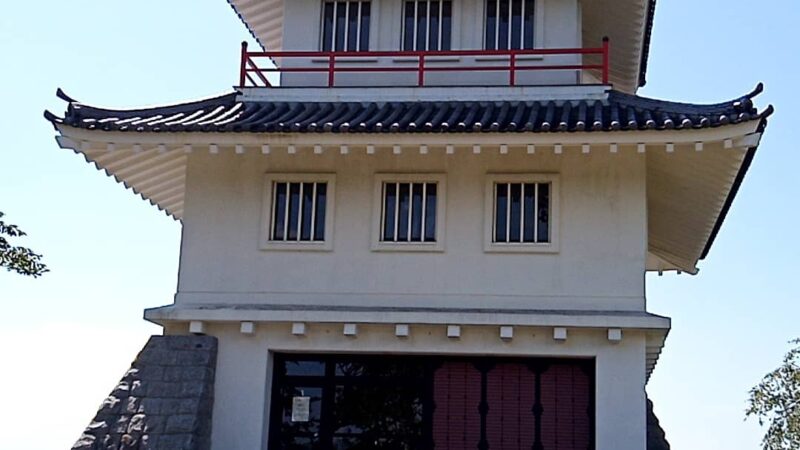
Hinohara Castle (also known as Hibara-jo or Hibara-jo), towering on the northern shore of Lake Hinohara in Kitashiobara Village, Yama District, Fukushima Prefecture, is a mountain castle built by Date Masamune, a powerful figure of the Sengoku period, as a military base for his campaign against Aizu. Built on Mt. Kotani (elevation 954m, relative height 120m) within Bandai-Asahi National Park, the castle still retains well-preserved remains such as dry moats, earthworks, baileys, and gatehouses, conveying the appearance of a Sengoku period mountain castle to the present day.
This article comprehensively explains everything you need to know before visiting Hinohara Castle, from its historical background and castle structure to its highlights, access methods, and surrounding tourist information.
The History of Hinohara Castle | Date Masamune and the Conquest of Aizu
Background of the Castle’s Construction and the Situation in Aizu during the Tensho Era
Hinohara Castle was built in 1585 (Tensho 13). At that time, Date Masamune, the lord of Yonezawa Castle, was aiming to seize hegemony in Tohoku and was considering a confrontation with the Ashina clan, a powerful daimyo of Aizu.
In 1584 (Tensho 12), Masamune crossed the Hinohara Pass and began his invasion of Ashina territory. In this military operation, Masamune succeeded in capturing Toyama Castle and Iwayama Castle, which were defended by the Anazawa clan, but failed to capture Kashiwagi Castle, an important stronghold of the Ashina clan.
The Construction and Strategic Significance of Hinohara Castle
Although Masamune failed to capture Kashiwagi Castle, he did not simply retreat, but built a castle in Hinohara, a strategically important location from which he could monitor the Yonezawa Road. This is Hinohara Castle. Also known as Kotaniyama Castle, this castle functioned as an important military base, securing the invasion route towards Aizu and simultaneously protecting the retreat route to Yonezawa.
Goto Sonbei Nobuyasu, a retainer, was appointed as the castle lord, and Masamune returned to Yonezawa. Hinohara Castle would function as a frontline base in the Date clan’s invasion of Aizu, and as a base for applying pressure on the Ashina clan.
The Battle of Suriagehara and the Aftermath of Hinohara Castle
In 1589 (Tensho 17), the fateful Battle of Suriagehara took place between Date Masamune and the Ashina clan. Masamune achieved a decisive victory in this battle and entered Kurokawa Castle (Aizu-Wakamatsu Castle), the Ashina clan’s stronghold.
With this victory, Hinohara Castle ceased its role as a frontline base. Furthermore, in 1590, following Toyotomi Hideyoshi’s conquest of Odawara and subsequent pacification of Oshu, Masamune was forced to return to Yonezawa after his Aizu territory was confiscated. It is believed that Hibara Castle was abandoned around this time.
Although it was a short-lived castle, lasting only about five years, it remains to this day as an important historical site symbolizing Date Masamune’s ambition to conquer Aizu.
Hibara Castle’s Layout and Structure
Characteristics of a Consecutive-Enclosure Mountain Castle
Hibara Castle is a consecutive-enclosure mountain castle built on the summit of Mt. Kotani (approximately 950m above sea level). The relative height is about 120m, and the rugged mountain shape is impressive when viewed from the shores of Lake Hibara at the foot of the mountain.
The basic structure of the castle is a simple consecutive-enclosure structure, consisting of the second enclosure (Ninomaru), the main enclosure (Honmaru), and the third enclosure from north to south. Each enclosure is arranged linearly along the ridge, exhibiting a typical layout for a mountain castle from the Sengoku period.
Structure of the Main Enclosure (Honmaru)
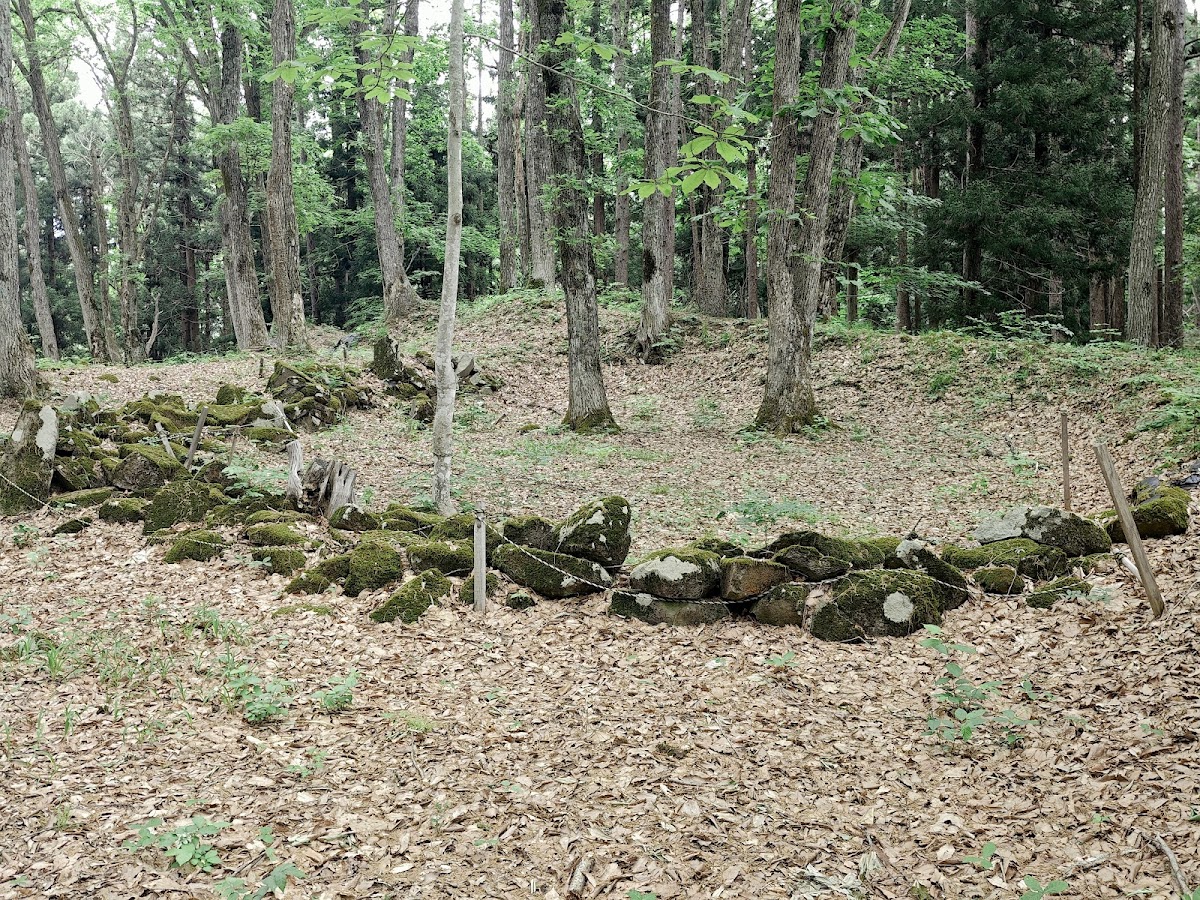
The main enclosure is located in the center of the castle and has a leveled, flat surface. Earthen ramparts surround it, enhancing its defensive capabilities. While the main enclosure is not particularly large, this indicates that Hibara Castle was not built as a long-term residence but as a military forward base.
From the main enclosure, one can see Lake Hibara and the surrounding mountains, and it is clear that there were views of the Yonezawa Road and the Aizu region. This location was the reason Masamune built the castle here.
Moats and Defensive Structures
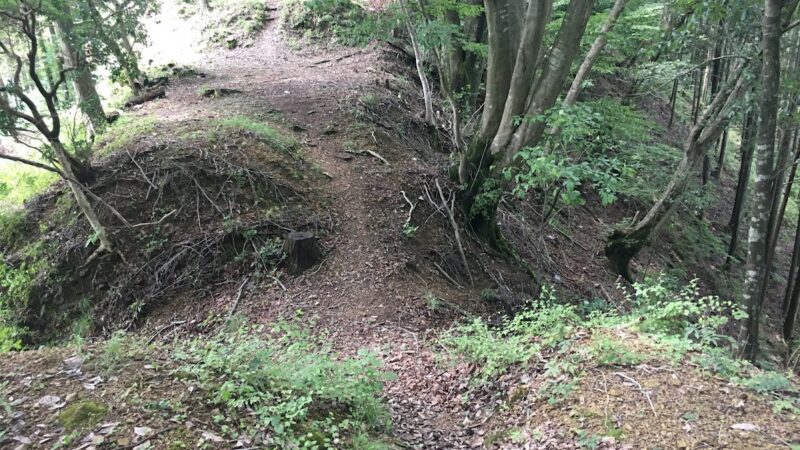
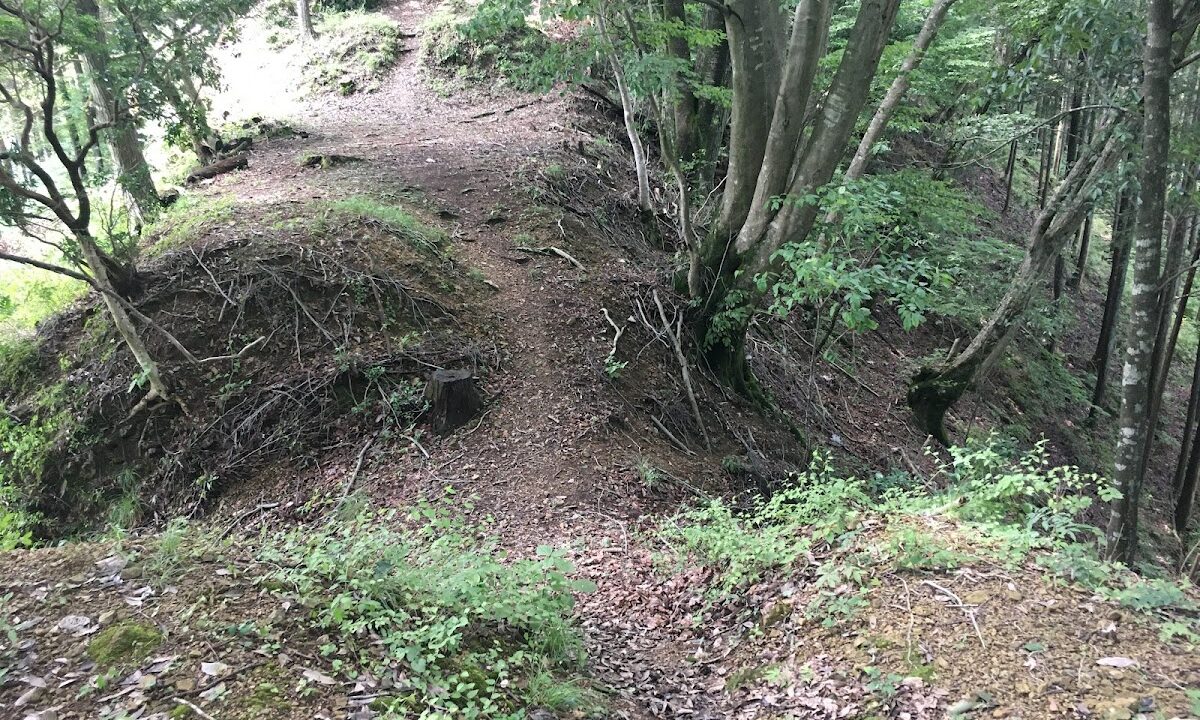
One of the most notable features of Hibara Castle is the moats that separate each enclosure. Moats, dug deep into the ridge, are important defensive structures that prevent enemy intrusion. Multiple moats have been identified at Hinohara Castle, with the moats between the main enclosure and the second enclosure, and between the main enclosure and the third enclosure, being particularly clearly preserved.
These moats still retain their depth today, demonstrating the advanced civil engineering techniques of the time and indicating that the castle possessed robust defensive capabilities despite being built in a short period.
Layout of Entrances and Enclosures
Multiple entrances to the castle, known as “koguchi,” have been identified. These entrances are not simple openings; they incorporate earthworks and enclosures to enhance their defensive capabilities.
In addition to the second, main, and third enclosures, smaller enclosures called “sode-kuruwa” (outer enclosures) are also located within the castle grounds. These are thought to have functioned as auxiliary facilities to defend the main enclosures. Overall, the castle layout is highly efficient, making maximum use of the limited terrain.
Highlights and Remains of Hinohara Castle
Well-Preserved Earthworks and Dry Moats
The greatest attraction of visiting Hinohara Castle is that, even more than 400 years after its construction, the remains such as earthworks and dry moats are well-preserved.
In particular, the earthworks around the main enclosure retain their height, allowing us to imagine the appearance of the castle at that time. The dry moats are also clearly visible without being filled in, and the V-shaped shape of the moats can be clearly seen. These remains are valuable historical materials that allow us to directly experience the castle-building techniques of the Date Masamune era.
Leveled Ground of the Enclosures
The leveled ground of each enclosure is also kept relatively flat, allowing us to imagine how soldiers positioned themselves here. The leveled ground of the main enclosure is particularly large, and it is thought to have been the place where the castle lord, Goto Sonbei Nobuyasu, and his subordinate samurai were stationed.
The leveled ground of the second and third enclosures is also clear, allowing us to visually understand the structure of the connected enclosures. Walking through these enclosures will give you a real feel for the reality of a mountain castle from the Sengoku period.
Views overlooking Lake Hibara
The views from Hibara Castle are also a major highlight. From the main enclosure, a beautiful view of Lake Hibara unfolds below, offering panoramic views of Mount Bandai and the surrounding mountains. However, the current Lake Hibara was formed by the eruption of Mount Bandai in 1888 (Meiji 21) and did not exist during the time of Date Masamune.
At that time, the Hibara River valley stretched out, and Masamune would have looked out over the Yonezawa Road and the Aizu region from here. Comparing the beautiful lake scenery of today with the rugged mountain landscape of the Sengoku period stimulates historical imagination.
The path to the castle and the atmosphere of the mountain castle
To reach Hibara Castle, you will climb a mountain trail. While the elevation difference of 120m may seem low at first glance, actually climbing it will give you a real sense of the ruggedness unique to mountain castles.
Although the path to the castle is well-maintained, it includes steep slopes and rocky areas, allowing you to experience the effort required to build this castle on this mountain during the Sengoku period and the difficulties faced by attackers. This “climbing experience” itself is an important element in understanding mountain castles.
Access and Visiting Information for Hinohara Castle
Location and Basic Information
Location: Nishi-Azuma, Hinohara, Kitashiobara Village, Yama District, Fukushima Prefecture (within a national forest)
Castle Classification: Mountain Castle
Alternate Name: Kotaniyama Castle
Former Province Name: Mutsu
Year of Construction: Tensho 13 (1585)
Builder: Date Masamune
Castle Deputy: Goto Sonbei Nobuyasu
Year of Abandonment: Around Tensho 18 (1590)
Access by Car
Access to Hinohara Castle is convenient by car.
- From the Inawashiro Bandai Kogen IC on the Ban-etsu Expressway: Approximately 25km, about 35 minutes by car.
- From the Fukushima Nishi IC on the Tohoku Expressway: Approximately 50km, about 1 hour by car.
There is parking space around Lake Hibara, but it is limited near the trailhead, so please be careful when visiting. During winter, roads may be closed due to snow, so it is recommended to check in advance.
Access by Public Transportation
If using public transportation, the nearest station is Inawashiro Station on the JR Ban-etsu West Line. From the station, take a Bandai Toto Bus bound for Hibara and get off at the Hibara Lake bus stop. However, the number of buses is limited, so it is important to check the timetable in advance.
Precautions for Visiting the Castle
Since Hibara Castle is a mountain castle, the following preparations and precautions are necessary when visiting.
- Attire: Comfortable clothing and hiking boots or trekking shoes are recommended.
- Equipment: Bring drinking water, insect repellent, and a bear bell.
- Season: Spring to autumn is the best time to visit. Climbing the castle in winter is difficult due to snow.
- Estimated Time: Allow approximately 1.5 to 2 hours from ascent to descent.
- Weather: Visiting on a sunny day is recommended, as rainy weather can make the trails slippery.
Best Time to Visit
The best time to visit Hinohara Castle is from May to October. Especially in May-June with its fresh greenery and from October to early November with its autumn foliage, the scenery around Lake Hinohara is beautiful, making it ideal for exploring the mountain castle.
In summer (July-August), the greenery can be dense and the remains may be difficult to see, but exploring the cool mountain castle is pleasant. However, it is also a time with many insects, so insect repellent is essential.
Nearby Tourist Attractions and Related Historical Sites
Sightseeing Around Lake Hibara
If you visit Hibara Castle, be sure to also enjoy sightseeing around Lake Hibara. Lake Hibara is a beautiful lake formed by the eruption of Mount Bandai, and you can enjoy activities such as sightseeing boats, canoeing, and fishing.
There are many accommodations and campgrounds along the lakeshore, allowing you to relax and enjoy nature. There are also plenty of spots for nature walks, such as Goshikinuma (Five-Colored Ponds) and the Lake Hibara Lakeside Nature Trail.
Related Castles in the Aizu Region
If you visit Hibara Castle, we recommend also visiting nearby castles related to the battles between Date Masamune and the Ashina clan.
Kurokawa Castle (Aizu-Wakamatsu Castle, Tsuruga Castle): This was the base of the Ashina clan and a famous castle where Masamune entered after the Battle of Suriagehara. The keep has now been restored and is open to the public as a museum that tells the history of Aizu. It is about a 40-minute drive from Hibara Castle. Inawashiro Castle: This was the residence of the Inawashiro clan. Masamune gained an advantage in his conquest of Aizu by securing the defection of Inawashiro Morikuni. Located about 30 minutes by car from Hibara Castle, remnants such as stone walls and moats remain.
Mukaihaguroyama Castle: This is one of the largest mountain castles in Tohoku, built by the Ashina clan, and is a nationally designated historical site. While it’s a bit of a distance (about 50 minutes by car from Hibara Castle), it’s an important historical site for understanding Aizu during the Sengoku period.
Historical Sites Related to the Date Clan in the Yonezawa Area
Since Hibara Castle was built by Date Masamune during his time as lord of Yonezawa Castle, it’s a good idea to visit it along with other historical sites in the Yonezawa area.
Yonezawa Castle Ruins (Uesugi Shrine): This is the site of Yonezawa Castle, where Masamune was born and raised. Currently, it is the site of Uesugi Shrine and is known as a historical site of the Uesugi clan, but you can also learn about the history of the Date clan. It’s about a one-hour drive from Hinohara Castle.
Places Associated with Date Masamune: Within Yonezawa City, there are numerous historical sites associated with Masamune, including his birthplace and family temple. Combining a visit to Hinohara Castle with a historical trip tracing Masamune’s footsteps is a great way to enjoy the area.
Resources and Information for Deeper Understanding of Hinohara Castle
Related Books
For those who want to learn more about Hinohara Castle, Date Masamune, and the Sengoku period history of Aizu, the following books are recommended.
- *Date Masamune* (various biographies): Through Masamune’s life, you can understand the background of the construction of Hinohara Castle.
- *Aizu Sengoku History*: A book that explains in detail the battles between the Ashina and Date clans.
- *Comprehensive Guide to Japanese Castles*, Volume 3 (Yamagata, Miyagi, Fukushima): A comprehensive introduction to castles in the Tohoku region, including Hinohara Castle.
- *Walking Through Tohoku’s Famous Castles* series: Abundant guide information useful for actual visits.
Local Information Boards and Materials
Information boards explaining the history and structure of Hinohara Castle are installed along the approach to the castle and near the main enclosure. These boards are very useful for understanding the castle, so we recommend reading them carefully while exploring.
Also, you can obtain local historical materials and tourist brochures at the Kitashiobara Village tourist information center and roadside stations. These materials will also be helpful when visiting Hinohara Castle.
Online Information Sources
Many castle enthusiast community sites and historical information websites publish numerous accounts and photographs from people who have actually visited Hinohara Castle. Checking this information before your visit will allow for a more fulfilling castle exploration.
In particular, specialized castle websites such as Kojodan (Castle Attack Group) feature a wealth of detailed castle information, visitor ratings, and photographs, making them extremely useful when planning your visit.
Historical Significance and Charm of Hinohara Castle
A Historic Site Demonstrating Date Masamune’s Ambition
Hinohara Castle is a historical site that shows an important moment in the Aizu campaign launched by the young Date Masamune to become the ruler of Tohoku. Although it was a short-lived castle, lasting only about five years, it is a valuable legacy that speaks to Masamune’s strategic thinking and decisiveness.
Masamune not only won battles, but also possessed a strategic perspective of securing bases and solidifying his control. The construction of Hinohara Castle is a prime example of Masamune’s military talent.
A Historic Site Where You Can Experience the Charm of a Mountain Castle
Hibara Castle is a valuable historical site that well preserves the characteristics of a mountain castle from the Sengoku period (Warring States period). Unlike modern castles with stone walls and keeps, it has a simple structure mainly consisting of earthworks and moats, but this is precisely what makes it so important for understanding the reality of castles from the Sengoku period.
By actually climbing the mountain, walking through the baileys, and seeing the moats, you can experience the true nature of a mountain castle that cannot be understood from textbooks or documents alone. This “experience” is the greatest attraction of visiting Hibara Castle.
A Landscape Where Nature and History Blend
Hibara Castle is located within Bandai-Asahi National Park and is surrounded by abundant nature. While it is a historical site from the Sengoku period, it is also a place where you can enjoy beautiful natural scenery.
As a place where the history of natural disasters in the Meiji era, such as the formation of Lake Hibara, and the history of human activity in the Sengoku period coexist in a layered manner, Hibara Castle can be said to be a historical site with multifaceted charm.
Summary | The Value of Visiting Hibara Castle
Hibara Castle, located in Kitashiobara Village, Fukushima Prefecture, is a mountain castle built as part of Date Masamune’s ambitious military campaign to conquer Aizu. Built in 1585, it was a short-lived castle, abandoned after only about five years. However, the well-preserved remains convey the appearance of a Sengoku period mountain castle.
Hibara Castle is full of the unique charm of a mountain castle, with its interconnected layout consisting of the main enclosure, second enclosure, and third enclosure, clearly preserved moats and earthworks, and views overlooking Lake Hibara. Climbing the mountain and walking through the enclosures will allow you to experience the Sengoku period castle firsthand.
Visiting Hibara Castle in conjunction with the rich natural surroundings of Lake Hibara and related historical sites in the Aizu and Yonezawa areas will make for a more fulfilling historical trip. For fans of Date Masamune, castle enthusiasts, and anyone who loves history and nature, Hinohara Castle is a historical site well worth visiting.
During the spring to autumn visiting season, be sure to visit Hinohara Castle and experience the ambitions of the young Masamune and the spirit of the Sengoku period.