Mizukubo Castle (Fukushima Prefecture) Complete Guide: History and Remains of Yamauchi Ujikatsu’s Last Resistance Base
What is Mizukubo Castle?
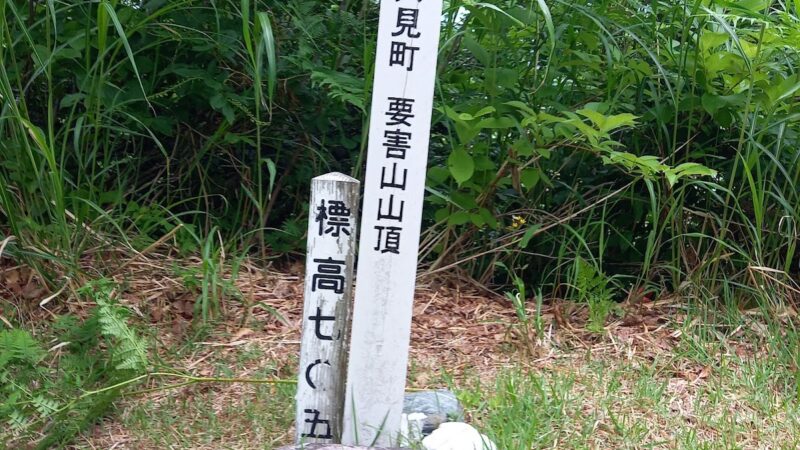
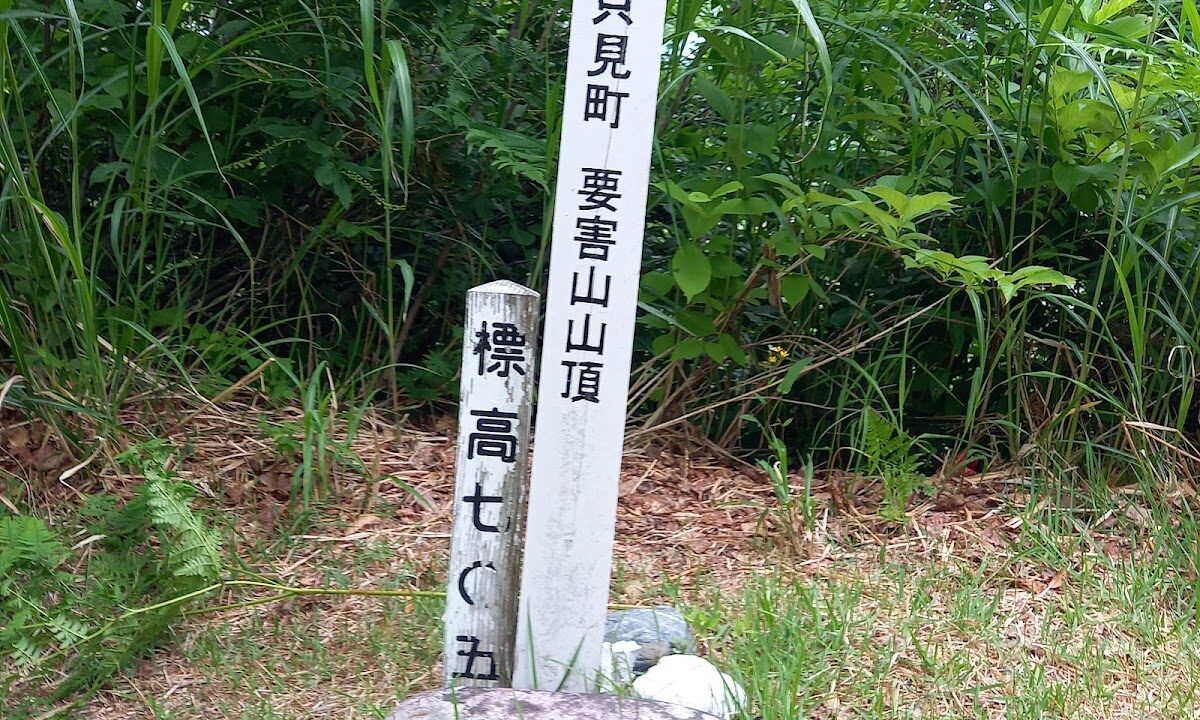
Mizukubo Castle is a Sengoku period mountain castle located in Tadami Town, Minamiaizu District, Fukushima Prefecture. The castle grounds encompass the area around Yogaiyama Mountain (710 meters above sea level), which rises north of Tadami Station on the JR Tadami Line. It is known as a castle that played an important role in the Sengoku period history of the Aizu region.
Some records refer to it as “Mizukubo Castle,” but it has been affectionately known as “Mizukubo-jo” by locals. Currently, a television relay tower is installed on the mountaintop, and a forest road has been constructed, making it a relatively easily accessible mountain castle.
Location and Basic Information
- Location: Tadami-goyama, Tadami-machi, Minamiaizu-gun, Fukushima Prefecture
- Type: Mountain Castle
- Elevation: 710 meters (Relative height approximately 320 meters)
- Main Period: Medieval period (Sengoku period)
- Builder: Yamauchi clan
- Year of Abandonment: Around 1590 (Tensho 18)
History of Mizukubo Castle
The Four Aizu Families: The Yamauchi and Ashina Clans
Indispensable to understanding the history of Mizukubo Castle is the existence of the Yamauchi clan, one of the four Aizu families. The Yamauchi clan, based in Minamiaizu, served the Ashina clan, whose base was Kurokawa Castle (later Wakamatsu Castle, present-day Aizuwakamatsu City), during the Sengoku period.
The Yamauchi clan’s main castle was Nakamaru Castle (within Tadami-machi), and Mizukubo Castle functioned as its branch castle. The Tadami area was a crucial transportation hub connecting the Aizu region and Echigo, and the Yamauchi clan contributed to maintaining the Ashina clan’s power through their control of this region.
The Battle of Suriagehara and the Downfall of the Ashina Clan
On June 5, 1589 (Tensho 17), the Battle of Suriagehara, a battle that drastically altered the history of the Aizu region, took place. In this battle, the Ashina clan suffered a crushing defeat at the hands of the Date army led by Date Masamune. Ashina Yoshihiro fled to Hitachi Province, effectively ending the Ashina clan.
While many Ashina retainers surrendered to Date Masamune, Yamauchi Ujikatsu refused to submit. This decision propelled Mizukubo Castle onto the stage of history.
Yamauchi Ujikatsu’s Resistance and the Fall of Nakamaru Castle
Date Masamune did not tolerate Yamauchi Ujikatsu’s resistance and launched an attack on Nakamaru Castle. Faced with an overwhelming difference in military strength, Nakamaru Castle fell. Ujikatsu fled to Mizukubo Castle, a subsidiary castle, and decided to continue his resistance from there as his last stronghold.
Mizukubo Castle, utilizing the rugged terrain of Yogaiyama Mountain, was a strong mountain castle capable of being defended even with a small force. It is said that Ujikatsu withstood attacks from the Date army here and continued his resistance until the Oshu Settlement in 1590 (Tensho 18).
The Oshu Settlement and the End of Mizukubo Castle
In 1590, Toyotomi Hideyoshi implemented the Oshu Settlement. As part of this nationwide unification project, Date Masamune also followed Hideyoshi’s orders, and the situation in the Aizu region changed dramatically.
The fate of Yamauchi Ujikatsu after this is unclear due to limited historical records. However, it is believed that Mizukubo Castle was abandoned around this time. Ujikatsu’s resistance, which lasted for about a year, is etched in local history as a testament to his strong loyalty to the Ashina clan.
Structure and Remains of Mizukubo Castle
Characteristics as a Mountain Castle
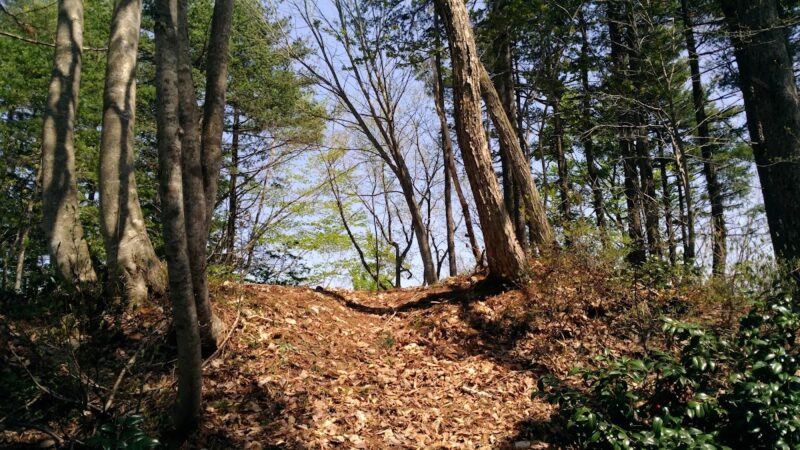
Mizukubo Castle is a typical Sengoku period mountain castle, characterized by its defensive facilities that skillfully utilize the natural terrain of the fortified mountain. The main enclosure (honmaru) is located at the mountaintop at an altitude of 710 meters, with multiple enclosures (kuruma) arranged along the ridges and slopes.
The elevation difference of approximately 320 meters posed a significant obstacle for attackers, creating a formidable defense that could be achieved even with a small number of defenders. This is thought to be one of the reasons why Yamauchi Ujikatsu chose it as his final base.
Main Remains
Currently, the following remains have been confirmed at the Mizukubo Castle site:
Main Enclosure (Honmaru)
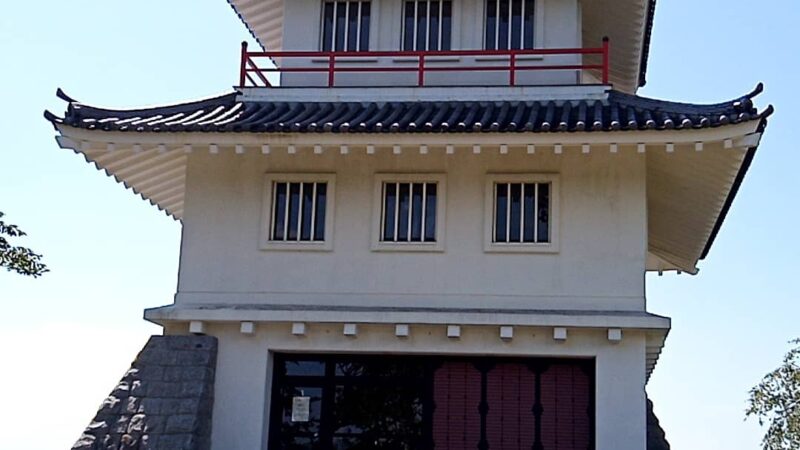
This is the main enclosure located at the mountaintop, where a television broadcasting tower is currently constructed. The relatively flat terrain suggests that this was once the central part of the castle complex.
Earthworks
Partial traces of earthworks remain around the enclosure. While the structure is simple, typical of mountain castles, it is clear that they served a defensive function.
Moats
Multiple moats have been identified to block the ridgeline, demonstrating ingenuity in preventing enemy intrusion. This is a typical defensive feature of mountain castles.
Enclosure Group
Several terraced enclosures are arranged around the main enclosure. These are presumed to have been used for various purposes, such as troop garrisoning, supply storage, and lookout.
Characteristics of the Castle Layout
The layout of Mizukubo Castle shares characteristics common to mountain castles in southern Aizu. It maximizes the use of the steep terrain, and artificial construction is kept to a minimum. This is a typical method of Sengoku period mountain castles, achieving high defensive capabilities while keeping construction and maintenance costs down.
Located overlooking the Tadami River, its position was ideal for monitoring the highway and controlling the surrounding area. Therefore, it is believed to have served as a “fortress” functioning as a base for territorial control in peacetime and as a refuge and resistance base during wartime.
Guide to Visiting Mizukubo Castle
Access Methods
Using Public Transportation
- Get off at JR Tadami Line “Tadami Station,” and the trailhead is approximately a 9-minute walk away.
- Tadami Station is one of the main stations on the Tadami Line, which connects Aizu-Wakamatsu and Koide.
- Since the Tadami Line has limited service, checking the timetable in advance is essential.
Using a Car
- Tadami Station is located along National Route 252, and there is parking space around the station.
- Enter “Tadami Station” or “Tadami-goyama, Tadami-machi, Minamiaizu-gun, Fukushima Prefecture” into your car navigation system.
- During winter, snow and ice are possible, so studded tires are recommended.
Ascent Route
The most common route to Mizukubo Castle ruins is via the forest road leading to the television broadcasting tower at the summit. However, this forest road is a maintenance road, and caution is required when using it with general vehicles.
While it is possible to climb the castle on foot, the trail involves a 320-meter elevation gain, so the following preparations are recommended:
- Non-slip shoes such as trekking shoes
- Drinking water and snacks
- Rain gear and warm clothing
- Map and compass (or GPS device)
- Wildlife deterrents such as bear bells
Precautions for Visiting
Season and Weather
- The best time to visit is from May to November
- Climbing the castle is difficult in winter (December to April) due to snow
- Be careful as the ground can be slippery in rainy weather
- Don’t forget insect repellent in summer
Safety Precautions
- Avoid climbing alone; group climbing is recommended
- Check cell phone signal strength beforehand
- Manage your time carefully to ensure you descend before sunset
- Remember to greet and ask permission from locals
Protection of Historical Remains
- Be careful not to damage historical remains such as earthworks and moats
- Always take your trash with you
- Collecting plants or capturing animals is strictly prohibited.
Estimated Visit Time
- Ascending the Castle: Approximately 40 minutes to 1 hour
- Visiting the Castle Ruins: Approximately 30 minutes to 1 hour
- Descending the Castle: Approximately 30 minutes to 40 minutes
- Total: Approximately 2 to 3 hours
We recommend planning your visit with ample time.
Nearby Attractions
Nakamaru Castle Ruins
The Nakamaru Castle Ruins, the main castle of the Yamauchi clan, are also located within Tadami Town. Visiting them together with Mizukubo Castle will allow you to gain a deeper understanding of the Yamauchi clan’s castle system. Nakamaru Castle is also known as “Yamanouchi Yashiki” (Yamauchi Residence) and is thought to have had a residential function.
History and Culture of Tadami Town
Tadami Town is known as a heavy snowfall area, where a unique snow country culture has flourished. There are folk museums and other facilities in the town where you can learn about the history and culture of this region.
The Stunning Scenery of the Tadami Line
The JR Tadami Line is considered one of “Japan’s most beautiful railway lines,” offering stunning views of the valley along the Tadami River. Combining a visit to the castle ruins with a train journey is highly recommended.
The Historical Significance of Mizukubo Castle
Its Place in the Sengoku Period History of the Aizu Region
Mizukubo Castle holds a special place in the Sengoku period history of the Aizu region as a symbol of resistance during the chaotic period following the fall of the Ashina clan. In an era when many warlords changed lords according to the times, Yamauchi Ujikatsu’s approximately one-year resistance is highly regarded as an embodiment of samurai loyalty.
Its Value in Mountain Castle Research
As a mountain castle from the Sengoku period, Mizukubo Castle is an important case study in the study of castles in the southern Aizu region. It possesses typical characteristics of medieval mountain castles, such as a layout that utilizes the terrain, its function as a subsidiary castle, and its role as a final stronghold, making it a valuable resource for castle history research.
Connection to Local History
In the history of Tadami Town, Mizukubo Castle is an important historical site that illustrates the realities of regional governance during the Sengoku period (Warring States period). It is linked to various historical themes, including the Yamauchi clan’s control of southern Aizu, the securing of transportation routes with Echigo, and the structure of the local community.
Preservation and Utilization of Mizukubo Castle
Status of Cultural Property Designation
The Mizukubo Castle ruins are registered in the cultural property database as one of the medieval castle sites in Fukushima Prefecture. However, it has not received national or prefectural historical site designation, and preservation and management are carried out at the town level.
Current Situation and Challenges
Due to the construction of a television relay tower on the mountaintop, part of the main enclosure has been altered. However, overall, the layout of the castle from the Sengoku period is well preserved, and the state of preservation of the remains is relatively good.
Future challenges include the following:
- Creation of a detailed site plan based on thorough surveying
- Enhancing information provision through the installation of signboards and explanatory panels
- Improvement of access routes and safety measures
- Historical education and outreach activities for local residents and tourists
Potential as a Tourism Resource
Tadami Town has seen an increase in tourists in recent years due to its natural scenery and the popularity of the Tadami Line. Combining the Mizukubo Castle ruins with these other tourist resources could create an attractive tourist attraction where visitors can enjoy both history and nature.
Utilizing it as a resource for experiential tourism, such as “castle ruin trekking” and “historical exploration tours,” could also contribute to regional revitalization.
Points to Note When Visiting Mizukubo Castle
Preparations
To make your visit to Mizukubo Castle more fulfilling, please prepare the following beforehand:
- Historical Preparation: Gain basic knowledge about the Battle of Suriagehara and the Yamauchi clan.
- Map Check: Understand the topography using topographic maps from the Geospatial Information Authority of Japan, etc.
- Weather Forecast Check: Pay attention to weather changes as it is a mountainous area.
- Equipment Check: Prepare appropriate clothing and equipment for mountain climbing.
Photography Points
- Distant View from around Tadami Station: It is possible to take photos capturing the entire Yogaiyama mountain.
- View from the Main Enclosure: A spectacular viewpoint overlooking the Tadami River and surrounding mountains.
- Details of the Remains: Record the features of defensive structures such as earthworks and moats.
- Seasonal Changes: Enjoy the seasonal expressions, such as the fresh greenery of spring and the autumn leaves.
Comparison with Other Castle Ruins
There are many medieval castle ruins in Fukushima Prefecture. Visiting the following castle ruins in conjunction with Mizukubo Castle will provide a deeper understanding of the castle history of the Aizu region:
- Aizu-Wakamatsu Castle (Tsuruga Castle): The Ashina clan’s base, renovated as a modern castle.
- Mukaihaguroyama Castle: The Ashina clan’s final stronghold, a large-scale mountain castle.
- Nakamaru Castle: The Yamauchi clan’s main castle, paired with Mizukubo Castle.
Summary
Mizukubo Castle is a valuable mountain castle ruin that conveys the turbulent history of the late Sengoku period. The story of Yamauchi Ujikatsu’s loyalty and resistance gives this castle ruin special historical value.
Its strong defensive structure built on a 710-meter-high fortified mountain, its strategic location overlooking the Tadami River, and its role as the last stronghold that continued resistance even after the fall of the Ashina clan—all of these factors make Mizukubo Castle more than just a mountain castle ruin.
When you visit Tadami Town, be sure to stop by this historical site. As you climb the steep mountain path and look down on Tadami Town from the summit, you might feel the presence of the warlords of the Sengoku period. Experience the charm of Minami-Aizu, where nature and history intertwine, at the Mizukubo Castle ruins.