Complete Guide to Oeda Castle (Fukushima Prefecture): History and Highlights of a Mountain Castle Built by the Date Clan
What is Oeda Castle?
Oeda Castle is a medieval mountain castle located in Higashi-Oeda, Yanagawa-cho, Date City, Fukushima Prefecture. Built on the tip of a small hill overlooking the Abukuma River, this castle is known as the residence of the Oeda clan (later the Ojo clan), a branch of the Date clan, for generations.
Also known as “Sodegasaki Castle,” “Ojo Castle,” “Tsuzuri Sogamori,” and “Kamigasaki Castle,” it served as one of the Date clan’s important branch castles in the Yanagawa region, playing a significant role in history for approximately 200 years.
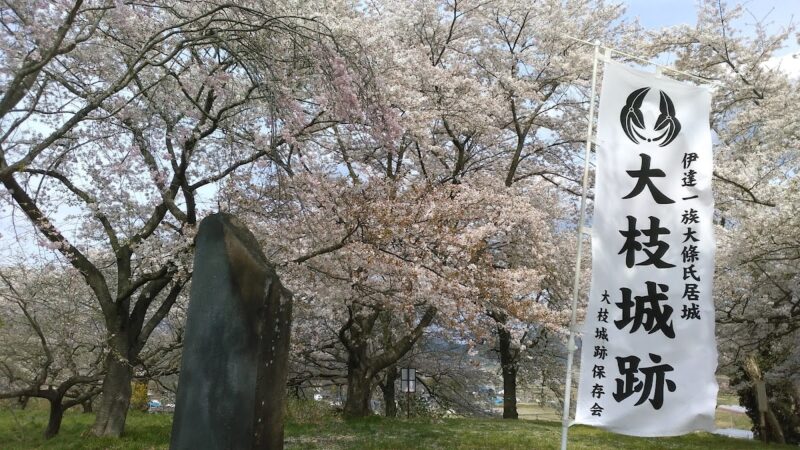
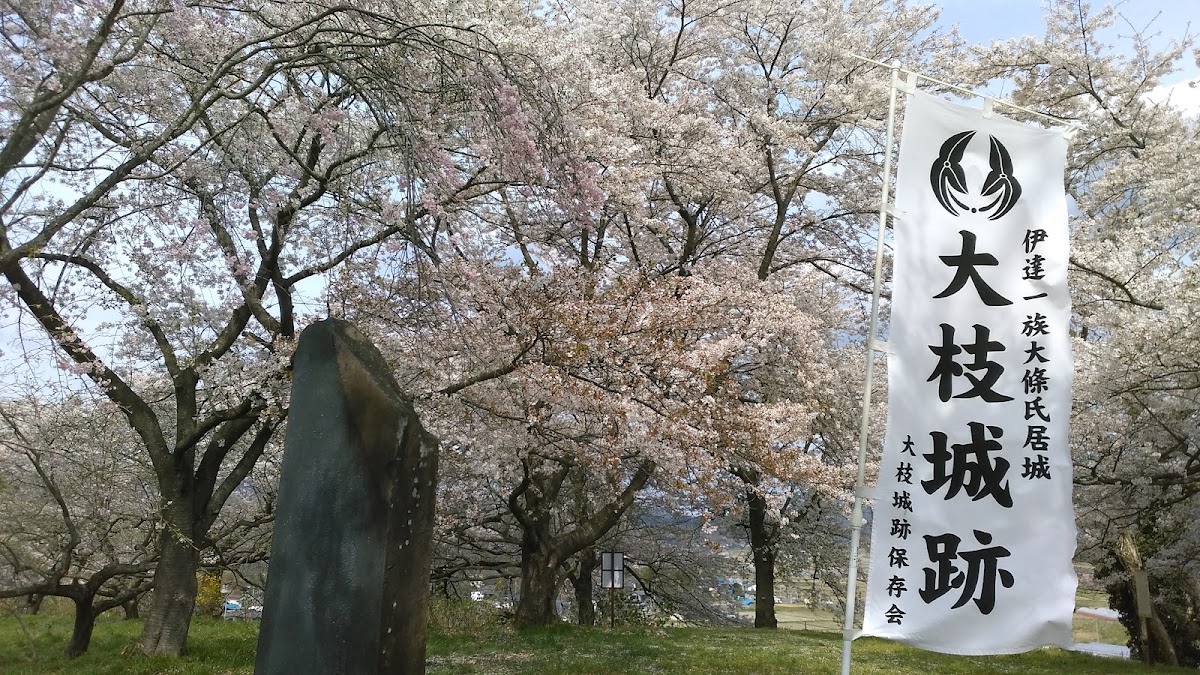
Although much of the castle site is now used as an orchard, the main keep site has been developed into a park, and a monument has been erected. Its location, offering a panoramic view of Yanagawa Castle, conveys its strategic importance at the time.
History of Oeda Castle
Construction History and Establishment of the Oeda Clan
Oeda Castle is said to have been built during the Oei era (1394-1427). The builder was Oeda Magosaburo Muneyuki, the son of Date Muneto and younger brother of the 9th lord, Date Masamune.
Around 1394 (Oei 1), Muneyuki acquired territory in the Oeda area and branched off from the Date clan, adopting the name Oeda. This branching off was intended to expand the Date clan’s power and improve the efficiency of territory management, and the Oeda clan would play an important role as a branch of the Date clan.
Later, the Oeda clan changed its name to “Ojo clan,” but this is a name referring to the same family. Historical documents use both spellings interchangeably.
Successive Lords of the Oeda Clan
Oeda Castle began with the first lord, Oeda Magosaburo Muneyuki, and successive lords of the Oeda clan (Ojo clan) served as castle lords. As a branch of the Date clan, they played a crucial role in supporting the main Date family, whose base was Yanagawa Castle.
Notably, it is said that the 17th head of the Date clan, Date Masamune (Dokuganryu Masamune), also set up camp there. This indicates that Oeda Castle functioned not only as a residence but also as a military base.
The Oeda clan held an important position within the Date clan’s retainers and consistently played a central role in the Date clan’s military and political activities.
The Tensho Pacification of Oshu and the Abandonment of the Castle
The history of Oeda Castle reached a major turning point with Toyotomi Hideyoshi’s Pacification of Oshu in 1591. This policy resulted in the Date clan being relocated from Yonezawa to Iwadeyama Castle (present-day Osaki City, Miyagi Prefecture).
Following this relocation, the 7th head of the clan, Oeda Munenao, also moved to Okura Castle with the Date clan, and Oeda Castle was abandoned. The history of the Oeda clan as their castle, spanning approximately 200 years, came to an end here.
After its abandonment, Oeda Castle was gradually used as farmland and orchards, a practice that continues to this day.
Layout and Structure of Oeda Castle
Location and Topographical Characteristics
Oeda Castle is a mountain castle built on the tip of a small hill overlooking the Abukuma River. It is located west of the Abukuma River, reached by heading north from Yanagawa Castle along National Route 349.
This location was militarily advantageous, possessing the Abukuma River as a natural moat and situated on high ground overlooking the castle town of Yanagawa. It was an ideal location for monitoring enemy movements and establishing a defensive system in conjunction with Yanagawa Castle.
The castle’s layout, making maximum use of the topography of the hill’s tip, exhibits a typical form of a medieval mountain castle.
Castle Structure and Remains
Oeda Castle’s structure is in the style of a mountain castle, and the following remains can still be seen today.
Main Enclosure Site
Currently, the site is maintained as a park, and a monument marking the castle ruins has been erected. The main enclosure (honmaru) was the central part of the castle and is believed to have been the location of the lord’s residence. It is situated in a location with a good view overlooking the Yanagawa area.
Enclosures (Kuruwa)
Multiple enclosures (kuruma) were arranged, indicating that a layered defensive system was constructed. Each enclosure was positioned according to the terrain, enabling efficient defense.
Earthworks
Traces of earthworks remain in various places within the castle grounds. The earthworks served to prevent enemy intrusion and also demarcated the enclosures.
Dry Moats
Dry moats were constructed as defensive structures, and parts of them can still be seen in the terrain today. Dry moats were an important defensive structure that hindered enemy advances.
Currently, much of the castle site is used as an orchard, and farm roads run through it. However, by carefully observing the terrain, traces of the castle’s structure from that time can be discerned.
Highlights of Oeda Castle
Main Enclosure Park and Castle Site Monument
The main highlight when visiting Oeda Castle is the main enclosure site, which has been developed into a park. A castle site monument stands here, along with an information board that concisely explains the history of Oeda Castle.
The view from the main enclosure site is magnificent, offering a panoramic view of the town of Yanagawa and the Abukuma River. Seeing this view, you’ll understand why this location was chosen for the castle.
Observing Remaining Structures
Walking along the farm roads that pass through the orchards, you can observe remains such as earthworks and dry moats. Although not completely preserved, the topography and elevation changes allow you to imagine the castle’s structure at the time.
In particular, the layout of the baileys and the traces of the earthworks are valuable resources for understanding the defensive philosophy of medieval mountain castles.
Relationship with Yanagawa Castle
When visiting Oeda Castle, it is recommended to visit Yanagawa Castle as well. Yanagawa Castle was one of the Date clan’s strongholds, and Oeda Castle functioned as its subsidiary castle.
By actually examining the relative locations of the two castles, we can understand how the Date clan managed their territory and constructed their defensive system.
Access and Visiting Information
Location
〒960-0702 Tate, Higashi-Oeda, Yanagawa-machi, Date City, Fukushima Prefecture
Access Methods
Access by Car
- Approximately 15 minutes from the Tohoku Expressway “Kunimi IC”
- Head north on National Route 349 from Yanagawa Castle, cross the Abukuma River, and head west.
- Parking is limited, so please be careful when visiting.
Access by Public Transportation
- Approximately 30 minutes on foot from JR Tohoku Main Line “Yanagawa Station”
- Taxis are also available.
Points to Note When Visiting
- Much of the castle site is private land (orchard), so please respect the rights of the landowners when visiting.
- The park area of the main keep site can be freely visited.
- It is efficient to check the location of the information boards and castle site monuments in advance.
- We recommend wearing comfortable shoes.
- Visiting Yanagawa Castle and other historical sites related to the Date clan will deepen your understanding.
Contact Information
Date City Commerce and Tourism Division
Phone: 024-575-1113
For detailed information on sightseeing and visits, please check the official Date City website or the tourist information center.
Historical Background of Oeda Castle and the Date Clan
The Role of the Date Clan
The Oeda clan (Ojo clan) held an important position as a branch of the Date clan, supporting the main Date family. The Date clan was a prestigious samurai family that expanded its power in the Tohoku region from the Kamakura period to the Sengoku period, and in the process, they placed family members in various locations to govern their territories.
The Oeda clan was one such branch, and played a role in solidifying the Date clan’s control over the Yanagawa region. Oeda Castle, their residence, was not merely a residence, but also a base for regional control and a strategically important military location.
The Date Clan’s Base in Yanagawa
Yanagawa was one of the Date clan’s important bases. Centered around Yanagawa Castle, several subsidiary castles, including Oeda Castle, were strategically positioned to establish a defensive system for this region.
The distance between Oeda Castle and Yanagawa Castle was ideal for coordinated defense while maintaining communication, and their placement across the Abukuma River, a natural barrier, created a stronger defensive line.
The Turmoil of the Sengoku Period and Oeda Castle
During the Sengoku period, fierce territorial disputes raged throughout the Tohoku region. The Date clan was no exception, repeatedly clashing with surrounding daimyo.
Records indicating that the 17th Date Masamune (Dokuganryu Masamune) set up camp at Oeda Castle demonstrate its important role in actual military operations. Masamune waged numerous battles for supremacy in the Tohoku region, and Oeda Castle was utilized as a strategic base during these battles.
Tourist Attractions Around Oeda Castle
Yanagawa Castle Ruins
The closest major historical site to Oeda Castle is the Yanagawa Castle Ruins. Yanagawa Castle, which flourished as one of the bases of the Date clan, is now a park where you can learn about the history of the Date clan.
Date City Yanagawa Art Museum
This facility introduces the history and culture of the Yanagawa region and also features exhibits related to the Date clan. Visiting before or after your visit to Oeda Castle will give you a deeper understanding.
Nature around the Abukuma River
The area around the Abukuma River, which characterizes the location of Oeda Castle, is blessed with abundant nature. You can enjoy the scenery of each season, and the cherry blossom season and autumn foliage season offer particularly beautiful views.
Historical Sites Related to the Date Clan in Northern Fukushima Prefecture
In addition to Oeda Castle, there are many historical sites related to the Date clan remaining in northern Fukushima Prefecture. By visiting the surrounding castle ruins such as Hobara Castle, Reizan Castle, and Kuwori Castle, you can gain a more comprehensive understanding of the Date clan’s sphere of influence and history.
Photo Gallery
Here are some photo spots to take when visiting Oeda Castle.
Recommended Photo Spots
View from the Main Enclosure
The main enclosure, offering a panoramic view of the Yanagawa townscape and the Abukuma River, is a superb photo spot. Especially on sunny mornings, the lighting is excellent, allowing for beautiful photographs.
Castle Site Monument and Information Board
The castle site monument, recording history, is perfect for commemorative photos of your visit. Taking photos with the information board will also serve as a valuable reference later.
Castle Ruins Across the Orchard
The landscape, where the current orchard and historical remains coexist, symbolizes the present state of Oeda Castle. Because the appearance of the fruit trees changes with the seasons, each visit offers a different view.
Remains of Earthworks and Dry Moats
The remaining remains are valuable resources for understanding the structure of a medieval mountain castle. By carefully choosing your angles, you can record the castle’s structure at that time.
How to Enjoy Your Visit to Oeda Castle
As a Historical Exploration
Oeda Castle is an important historical site for learning about the history of the Date clan. Visiting after researching the history of the Date and Oeda clans will likely lead to a deeper appreciation of the site.
Carefully reading the explanations on the information boards and castle ruins monuments, and walking through the castle grounds while imagining what it was like in those days, will allow you to feel the breath of history.
As a Castle Research Interest
For those interested in the structure of medieval mountain castles, Oeda Castle is a valuable research subject. There is the enjoyment of inferring the layout from the remaining structures and deciphering the defensive strategies.
Walking the site while comparing it with topographic maps and old drawings will allow you to experience the true essence of castle research.
As a Nature Walk
Enjoying the nature surrounding the castle ruins is another option. The flow of the Abukuma River and the surrounding rural landscape offer beauty in every season.
The castle ruins, now used as an orchard, create a unique landscape where life and history are intertwined, with flowers blooming in spring and fruit ripening in autumn.
As a Photography Subject
Oeda Castle, where historical remains and modern agricultural landscapes coexist, is an attractive subject for photography. By photographing from various angles, you can capture the multifaceted charm of the castle ruins.
Preservation and Future of Oeda Castle
Current Situation and Challenges
While the main keep area of Oeda Castle has been developed into a park, much of the site remains privately owned and used as an orchard. This presents challenges from the perspective of castle preservation, but it also possesses unique value as a form of coexistence between local life and history.
Although the preservation of the remains is not perfect, traces of earthworks and dry moats can still be seen, providing valuable information for understanding the structure of medieval mountain castles.
Regional Positioning
Oeda Castle is recognized as an important historical asset of Date City and is utilized as a tourist resource. It is an indispensable part of the history of the Yanagawa region and is an integral part of the region’s identity.
In Date City, efforts are being made to promote tourism utilizing historical sites related to the Date clan, including Oeda Castle. These efforts include installing information boards and disseminating information.
Request to Visitors
When visiting the Oeda Castle ruins, please observe the following points:
- Avoid trespassing on private property.
- Please take all your trash with you.
- Please be careful not to damage the ruins.
- Do not touch the crops in the orchards.
- Please respect the lives of local residents.
By observing these manners, we can preserve this valuable historical heritage for future generations.
Summary
Oeda Castle (Date City, Fukushima Prefecture) is a mountain castle that served as the residence of the Oeda clan (Ojo clan), a branch of the Date clan, for generations. It has a history spanning approximately 200 years, from its construction during the Oei era to its abandonment in 1591 (Tensho 19).
Built on a prime location on a small hill overlooking the Abukuma River, this castle served as an important subsidiary castle supporting Yanagawa Castle and was a strategically important military stronghold, with the 17th lord of the Date clan, Date Masamune, said to have stationed his troops there.
Currently, much of the castle site is used as an orchard, but the main keep site has been developed into a park, and some remains such as earthworks and dry moats still exist. The panoramic view of Yanagawa is magnificent, allowing visitors to truly appreciate its strategic importance at the time.
For those interested in the history of the Date clan, those wanting to learn about the structure of medieval mountain castles, or those simply wanting to explore the history of Fukushima Prefecture, Oeda Castle is a historical site well worth visiting. Visiting it in conjunction with Yanagawa Castle and other Date-related historical sites in the area will provide a deeper understanding and a greater sense of awe.
Why not trace the footsteps of the Date clan at the Oeda Castle ruins, where history and modern life coexist?