A Complete Guide to the History and Highlights of Matsuzaki Castle (Chiba Prefecture)
Matsuzaki Castle is a medieval castle site located in Matsuzaki, Sōsa City, Chiba Prefecture. It is believed to have been built during the Sengoku period by the Matsuzaki clan, a branch of the Chiba clan, and its remains, such as earthworks and dry moats, are still well-preserved. This article provides a detailed explanation of Matsuzaki Castle’s history, its lords, highlights of its remains, and access methods.
Basic Information on Matsuzaki Castle
Matsuzaki Castle is a flatland castle located in Sōsa City, in the northeastern part of Chiba Prefecture, built on a plateau approximately 20 meters above sea level. While relatively small in scale, the castle functioned as an important base protecting a strategic location in the region.
Location: Matsuzaki, Sōsa City, Chiba Prefecture
Castle Structure: Hilltop Castle
Construction Period: Sengoku period (around the 16th century)
Builder: Matsuzaki clan
Main Lords: Matsuzaki clan
Currently, part of the castle site is farmland and residential land, but the main remains are preserved and cherished as a local historical heritage.
History of Matsuzaki Castle
Background of Construction and the Sengoku Period
Matsuzaki Castle is believed to have been built by the Matsuzaki clan, a branch of the Chiba clan, who ruled Shimōsa Province during the Sengoku period. The Chiba clan was a prominent family that wielded power in Shimōsa Province from the late Heian period, and its branches were dispersed throughout the country, governing various territories.
The Matsuzaki clan, as a branch of the Chiba clan, was entrusted with the rule of the Sōsa region (former Sōsa County). This region is located in the northeastern part of Shimōsa Province, a strategically important transportation hub at the intersection of the Kujūkuri Plain and the Hokusō Plateau. It is presumed that Matsuzaki Castle functioned as a defensive base for this region and as the center of territorial management.
Relationship with the Chiba Clan
The Chiba clan served as the governor of Shimōsa Province from the Kamakura period to the Muromachi period, boasting one of the greatest powers in the Kanto region. However, with the arrival of the Sengoku period, they gradually lost power due to internal conflicts and clashes with other forces.
The Matsuzaki clan was also affected by the decline of the main Chiba clan. In the latter half of the 16th century, they were caught between powerful forces such as the Hōjō clan, who had expanded into Kanto, and the Satake clan of Hitachi Province, and are thought to have been in a difficult situation.
From the End of the Sengoku Period to the Castle’s Abandonment
In 1590, Toyotomi Hideyoshi’s siege of Odawara led to the downfall of the Hōjō clan, and the Kanto region came under the control of Tokugawa Ieyasu. At this point, the Chiba clan’s power was completely lost, and the Matsuzaki clan also seems to have disappeared from the historical stage.
While there are no clear records of when Matsuzaki Castle was abandoned, it is presumed that it had already lost its function as a castle around 1590 (Tensho 18) or in the early Edo period. Afterward, while the land was used for agriculture, the castle’s remains continued as a topographical feature.
Matsuzaki Castle’s Layout and Structure
Castle’s Arrangement and Size
Matsuzaki Castle is a flatland castle utilizing the edge of a plateau, with a layout that skillfully makes use of the natural terrain. The castle area is approximately 150 meters east-west and 100 meters north-south, a standard size for a medieval local lord’s residence.
The castle is thought to have had a concentric structure with multiple enclosures (kuruwa) arranged around the main enclosure (honmaru). The elevation difference of the plateau was used to enhance its defensiveness, and dry moats and earthen ramparts surrounded the perimeter.
Major Remains
The following remains can still be observed today:
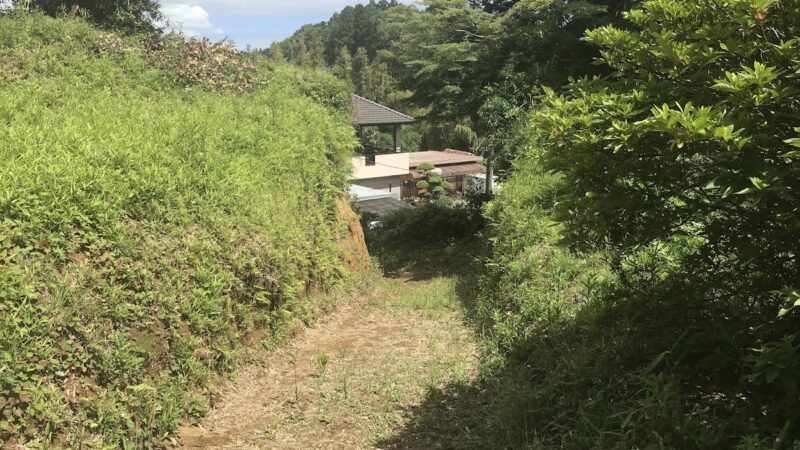
Earthworks: Parts of the earthworks that surrounded the castle remain. The height varies depending on the location, but the best-preserved sections are approximately 2-3 meters high. The earthworks prevented enemy intrusion, and fences or walls were built on top of them to enhance defense.
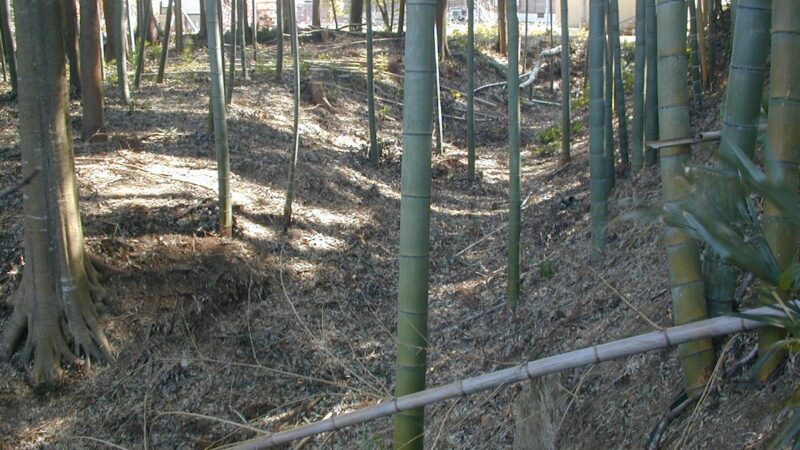
Dry Moats: Traces of dry moats, which played an important role as a defensive structure of the castle, remain. While some parts are now filled in, the location of the moats can be estimated from the topography. The depth is thought to have been approximately 3-4 meters.
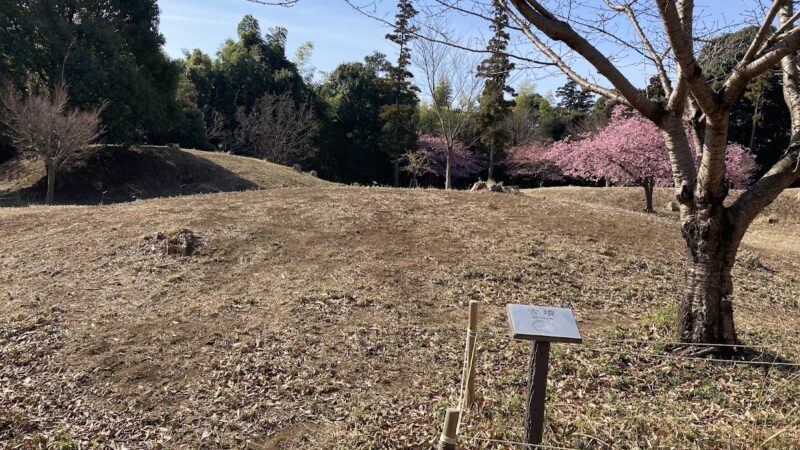
Enclosures (Kuruwa): The topography of multiple enclosures, including the main enclosure, remains today. Each enclosure was leveled, and it is presumed that buildings or warehouses were constructed there.
Tiger’s Mouth (Entrance): Traces of the castle’s entrances (koguchi) can also be seen in some places. It is thought that they were curved rather than straight to prevent enemy intrusion.
Highlights and Walking Points of Matsuzaki Castle
Observing the Ruins
When visiting the Matsuzaki Castle ruins, paying attention to the following points will help you understand the castle’s structure more deeply.
- Shape of the Earthworks: By observing the cross-section and height of the earthworks, you can learn about the castle-building techniques of the time.
- Topography: By observing the difference in elevation between the flat enclosures and the surrounding moat remains, you can imagine the castle’s three-dimensional structure.
- Surrounding Landscape: By examining the area visible from the castle, you can understand why the castle was built in this location.
Nearby Historical Sites
Several historical sites that also tell the history of the Middle Ages exist around Matsuzaki Castle.
Iitaka-ji Temple (Iitaka Danrin Ruins): An important Nichiren Buddhist temple located in Sōsa City, which flourished as an educational institution for monks during the Edo period. It contains buildings designated as important national cultural properties.
Yokaichiba Castle Ruins: Also located within Sōsa City, this is a medieval castle ruin associated with the Chiba clan.
Visiting both sites together will allow you to gain a deeper understanding of the region’s history from the medieval to early modern periods.
How to Access Matsuzaki Castle
Using Public Transportation
Nearest Station: JR Sōbu Main Line “Yokaichiba Station”
Matsuzaki Castle Ruins are approximately 5 kilometers from Yōichiba Station. It is convenient to take a taxi or rent a bicycle from the station. There are also bus routes, but the number of services is limited, so it is recommended to check the timetable in advance.
Using a Car
If using the Higashi-Kanto Expressway, the nearest interchanges are “Daiei IC” or “Sawara-Katori IC”. From there, it takes approximately 30-40 minutes via national and prefectural roads.
There is no dedicated parking lot around the castle ruins, so please be careful not to inconvenience local residents when parking on the street. If possible, we recommend using the parking lot of a nearby public facility and accessing the site on foot from there.
Points to Note When Visiting
- Part of the castle ruins are on private property, so permission from the owner may be required to enter.
- Please do not climb or dig on the earthworks or moat remains to avoid damaging the ruins.
- In summer, vegetation can grow thick, making the ruins difficult to see. Visiting in spring or autumn is recommended.
- Please prepare for outdoor walking, such as insect repellent and long-sleeved clothing.
Research and Preservation Activities of Matsuzaki Castle
Archaeological Survey
While no large-scale excavations have been conducted at Matsuzaki Castle, surveys and records have been carried out by local historians and castle researchers.
Through the creation of layout maps and the investigation of ancient documents, the structure and historical background of the castle are gradually becoming clearer. Further detailed investigations may yield even more information.
Current Status and Challenges of Preservation
Matsuzaki Castle Ruins are not currently designated as a historical site, but they are carefully preserved by local history enthusiasts and residents. However, parts of the castle ruins are being used for residential development and agriculture, leaving challenges for the preservation of the remains.
In the future, it will be important to strike a balance between appropriate preservation and utilization as a valuable historical heritage site for the region. This is a challenge that the entire community should address, including the installation of information boards and the maintenance and management of the remains.
Comparison with Other Medieval Castles in Chiba Prefecture
Many medieval castles similar to Matsuzaki Castle remain in Chiba Prefecture.
Hon-Sakura Castle (Shisui Town/Sakura City)
This castle flourished as the base of the Chiba clan and is designated as a national historical site. It is larger in scale than Matsuzaki Castle and is a flatland castle with a complex layout.
Usui Castle (Sakura City)
This castle was built on a plateau overlooking Lake Inba and is known for repelling an attack by Uesugi Kenshin.
Otaki Castle (Otaki Town)
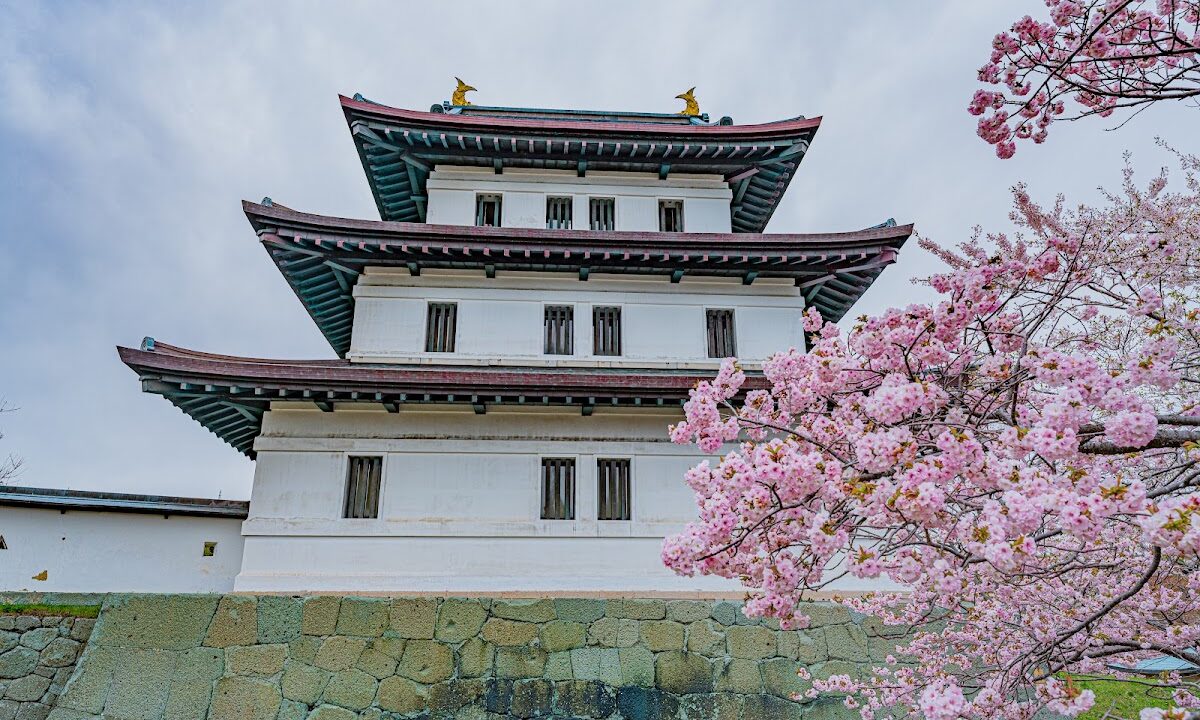
Located in the central part of the Boso Peninsula, this castle now features a replica keep and is open to the public as a museum.
Compared to these other castles, Matsuzaki Castle, though smaller in scale, possesses a typical structure for a local powerful family’s residence and is a valuable historical site for understanding the local community of the time.
Learning about Local Communities in the Sengoku Period from Matsuzaki Castle
Small, local castles like Matsuzaki Castle provide important clues for understanding local communities in the Sengoku period.
The Role of Local Powerful Families
Local powerful families like the Matsuzaki clan stood between daimyo (feudal lords) and farmers, and were responsible for governing their regions. They used their castles as bases and fulfilled the following roles:
- Military Defense: A defensive base protecting the region from external enemies
- Administrative Functions: Collection of land tax and mediation of disputes
- Economic Activities: Holding markets and managing distribution
- Cultural Center: Protection of temples and shrines and support for cultural activities
Relationship between Castles and Settlements
Settlements were formed around castles, inhabited by retainers, merchants, and artisans. These settlements were called “castle towns” and formed a local community integrated with the castle. It is believed that such settlements once existed around Matsuzaki Castle.
Summary: Historical Value of Matsuzaki Castle
Matsuzaki Castle is a valuable medieval castle ruin remaining in Sōsa City, Chiba Prefecture. Although not large in scale, it possesses the following historical value:
- Demonstrates the Chiba Clan’s Power Structure: Clues to how the Chiba clan controlled a vast territory.
- Reality of Local Powerful Clans in the Sengoku Period: Conveys the realities of politics, military affairs, and economics at the local level.
- Typical Example of a Medieval Castle: A teaching tool for learning the basic structure of a hilltop castle.
- Regional Historical Heritage: An important cultural property that conveys the history of Sōsa City.
Matsuzaki Castle, with its remaining earthworks and dry moats, is a worthwhile spot for history buffs. While not flashy, you can feel the presence of the people who lived during the Sengoku period within the quietly standing ruins.
If you are interested in the medieval history of Chiba Prefecture or enjoy visiting castles, please visit the Matsuzaki Castle ruins. Visiting it along with other historical sites in the surrounding area will allow you to gain a deeper understanding of the rich history of this region.
Matsuzaki Castle is a witness to history, preserved by the local people. We visitors are also required to treat the ruins with care and observe proper etiquette when visiting, in order to pass on this precious heritage to future generations.