Complete Guide to Koya Castle (Yotsukaido City, Chiba Prefecture) | Thorough Explanation of History, Remains, and Access
What is Koya Castle?
Koya Castle (Koya-jo) is a medieval castle located in Kitanosaku, Monoi, Yotsukaido City, Chiba Prefecture. Also known as “Monoi Koya Castle,” it is known as one of the important strongholds in Shimosa Province during the Sengoku period. Built on the tip of a north-facing plateau on the left bank of the Kashima River, which flows towards Lake Inba, this castle, a hill castle that skillfully utilized the natural terrain, still retains well-preserved remains.
Designated as a historical site by Yotsukaido City, it is highly regarded among castle researchers and history enthusiasts due to the diverse castle remains that can be confirmed, including the main enclosure, lower enclosures, watchtower bases, earthworks, dry moats, shoji-bori (screen-like moats), and wells. Currently preserved as a well-maintained park, it is a valuable historical heritage site that evokes its former appearance despite being located in a residential area.
History of Furuya Castle
Background and Period of Construction
The exact date of construction and builder of Furuya Castle are unknown due to a lack of clear historical records. However, based on the castle’s structure and the historical background of the surrounding area, it is estimated to have been built during the mid-to-late Sengoku period. This region, located in the central part of Shimosa Province and a key point for water transport utilizing the Inbanuma Lake system, was militarily and economically important.
Relationship between the Usui and Monoi Clans
The main lords of Furuya Castle, as recorded, were the Usui and Monoi clans. The Usui clan was a powerful local lord based in Usui, Shimosa Province (present-day Usui, Sakura City), and built a vast sphere of influence centered around Usui Castle. The Monoi clan is thought to have been a branch or vassal group of the Usui clan, entrusted with governing this region.
The place name Monoi itself likely originates from the rule of the Monoi clan, suggesting that Furuya Castle functioned as the Monoi clan’s residence or branch castle. The Usui clan, a branch of the Chiba clan, wielded considerable influence in northern Shimosa Province and played a crucial role in conflicts with the Hojo and Satomi clans during the Sengoku period.
Developments during the Sengoku Period
During the Sengoku period, this region became a battleground for the struggle for supremacy in the Kanto region. In particular, during the Eiroku era (1558-1570), Usui Castle became the site of fierce battles during Uesugi Kenshin’s invasion of Kanto. It is believed that Furuya Castle also played a part in the network of Usui Castle’s subsidiary castles, functioning as part of the defensive line.
When the Hojo clan gained control of Kanto, the Usui clan also came under their control, and Furuya Castle was incorporated into their system of rule. After Toyotomi Hideyoshi’s siege of Odawara in 1590, the Hojo clan was destroyed, and this region came under the control of Tokugawa Ieyasu. It is presumed that Furuya Castle was abandoned during this time.
Layout and Structure of Furuya Castle
Location and Topographical Features
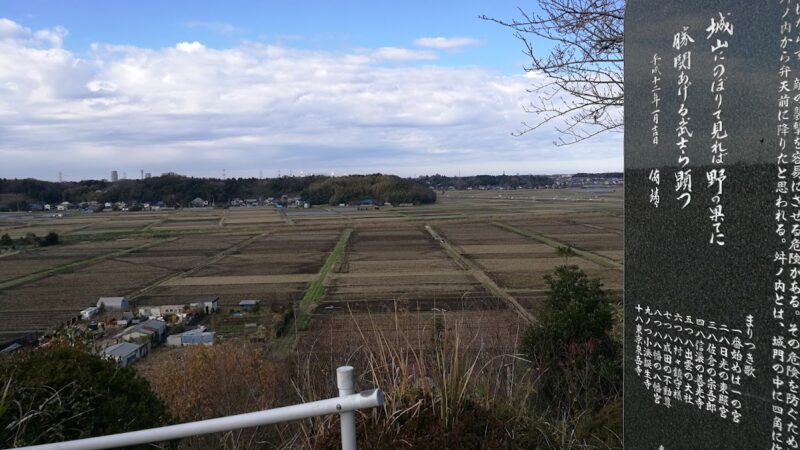
Furuya Castle was built on a plateau on the left bank of the Kashima River, making full use of its north-facing plateau tip. The elevation is approximately 30 meters, with a relative height of approximately 20 meters. The north and east sides are steep cliffs, forming a natural defensive line. From the plateau, one can see a panoramic view of Lake Inba and the Kashima River basin, making it an excellent military observation post.
Across the river were related castles such as Mawatari Ouchi Castle and Mawatari Baba-kan, indicating the formation of a castle network across the Kashima River. This arrangement was strategic, enabling monitoring and control of water transport, as well as mutual military support.
Structure of the Main Enclosure
The main enclosure is trapezoidal, measuring approximately 40 meters on the top side, 80 meters on the bottom side, and 80 meters from north to south. This vast space is thought to have housed residential facilities, warehouses, and barracks. The remains of a well still exist within the main enclosure, indicating that water supply was considered during sieges.
The main enclosure is surrounded by earthen ramparts 2-3 meters high, enhancing its defensive capabilities. The southern rampart, in particular, is large and structured to defend against attacks from the main gate. Earthen platforms, believed to be watchtower bases, can be seen at the four corners of the main enclosure, suggesting they functioned as lookout posts or defensive strongholds.
Lower Enclosures and Defensive Structures
Several lower enclosures are positioned around the main enclosure. These were defensive positions designed to protect the main enclosure, forming a tiered defensive line. The lower enclosures are irregularly arranged, following the terrain, restricting the attacker’s movement and creating a favorable combat environment for the defenders.
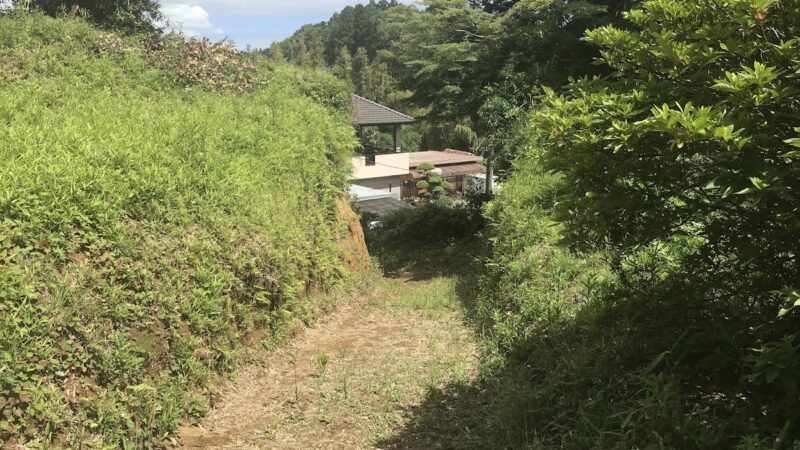
A dry moat (horizontal moat) runs between the main enclosure and the lower enclosures, serving as an important defensive structure to prevent enemy intrusion. The moat is 5-8 meters wide and 3-5 meters deep, providing sufficient defensive capability for the time.
Features of the Shoji Moat
One of the greatest highlights of Furuya Castle is the shoji moat. A shoji moat is a unique type of dry moat with ridges resembling the lattices of a shoji screen at the bottom, a characteristic feature of castles belonging to the Later Hojo clan in the Kanto region. This structure made it difficult for enemies to move along the bottom of the moat and also made their footing unstable when attempting to cross it.
The shoji moat at Furuya Castle has been confirmed in a portion of the south side of the main enclosure, but it has been backfilled for preservation. However, its intricate structure can be seen from archaeological records and photographs. The existence of the shoji moat indicates that this castle was not merely the residence of a local powerful family, but was constructed or renovated by a force with advanced castle-building techniques.
Entrance and Circulation
The main entrance to the castle is thought to have been located on the south side. Earthworks and moats are intricately arranged around the entrance, demonstrating a strategy to enhance its defensive capabilities. Furthermore, it is presumed that the rear gate (rear entrance) was located on the east or west side, but no clear traces remain.
The movement within the castle was designed utilizing the elevation differences of the terrain, allowing the defenders to attack from advantageous positions. The paths between each enclosure are narrow and winding, a structure designed to prevent the intrusion of large armies.
Details of the Remains of Furuya Castle
Existing Remains
The following remains exist at Furuya Castle:
Enclosures: Multiple enclosures can be identified, centered around the main enclosure. Each enclosure is arranged according to the terrain, forming an organic defensive system as a whole.
Lower Enclosures: The lower enclosures, arranged in a stepped fashion around the main enclosure, are still clearly visible. The northern and eastern lower enclosures, in particular, are well-preserved.
Watchtower Platforms: The watchtower platforms located at the four corners of the main enclosure remain as earthen platforms. The height is approximately 1-2 meters, and it is believed that a wooden watchtower stood there at the time.
Earthwork: The earthwork surrounding the main enclosure remains in good condition in some sections. It is 2-3 meters high, and in some places the base width reaches 5-8 meters.
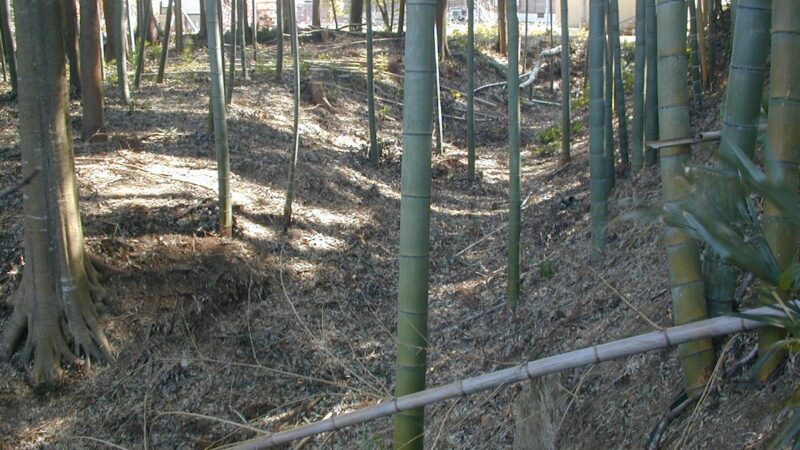
Dry Moat: The dry moat surrounding the main enclosure still retains some depth. The moat bottom is 3-5 meters wide and has a V-shaped or U-shaped cross-section.
Screen Moat: As mentioned above, it is currently filled in, but it once existed on the south side of the main enclosure. Excavations have confirmed a shoji-style moat with ridges spaced approximately 1.5-2 meters apart and about 1 meter high.
Well: The remains of a well within the main enclosure can still be seen as a depression. The depth is unknown, but it is presumed to have been a well that utilized spring water.
Lost Remains
Due to residential development and agricultural conversion, the following remains have been lost or significantly altered:
- Outer baileys and moats
- Remains of earthen and wooden bridges
- Foundation stones and post holes of buildings
- Remains of castle gates
However, based on the surrounding topography and place names, it is presumed that the former castle area was much larger.
Relationship with Surrounding Castles
Mawatari Ouchi Castle
Located on the right bank of the Kashima River, opposite Furuya Castle, Mawatari Ouchi Castle was a castle closely related to Furuya Castle. The two castles were positioned to mutually support each other across the Kashima River, forming a defensive line for the region. Mawatari Ouchi Castle is also thought to have been within the sphere of influence of the Usui clan, and together with Furuya Castle, it functioned as a base for controlling the Kashima River basin.
Mawatari Baba Manor
Mawatari Baba Manor is a manor site located near Mawatari Ouchi Castle, and may have been used as a residence during peacetime. During the Sengoku period, it was common practice to separate castles for warfare from residences for daily life, and Furuya Castle may have followed a similar approach.
Koshinozuka Castle and Oshinozuka Castle
Around Furuya Castle, there were other castles such as Koshinozuka Castle and Oshinozuka Castle, which formed a network of branch castles of the Usui clan. These castles were spaced several kilometers apart, and it is believed that a communication network using beacons and swift horses was in place. This network of branch castles allowed the Usui clan to efficiently control a vast territory.
Relationship with Usui Castle
Usui Castle was the Usui clan’s base, and Furuya Castle is considered one of its branch castles. The straight-line distance from Usui Castle to Furuya Castle is approximately 6 kilometers, a distance of about 2 hours on foot. Its strategic location was important, as it was within a distance from which reinforcements could be dispatched from Usui Castle in emergencies.
Access to Furuya Castle
Access by Public Transportation
By Train:
- Get off at “Monoi Station” on the JR Sobu Main Line, approximately 12 minutes on foot.
- Only local trains stop at Monoi Station; if using an express train, you will need to transfer at Yotsukaido Station.
- Approximately 1 hour from Tokyo Station, approximately 15 minutes from Chiba Station.
By Bus:
- Take a bus bound for “Monoi” from Yotsukaido Station, get off at the nearest bus stop, and walk approximately 5 minutes.
- However, bus services are limited, so it is recommended to check the timetable in advance.
Access by Car
Using the Higashi-Kanto Expressway:
- Approximately 10 minutes from “Yotsukaido IC”.
- Access is possible via National Route 51.
Parking:
- There is no dedicated parking lot, but you may be able to use the parking lots of nearby public facilities.
- Please avoid street parking as it is a residential area, and be considerate of the neighbors.
Points to Note During Your Visit
- Furuya Castle Ruins are maintained as a park, but since they are located in a residential area, consideration for the surrounding residents is necessary when visiting.
- To protect the remains, please refrain from climbing on the earthworks or moats, and from damaging the vegetation.
- The shoji moat has been filled in and cannot be seen on site.
- The ground can be slippery during and after rain, so appropriate footwear is recommended.
- In summer, the vegetation can be overgrown, making it difficult to see the remains. Visiting from autumn to spring is ideal for observing the remains.
Highlights of Furuya Castle
The Vast Space of the Main Enclosure
The size of the main enclosure is one of the biggest highlights of Furuya Castle. The vast space of approximately 80 meters square gives a real sense of the scale of the castle at that time. Walking through the main enclosure allows you to experience the expansive living space of the castle lord and his retainers.
Well Remains
The well remains within the main enclosure are important remains that demonstrate the castle’s function in anticipation of a siege. Although it remains as a depression today, it was once a deep well that secured a water source. It is a valuable historical site for understanding the importance of water in medieval castles.
Combination of Earthworks and Moats
The combination of earthworks surrounding the main enclosure and the surrounding moats demonstrates a typical defensive structure of a medieval castle. Looking down at the bottom of the moat from the top of the earthworks allows one to appreciate the defensive advantage.
Layout Utilizing the Topography
The layout, which makes maximum use of the topography of the plateau, demonstrates the high level of castle construction technology at Furuya Castle. The steep cliffs on the north and east sides function as natural barriers, while artificial defensive structures are concentrated on the south side—a rational design.
Views
From the main enclosure, one can enjoy views of the Kashima River basin and the Inbanuma Lake area. On clear days, distant mountain ranges are visible, indicating that this castle also functioned as a surveillance base.
Cultural Property Designation and Preservation Status of Furuya Castle
Furuya Castle is designated as a historical site by Yotsukaido City and is protected as an important cultural property of the region. The city is carrying out preservation and maintenance work, and information boards and explanatory signs have been installed.
However, there are challenges in balancing the preservation of the remains with the use of the site as a park, as evidenced by the backfilling of the shoji-bori (a type of moat). Further detailed archaeological excavations and efforts to make the remains more visible are expected in the future.
Furuya Castle is designated as a historical site by Yotsukaido City and is protected as an important cultural property of the region. ## Nearby Sightseeing When Visiting Furuya Castle
Historical Spots in Yotsukaido City
When visiting Furuya Castle, we recommend also visiting other historical spots in Yotsukaido City:
- Yotsukaido City Library: You can view local historical materials.
- Yotsukaido City Local History Museum: A facility where you can learn about the history and culture of the city.
Nearby Castles
For castle enthusiasts, you can also add the following nearby castles to your visit list:
- Usui Castle (Sakura City): The main castle of the Usui clan, famous for its battles against Uesugi Kenshin.
- Hon-Sakura Castle (Shisui Town): The base of the Chiba clan, designated as a national historical site.
- Sakura Castle (Sakura City): An Edo period castle, now maintained as a castle ruins park.
Current Status and Challenges of Furuya Castle Research
Limitations of Historical Sources
Documentary sources concerning Furuya Castle are extremely limited, leaving many questions unanswered regarding its construction date, builder, and detailed historical circumstances. Further research into surrounding historical documents and comparative studies with other castles may yield new insights.
Need for Archaeological Investigation
Full-scale excavations have not yet been conducted sufficiently, leaving many questions unanswered regarding the details of the remains, their age, and the castle’s transformation process. Future excavations, through analysis of unearthed artifacts and remains, are expected to reveal a more detailed history of the castle.
Balancing Preservation and Utilization
As a castle site located within a residential area, balancing the preservation of the remains with their use as living space for local residents is a crucial challenge. While measures such as backfilling the shoji-bori moat have been taken to temporarily obscure the remains for preservation purposes, future considerations for visualizing and restoring the remains are worthwhile.
Summary
Furuya Castle is a valuable medieval castle site remaining in Yotsukaido City, Chiba Prefecture. As a base of operations for the Usui and Monoi clans, it played a vital role in protecting a strategic point in the Kashima River basin. The remains, including the main enclosure, earthworks, dry moats, and shoji-style moats, are valuable cultural assets that convey the castle-building techniques of the Sengoku period.
Its convenient location, accessible on foot from Monoi Station, and the well-preserved remains despite being in a residential area, make it a worthwhile spot not only for castle enthusiasts but also for many people interested in local history.
Visiting it along with nearby castles such as Mawatari Ouchi Castle and Usui Castle will allow for a deeper understanding of the Usui clan’s rule and the history of Shimosa Province during the Sengoku period. Why not explore Chiba Prefecture’s rich medieval history through Furuya Castle?