Oyumi Jinya Ruins (Chiba Prefecture): The Center of the Oyumi Domain, Marking 240 Years of History for the Morikawa Clan
The Oyumi Jinya Ruins are the remains of an Edo period administrative office located in Oyumi-cho, Chuo-ku, Chiba City, Chiba Prefecture. It served as the administrative center of the Oyumi Domain, which ruled Oyumi in Chiba County, Shimosa Province, for approximately 240 years, from 1627 (Kanei 4) until the Meiji Restoration. Built utilizing a corner of the medieval Oyumi Castle (Kita-Oyumi Castle), this administrative office played a crucial role as the governing base of the Morikawa clan, the only daimyo family in Chiba City.
Basic Information on Oyumi Jinya
The Oyumi Jinya was located in Oyumi, Chiba County, Shimosa Province (near present-day 1217 Oyumi-cho, Chuo-ku, Chiba City, Chiba Prefecture). The administrative office was situated on the outer bailey of the medieval Oyumi Castle, with its center located in the area west of Oyumi Shrine.
The size of the jinya (fortified residence) was relatively small, befitting a small domain of 10,000 koku (a unit of rice production), but the Morikawa clan maintained stable rule for 12 generations, making it an important historical center in the early modern period within the Chiba City area. Currently, most of the jinya site has been developed into residential land, but traces of its former glory can still be seen in the dry moat and earthworks remaining west of the Omi Shrine, and in Shigetoshiin Temple, the Morikawa clan’s family temple.
History of the Omi Jinya
From Medieval Omi Castle to Early Modern Jinya
The site where the Omi Jinya was built was originally part of the medieval Omi Castle (also known as Kita-Omi Castle or Kita-Oyumi Castle). Omi Castle was known as the residence of Ashikaga Yoshiaki, the Oyumi Shogun, during the Sengoku period and was an important base in Shimosa Province. Medieval remains have been confirmed, including the excavation of a stone monument bearing the inscription of Kyoroku 4 (1531).
After the turmoil of the Sengoku period, the region came under the control of Tokugawa Ieyasu during the Edo period. In 1626 (Kanei 3), Morikawa Shigetoshi, the third son of Morikawa Ujitoshi, a retainer of Ieyasu, was granted a fiefdom of 10,000 koku, centered around the Ikuhama area.
Establishment of the Jinya (Fortified Residence) by Morikawa Shigetoshi
In 1627 (Kanei 4), Morikawa Shigetoshi, who became the first lord of the domain, built a jinya (fortified residence) on a corner of the former Ikuhama Castle, making it the administrative center of the Ikuhama Domain. Shigetoshi was a samurai who served the Tokugawa family, and based on that trust, he laid the foundation for the new domain.
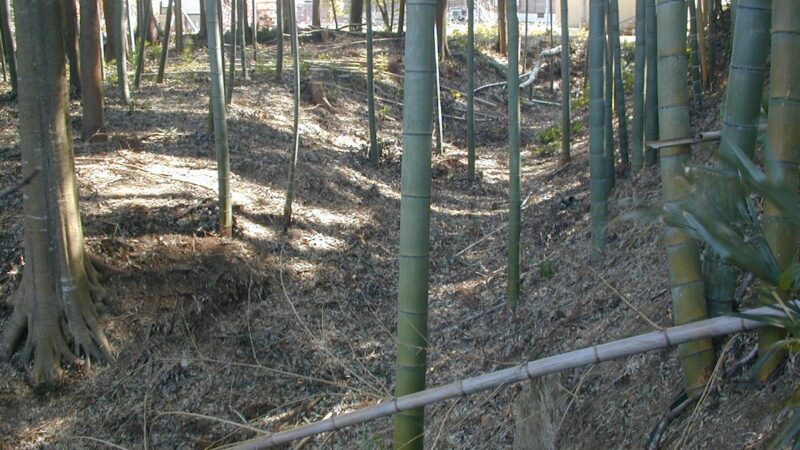
The jinya was developed as a residence for a modern daimyo, utilizing the remains of the medieval castle. The central part of the jinya was the area adjacent to Ikuhama Shrine, and dry moats and earthen ramparts were arranged around it. The vast dry moat, approximately 10 meters wide, that still remains west of Ikuhama Shrine today, is thought to be a remnant of the defensive facilities from the jinya era.
The Morikawa Clan’s 240-Year Rule Over 12 Generations
The Morikawa clan ruled the Omi Domain for approximately 240 years, from the first lord, Shigetoshi, through 12 generations. Despite being a small domain of 10,000 koku, the Morikawa clan maintained stable administration until the end of the Edo period, contributing to the development of the region.
The Omi Domain, also known as the Morikawa Domain, was the only daimyo family to exist within Chiba City. The lord governed by traveling between Edo and Omi, and the domain’s administrative offices and retainers were located in the jinya (fortified residence).
Shigetoshi-in Temple was founded as the Morikawa clan’s family temple and became the burial place of successive lords. Even today, the Morikawa clan’s tombs remain at Shigetoshi-in Temple, located south of the jinya site and at the western edge of the castle grounds. Benten Pond below Shigetoshi-in Temple is said to be the site of the jinya’s outer moat.
The Meiji Restoration and the Abolition of the Domains
With the Meiji Restoration, the Omi Domain, like other domains, experienced significant changes. With the abolition of the feudal domains in 1871 (Meiji 4), the Omi Domain was abolished, and the jinya (fortified residence) ceased to function. Since then, the site of the jinya has gradually been developed into residential land, making it difficult to imagine its former appearance.
Structure and Remains of the Omi Jinya Site
Layout of the Jinya
The Omi Jinya was built utilizing the outer bailey of the medieval Omi Castle. The area west of Omi Shrine was the center of the jinya, and it is believed that the palace and administrative facilities of the domain were located there.
The jinya’s boundaries included the area surrounding Omi Shrine, with defensive structures positioned to the east, west, north, and south. Current topography indicates that the jinya was built utilizing the advantageous terrain of the plateau.
Existing Remains
While most of the remains of the Omi Jinya site have been lost due to residential development, several important traces remain.
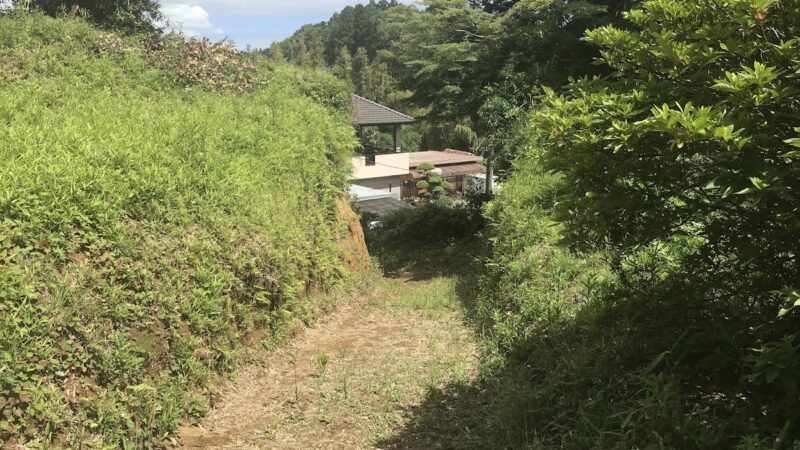
Dry Moat: A dry moat, approximately 10 meters wide, remains from the south to the west of the Omi Shrine. This was a defensive structure from the time of the jinya (fortified residence), and is now almost the only clearly identifiable surviving structure. Its considerable size speaks volumes about the jinya’s defensive capabilities.
Earthwork: A portion of the earthwork remains on the west side of the dry moat, facing residential land. While its height and size have decreased since its original state, it is a valuable relic for understanding the structure of the jinya.
Omi Shrine: A shrine that existed within the jinya grounds, formerly known as Goryo Shrine. The Morikawa clan also revered it, and it played a role as the spiritual pillar of the domain.
Shigetoshi-in Temple: A temple founded as the Morikawa clan’s family temple, located at the western edge of the castle grounds. The temple grounds contain the tombs of successive feudal lords, preserving the history of the Omi domain.
Stone Monuments and Information Boards
Several stone monuments and information boards that convey its history are installed at the Omi Jinya site.
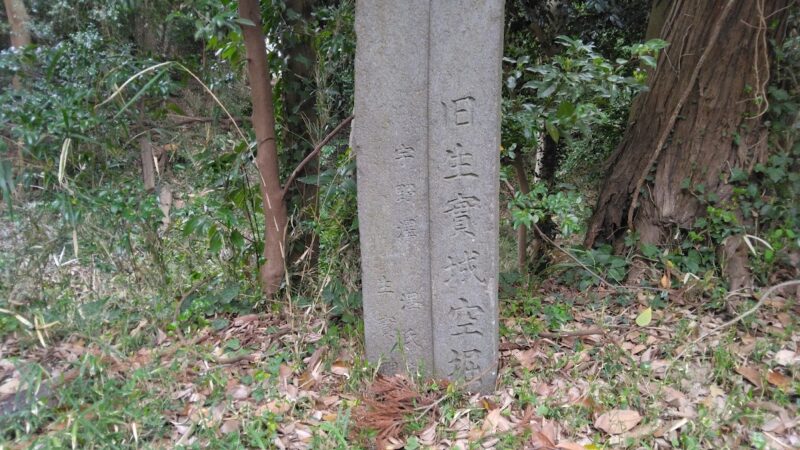
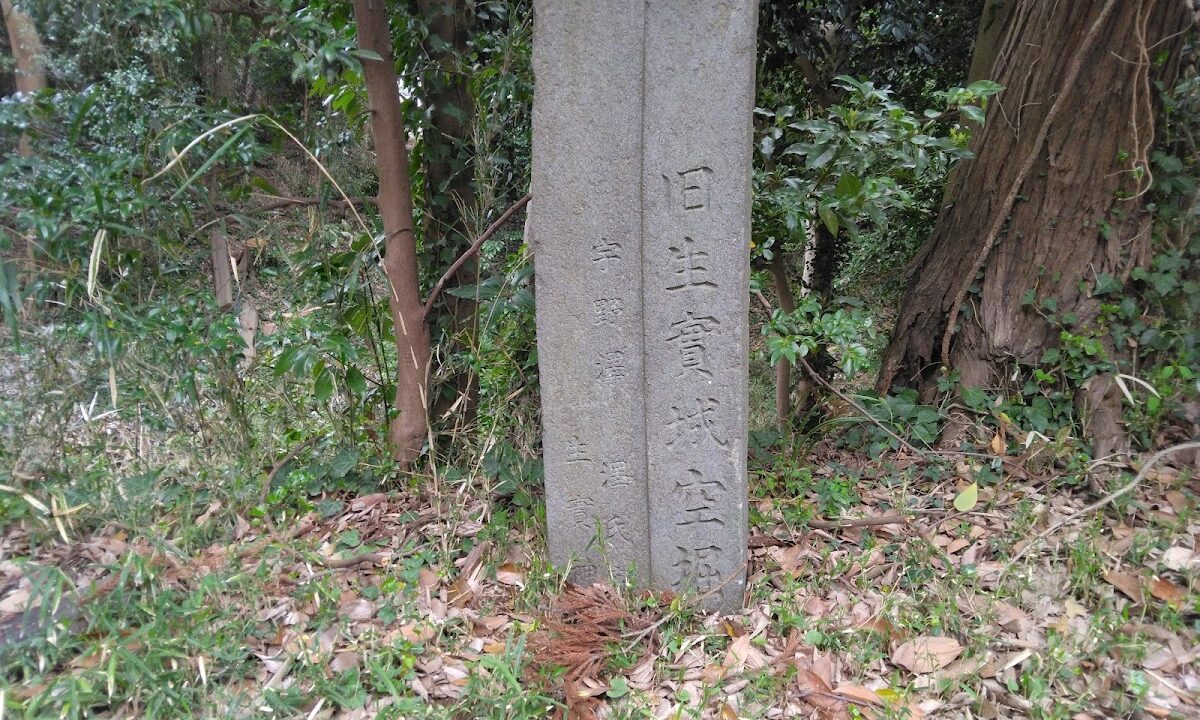
A stone monument marking the “Morikawa Clan Castle Site” stands facing the road (Prefectural Road 66) south of Omi Shrine, indicating that this was the residence of the Morikawa clan. Omi Shrine also has an information board about the jinya (fortified residence), explaining its historical background to visitors.
There is also a stone monument at what is believed to be the site of the main gate of Omi Castle, with a small earthen embankment remaining to the north. These are remnants of the medieval Omi Castle, but it is possible they were also used during the jinya period.
Relationship to Omi Castle Site
Omi Castle as a Medieval Castle
The site where the Omi Jinya was built was part of the medieval Omi Castle (Kita-Omi Castle, Kita-Oyumi Castle). Omi Castle played an important role as the residence of Ashikaga Yoshiaki, the Oyumi Shogun, during the Sengoku period.
Excavations conducted by the Chiba City Archaeological Research Center and the Chiba City Board of Education have uncovered medieval remains and artifacts, including a stone monument bearing the inscription of Kyoroku 4 (1531) in Section 2C. Pit dwellings, wells, and fence lines have also been detected, revealing that the site is a complex archaeological site spanning from the medieval to the early modern period.
Characteristics as a Complex Site
The Omi Castle and Omi Jinya Site is a complex archaeological site where a medieval castle and an early modern jinya (fortified residence) overlap. Excavations have confirmed traces of each period, including ancient artifacts such as stone tools, medieval pottery, and early modern remains.
Surveys conducted during the Showa period (1926-1989) have also confirmed the existence of settlement remains and burial mounds, indicating that this area has been inhabited by people since ancient times. The existence of two important historical facilities—the medieval Omi Castle and the early modern Omi Jinya—in the same location speaks to the geographical and strategic importance of this area.
The Domain Administration and Local Community of the Omi Domain
Management of a Small Domain of 10,000 Koku
Although the Omi Domain was a small domain of only 10,000 koku, the Morikawa clan managed its administration efficiently. The territory centered around the Omihama area, and its economy was based on agriculture.
Despite being a small domain, the lord served in various positions within the Edo shogunate, playing a vital role in the shogunate system. The domain’s administrative offices were located in the jinya (domain office), where tax collection, maintaining public order, and governing the people were carried out.
Contribution to Local Culture
The Morikawa clan contributed to the development of local religious culture by founding the family temple, Shigetoin, and protecting the Omi Shrine. They also paid attention to the education of samurai and residents, striving for the stability and development of the local community.
The existence of the Omi Domain occupies an important position in the early modern history of the Chiba City area. As the only daimyo family in Chiba City, it also influenced the formation of the region’s identity.
Current Status of the Omi Jinya Site
Current State of Development and Preservation
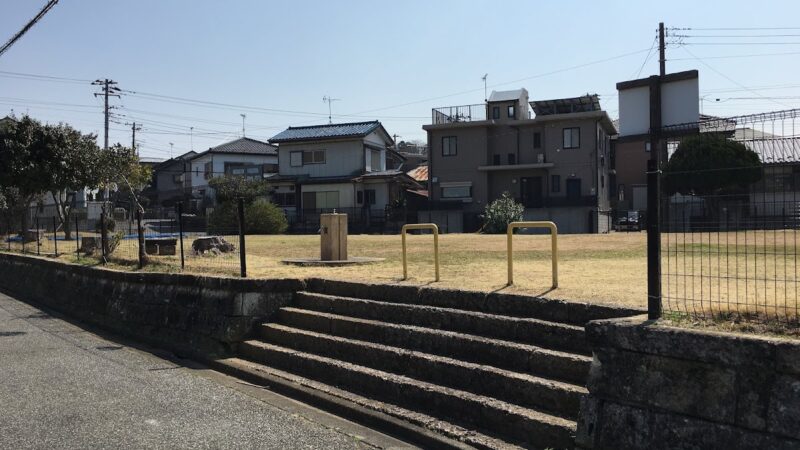
Currently, most of the Omi Jinya site has been developed into residential land, making it difficult to imagine its former appearance. Commercial facilities such as restaurants and houses line the area, and only a limited number of remains retain traces of the early modern Jinya.
The dry moat and earthworks west of Omi Shrine, the tomb of Shigetoshiin, and the stone monuments and information boards erected throughout the site are valuable historical materials that convey the history of the Omi Jinya.
Status as a Cultural Property
The Omi Castle and Omi Jinya sites are recognized as important cultural properties of Chiba City. In the Chiba City Local History Museum’s collection introduction, Omi Castle and Omi Jinya are introduced as one of the major castle ruins in Chiba City.
The Chiba City Board of Education and the Chiba City Archaeological Research Center are continuously conducting research, and detailed investigations of the site are progressing. These research results play an important role in deepening our understanding of the region’s history.
Access and Visiting
Location
The Omi Jinya Ruins are located near 1217 Omi-cho, Chuo-ku, Chiba City, Chiba Prefecture. The area centered around Omi Shrine is the site of the Jinya (fortified residence), with remnants scattered throughout the surrounding area.
Transportation Access
If using public transportation, you can access the site by bus from JR Sotobo Line Kamatori Station or Soga Station. After getting off at the Omi-cho bus stop, Omi Shrine is a few minutes’ walk away.
If traveling by private car, the site is located along Prefectural Road 66 and is relatively easy to access from Chiba city center. However, since the area around the Jinya Ruins is residential, consideration for local residents is necessary when visiting.
Points to Note When visiting the Omi Jinya Ruins, keeping the following points in mind will deepen your understanding.
- Omi Shrine: A shrine located in the center of the Jinya (fortified residence), with an information board installed.
- Dry Moat: A vast dry moat remaining from the south to the west side of Omi Shrine.
- Stone Monument of the Morikawa Clan Castle Site: A stone monument standing along Prefectural Road 66.
- Shigetoshi-in Temple: The Morikawa clan’s family temple and burial ground.
- Benten Pond: A pond below Shigetoshi-in Temple, believed to be the remains of the outer moat of the Jinya.
Historical Significance of the Omi Jinya Site
The Omi Jinya site is an extremely important historical site for understanding the early modern history of Chiba City. It encompasses diverse historical themes, including the transition from a medieval castle to an early modern Jinya, the realities of regional governance by a small domain, and the 240-year history of the Morikawa clan.
As the only daimyo family’s castle in Chiba City, it had a significant impact on the formation of the region’s identity. Furthermore, as a complex site with the medieval Omi Castle, it is a valuable example demonstrating the continuity of history across different eras.
While much of the original structure has been lost, the remaining dry moats, earthworks, stone monuments, and the tomb of Shigetoshiin are valuable cultural heritage sites that convey the history of the Omi Domain and the Morikawa clan. Preserving these remains and passing them on to future generations is a crucial task in protecting the history of Chiba City.
Summary
The Omi Jinya site is the former administrative center of the Omi Domain, which was ruled by the Morikawa clan for approximately 240 years, from 1627 (Kanei 4) until the Meiji Restoration. Built on a corner of the medieval Omi Castle (Kita-Oyumi Castle), this jinya played an important role as the only daimyo base in Chiba City.
Although most of the site is now residential, traces of its former glory can still be seen in the dry moats and earthworks west of Omi Shrine, and in the tomb of Shigetoshiin. Stone monuments and information boards marking the Morikawa clan castle site have also been installed to inform visitors of the historical background.
As a complex archaeological site spanning from the medieval to early modern periods, and as an important cultural asset that tells the story of Chiba City’s early modern history, the Omi Jinya Ruins are a valuable historical heritage site that is expected to continue to be investigated, researched, and preserved. When you visit Omi-cho in Chuo Ward, Chiba City, why not take a trip to this historical site and reflect on the 240-year history of the Morikawa clan?