
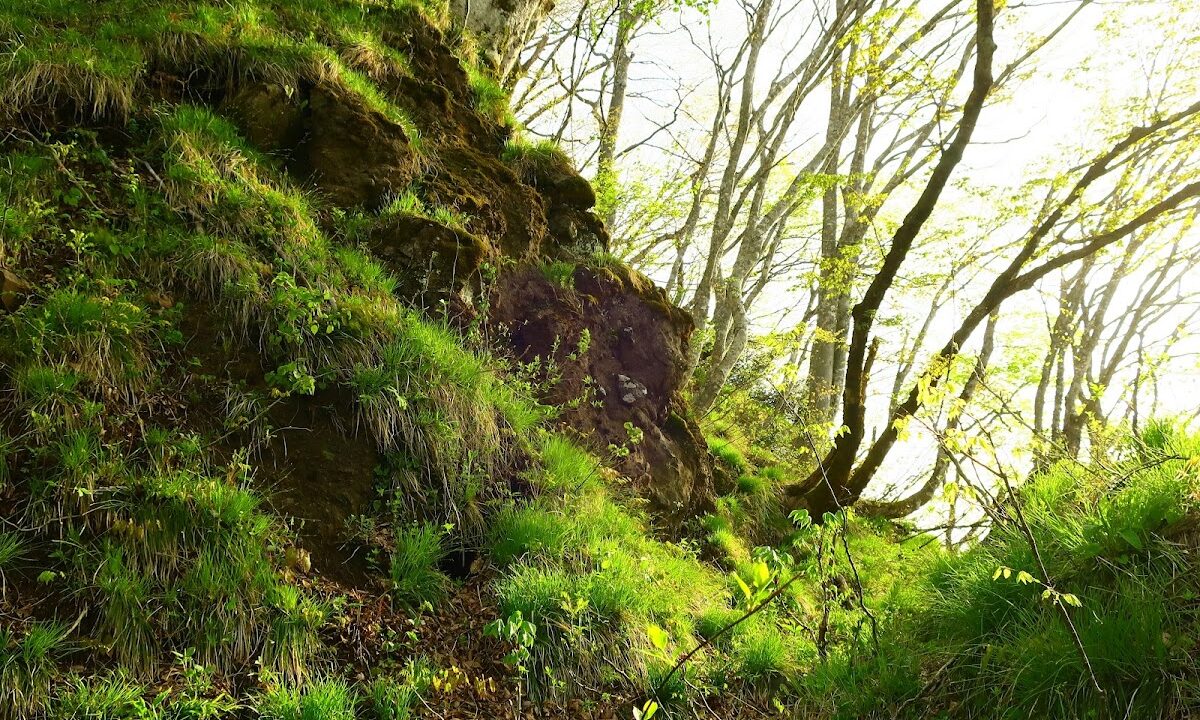
Heizo Castle (Ichihara City, Chiba Prefecture) Complete Guide: History, Structure, Highlights, and Visitor Information
Heizo Castle is a medieval mountain castle located in Heizo, Ichihara City, Chiba Prefecture. Situated along National Route 297 (Otaki Highway), it functioned as an important base controlling a key transportation hub in the Kazusa region. It boasts a sturdy, terraced layout, and remnants such as earthworks and moats remain well-preserved today.
History and Development of Heizo Castle
Origins of Construction and the Tsuchibashi Clan
Several legends remain regarding the construction of Heizo Castle. The oldest legend states that during the Shohei era (931-938), during the rebellion of Taira no Masakado, Tsuchibashi Masatsune (Tsuchibashi Heizo Masatsune) migrated from Kii Province and established a castle in this area.
More reliable records suggest that it was developed into a full-fledged mountain castle by the Tsuchibashi clan during the Muromachi period. The Tsuchibashi clan was a powerful local family in Kazusa Province. The castle lord is said to have been Tsuchibashi Heizo Masatsune, and the place name “Heizo” is thought to originate from the lord’s name.
Relationship between the Kazusa Rebellion and “Heisan Castle”
When discussing the history of Heizo Castle, it’s impossible to ignore its relationship with “Heisan Castle.” Following the Uesugi Zenshu Rebellion in 1416, the remnants of the rebels rose up in Kazusa Province in what became known as the “Kazusa Rebellion.” Historical documents mention “Heisan Castle” as the castle where the rebels took refuge.
For a long time, Heizo Castle and Heisan Castle were considered the same, but current research suggests they are located in different places. Heizo Negoya Castle (on the mountain ridge where the Hachiman Shrine is located, near Heisan Elementary School) is considered a strong candidate for Heisan Castle. Therefore, Heizo Castle and Heisan Castle/Negoya Castle are now understood as separate, adjacent castles.
Heizo Castle in the Sengoku Period
During the Sengoku period, Kazusa Province became the stage for the power struggle between the Satomi and Hojo clans. Heizo Castle was strategically important, controlling the road leading from Otaki to the inland part of the Boso Peninsula.
While there are few clear historical records regarding which power the Tsuchibashi clan belonged to, geographical conditions suggest they had close ties to the power based at Otaki Castle. It is highly likely they were under the influence of the Satomi clan in the late Sengoku period.
Abandonment and Present State
The exact time of Heizo Castle’s abandonment is unclear, but it is believed to have been abandoned along with many other small and medium-sized castles during the relocation of Tokugawa Ieyasu’s domain after Toyotomi Hideyoshi’s siege of Odawara in 1590.
Currently, the castle ruins are called “Shiroyama” (Castle Mountain) and include private land, but parts are open to visitors. It is recognized as a historical heritage site of Ichihara City and is recorded and preserved as an archaeological site by the Ichihara Historical Museum (formerly the Ichihara City Archaeological Research Center).
Layout and Structure of Heizo Castle
Location and Topography of the Castle
Heizo Castle is built on a hill in Heizo, Ichihara City, commonly known as “Amida-hata.” It is a typical mountain castle utilizing the tip of a north-south extending hill facing a valley created by a tributary of the Yoro River system.
The elevation is approximately 80 meters, with a relative height difference of about 30-40 meters from the surrounding lowlands. Located east of National Route 297, the name “Heizo Bridge” still evokes memories of the past.
Terraced Layout
Heizo Castle is a mountain castle with a terraced layout. A terraced castle structure, where multiple enclosures are arranged in a stepped pattern around a central enclosure, is a highly defensible design.
The main castle area features the main enclosure at the highest point of the hill, surrounded by smaller enclosures. The main enclosure is estimated to be approximately 40 meters east-west and 30 meters north-south. Earthen ramparts surround the main enclosure, some of which can still be seen today as mounds about 1-2 meters high.
Moats and Steep Slopes
As defensive features, multiple moats (horikiri) were constructed in various locations. In particular, the large moat cutting off the ridge to the rear (north) was a crucial defensive line preventing enemy intrusion.
Steep slopes (kirigishi) are also clearly visible around each enclosure, with artificially carved steep slopes enhancing defensive capabilities. These remains indicate that Heizo Castle was not merely a residence, but a full-fledged mountain castle designed for combat.
Existence of an Outpost
Heizo Castle also had an outpost (dejiro). The hill jutting out to the south, adjacent to the grounds of Toyoji Temple in Heizo Motoshuku, is believed to be the site of the outpost. Located approximately 500 meters from the main castle, it is thought to have served as a road watch and outpost.
It is presumed that the valley between the outpost and the main castle contained a castle town settlement and a residence for the lord and his retainers.
Highlights and Remains of Heizo Castle
Main Enclosure and Earthworks
The greatest highlight of Heizo Castle is the well-preserved earthworks of the main enclosure. The earthworks surrounding the main enclosure are particularly well-preserved on the north and west sides, with mounds of earth approximately 1.5 to 2 meters high visible.
The interior of the main enclosure is relatively flat, and while no building remains are visible on the surface, it is believed that the lord’s residence and watchtowers once stood there. From the main enclosure, you can overlook the surrounding valleys and roads, truly appreciating its strategic location as a military base.
The Impressive Moat
The large moat located north (behind) the main enclosure is a crucial defensive feature of Heizo Castle. It measures approximately 5-6 meters deep and 10 meters wide, completely cutting off the ridge.
Seeing this moat in person reveals the high level of medieval castle construction technology and the thorough defensive philosophy aimed at preventing enemy intrusion. The cliffs on both sides of the moat are steep, making it difficult to climb.
Lower Enclosures
Several tiers of lower enclosures (koshikuruwa) are arranged around the main enclosure. These served as defensive positions for the main enclosure and also functioned as barracks for castle soldiers.
The lower enclosures are located at a lower level than the main enclosure, forming a belt-like structure, approximately 3-5 meters wide. Exploring the castle ruins while walking through these enclosures allows for a three-dimensional understanding of the castle’s overall structure. ### Steep Slopes and Vertical Moats
The steep slopes surrounding each enclosure were created by artificially carving steep inclines from natural slopes, serving as defensive structures to make ascent difficult for enemies. At Heizo Castle, the steep slopes on the east and south sides are particularly clearly visible.
Furthermore, traces of vertical moats (tatebori), dug vertically into the slopes, can be seen in some areas. Vertical moats were effective in restricting enemy lateral movement and limiting attack routes.
Entrances (Koguchi)
Entrances to the castle, known as koguchi, can be seen on the south and west sides. The southern entrance, in particular, is an approach route from National Route 297, and it is believed that an earthen or wooden bridge once spanned it.
The area around the entrances was especially heavily fortified, and features such as flanking fire (a structure allowing attacks from the flanks) can be seen.
Saiganji Amida Hall: Guardian Deity of Heizo Castle
Amida Hall, a Nationally Designated Important Cultural Property
When visiting Heizo Castle, one must-see is the Amida Hall of Saiganji Temple, located across the valley from the castle ruins. This Amida Hall is a valuable building designated as a Nationally Designated Important Cultural Property.
According to tradition, the Amida Hall was built by Tsuchibashi Heizo Masatsune, the lord of Heizo Castle, to protect the castle’s northeast (demon’s gate) direction. It is estimated to have been built in the mid-Muromachi period (15th century), making it one of the oldest wooden buildings in Chiba Prefecture.
Architectural Characteristics
The Amida Hall is a small Buddhist hall, approximately 5.4 meters square, but it is an eclectic style building that incorporates elements of Zen Buddhism while primarily using the Japanese style. The roof is a hipped roof covered with cypress bark, and the eaves are of a dignified style with double rafters.
Inside, a seated statue of Amida Buddha in the style of the Kamakura period is enshrined, and this too is designated as a city cultural property. The altar and palace (kuden) inside the hall are also valuable examples that retain the style of the Muromachi period.
The ridge beam inscription records that two carpenters from Kamakura were involved in its construction, making it an important historical document that shows the technological exchange and cultural network of the time.
Visiting and Sightseeing
The Amida Hall of Saiganji Temple is usually locked, but you are free to view the exterior. You can walk around the hall and observe the details of the architectural techniques. If you wish to view the interior, it is recommended that you contact the Ichihara City Board of Education or the Ichihara Historical Museum in advance.
The area surrounding the Amida Hall is a quiet rural area, and the environment has been preserved in a way that makes it easy to imagine the landscape of the past. Visiting both Heizo Castle and the Amida Hall allows you to understand the relationship between medieval castles and religious beliefs.
Access and Visiting Guide
Access by Car
Access to Heizo Castle is most convenient by car. From the Ken-O Expressway Ichihara-Tsurumai Interchange, head south on National Route 297. You will arrive in the Heizo area in approximately 15 minutes.
The landmark is near “Heizo Bridge” along National Route 297. There is a community center near the bridge where you can park your car (however, please be considerate of local residents). There is no dedicated parking lot, so if you park on the roadside, please be careful not to obstruct traffic.
Access by Public Transportation
If using public transportation, take the Kominato Railway bus bound for “Katsuura” or “Otaki” from Goi Station on the JR Uchibo Line and get off at the “Heizo” bus stop. The castle ruins are approximately a 10-minute walk from the bus stop.
However, since the number of buses is limited, it is recommended to check the timetable in advance. Especially on weekends and holidays, there are fewer buses, so please be aware of this.
Route to the Castle Ruins
There is a path leading up to the castle ruins from beside Heizo Bridge. The path is clear, but since it is a mountain trail, it is recommended to wear comfortable shoes and clothing.
From the entrance to the castle, it takes about 10-15 minutes on foot to the main enclosure. Along the way, you will pass through steep slopes and lower enclosures. The path is relatively gentle, but it can become slippery after rain, so caution is advised.
There are several forks in the path to the main enclosure, but basically, if you climb along the ridge, you will reach the main enclosure. Since there are no signposts, obtaining a map of the castle layout beforehand will enhance your understanding.
Precautions for Visiting
Heizo Castle Ruins is not a developed tourist area, and some parts include private land. Please note the following points when visiting:
- Avoid trespassing on private property and do not enter areas marked as off-limits.
- Always take your trash with you.
- Do not damage the ruins or collapse the earthworks.
- In summer, there are many insects such as mosquitoes and bees, so take precautions against insects.
- Even in winter, be careful of ticks and avoid exposing your skin.
- Avoid visiting alone; if possible, visit with others.
- Check the cell phone signal strength in advance.
Estimated Visiting Time
The estimated visiting time for Heizo Castle Ruins is approximately 30 minutes to 1 hour if you only visit the main enclosure area, or 1.5 to 2 hours if you want to explore the entire site thoroughly. If you also visit Saiganji Amida Hall, please add another 30 minutes or so.
Nearby Attractions and Related Historical Sites
Heizo Negoya Castle
As mentioned above, the area around Hachiman Shrine, southwest of Heizo Elementary School, is considered to be the site of Heizo Negoya Castle. This is a strong candidate for the location of “Heizan Castle” during the Kazusa Rebellion, and visiting it along with Heizo Castle provides a comprehensive understanding of the medieval castle complex in this region.
Traces of earthworks and moats remain within the grounds and surrounding area of Hachiman Shrine, allowing for the confirmation of castle remains, albeit on a smaller scale than Heizo Castle.
Otaki Castle
Continuing south along National Route 297, you will reach Otaki Castle (Otaki-machi, Isumi-gun, Chiba Prefecture). Otaki Castle was extensively renovated in the late Sengoku period by the Masaki clan, a senior retainer of the Satomi clan, and underwent major renovations during the Edo period under Honda Tadakatsu, transforming it into a modern castle.
Currently, a replica of the keep has been reconstructed, and the interior is open to the public as the Otaki Castle Branch of the Chiba Prefectural Central Museum. Located about 30 minutes by car from Heizo Castle, it is ideal for comparing the development of castles from the medieval to the early modern period.
Ichihara Historical Museum
If you want to learn about the history of Ichihara City, including Heizo Castle, a visit to the Ichihara Historical Museum (Sōsha, Ichihara City) is recommended. This new museum, which opened in 2022, exhibits the history of the Ichihara area from ancient times to the modern era.
You may find exhibits related to Heizo Castle, such as castle layout maps and excavated artifacts, and you can also obtain information about other castles in Ichihara City.
Yōrō Valley
Approximately 20 kilometers southeast of Heizo Castle lies Yōrō Valley, a representative scenic spot of the Bōsō Peninsula. Known as a famous spot for autumn foliage, a walking trail is maintained along the valley.
Visiting Yōrō Valley in conjunction with a castle ruins visit is a good way to enjoy nature. It is especially crowded with tourists during the autumn foliage season.
Other Castles in Ichihara City
Besides Heizo Castle, many other medieval castles existed in Ichihara City. Here are some of the main ones.
Shiizu Castle
Located in Shiizu, Ichihara City, this castle had the characteristics of a coastal castle facing Tokyo Bay. It was the stage for conflicts between the Satomi and Hojo clans and also served as an important naval base. Although now a residential area, some remains still exist.
Chonan Castle
Located in Sōsha, Ichihara City, this castle, near the Kazusa Provincial Capital, is thought to have played an important role during the transition from ancient to medieval times. Currently located near the Ichihara City Hall, it is undergoing residential development.
Yamakura Castle
Located in Yamakura, Ichihara City, this castle controlled the middle reaches of the Yōrō River. Parts of the earthworks and moats remain, exhibiting a typical structure of a medieval castle.
By visiting these castles, one can understand the distribution of power and the importance of transportation routes in the Ichihara City area during the medieval period.
Current Status and Challenges of Heizo Castle Research
Status of Archaeological Investigations
Regarding Heizo Castle, no full-scale excavation has been conducted; research has mainly consisted of surface surveys and the creation of castle layout maps. Therefore, many aspects of the castle’s detailed structure, age, and excavated artifacts remain unclear.
Future academic excavations may yield new insights into the castle’s construction date, changes in its owners, and its functions.
Limitations of Documentary Sources
Documentary sources concerning Heizo Castle are extremely limited. Records concerning the Tsuchibashi clan are fragmentary, making it difficult to reconstruct the castle’s specific history.
Regarding its relationship with “Heizo Castle,” there are differing interpretations of the documents, and further research is needed. There is also a possibility of discovering new historical materials from local historical documents and temple/shrine records.
Challenges of Preservation and Utilization
Currently, the Heizo Castle site does not have any legal protection measures in place, and because it includes private land, its preservation status is not necessarily good. There is a risk that the remains may be lost due to development and changes in land use.
On the other hand, it is increasingly being recognized as a local historical heritage site, and the city of Ichihara has installed information boards, while momentum for preservation activities by local residents is growing. The challenge going forward is to pass it on to future generations while striking a balance between appropriate preservation and utilization.
The Significance of Visiting Heizo Castle
Heizo Castle is not a famous tourist destination, but it is a valuable historical site that preserves the structure of a medieval mountain castle in good condition. Because no large-scale restoration work has been carried out, you can experience its original appearance.
By actually walking along the earthworks and moats, and standing in the main enclosure and surveying the surroundings, you can imagine how medieval samurai protected this land and lived here. Furthermore, through its relationship with the Saiganji Amida Hall, you can understand an important aspect of medieval society: the connection between castles and faith.
Many medieval castles exist in Chiba Prefecture, but most have been lost due to residential development and other factors. Heizo Castle is a valuable example of a castle whose remains are relatively well preserved, making it well worth a visit. ## Summary
Heizo Castle is a medieval mountain castle located in Ichihara City, Chiba Prefecture, and served as the base of the Tsuchihashi clan. It boasts a robust, terraced layout, with well-preserved remains including earthworks, moats, and lower baileys centered around the main enclosure.
Located at a strategic transportation hub along National Route 297, it served as a military base controlling the road to Otaki. The Saiganji Amida Hall, believed to have been built by the castle lord, is a nationally designated Important Cultural Property and a valuable example illustrating the relationship between medieval castles and religious beliefs.
Access is most convenient by car, and a visit to the castle ruins takes approximately 1-2 hours. Nearby are related historical sites such as Heizo Negoya Castle and Otaki Castle, making it an important location for learning about the medieval history of the Boso Peninsula.
Because it hasn’t been heavily commercialized as a tourist destination, there are few visitors, allowing for a quiet and peaceful visit, which in turn allows for a deeper appreciation of the medieval castle’s atmosphere. This historical site is a must-visit for anyone interested in the history and castles of Chiba Prefecture.


