Inunari Mukaiyama Castle (Ichihara City, Chiba Prefecture) Complete Guide: History, Remains, and Access Information
What is Inunari Mukaiyama Castle?
Inunari Mukaiyama Castle is a medieval castle located in the Inunari district of Ichihara City, Chiba Prefecture. Also known as “Inunari Mukaiyama Castle,” it is believed to have served a complementary role to the adjacent Inunari Castle. While there are no clear historical records regarding the exact construction date or lord, it is noteworthy as a castle associated with the Toke Sakai clan, who expanded their power in the Kazusa region during the Sengoku period.
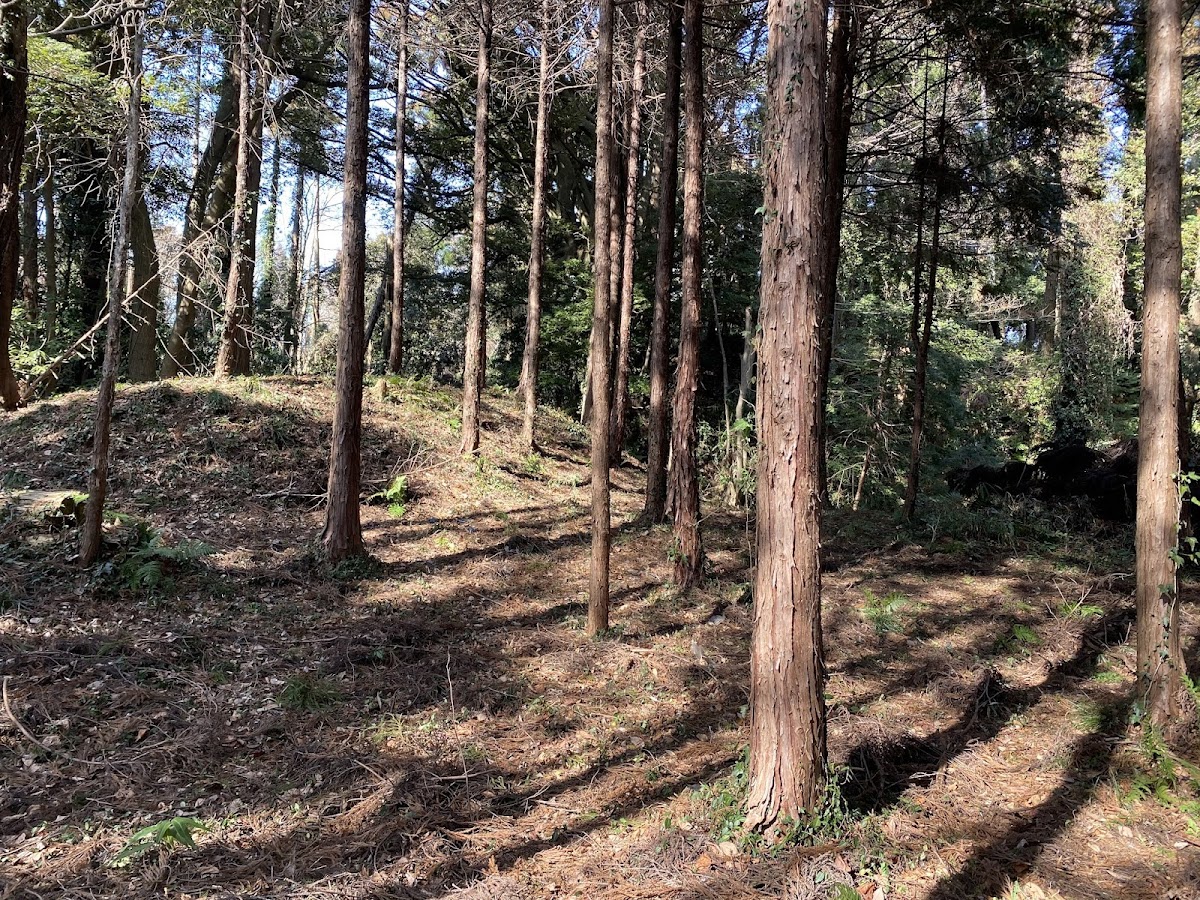
The current castle site reveals remnants of what appear to be earthworks and dry moats, making it a valuable historical site that conveys the structure of a medieval castle. Located in the Ichitsu district in northern Ichihara City, it exhibits the typical characteristics of a medieval mountain castle, utilizing the mountainous terrain.
Historical Background of Inunari Mukaiyama Castle
The Kazusa Region in the Sengoku Period
During the Sengoku period, the Kazusa region was a fierce battleground where powerful warlords such as the Chiba, Toke Sakai, and Satomi clans vied for supremacy. The Ichihara area, located in the central part of the Boso Peninsula, was particularly strategically important due to its transportation hub, and multiple forces attempted to control it by building castles there.
The Toke Sakai Clan’s Expansion into Ichihara
Inunari Mukaiyama Castle is presumed to be an outpost (branch castle) of Toke Castle, built by the Toke Sakai clan to expand into the Ichihara area. The Toke Sakai clan was a branch of the Chiba clan, based in the Toke district of present-day Midori Ward, Chiba City, and built multiple castles in the surrounding area to expand their power.
It is highly probable that Inunari Castle and Inunari Mukaiyama Castle were built as part of this military strategy, and it is thought that the two castles worked together to defend and control the region. Inunari Mukaiyama Castle is located on the “mountain opposite” Inunari Castle, suggesting a positional relationship that allowed for mutual visibility and communication.
Theory of Connection to the Hojo Clan
On the other hand, there is a theory that the castle was built by the Later Hojo clan to control the Mobara Road, which ran from Yawata (present-day Yawata district of Ichihara City) to Mobara. During the late Sengoku period, the Hojo clan, who ruled the Kanto region, prioritized securing transportation routes and placed many castles along major highways.
The Inunari area was close to the Mobara Road and a key transportation hub traversing the Boso Peninsula, making it quite possible that the Hojo clan considered it an important military base. However, no definitive historical evidence to support this theory has been discovered to date.
Evaluation as a Castle
Regarding Inunari Mukaiyama Castle, there are also negative opinions on whether it should be recognized as a castle. This is because the scale and clarity of the remains are limited compared to other well-known castles. However, on-site investigations have confirmed the existence of structures that appear to be earthworks and dry moats, and it is considered certain that it was a facility with at least military function.
Medieval regional castles did not necessarily consist of large-scale structures; many were simple defensive facilities that cleverly utilized the terrain. Inunari Mukaiyama Castle should be understood as one such practical castle.
Structure and Remains of Inunari Mukaiyama Castle
Location and Topography
Inunari Mukaiyama Castle was built on mountainous terrain in the northern part of Ichihara City. This area is part of the Boso Hills, and although the elevation is not very high, the undulating terrain was suitable for defense. It is thought that the castle was built using ridges and small hills, and it is presumed to have been in a position that allowed it to overlook the surrounding area.
Confirmed Remains
The following remains have been confirmed at the current castle site:
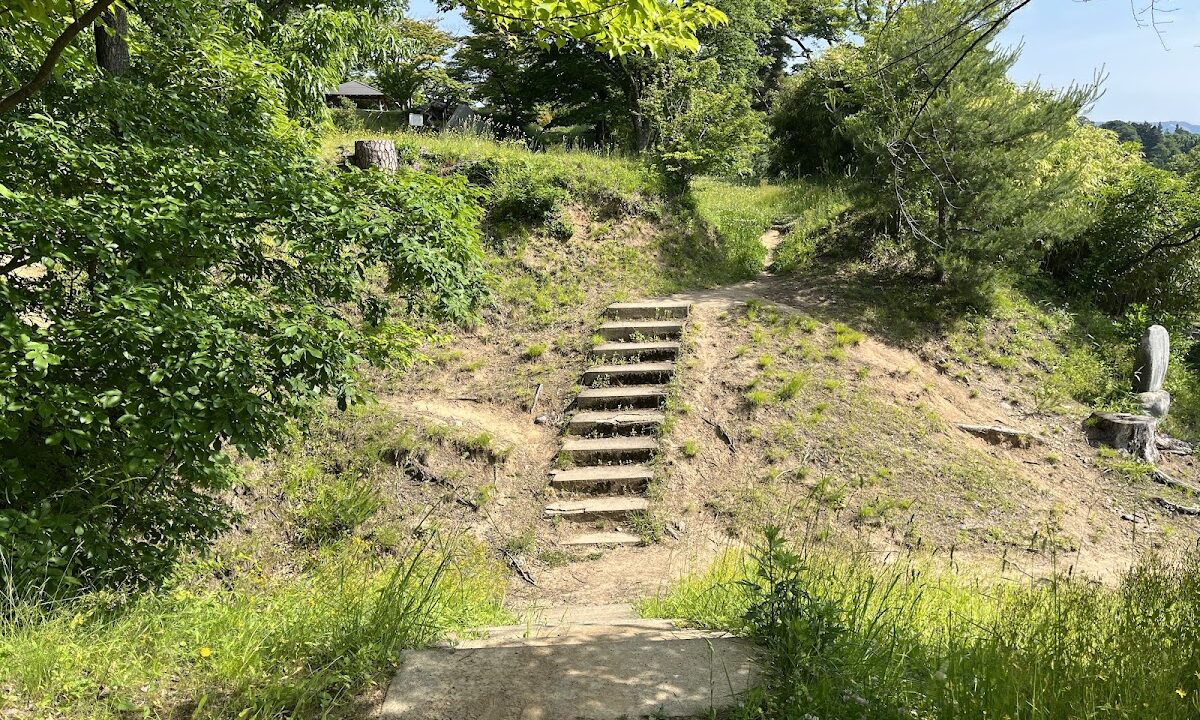
Earthworks: Defensive facilities made of piled-up earth to demarcate the perimeter or sections of the castle. At Inunari Mukaiyama Castle, traces of earthworks remain in some areas, indicating the former defensive line.
Dry Moat: A moat dug to prevent enemy intrusion. Dry moats, which do not hold water, are a common defensive feature in mountain castles, and depressions believed to be dry moats have been confirmed at Inunari Mukaiyama Castle.
Kuruwa (Enclosure): A flat, leveled area used for building structures or stationing soldiers. While clear traces of enclosures are limited, the topography suggests the existence of multiple flat areas.
Characteristics of the Castle Layout
The layout (design and arrangement) of Inunari Mukaiyama Castle is presumed to have been typical of small medieval mountain castles. It features a main enclosure (equivalent to the main keep) surrounded by several secondary enclosures (equivalent to the second and third enclosures), with defenses reinforced by earthworks and dry moats.
There are no large stone walls or structures like a keep; it is thought that the castle relied primarily on simple defensive structures created through civil engineering. This is a common characteristic of regional castles during the Sengoku period, demonstrating ingenuity in efficiently securing defensive capabilities with limited resources and labor.
Relationship with Inunari Castle
Location of the Two Castles
Inunari Mukaiyama Castle and Inunari Castle are located very close to each other, suggesting they formed an integrated defensive system. The most likely theory is that Inunari Castle was the main castle (honjo), and Inunari Mukaiyama Castle was a subsidiary castle (outpost).
In medieval castles, it was common to form a “castle complex” by arranging multiple smaller castles around a single large castle to support each other. It is highly probable that the two castles in the Inunari area were built based on this strategy.
Division of Functions
While Inunari Castle served as the central residence with political and administrative functions, Inunari Mukaiyama Castle is presumed to have purely served a military surveillance and warning role. It likely monitored the surrounding area from Mukaiyama Castle, detected enemy movements, and relayed the information to the main castle.
Furthermore, it is believed that Mukaiyama Castle served as a forward base during enemy invasions, buying time for the main castle’s defense. This arrangement of subsidiary castles was a widely adopted castle tactic during the Sengoku period (Warring States period).
Highlights of Inunari Mukaiyama Castle
Atmosphere of the Castle Site
Inunari Mukaiyama Castle remains in a naturally rich environment. It is characterized by the fact that no large-scale development has been carried out, and the original topography and remains have been preserved almost as they were. For castle enthusiasts and history buffs, it is a valuable place to experience the “raw form” of a medieval castle.
Points for Observing the Remains
When visiting the castle site, paying attention to the following points will help you understand the remains more deeply:
- Changes in Topography: By paying attention to the boundary between flat areas and sloping areas, you may find traces of artificially constructed baileys.
- Earthly Embankments: Unnatural earthly mounds that differ from the natural terrain may be remnants of earthworks.
- Depressions and Ditches: Straight or arc-shaped depressions may be remnants of dry moats.
- View: Examining the view from the castle site reveals why this location was chosen as a surveillance post.
Surrounding Historical Environment
Besides Inunari Mukoyama Castle, the Inunari area retains elements that convey medieval history, such as the Inunari Castle Ruins and traces of historical roads. Visiting the castle ruins allows you to enjoy the historical landscape of the entire region.
Access Information
Location
Address: Inunari, Ichihara City, Chiba Prefecture
Inunari Mukoyama Castle Ruins are located in the Ichitsu district in northern Ichihara City. It is north of the center of Ichihara City, near the border with Chiba City.
Access by Public Transportation
Nearest Station: JR Uchibo Line “Yawatajuku Station” or “Goi Station”
From the station, you will need to take a local bus or taxi. Kominato Railway buses operate towards Inunari, but the number of buses is limited, so it is recommended to check the timetable in advance.
Using the Bus: After getting off at the “Inunari” bus stop, walk towards the castle ruins. However, since the castle ruins are located in the mountains, please use a map or GPS to confirm the exact location.
Access by Car
Expressway: Approximately 15-20 minutes from the Tateyama Expressway “Ichihara IC”
General Roads: From National Route 297 (Otaki Kaido), take the prefectural road to the Inunari area.
There is no dedicated parking lot around the castle ruins, but it is possible to park in a safe place on the roadside. However, consideration should be given to avoiding inconveniencing local residents.
Important Notes for Visitors
- As the castle ruins are not a well-maintained tourist area, comfortable clothing and shoes are essential.
- Long sleeves and long pants are recommended as insects and snakes may inhabit the mountainous area.
- Remember to take precautions against heatstroke in summer and warm clothing in winter.
- Please be careful not to damage the ruins and be sure to take all your trash with you.
- If you wish to enter private property, please obtain permission from the owner.
Nearby Tourist Attractions
Inunari Castle
Inunari Castle, which was closely related to Inunari Mukaiyama Castle, is also worth visiting. Comparing the two castles will give you a deeper understanding of the medieval castle system.
Other Castles in Ichihara City
Several other medieval castles remain in Ichihara City. Murakami Castle, Shiizu Castle, and Kaiho Castle are representative examples, making this an ideal castle-touring route for those interested in the Sengoku period history of the Boso Peninsula.
JFE Inunari Baseball Stadium
The Inunari area also has corporate sports facilities, showcasing a modern aspect of the region.
Keiyo Shooting Club
Also located in the Inunari area, this sports facility demonstrates the diverse uses of the area.
Research and Preservation of Inunari Mukaiyama Castle
Academic Evaluation
Inunari Mukaiyama Castle holds an important position in the study of medieval castles in Chiba Prefecture. While not a large-scale castle, it is a valuable example for understanding the realities of regional castles during the Sengoku period.
Chiba Prefecture is known as a treasure trove of medieval castles, with hundreds of castle sites confirmed within the prefecture. Among them, Inunari Mukaiyama Castle is a site that provides clues to understanding the expansion strategies of the Toke Sakai clan and the military situation in the central Boso Peninsula.
Preservation Status and Challenges
Currently, the Inunari Mukaiyama Castle site does not have special protection designation, raising concerns about the loss of remains due to development and natural disasters. While local history enthusiasts and researchers continue their research and documentation activities, official preservation measures are limited.
It is hoped that the site will be officially recognized as a cultural property of Ichihara City and that appropriate preservation and management will be implemented. At the same time, a balanced preservation policy is needed to prevent the loss of the authenticity of the remains due to excessive development.
Castle Culture of Chiba Prefecture and Inunari Mukaiyama Castle
Characteristics of Castles in Boso Peninsula
Chiba Prefecture (former provinces: Kazusa, Shimosa, and Awa) is a region where many castles were built during the Sengoku period. While there are vast plains, there are also many hilly areas, and a variety of castles developed that took advantage of the terrain.
Castles in the Boso Peninsula have the following characteristics compared to other regions of the Kanto area:
- Mainly Earthen Castles: Due to the scarcity of stone, many castles primarily consisted of earthen ramparts and dry moats.
- Strong Point for Maritime Transportation: Facing Tokyo Bay and the Pacific Ocean, castles controlling sea routes were crucial.
- Complex Power Relationships: The Chiba, Satomi, and Hojo clans, among others, repeatedly engaged in complex conflicts and alliances.
Inunari Mukaiyama Castle should also be understood within this Boso castle culture.
Historical Positioning of Ichihara City
Ichihara City is located almost in the center of the Boso Peninsula and has been a transportation hub since ancient times. Many burial mounds were built during the Kofun period, and several castles were located there during the medieval period. In the early modern period, it developed as a post town on a major highway, and today it also has the characteristics of an industrial city as part of the Keiyo Industrial Zone.
In Ichihara City, with its multi-layered history, Inunari Mukaiyama Castle is positioned as an important heritage site that conveys the regional history of the Sengoku period.
Advice for Visitors
Preparations for Visiting the Castle
When visiting Inunari Mukaiyama Castle, we recommend the following preparations:
- Prior Study: Gaining basic knowledge about the castle’s history and structure will increase your discoveries on site.
- Map and GPS: Utilize your smartphone’s map app and GPS function.
- Camera: For recording the remains and taking memorable photos.
- Notebook: Recording your observations and questions will enhance your enjoyment of researching later.
- Drinking Water and Snacks: Bringing your own is safer as there are few shops in the surrounding area.
Best Time to Visit
Spring (March-May): The fresh greenery is beautiful, and the weather is mild, making it ideal for visiting the castle. However, those with hay fever should take precautions.
Autumn (September-November): Enjoy the autumn foliage, and there are fewer insects, making for a comfortable stroll.
Summer (June-August): The vegetation grows thick, making the remains difficult to see. Also, precautions against heat and insects are essential.
Winter (December-February): While the vegetation withers, making the ruins easier to see, cold weather gear is necessary.
Estimated Visiting Time
While a stroll through the castle ruins itself takes about 30 minutes to an hour, if you plan to visit the surrounding Inunari Castle and the local historical environment, it’s best to allocate about half a day.
Summary
Inunari Mukaiyama Castle (Ichihara City, Chiba Prefecture) is a valuable historical site that conveys the military situation of the Boso region during the Sengoku period. It may have been built as part of the castle strategy accompanying the Toke Sakai clan’s advance into Ichihara, or as a base for the Hojo clan’s control of the highways, and is thought to have formed an integrated defensive system with the adjacent Inunari Castle.
Even today, remains such as earthworks and dry moats remain, making it a place where you can experience the reality of a medieval castle. While not a large-scale tourist destination, it’s an attractive spot for history buffs and castle enthusiasts, allowing them to stroll while imagining its former glory.
When you visit Ichihara City, be sure to stop by the Inunari Mukaiyama Castle Ruins and reflect on the Boso Peninsula during the Sengoku period. With proper preparation and consideration, you’ll have a valuable experience of feeling the traces of history up close.