Complete Guide to Chonan Castle (Chonan Town, Chiba Prefecture) | Thorough Explanation of History, Structure, and Access
What is Chonan Castle?
Chonan Castle (Chōnan-jō) was a Japanese castle located in Chonan, Chonan Town, Chōsei District, Chiba Prefecture. Also known as “Chonan Castle,” it played an important role for approximately 140 years as the residence of the Takeda clan, who ruled Kazusa Province (present-day central Chiba Prefecture) during the Sengoku period.
Currently, it is designated as a historical site of Chonan Town as “Chonan Castle Taikomori,” and a portion of the castle ruins is preserved. Located almost in the center of Chiba Prefecture, within the Bōsō Hills, it lies on a hillside several hundred meters away from the town of Chonan. Despite being located within approximately 60km of central Tokyo, it is known as a valuable historical site that retains traces of the Sengoku period.
History of Chōnan Castle
Construction and the Takeda Clan’s Entry
Chōnan Castle is believed to have been built in 1456 (Kōshō 2) by Takeda Nobunaga, a member of the Kai Takeda clan. Takeda Nobunaga was appointed governor of Kazusa Province and built Chōnan Castle, along with Mariya Castle, as a base for his control of Kazusa Province.
It is presumed that the Chōnan area was originally the territory of the Chōnan clan, who were descendants of the Kazusa Taira clan. The Chōnan clan were also patrons of Chōfukuju-ji Temple, a Tendai Buddhist temple that oversaw the Bōsō Tendai sect, and wielded significant influence in the region. With the Takeda clan’s entry, Chōnan became an important political and military center in Kazusa Province during the Sengoku period.
The Chōnan Takeda Clan in the Sengoku Period
From its construction until its fall in 1590 (Tenshō 18), Chōnan Castle served as the ancestral residence of the Chōnan Takeda clan for approximately 140 years. The Kazusa Takeda clan, a branch of the Kai Takeda clan, played a crucial role in the expansion of the Takeda clan’s power in the Boso Peninsula.
A notable figure who served as a castle lord was Takeda Toyonobu. The Chōnan Takeda clan maintained control of Kazusa Province in cooperation with the main Takeda family, based at Mariya Castle. Throughout the Sengoku period, Chōnan Castle flourished as the political and military center of southern Kazusa Province.
The Siege of Odawara and the Castle’s Demise
In 1590, during the Siege of Odawara by Toyotomi Hideyoshi, the fate of Chōnan Castle changed dramatically. Because the Chōnan Takeda clan was subordinate to the Later Hōjō clan, they became a target of attack by Tokugawa Ieyasu’s forces.
The forces of Honda Tadakatsu, one of the Four Heavenly Kings of Tokugawa, attacked Chōnan Castle, and the castle fell. This battle led to the downfall of the Chōnan Takeda clan, bringing to an end the approximately 140-year history of Chōnan Castle. After its fall, Chōnan Castle was abandoned and never rebuilt.
From the Edo Period Onward
The ruins of Chōnan Castle, after its abandonment, have been preserved as a historical memory within the Chōnan community. The tombs of successive generations of the Takeda clan remain at Ōbayashi-ji Temple, the family temple of the Kazusa Takeda clan, making it a valuable historical site that still conveys the history of the Takeda clan.
With the implementation of the town and village system in the Meiji era, this area was established as Takeoka Village in Kami-Hanyu District, and the following year it was incorporated as a town and renamed “Chōnan Town.” In 1955, during the Showa-era municipal mergers, Chōnan Town, Toyosaka Village, Higashi Village, and Nishi Village merged to form the current “Chōnan Town.” The town name “Chōnan” originates from “Chōnan” in Chōnan Town.
Structure
Basic Structure of the Castle
Chōnan Castle is a flatland castle utilizing both plains and hills. The castle’s structure skillfully utilizes the topography of the Boso Hills, employing natural elevation differences for defensive purposes. The castle’s layout is long from north to south, consisting of multiple baileys (kuruwa).
The central part of the castle is located on a hill several hundred meters away from the town of Chonan, offering a strategic position overlooking the surrounding plains. This location allowed for monitoring the transportation routes in southern Kazusa Province, ensuring military superiority.
Taikomori and the Main Area
On the high ground at the western corner of Chonan Castle lies a place called “Taikomori.” Taikomori was an important defensive stronghold of the castle, and its name remains as a place name today. This location, the highest point within the castle, is thought to have functioned as a lookout post offering panoramic views.
To the east of Taikomori lies Myoken Shrine (Myoken-sha), which also served as the religious center of the castle. Myoken worship was deeply ingrained in the Takeda clan’s faith, indicating the important role Myoken Shrine played in Chonan Castle.
Earthworks and Defensive Structures
Earthworks have been confirmed as a defensive structure of Chōnan Castle. These earthworks were built around the castle grounds and at the boundaries of the baileys, playing a crucial role in preventing enemy incursions. Some earthworks still remain today, providing clues to the castle’s structure at the time.
During the Sengoku period, castles on the Bōsō Peninsula generally employed defensive structures primarily based on earthworks rather than stone walls. Chōnan Castle was no exception, and it is believed to have employed a defensive system combining earthworks (piled up earth) and excavated dry moats.
Arrangement of Baileys
Multiple baileys were arranged within the castle. Centered around the main bailey (honmaru), the second and third baileys were arranged in a stepped or linear fashion, each functioning as an independent defensive unit.
The long, north-south layout is a typical mountain castle/hilltop castle structure, with baileys arranged along the ridge of the hill. This arrangement created a multi-layered defensive system, allowing for continued defense even if one bailey fell.
Existing Remains
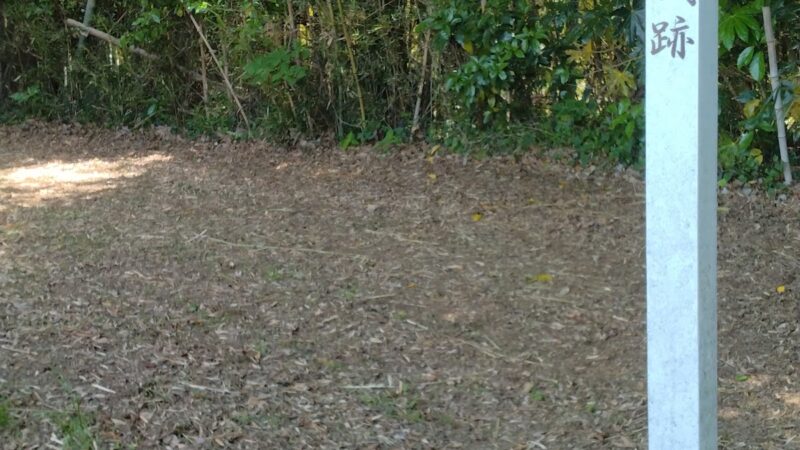
At the current site of Chonan Castle, remnants of earthworks, flat areas of baileys, and traces of moats remain. While much has been lost due to weathering and development over the years, the area designated as a town historical site, “Chonan Castle Taikomori,” still offers a glimpse of the castle’s appearance during the Sengoku period.
The area around Myoken Shrine has relatively well-preserved remains, making it a popular spot for castle researchers and history enthusiasts. While archaeological excavations have been limited, further discoveries are expected in future investigations.
Highlights of Chonan Castle
Taikomori
The greatest highlight of Chonan Castle is “Taikomori,” located at the western corner of the castle. From this elevated position, one can enjoy a panoramic view of the surrounding terrain, allowing one to imagine the castle lords and warriors who kept watch during the Sengoku period. One theory suggests the name Taikomori originates from the fact that drums were beaten to signal during wartime.
The area around Taikomori contains remnants of earthworks, which are important points for understanding the castle’s structure. In spring, the fresh greenery is beautiful, and in autumn, the autumn leaves are stunning, making it a place where you can enjoy both historical exploration and nature walks.
Myoken Shrine
Located east of Taikomori, Myoken Shrine was the center of worship for the Takeda clan. Myoken worship deifies the North Star and the Big Dipper, and was deeply revered by samurai families, especially the Takeda clan. It is known that the Chonan Takeda clan, a branch of the Kai Takeda clan, also inherited this faith.
Although the current Myoken Shrine is small, you can feel the form of worship from the Sengoku period in its quiet atmosphere. Castle remains also remain around the shrine, making it an area of high historical value.
Dairinji Temple and the Takeda Clan’s Graves
Dairinji Temple, located near the Chonan Castle ruins, is the family temple of the Kazusa Takeda clan. Within the temple grounds are the graves of successive generations of the Takeda clan, making it an important historical site that conveys the history of the Chonan Takeda clan to the present day.
Visiting Dairinji Temple allows you to gain a deeper understanding of the entirety of Chonan Castle, including the lives and beliefs of its lords, and its history after its fall. The area surrounding the temple is quiet and ideal for historical walks.
Remains of Earthworks and Enclosures
Within the castle ruins, remnants of earthworks and enclosures from the Sengoku period remain. These remains are valuable resources for understanding the castle construction techniques and defensive philosophies of the time. The earthworks, in particular, allow us to estimate the scale of the castle from their height and width, providing important clues for castle research.
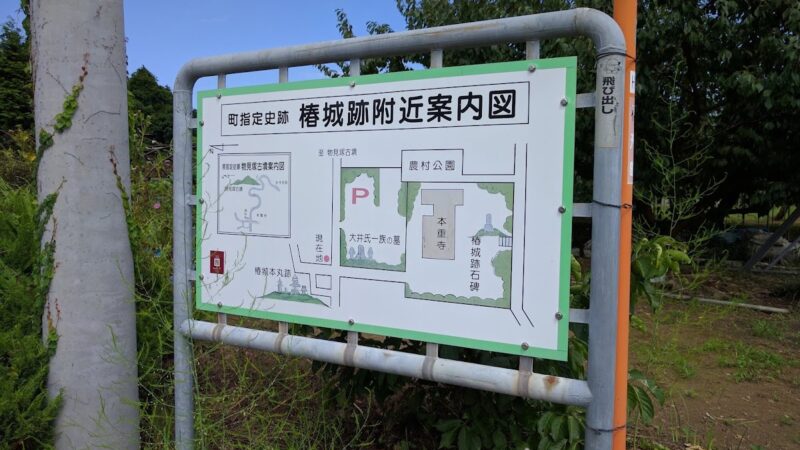
The state of preservation of the remains varies depending on the location, but some areas have explanatory signs, making them easy to understand even for first-time visitors.
The Townscape of Chonan and Traces of the Castle Town
A town developed around Chonan Castle from the Sengoku period to the Edo period. The current center of Chonan town retains some traces of its former life as a castle town and post town.
Chonan town has long been a transportation hub, and many historical buildings, such as Chofukuju Temple, remain. By combining a visit to the castle ruins with a stroll through the town, you can gain a deeper understanding of the local community during the time when Chōnan Castle existed.
Access
Access by Public Transportation
If you are visiting Chōnan Castle Ruins by public transportation, the nearest station is Mobara Station on the JR Sotobō Line. The following routes are available from Mobara Station to Chōnan Castle Ruins:
By Bus from Mobara Station
- Take the Kominato Railway bus bound for “Chōnan Depot” or “Chōnan Area” from the south exit of Mobara Station.
- Get off at the “Chōnan” bus stop (approximately 25 minutes).
- It’s about a 10-minute walk from the bus stop to Chōnan Castle Ruins (Taikomori).
Since bus services are limited, it is recommended to check the timetable in advance. Especially on holidays, the number of services may be reduced, so careful planning is necessary.
Taxi Access
- If taking a taxi from Mobara Station, the journey takes approximately 20 minutes.
- The fare is approximately 3,000 to 4,000 yen (may vary depending on traffic conditions).
- It is recommended to book your return taxi in advance.
Access by Car
If traveling by car, the following route is convenient.
From the Tokyo Metropolitan Area
- Approximately 10 minutes from the Ken-O Expressway “Mobara-Chonan IC”
- Proceed along National Route 409 towards Chonan Town and follow the signs.
- Mobara-Chonan IC is a major interchange on the Ken-O Expressway, approximately 60km from central Tokyo.
From Chiba City
- Head south on National Route 409 to Chonan Town (approximately 40 minutes).
- There is also a route via prefectural roads, with roughly the same travel time.
Parking Information
- There is no large-scale dedicated parking lot around the Chonan Castle Ruins.
- It is common to use public parking lots around the Chonan Town Hall and walk to the castle ruins.
- There may be some parking spaces near Myoken Shrine, but these may not be available during peak hours.
- Please be considerate of local residents when visiting.
Location Details
- Address: Chonan, Chonan-machi, Chosei-gun, Chiba Prefecture
- Historic Site Designation: Chonan Town Designated Historic Site “Chonan Castle Taikomori”
- Visiting: Free (However, caution is advised when entering private property)
- Visiting Hours: No specific restrictions (Daytime visits are recommended)
- Admission Fee: Free
Combining with Surrounding Facilities
When visiting Chonan Castle Ruins, combining your visit with other nearby historical facilities and tourist spots will enhance your historical exploration.
Ōbayashi-ji Temple (Takeda Clan’s Family Temple)
- Within walking distance of the Chōnan Castle Ruins
- Visitors can see the tombs of successive generations of the Takeda clan.
Chōfukuju-ji Temple
- An ancient Tendai sect temple and the central temple of the Bōsō Tendai sect.
- A temple deeply connected to the history of Chōnan Castle.
- A representative cultural property of Chōnan Town.
Chōnan Town Local History Museum (Confirmation Required)
- Exhibits materials related to the history and culture of Chōnan Town.
- May also house materials related to Chōnan Castle.
Points to Note When Visiting Chōnan Castle
Best Time to Visit
Chōnan Castle Ruins are open year-round, but the following times are especially recommended.
Spring (March-May)
- Beautiful fresh greenery and mild weather, perfect for a stroll.
- Enjoy the surrounding natural scenery during cherry blossom season.
Autumn (October-November)
- Beautiful autumn foliage enhances the atmosphere of the castle ruins.
- Moderate temperatures make it suitable for extended visits.
Times to Avoid
- Mid-Summer (July-August): High temperatures and humidity, and many insects.
- Rainy Season: Mounds of footing may be muddy.
- Typhoon Season: Should be avoided for safety reasons.
Clothing and Items to Bring
The following preparations are recommended for visiting the castle ruins.
Attire
- Comfortable clothing (long sleeves and long pants recommended)
- Comfortable walking shoes (trekking shoes or sneakers)
- Hat (for sun protection)
- Warm clothing and rain gear appropriate for the season
Items to Bring
- Drinking water
- Towel
- Camera (for recording)
- Map or guidebook
- Insect repellent (summer)
- Binoculars (for observing the terrain, useful to have)
Precautions for Visiting
- Parts of the castle ruins may be private property, so do not enter restricted areas.
- Do not damage the remains or climb the earthworks.
- Please take all your trash with you.
- No open flames.
- Please be considerate of the surrounding residents and avoid making noise.
- When taking photographs, please be mindful of private property and individual privacy.
Estimated Time Required
- Visiting only the castle ruins: 30 minutes to 1 hour
- Visiting including Dairinji Temple: 1 hour to 1 hour 30 minutes
- Visiting other historical sites in Chonan Town: 2-3 hours
- If you plan to take photos and observe the topography in detail: 2 hours or more
History and Tourism of Chonan Town
Overview of Chonan Town
Chonan Town is located in Chosei District, Chiba Prefecture, almost in the center of the prefecture. Despite being within approximately 60km of central Tokyo, it is a region blessed with abundant nature, including lush green hills and rice fields.
Located approximately 25km from Chiba City, and situated within the Boso Hills, it has little flat land and is characterized by a mountainous terrain. The population is approximately 7,000 (as of 2024), and it is a quiet rural area.
History of Chonan Town
Chonan Town has flourished since ancient times as a transportation hub on the Boso Peninsula. During the Sengoku period, it developed as a castle town centered around Chonan Castle, and during the Edo period, it also functioned as a post town.
In 1889, when the town and village system was implemented, it was established as Takeoka Village in Kami-Hanyu District. The following year, it became a town, Chonan-cho. In 1955, during the Showa-era municipal mergers, Chonan-cho, Toyosaka Village, Higashi Village, and Nishi Village merged to form the present-day Chonan-cho.
Cultural Properties and Historical Sites of Chonan-cho
Besides Chonan Castle, Chonan-cho boasts many other cultural and historical legacies.
Chofukuju-ji Temple
- An ancient Tendai sect temple and the head temple of the Boso Tendai sect.
- Houses important Buddhist cultural artifacts.
- Extensive grounds and historical buildings.
Kasamori Kannon (Kasamori-ji Temple)
- Located in Nagara-machi, adjacent to Chonan-machi, but easily accessible from Chonan-machi.
- Kannon-do Hall, a nationally designated important cultural property.
- A rare architectural style called Shiho-kakezukuri (four-sided cantilevered construction).
Other Historical Sites
- Burial mounds
- Temples and shrines
- Traditional rural landscape
Access Points to Chonan-machi
The main transportation points for visiting Chonan-machi are as follows:
Railway
- The nearest station is Mobara Station on the JR Sotobo Line.
- Approximately 60 minutes by limited express train and 90 minutes by local train from Tokyo Station to Mobara Station.
Expressway
- The nearest interchange is Mobara-Chonan IC on the Ken-O Expressway.
- Approximately 60km from central Tokyo, travel time approximately 60-90 minutes.
Route Bus
- Kominato Railway buses operate from Mobara Station.
- Due to limited service, checking the timetable in advance is essential.
The Kazusa Takeda Clan and the Sengoku History of Boso
The Kai Takeda Clan and the Kazusa Takeda Clan
The Kazusa Takeda clan, whose base was Chonan Castle, was a branch family of the Takeda clan, whose base was in Kai Province (present-day Yamanashi Prefecture). In the mid-Muromachi period, when Takeda Nobunaga was appointed governor of Kazusa Province, the Takeda clan expanded into the Boso Peninsula.
The Kai Takeda clan was one of the most prominent daimyo families of the Sengoku period, a prestigious family known for Takeda Shingen. The Kazusa Takeda clan, a branch family, played a crucial role in the expansion of the Takeda clan’s power on the Boso Peninsula.
Relationship with Mariyatsu Castle
Takeda Nobunaga built Mariyatsu Castle along with Chonan Castle. Mariyatsu Castle functioned as the main castle of the Kazusa Takeda clan, while Chonan Castle was positioned as a branch castle or a residence for a family member.
The two castles served as the two major bases for controlling Kazusa Province, cooperating with each other to contribute to the maintenance of the Takeda clan’s power. Mariyatsu Castle is located in present-day Mariyatsu, Kisarazu City, approximately 20 km from Chonan Castle.
The Sengoku Period in Boso
During the Sengoku period, the Boso Peninsula was divided among various forces, including the Kazusa Takeda clan, the Satomi clan, and the Chiba clan. These forces repeatedly formed alliances and conflicts, vying for control of the Boso Peninsula.
In the latter half of the 16th century, the Later Hojo clan, based in Odawara, strengthened their influence over the Boso Peninsula, and the Kazusa Takeda clan also came under the Hojo’s control. This relationship ultimately led to the Takeda clan’s downfall during Toyotomi Hideyoshi’s siege of Odawara.
Honda Tadakatsu and the Capture of Chonan Castle
In the siege of Odawara in 1590, Tokugawa Ieyasu was ordered to eliminate the Hojo forces on the Boso Peninsula. Honda Tadakatsu, one of the Four Heavenly Kings of Tokugawa, played a central role in this operation.
After capturing Chonan Castle, Honda Tadakatsu pacified Kazusa Province and later became the lord of Otaki Castle (present-day Otaki Town). Honda Tadakatsu’s capture of Chonan Castle symbolized the end of the Sengoku period on the Boso Peninsula.
Current Status and Future of Chōnan Castle Research
Excavation and Research
Regarding Chōnan Castle, only limited, full-scale excavations have been conducted to date. Therefore, many aspects of the castle’s detailed structure and history remain unclear.
Through surveys of remains on the ground surface and research into ancient documents and maps, the overall picture of Chōnan Castle is gradually becoming clearer. Further planned excavations are expected to yield new discoveries.
Preservation and Utilization
As a valuable cultural asset of Chōnan Town, the Chōnan Castle site requires appropriate preservation and utilization. Currently designated as a town historical site, further preservation and development are expected, along with its use as a resource for historical education and tourism.
It is desirable to create an environment where visitors can easily understand the value of the castle site, such as by installing explanatory signs, developing viewing paths, and conducting guided tours.
Positioning in Local History
Chōnan Castle is an important historical site for understanding the Sengoku period history of the Bōsō Peninsula. As the residence of the Kazusa Takeda clan, a branch of the Kai Takeda clan, and as a battlefield during the Siege of Odawara, it holds a significant place in the history of Japan’s Sengoku period.
Re-evaluating and widely disseminating the value of Chonan Castle as a regional historical resource and as part of the history of Japanese castles will be a challenge for the future.
Summary
Chonan Castle is a Sengoku period castle site located in Chonan Town, Chiba Prefecture, and is an important historical site with a history of approximately 140 years as the residence of the Kazusa Takeda clan. Built in 1456 by Takeda Nobunaga, it functioned as the political and military center of southern Kazusa Province until its fall to Honda Tadakatsu’s forces in 1590.
Currently, it is designated as a town historical site as “Chonan Castle Taikomori,” and some remains such as earthworks and baileys remain. With numerous points of interest such as Taikomori, Myoken Shrine, and the Takeda clan’s tombs at Dairinji Temple, Chonan Castle Ruins is an attractive destination for anyone interested in the history of the Sengoku period.
Access is relatively easy from central Tokyo, approximately 10 minutes by car from the Ken-O Expressway Mobara-Chonan Interchange, or about 25 minutes by bus from JR Mobara Station. Visiting Chonan Castle Ruins in conjunction with other historical sites in Chonan Town will provide a deeper understanding of the history.
If you are interested in the Sengoku period history of the Boso Peninsula, the history of the Takeda clan, or Japanese castles, be sure to visit Chonan Castle Ruins. The remnants of the Sengoku period remaining in the quiet countryside will surely evoke a sense of historical romance.