
-1360x720.png)
Complete Guide to Ishikawa Castle (Hirosaki City, Aomori Prefecture): A Thorough Explanation of the History and Highlights of Ishikawa Thirteen Shields
What is Ishikawa Castle?
Ishikawa Castle (Ishikawa-jo) is a medieval mountain castle located in the Ishikawa district of Hirosaki City, Aomori Prefecture. It is also known as Daibutsu-ga-hana Castle, Obuchi-ga-hana Castle, Ishikawa Shield, and Iwadate Thirteen Shields, and the 13 surrounding fortifications are collectively called Ishikawa Thirteen Shields.
Built on a hilltop on the left bank of the Hirakawa River, it is now maintained as Daibutsu Park and preserved as an important historical site of Hirosaki City. As a castle that played a role in the conflict between the Nanbu and Tsugaru clans, it is an indispensable part of the Sengoku period history of the Tsugaru region.
Basic Information on Ishikawa Castle
- Location: Daibutsu, Ishikawa, Hirosaki City, Aomori Prefecture
- Other Names: Daibutsu-ga-hana Castle, Obuchi-ga-hana Castle, Ishikawa Jusan-kan, Ishikawa Jusan-tate, Iwadate Jusan-tate
- Castle Structure: Hilltop castle, multi-bailey mountain castle
- Year of Construction: Said to be Kenmu 1 (1334)
- Builder: Soga Dosei (legend)
- Main Lords: Soga clan, Nanbu clan (Ishikawa Takanobu), Tsugaru clan
- Year of Abandonment: Around Keicho 16 (1611) (accompanying the construction of Hirosaki Castle)
- Remains: Moat remains, bailey remains, earthwork remains
- Designated Cultural Property: Hirosaki City Designated Historic Site
- Current Status: Daibutsu Park
History of Ishikawa Castle
From Construction to the Nanboku-cho Period
Ishikawa Castle is said to have been built in 1334 (Kenmu 1st year/Genkō 4th year) by Soga Dōshō. Soga Dōshō was a member of the Hiraga Soga clan, the main branch of the Soga family in Tsugaru, and ruled this region.
The first documented appearance of Ishikawa Castle is in 1334 (Kenmu 1st year), where it appears as “Ishikawa Tate.” Records indicate that in that year, Soga Dōshō, under attack from the Southern Court, fled from Daikōji Castle to Ishikawa Tate, and then to Mochiyori Castle. This marks the first historical appearance of Ishikawa Castle.
During the turbulent Nanboku-cho period, the Tsugaru region became a battlefield where forces of the Southern and Northern Courts clashed, and Ishikawa Castle was caught in the middle of this turmoil. The Soga clan, as local lords, strived to maintain control of the region.
The Rule of the Nanbu Clan and the Era of Ishikawa Takanobu
From the Muromachi period to the Sengoku period, the Tsugaru region gradually came under the influence of the Nanbu clan, based in Sannohe. The Soga clan was later subdued by the Nanbu clan, and Ishikawa Castle came under their control.
In 1533 (Tenbun 2), Nanbu Takanobu of the Sannohe Nanbu clan led a large army to conquer Tsugaru and made Ishikawa Castle his residence as the Tsugaru County Magistrate. At this time, Takanobu changed his name to Ishikawa Takanobu and adopted the name Ishikawa.
Ishikawa Takanobu is an important figure known as the father of Nanbu Nobunao. As the father of Nobunao, who is considered the restorer of the Nanbu clan, he occupies an important position in the history of the Nanbu clan. Takanobu governed the Tsugaru region from Ishikawa Castle and developed and strengthened the surrounding Ishikawa Thirteen Shields.
Tsugaru Tamenobu’s Surprise Attack and the Fall of Ishikawa Castle
In 1571 (Genki 2), the history of Ishikawa Castle reached a dramatic turning point. Oura Tamenobu (later Tsugaru Tamenobu), whose base was Oura Castle (the predecessor of Hirosaki Castle), launched a surprise attack on Ishikawa Castle.
Tamenobu would later unify Tsugaru and become the first lord of the Tsugaru Domain, but at this time he was still a vassal of the Nanbu clan. However, harboring ambitions of independence, Tamenobu sought to gain a foothold in Tsugaru by attacking Ishikawa Castle, a Nanbu clan stronghold in the region.
Ishikawa Takanobu, facing Tamenobu’s surprise attack, attempted fierce resistance, but ultimately the castle fell. Takanobu committed suicide, and Ishikawa Castle fell. It is said that Takanobu’s wife, children, and many of his vassals also lost their lives in this battle.
Currently, within Daibutsu Park stands the “Monument to Lord Nanbu Takanobu and His Retainers,” a monument commemorating the tragic events of the time, serving as a memorial to Lord Nanbu Takanobu, his wife and children, and his retainers who lost their lives at this castle.
The Tsugaru Clan Era and the Abandoned Castle
Tsugaru Tamenobu, having seized Ishikawa Castle, appointed his senior retainer, Itagaki Hyobu Masakane, as the castle’s governor to defend it. Itagaki Masakane was a highly trusted retainer of Tamenobu, and his responsibility for defending Ishikawa Castle made it a crucial base for the Tsugaru clan’s rule over Tsugaru.
Subsequently, Tamenobu continued his unification of Tsugaru, and in 1590, he received official recognition of his rule over the Tsugaru territory from Toyotomi Hideyoshi. In 1603, he was granted ownership of the three Tsugaru districts by Tokugawa Ieyasu, establishing his status as a daimyo.
Around 1611 (Keicho 16), Tsugaru Nobuhira, the second lord of the domain who succeeded Tamenobu, began construction of a new castle in Takaoka (later Hirosaki), replacing Horikoshi Castle. This is the present-day Hirosaki Castle. With the completion of Hirosaki Castle, Ishikawa Castle ceased to serve its purpose and was abandoned.
Structure of the Ishikawa Thirteen Shields
The most distinctive feature of Ishikawa Castle is its large-scale castle structure, consisting of thirteen interconnected fortifications (kuruma). These are collectively known as the Ishikawa Thirteen Shields, and it functioned not as a single castle, but as a complex of castle buildings organically linked to multiple defensive strongholds.
Composition of the Ishikawa Thirteen Shields
The Ishikawa Thirteen Shields consisted of the following 13 fortifications:
- Daibutsu-ga-hana Castle – Main castle, main enclosure
- Oka-tate
- Sarugaku-tate
- Tsuki-tate
- Bo-tate
- Hachiman-tate
- Tera-tate
- Takada-tate
- Mohee-dono-tate
- Terayama-tate
- Magobe-tate
- Koyama-tate
- New Building
These 13 buildings were scattered across the hilly area along the Hirakawa River, coordinating with each other to form a defensive system. At the center was Daibutsu-ga-hana Castle, the residence of Ishikawa Takanobu and the political and military center.
Castle Topography and Structure
Ishikawa Castle (Daibutsu-ga-hana Castle) is a flatland castle built on the tip of a hill on the left bank of the Hirakawa River. It possessed a defensive structure that skillfully utilized the natural topography of the river and hills.
Topographical Features:
- Located on a river terrace of the Hirakawa River, with a steep cliff on the north side.
- The south side is a gently sloping area where multiple baileys were located.
- A series of interconnected baileys utilizing a long, narrow ridge running east to west.
Defensive Structures:
- Moat Remains: Multiple medieval moat remains have been confirmed, separating the baileys.
- Earthworks: Traces of earthworks remain around the baileys.
- Cliffs: Artificially carved steep slopes formed a defensive line.
- Gate Entrances: Defense features were incorporated at the entrances.
Even today, parts of medieval moat and bailey remains can be seen within Daibutsu Park, allowing visitors to imagine the castle’s structure in its heyday.
Formation of the Castle Town
A castle town supporting the castle was formed around Ishikawa Castle. It is believed that settlements with certain urban functions developed around the various residences of the Ishikawa Thirteen Shields, with samurai, merchants, and artisans residing there.
Names such as “Temple Residence” and “Buddhist Monastery Residence” suggest that temples and religious facilities were also located within the castle grounds. This is a characteristic of medieval castles, indicating that religious facilities played an important role in the castle’s defense and governance.
Highlights of Ishikawa Castle
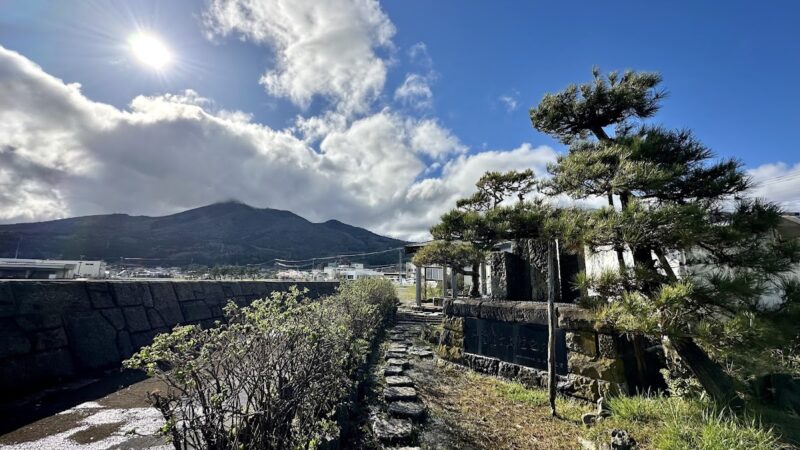
Daibutsu Park
The Ishikawa Castle ruins are now maintained as Daibutsu Park, a place of relaxation for citizens. Cherry trees are planted within the park, making it a popular spot for cherry blossom viewing in spring.
The park’s name originates from the fact that a large Buddha statue was once enshrined on this site. While retaining traces of its castle past, it is a peaceful park cherished by the local community.
Park Facilities:
- Walking Paths: Walking paths are maintained within the castle ruins.
- Information Boards: Information boards explaining the castle’s history and structure are installed.
- Parking: Free parking is available on the north side of the park (approximately 10 spaces).
- Rest Area: Benches and other seating are provided.
Memorial Monument to Lord Nanbu Takanobu and His Retainers
The most important historical site in the park is the Memorial Monument to Lord Nanbu Takanobu and His Retainers. This monument was erected to commemorate Lord Nanbu Takanobu, his wife and children, and the many retainers who lost their lives when the castle fell in 1571.
Standing before the monument, one can feel the fierce battles of the Sengoku period and the emotions of those who perished. When visiting the castle ruins, please be sure to pay your respects at this monument and reflect on history.
Highlights of the Ruins
At Ishikawa Castle Ruins, you can observe the following remains:
Moat Remains:
By carefully observing the topography within the park, you can find areas where the remains of medieval moats are still visible. In particular, the remains of ditches and moats from the Heian period to the medieval period have been confirmed through archaeological excavations, indicating that they were used over multiple periods.
Enclosure Remains:
The current topography of the park reflects the former layout of the enclosures. By paying attention to the boundaries between flat areas and slopes, you can find traces of artificially constructed enclosures.
Earthwork Remains:
Some elevations that appear to be the remains of earthworks remain. Although some areas are covered with trees, careful observation can reveal castle remains.
Views
From Ishikawa Castle Ruins, you can enjoy views of the Tsugaru Plain and the direction of Mount Iwaki. During the Sengoku period, the castle lords must have gazed upon the Tsugaru region from this spot, contemplating the management of their domains.
Especially on clear days, you can enjoy views of Hirosaki city and the majestic Mount Iwaki in the distance, truly appreciating the geographical features of the Tsugaru region.
Access and Visiting Information
Access by Public Transportation
Using the Konan Railway Owani Line:
- Get off at Ishikawa Station on the Konan Railway Owani Line, approximately 10 minutes on foot.
- Head southeast from Ishikawa Station to reach Daibutsu Park.
The Konan Railway Owani Line is a local line connecting Hirosaki Station and Owani Station, offering a tranquil journey through the Tsugaru countryside.
Access by Car
From Major Roads:
- Approximately 15 minutes from the Tohoku Expressway “Owani Hirosaki IC”
- Approximately 20 minutes from the center of Hirosaki City via National Route 7
- Set your car navigation system to “Daibutsu Park” or “Ishikawa, Hirosaki City, Daibutsu” and search.
Parking:
- Free parking available on the north side of Daibutsu Park (approximately 10 cars)
- Caution is advised regarding on-street parking during busy periods.
Visiting Hours and Fees
- Visiting Hours:: Always open (as it is a park)
- Estimated Time Required:: Approximately 30 minutes to 1 hour
- Admission Fee:: Free
- Guide:: There are no permanent guides, but information boards are installed.
Points to Note When Visiting
- Watch Your Step:: When viewing the ruins, some areas may have uneven ground, so comfortable walking shoes are recommended.
- Season: Spring cherry blossom season and autumn foliage season are especially recommended, but winter visits may be difficult due to snow.
- Insect repellent: There are many insects in summer, so it’s a good idea to bring insect repellent spray.
- Restrooms: There are restroom facilities in the park, but it’s recommended to use the facilities beforehand just in case.
Nearby Tourist Spots
When visiting Ishikawa Castle, exploring the surrounding historical sites will give you a deeper understanding of the history of the Tsugaru region.
Hirosaki Castle
Hirosaki Castle is the main castle of the Tsugaru clan, built after Ishikawa Castle was abandoned. It is designated as a National Important Cultural Property as one of the 12 existing castle keeps, and is nationally famous as a cherry blossom viewing spot.
- Location: 1 Shimoshirogane-cho, Hirosaki City
- Approximately 20 minutes by car from Ishikawa Castle Ruins
- A masterpiece of early modern castle architecture built by Tsugaru Tamenobu and Nobuhira
Horikoshi Castle Ruins
Horikoshi Castle, which served as the Tsugaru clan’s base before the construction of Hirosaki Castle, is also nearby. It functioned as the Tsugaru clan’s base after Tsugaru Tamenobu conquered Ishikawa Castle and before the construction of Hirosaki Castle.
- Location: Horikoshi, Hirosaki City
- Approximately 15 minutes by car from Ishikawa Castle Ruins
- National Historic Site
Daikoji Castle Ruins
Daikoji Castle, which served as Soga Dosei’s residence before moving to Ishikawa Castle, is also an important castle ruin for understanding the medieval history of the Tsugaru region.
- Location: Daikoji, Hirakawa City
- Approximately 10 minutes by car from Ishikawa Castle Ruins
Other Sites of the Ishikawa Thirteen Shields
The other sites of the Ishikawa Thirteen Shields, although now farmland and residential areas, still retain traces of their original topography. Those interested in local history may find visiting these sites a fascinating experience.
Ishikawa Castle and the History of Tsugaru
Conflict Between the Nanbu and Tsugaru Clans
The history of Ishikawa Castle must be understood within the context of the Sengoku period history of the Tsugaru region, specifically the conflict between the Nanbu and Tsugaru clans.
The Nanbu clan, based in Sannohe, expanded their power into northern Mutsu Province (present-day Aomori Prefecture) from the Muromachi period to the Sengoku period. The Tsugaru region also came under Nanbu control, and Ishikawa Takanobu was dispatched as the Tsugaru County Magistrate.
However, Oura Tamenobu, a vassal of the Nanbu clan, gradually harbored ambitions of independence. Beginning with the capture of Ishikawa Castle in 1571, he successively conquered various castles in the Tsugaru region. Tamenobu ultimately achieved the unification of Tsugaru and was recognized as an independent daimyo by Toyotomi Hideyoshi and Tokugawa Ieyasu.
This conflict between the Nanbu and Tsugaru clans continued throughout the Edo period, and relations between the two domains were always fraught with tension. The fall of Ishikawa Castle was a crucial event that marked the beginning of this long-running conflict.
The Road to Tsugaru Unification
The capture of Ishikawa Castle was a significant turning point in the process of Tsugaru Tamenobu’s unification of Tsugaru.
Major Battles in Tamenobu’s Unification of Tsugaru:
- 1571 (Genki 2) – Capture of Ishikawa Castle
- 1575 (Tensho 3) – Capture of Daikoji Castle
- 1578 (Tensho 6) – Capture of Namioka Castle
- 1585 (Tensho 13) – Capture of Aburakawa Castle
Through these battles, Tamenobu succeeded in bringing almost the entire Tsugaru region under his control. The capture of Ishikawa Castle was the first important victory in this series of battles, and it gave Tamenobu an opportunity to demonstrate his confidence and ability in unifying Tsugaru.
Ishikawa Takanobu and Nanbu Nobunao
The son of Ishikawa Takanobu, who committed suicide at Ishikawa Castle, was Nanbu Nobunao, who later succeeded to the Nanbu family. After his father’s death, Nobunao returned to Sannohe and inherited the headship of the Nanbu family.
Nobunao is known as the restorer of the Nanbu clan, and during Toyotomi Hideyoshi’s pacification of Oshu, the Nanbu clan’s territories were secured, establishing the Nanbu clan as a modern daimyo. He dedicated himself to the restoration and development of the Nanbu clan, carrying the regrets of his father, Takanobu, in his heart.
Although Nobunao and Tsugaru Tamenobu were once members of the same Nanbu clan, the animosity between Nobunao and Tamenobu, who was responsible for his father’s death, continued throughout their lives. This personal animosity is said to have been at the root of the conflict between the Nanbu and Tsugaru domains.
Cultural Value of Ishikawa Castle
Archaeological Survey
Multiple archaeological surveys have been conducted at the Ishikawa Castle site. According to the Comprehensive Survey of Cultural Properties, the following remains have been confirmed at the Ishikawa Castle site:
- Jomon period remains: Indicating that this area was a place of human habitation from ancient times.
- Heian period ditch remains: Possibility of some kind of facility existing during the Heian period.
- Medieval moat remains: Defensive structure as part of a castle.
- Medieval baileys: Multiple flat areas artificially constructed.
These research findings indicate that the Ishikawa Castle site is not merely a medieval castle, but a complex archaeological site bearing traces of continuous human activity from ancient times.
Importance in Regional History
Ishikawa Castle occupies an extremely important position in regional history as a site symbolizing the transition period from the medieval to the early modern period in the Tsugaru region.
Historical Significance:
- A base for the Nanbu clan’s rule over Tsugaru
- Tsugaru Tamenobu’s first step toward independence
- A fine example of medieval Tsugaru castle structure
- A unique castle form known as Ishikawa Jusan-tate (Ishikawa Thirteen Shields)
Hirosaki City has designated Ishikawa Castle ruins as a city-designated historical site, and it is expected that preservation and utilization will continue in the future.
Summary
Ishikawa Castle is a medieval mountain castle site remaining in Hirosaki City, Aomori Prefecture, and is an important historical site that tells the story of the Sengoku period history of the Tsugaru region, specifically the conflict between the Nanbu and Tsugaru clans. It has a history spanning approximately 280 years, from its construction in 1334 (Kenmu 1) to its fall in 1571 (Genki 2), and its abandonment with the construction of Hirosaki Castle.
Ishikawa Castle holds many historical elements, from its unique fortification structure known as Ishikawa Thirteen Shields, to the fates of two warlords, Ishikawa Takanobu and Tsugaru Tamenobu, and as the tragic stage that gave rise to Nanbu Nobunao, a future renowned ruler.
Although now a beloved park for locals, the castle ruins remain, conveying the spirit of the Sengoku period to visitors. Visiting Ishikawa Castle along with other nearby castles such as Hirosaki Castle and Horikoshi Castle will allow for a deeper understanding of the historical transition from the medieval to the early modern period in the Tsugaru region.
When visiting the Ishikawa Castle ruins, be sure to pay your respects at the memorial monument to Lord Nanbu Takanobu and his retainers, and reflect on the feelings of those who perished in this place. Within this quiet park, the memories of the turbulent Sengoku period still live on.
-800x450.png)
