Kadoya Castle (Akita Prefecture) Complete Guide | The History and Highlights of the Tozawa Clan’s Castle for Approximately 200 Years
What is Kadoya Castle?
Kadoya Castle is a medieval castle located in Oyamada, Nishiki-cho, Semboku City, Akita Prefecture. It was an important base for the Tozawa clan, a powerful warlord family of Dewa Province, for approximately 200 years, and is now preserved as an Akita Prefecture designated historical site. Built on the southeastern corner of a river terrace formed by the Hinokinai River and Nishinomatazawa, it was a strong fortress that skillfully utilized the terrain at an altitude of approximately 140m and a relative height of approximately 40-60m.
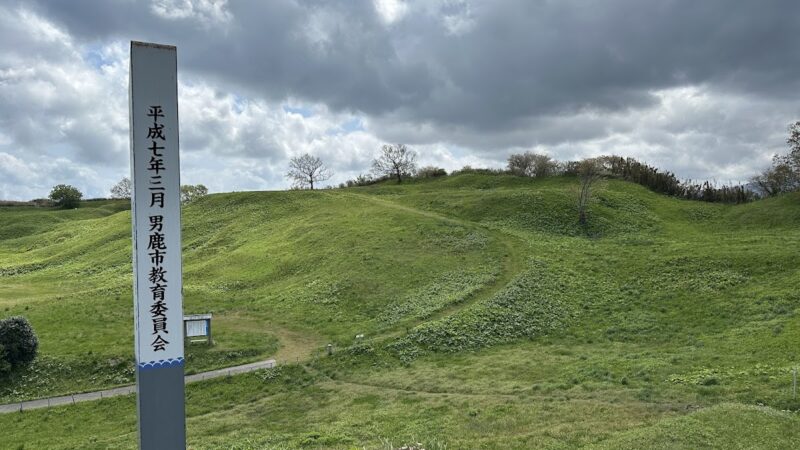
Currently, the Mitake Shrine stands on the site of the main keep, and the remains of earthworks, dry moats, and lateral moats are well-preserved. As a valuable historical site that tells the history of the Tozawa clan, it attracts attention from castle enthusiasts and history lovers.
History of Kadoya Castle
Construction and the Entry of the Tozawa Clan
The prevailing theory regarding the construction of Kadoya Castle is that it was built in 1228 by Tozawa Kanemori. Prior to this, the Tozawa clan had used Oyamada Castle, located just north of Kadoya Castle, as their residence from around 1220. It is said that they relocated to Kadoya Castle, seeking a more defensible location, and subsequently renovated the castle.
One theory suggests that the castle’s origins lie in the residence of Kitaura Rokuro Shigenori, the sixth son of Abe Yoriyoshi during the Heian period, indicating the possibility of some kind of base existing in this area from ancient times.
The Prosperity Period of the Tozawa Clan
Based at Kadoya Castle, the Tozawa clan expanded their power in Dewa Province. Following Tozawa Kanemori, successive heads of the Tozawa clan—Chikamori, Katsumori, Katsumori, Genmori, Hidemori, Ujimori, Imori, Yukimori, Toyomori, Yasumori, and Iemori—ruled this region for approximately 200 years.
The Tozawa clan built numerous branch castles in the surrounding area, forming a network of castles known as the “Thirty-Five Tozawa Castles.” Kadoya Castle functioned as the core of this network and was a symbolic representation of the Tozawa clan’s prosperity.
Relocation to Kakunodate Castle and its Role as a Branch Castle
In 1423 (Oei 30), during the time of the 13th head of the clan, Tozawa Iemori, the Tozawa clan moved its base to Komatsuyama Castle (later Kakunodate Castle). This is thought to be because the Kakunodate area, closer to a vast plain, was more suitable as a base for managing the domain.
However, Kadoya Castle was not abandoned and continued to exist as an important branch castle. Kadoya Kahei-no-jo and Miyauchi-no-daisuke Yorimori, both members of the Tozawa clan, served as castle lords and continued to play an important role in maintaining the Tozawa clan’s power.
Abandonment by Order of Toyotomi Hideyoshi
In 1590, Toyotomi Hideyoshi, who had achieved the unification of Japan, ordered the daimyo of the entire country to consolidate their castles, a precursor to the “One Castle Per Province” decree. As a result of this order, Kadoya Castle, one of the 35 castles owned by the Tozawa clan, was abandoned.
This brought to an end the history of Kadoya Castle, which had lasted for approximately 360 years since 1228.
Structure and Layout of Kadoya Castle
Utilization of Topography
Kadoya Castle was built on the tip of a river terrace formed by the Hinokinai River and its tributary, Nishinomata-zawa. This terrain, surrounded on three sides by steep cliffs, provided excellent defensive capabilities as a natural stronghold. The elevation difference of approximately 40-60 meters posed a significant obstacle for attackers.
Main Enclosure Structure
Kadoya Castle’s layout consists of multiple enclosures centered around the main enclosure (Honmaru). The Honmaru is located at the highest point of the castle and is now the grounds of Mitake Shrine. To the west of the Honmaru is an enclosure called the West Enclosure (Nishikan), and further surrounded by a belt-shaped enclosure (Obi-guruma).
A deep moat separates the Honmaru and the West Enclosure, demonstrating a design that allows each enclosure to function as an independent defensive unit. This is a characteristic structure of medieval castles, designed so that even if one enclosure falls, resistance can continue in the other enclosures.
Defensive Structures
Kadoya Castle exhibits numerous defensive structures typical of medieval castles.
Earthworks: Earthworks were built around each enclosure, and even today, earthworks approximately 2-3 meters high remain in good condition. Earthen ramparts served to prevent enemy intrusion and also functioned as a defensive wall against arrows and stones.
Dry Moats and Horizontal Moats: Deep dry moats were dug between the baileys and around the outer perimeter of the castle. Horizontal moats, in particular, extended long along the castle’s defensive line, restricting enemy movement. Some moats reached depths of over 5 meters, demonstrating the advanced civil engineering techniques of the time.
Vertical Moats: Vertical moats were constructed on the slopes, allowing for attacks on enemies climbing the slopes from the flanks.
Well Remains: Well remains have been found within the castle grounds, indicating ingenuity in securing a water source in preparation for sieges.
Highlights of Kadoya Castle
Mitake Shrine
Mitake Shrine, built on the site of the main bailey, is an important landmark that conveys the history of Kadoya Castle. From the shrine grounds, you can enjoy a panoramic view of the surrounding landscape, allowing you to appreciate why this site was chosen as a castle. The path leading to the shrine utilizes the former route to the castle, allowing visitors to feel a sense of historical continuity.
Well-Preserved Earthworks
The greatest highlight of Kadoya Castle is its well-preserved earthworks. The earthworks around the main keep, in particular, retain their height, making them valuable remains that allow for a concrete image of the defensive structures of a medieval castle. Walking along the earthworks allows you to experience the perspective of the defending soldiers of that time.
Clear Moats and Horizontal Ditches
The moat separating the main keep and the west enclosure remains clearly defined in depth and width, making it an important remains for understanding the castle’s structure. The horizontal ditch surrounding the castle’s perimeter is also well-preserved, allowing visitors to learn about the layout techniques of medieval castles.
West Enclosure
Located west of the main keep, the west enclosure is a relatively large, flat area. It is believed that this was the location of the residences of senior retainers and the barracks for soldiers. Looking up at the main keep from the west gate, you can truly appreciate the height of the cliff face (kirigishi: a cut-off cliff face) of the main keep, and gain a good understanding of the castle’s defensive structure.
View from the Outer Enclosure
From the outer enclosure surrounding the main keep, you can see the Hinokinai River and the surrounding terrain. This view speaks to how skillfully Kadoya Castle utilized the terrain.
Relationship between the Tozawa Clan and Kadoya Castle
Origins of the Tozawa Clan
The Tozawa clan is considered a prestigious family descended from the Seiwa Genji clan. They settled in Dewa Province in the early Kamakura period and expanded their power mainly in the Senboku region. The Tozawa clan was known as a family of great military prowess and played an active role as a powerful warlord in northern Dewa Province from the Nanboku-cho period to the Sengoku period.
Network of Thirty-Five Tozawa Castles
The Tozawa clan built numerous branch castles around Kadoya Castle, which was their core. These castles are collectively known as the “Thirty-Five Castles of Tozawa,” and include castles such as Oyamada Castle and Furuborita Castle. These castles were interconnected and served as key points for the defense of the territory. Kadoya Castle occupied a strategically important position as the center of this network.
About the Kadoya Clan
After the relocation to Kakunodate Castle, Kadoya Kahei-no-jo, who served as the lord of Kadoya Castle, was a member (relative) of the Tozawa clan. The Kadoya clan, as important retainers of the Tozawa clan, were entrusted with the maintenance and management of Kadoya Castle and the governance of the surrounding area. The surname Kadoya is thought to originate from the name of this castle.
Access Information
Location
Near 255 Oyamada Sawaguchi, Nishiki-cho, Semboku City, Akita Prefecture
Access by Public Transportation
By JR:
- Get off at Kakunodate Station on the JR Akita Shinkansen/Tazawako Line
- Approximately 20 minutes by car from Kakunodate Station (Public transportation is infrequent, so taking a taxi is recommended)
By Bus:
- Take the Ugo Kotsu bus bound for Nishiki from Kakunodate Station, get off at the Oyamada bus stop, and walk for approximately 15 minutes.
- However, since the number of buses is limited, it is necessary to check the timetable in advance.
Access by Car
From the Tohoku Expressway:
- Approximately 1 hour 30 minutes from Morioka IC via National Route 46
From the Akita Expressway:
- Approximately 40 minutes from Omagari IC via National Route 105 and prefectural roads
Parking:
- There are several parking spaces near the entrance to the Kadoya Castle ruins.
- You can also use the parking lot for visitors to Mitake Shrine.
Entrance and Estimated Time Required
The entrance to the Kadoya Castle ruins is clearly marked with an information board and signpost. It takes approximately 5-10 minutes to walk from the entrance to the main keep (Mitake Shrine). If you plan to thoroughly explore the ruins, it’s recommended to allow about an hour for the entire visit.
Points to Note When Visiting
Clothing and Equipment
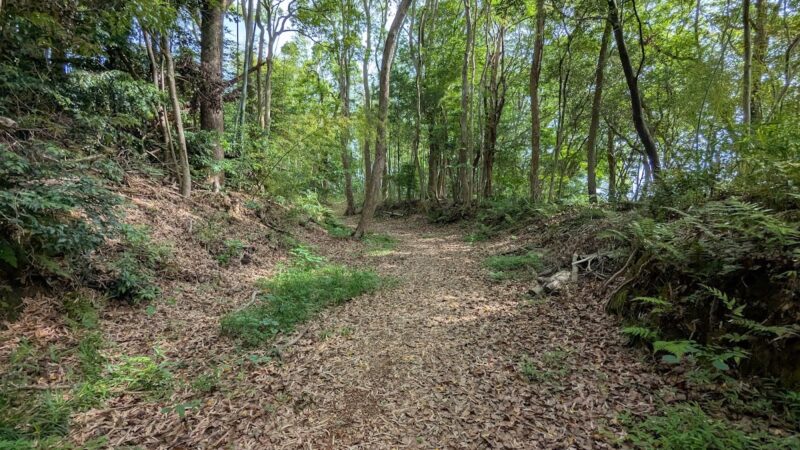
- The castle ruins consist of unpaved mountain paths, so comfortable walking shoes (trekking shoes or sneakers) are essential.
- In summer, it is recommended to bring insect repellent, a hat, and drinking water.
- In winter, the ground can be slippery due to snow, so extra caution is necessary.
Best Time to Visit
- Spring to autumn (April to November) is the best time to visit.
- In winter (December to March), snow makes it difficult to see the remains.
- The scenery is particularly beautiful during the fresh green season (May to June) and the autumn foliage season (October to November).
Other Precautions
- To protect the historical site, please be careful not to damage the remains.
- Please take all your trash with you.
- Mitake Shrine is an active shrine, so please observe proper etiquette when visiting.
- On days with bad weather, the ground can be slippery, so please avoid visiting if necessary.
Nearby Tourist Attractions
Kakunodate Samurai Residences
Located about 20 minutes by car from Kadoya Castle, Kakunodate is a samurai town known as “Little Kyoto of Michinoku.” It developed as a castle town of Kakunodate Castle, to which the Tozawa clan relocated from Kadoya Castle, and many samurai residences are still preserved today. Samurai residences such as the Ishiguro and Aoyagi residences are open for interior tours, allowing visitors to experience the life of a samurai during the Edo period.
Lake Tazawa
Known as the deepest lake in Japan, Lake Tazawa is located about 30 minutes by car from Kadoya Castle. Its beautiful azure surface and surrounding natural scenery attract many tourists throughout the year.
Oyamada Castle Ruins
Located just north of Kadoya Castle, Oyamada Castle was the residence of the Tozawa clan before Kadoya Castle. Visiting both castles together will allow for a deeper understanding of the Tozawa clan’s history.
Furuhorita Castle Ruins
Furuhorita Castle, one of the 35 castles of Tozawa, is located relatively close to Kadoya Castle. It was a subsidiary castle ruled by the Obota clan, and remnants such as vertical moats remain.
Cultural Property Designation of Kadoya Castle
The Kadoya Castle ruins are protected as a designated historical site of Akita Prefecture. This designation has led to the preservation and maintenance of the remains, and information boards and explanatory signs have been installed. As a valuable historical site with well-preserved medieval castle remains, it receives high academic acclaim.
Model Itinerary for Visiting Kadoya Castle
Half-Day Course (3-4 hours)
- Start from Kakunodate Station (travel by car)
- Visit Kadoya Castle Ruins (1 hour)
- Visit Oyamada Castle Ruins (30 minutes)
- Stroll through Kakunodate Samurai Residences (1-2 hours)
- Return to Kakunodate Station
Full-Day Course (6-8 hours)
- Start from Kakunodate Station (travel by car)
- Visit Kadoya Castle Ruins (1 hour)
- Visit Oyamada Castle Ruins (30 minutes)
- Visit Furuborita Castle Ruins (30 minutes)
- Lunch (Kakunodate or Nishiki area)
- Stroll through Kakunodate Samurai Residences (2 hours)
- Sightseeing at Lake Tazawa (1-2 hours)
- Return to Kakunodate Station
Historical Significance of Kadoya Castle
Kadoya Castle holds significant historical importance as a castle of a local powerful family in medieval Dewa Province. For approximately 200 years, it functioned as the residence of the Tozawa clan, forming the foundation for the clan’s expansion.
Furthermore, as the core of the network-type territorial control system known as the Tozawa Thirty-Five Castles, it is a valuable example of medieval regional governance. As a castle that was maintained for a long period until its abandonment in 1590, it is an important historical site for studying the social conditions and changes in military technology of the time.
The remaining structures are a typical example of a medieval castle built of earth without stone walls, and defensive structures such as earthworks and dry moats are well-preserved. These remains are valuable resources for the study of medieval castles, making it a must-see historical site for castle enthusiasts and researchers.
Summary
Kadoya Castle, located in Semboku City, Akita Prefecture, was the residence of the Tozawa clan for approximately 200 years and is an important historical site that conveys the history of medieval Dewa Province to the present day. From its construction in 1228 to its abandonment in 1590, this castle boasts a history of approximately 360 years. Its well-preserved remains, including earthworks and dry moats, make it a valuable resource for studying the structure of medieval castles.
Currently, it is a designated historical site of Akita Prefecture, and the Mitake Shrine stands on the site of the former main keep. Located near tourist attractions such as the samurai residences of Kakunodate and Lake Tazawa, it’s an ideal spot to visit as part of a trip to enjoy the history and nature of Akita Prefecture.
For those interested in the history of the Tozawa clan, medieval castles, and the history of Akita, Kadoya Castle is a must-see historical site. Be sure to visit this historic castle ruin and experience the spirit of medieval Dewa Province.