Ura Castle (Hachirogata Town, Akita Prefecture) Complete Guide: Visiting the Miura Clan’s Residence and the History of the Battle of Minato
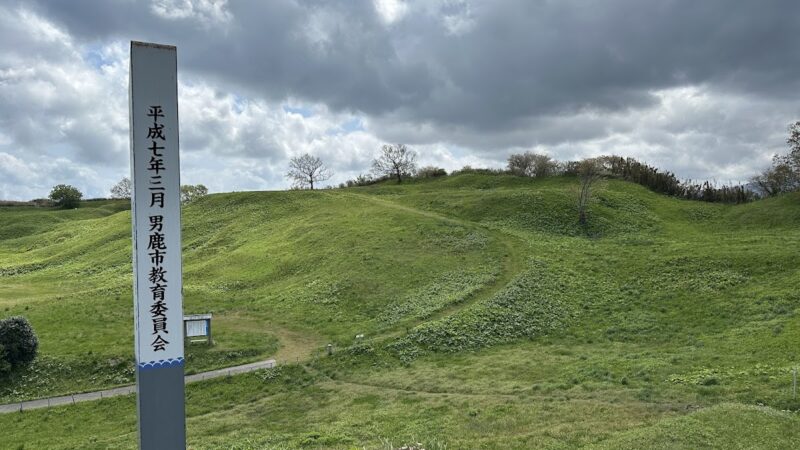
Located in Hachirogata Town, Minamiakita District, Akita Prefecture, Ura Castle is a mountain castle built at the end of the Muromachi period and is a valuable historical site that conveys the turbulent history of the Sengoku period. Built on a hill approximately 120 meters above sea level, this castle has a long, narrow layout stretching approximately 700 meters, and typical remains of a medieval mountain castle, such as outer baileys, outworks, dry moats, earthworks, and well remains, are well preserved.
Ura Castle is known as the residence of Miura Hyogo-no-kami Morinaga and is a historically important castle that was the stage for the “Battle of Minato” between the Minato Ando clan and the Hiyama Ando clan. This article comprehensively introduces all the information you need to visit Ura Castle, from its history and structure to its highlights and access methods.
History of Ura Castle: The Miura Clan and the Battle of Minato
Construction of Ura Castle and the Miura Clan
Ura Castle is believed to have been built at the end of the Muromachi period and functioned as the residence of the Miura clan. The Miura clan was one of the powerful local families in Akita Prefecture, and they ruled the surrounding area from Ura Castle. The castle’s location was strategically important, allowing them to monitor the transportation routes around Lake Hachirogata.
Lord of the Castle: Miura Hyogo-no-kami Morinaga
The most famous lord of Ura Castle is Miura Hyogo-no-kami Morinaga. Morinaga is known as a warrior who defended Ura Castle during the turbulent Sengoku period and worked to stabilize the region. Miura Hyogo-no-kami Morinaga was a warrior of great bravery and is said to have enjoyed the deep trust of his people.
During Morinaga’s time, internal conflicts within the Ando clan intensified in Akita Prefecture. The Ando clan split into the Minato Ando and Hiyama Ando clans, and the two were fiercely opposed to each other. This conflict escalated into a series of battles known as the “Minato Battles.”
The Minato Battles and the Fall of Ura Castle
The Minato Battles were a major battle of the Sengoku period fought between the Minato Ando and Hiyama Ando clans. In these battles, Miura Hyogo-no-kami Morinaga sided with one of the factions but was attacked by the opposing side.
After a fierce battle, Ura Castle fell, and it is said that the castle lord, Miura Hyogo-no-kami Morinaga, committed suicide. The place where Morinaga met his end is believed to be Murakumo-no-taki waterfall, near Takadakeyama, adjacent to the west of Ura Castle. This site is now a park where visitors can remember Morinaga’s tragedy.
The Murakumo Waterfall is said to have been named after a legend surrounding Morinaga’s suicide, and a stone monument commemorating Morinaga has been erected around the waterfall. This waterfall is an important spot indispensable when discussing the history of Ura Castle.
Ura Castle After its Fall
After falling in the Battle of Minato, Ura Castle was abandoned and never rebuilt. While the castle ruins have gradually returned to nature over the long years, the main remains still exist, preserving it as a valuable historical site that conveys the appearance of a Sengoku period mountain castle to the present day.
Geography and Location
Geographical Location of Ura Castle
Ura Castle is located in Satogaku, Ura-Omachi, Hachirogata-machi, Minamiakita-gun, Akita Prefecture. Hachirogata-machi is located in the northwestern part of Akita Prefecture and is the smallest municipality in Akita Prefecture, with an area of 17.0 square kilometers. The town is located on the east side of Lake Hachiro (formerly Hachirogata) and is approximately 30 kilometers north of Akita City, the prefectural capital.
The hilly area where Ura Castle was built is a mountain range approximately 120 meters high, located east of Mount Takadake. This location was militarily advantageous, offering a panoramic view of the surrounding area. Situated at the boundary between the plains and mountains surrounding Lake Hachirogata, it was ideally suited for monitoring and defending transportation routes.
Relationship with Mount Takadake
Mount Takadake is adjacent to Ura Castle to the west, and the two are geographically integrated. Mount Takadake is higher in elevation than Ura Castle and functioned as a natural stronghold protecting the castle’s rear. The Murakumo Waterfall lies in the valley between Mount Takadake and Ura Castle, and this terrain is thought to have formed part of the castle’s defensive system.
The terrain around Mount Takadake is undulating, creating a natural barrier that made enemy incursions difficult. The layout of Ura Castle was designed to maximize the use of this terrain, demonstrating the high level of medieval mountain castle construction technology.
Relationship with Lake Hachirogata
Lake Hachirogata (present-day Lake Hachirogata) was once the second largest lake in Japan. Although most of the area was converted into land through land reclamation projects that began in 1957, a vast body of water stretched across the lake during the Sengoku period (Warring States period). Ura Castle is located on the eastern shore of Lake Hachirogata and is presumed to have played a role in monitoring this strategically important waterway.
Water transport utilizing Lake Hachirogata played a crucial role in the transportation of goods and military movements, enhancing the strategic value of Ura Castle. Located at the intersection of the lake and mountains, Ura Castle possessed ideal geographical conditions, allowing it to control both land and water routes.
Structure and Remains of Ura Castle
Overall Structure of the Castle
Ura Castle is a long, narrow mountain castle stretching approximately 700 meters in length, with a series of interconnected enclosures (kuruwa) along the ridgeline. This structure is typical of medieval mountain castles, representing a defensive system that maximizes the use of the terrain.
The main part of the castle is situated on a ridge approximately 120 meters above sea level, with the steep slopes functioning as natural defensive walls. The castle grounds are divided into multiple sections, each designed to function as an independent defensive stronghold.
Main Enclosure (Honmaru Site)
The main enclosure (Honmaru site) is the heart of Ura Castle. Located at the highest point of the castle, it is believed to have housed the lord’s residence and command post. The Honmaru site is relatively flat, providing ample space for construction.
Earthworks surround the main enclosure, enhancing its defensive capabilities. These earthworks remain in good condition today, allowing us to infer the original defensive system from their height and shape. The main enclosure offers a wide view of the surrounding area, indicating its importance as a surveillance function.
Outer Enclosure and Outwork
Outer enclosures (obiguruma) are positioned around the main enclosure. These are long, narrow enclosures surrounding the main enclosure, functioning as the first line of defense. The structure was designed to intercept enemies before they could reach the main enclosure.
A demaru (outwork) is a small enclosure built projecting from the main enclosure, serving to reinforce defenses against attacks from a specific direction. The remains of the demaru at Ura Castle are well-preserved, allowing for confirmation of their strategic placement.
Dry Moats and Yagenbori (V-shaped Moats)
Ura Castle had several dry moats (karabori), which functioned as defensive lines separating the enclosures. Dry moats were dug deep into the ground and used as defensive barriers without water.
Of particular note are the moats known as yagenbori (V-shaped moats). Yagenbori have a V-shaped cross-section, making it extremely difficult for enemies to cross. The yagenbori at Ura Castle are well-preserved, making them valuable remains for learning about medieval mountain castle construction techniques.
Earthworks
Earthworks were built in various places within the castle. These earthworks were defensive walls constructed by piling up earth, preventing enemy intrusion and protecting castle soldiers from projectiles such as arrows and stones. The earthworks of Ura Castle are mostly about 1 to 2 meters high and are still clearly visible today.
The arrangement of the earthworks shows that they were particularly concentrated in the directions from which enemy invasion was expected, indicating the meticulousness of the defensive plan. It is presumed that fences or walls were built on top of the earthworks, further enhancing their defensive capabilities.
Well Remains
Well remains are found at Ura Castle. Securing water was a matter of life and death for mountain castles, and wells were essential facilities for preparing for sieges. Well remains have been confirmed in multiple locations within Ura Castle, indicating that preparations were made to cope with long-term sieges.
The depth and structure of the wells provide insight into the level of civil engineering technology at the time. Securing water on mountain ridges was technically difficult, but it is thought that Ura Castle accurately identified underground water veins and dug wells accordingly.
Warrior Gathering Area
The warrior gathering area was a space where castle soldiers waited or rested. At Ura Castle, the main keep can be viewed from the warrior’s waiting area, which is an important point for understanding the castle’s structure. The warrior’s waiting area was a relatively large, flat area, providing space to accommodate a large number of soldiers.
Ura Castle and Sugae Masumi
Sugae Masumi, a travel writer and folklorist of the Edo period, is known for his extensive travels throughout Akita Prefecture and the detailed records he left behind. Masumi also visited the area around Ura Castle and described it and the surrounding region in his writings.
Sugae Masumi’s records are valuable resources for understanding the state of Ura Castle during the Edo period and the local legends. Although Ura Castle had long been abandoned by the time Masumi recorded it, and its remains were in a state of decay, he noted that local legends about Miura Hyogo-no-kami Morinaga and the Battle of Minato remained strong.
Masumi’s descriptions provide detailed information about the legend of Murakumo Falls, the topography around Ura Castle, and the lives of the people at that time. These records are still used as important reference materials in modern research on Ura Castle.
Ura Castle Highlights and Visitor Guide
Main Highlights
Main Enclosure (Honmaru Site)
This is the central part of Ura Castle and the most important remains. The earthworks and flat areas are well-preserved, allowing visitors to appreciate the scale and structure of the castle. The view from the main enclosure is magnificent, offering a panoramic view of Lake Hachirogata and the surrounding mountains.
Yagenbori Moat
This dry moat, with its V-shaped cross-section, is an important remains for learning about the defensive techniques of medieval mountain castles. Its depth and shape are clearly preserved, making it a suitable spot for photography.
Obi-kuruwa and Demaru
This group of enclosures functioned as a defensive line protecting the main enclosure. Walking through the complex layout allows visitors to experience the strategic thinking of the castle builder.
Well Remains
This remains demonstrate the importance of securing water in mountain castles. Seeing the remains of a deep well is a testament to the advanced technology of the time.
Earthworks
The earthworks remaining throughout the castle grounds are a fundamental element of the defensive system. By observing their height and placement, you can see the overall picture of the defensive plan.
Murakumo Waterfall
Located west of Ura Castle, between it and Mount Takadake, this waterfall is said to be the place where Miura Hyogo-no-kami Morinaga committed suicide. It is now a park and a spot worth visiting in conjunction with a visit to Ura Castle. The area around the waterfall is enveloped in a tranquil atmosphere, allowing you to reflect on Morinaga’s final moments.
Access Information
Using Public Transportation
The nearest station is Hachirogata Station on the JR Ou Main Line. It’s about a 50-minute walk from the station to Ura Castle. While walking takes time, you can enjoy the townscape and rural scenery of Hachirogata town along the way. A taxi will get you there in about 10 minutes.
Using a Car
It’s about a 10-minute drive from the Gojome-Hachirogata Interchange on the Akita Expressway. You can access the castle via National Route 7 or a prefectural road. For car navigation, it’s best to set “Hachirogata-machi Ura-Omachi” or “Jofukuin” as your destination.
Parking
There are mainly two routes to climb Ura Castle.
- Jofukuin Route: There is a parking lot behind Jofukuin Temple in Ura-Omachi, Hachirogata-machi. The hiking trail from here is well-maintained and relatively easy.
- Murakumo Falls Route: There is also a parking lot near Murakumo Falls, from which you can access Ura Castle. This route allows you to visit Murakumo Falls before climbing Ura Castle.
Both parking lots are free. However, parking space is limited, so early arrival is recommended, especially on holidays.
Time and Difficulty of Climbing
For a visit to Ura Castle, allow approximately one hour round trip from the parking lot. If you plan to thoroughly explore the castle grounds, it’s recommended to allow an additional 30 minutes to an hour. The hiking trail is well-maintained, but there are steep stairs and slopes typical of mountain castles. Comfortable shoes and clothing are essential. After rain, the ground can become slippery, so caution is advised.
The difficulty level is moderate; those who exercise regularly should have no problem climbing the castle. However, there are many insects in the summer, and snow can make climbing difficult in the winter. The best seasons to visit are spring (April-May) and autumn (September-November).
Points to Note During Your Visit
- Admission Fee: Free of charge.
- Visiting Hours: No specific restrictions, but it is recommended to descend before sunset.
- Toilets: There are no toilets at the castle ruins. It is recommended to use the restroom beforehand.
- Drinking Water: There are no vending machines, so please bring your own drinking water.
- Cell Phone Signal: Signal strength may be weak in some areas.
- Wildlife: There is a possibility of wild animals such as bears and wild boars inhabiting the area. It is recommended to carry a bell or other noisemaker and walk while making noise.
- Vipers and Bees: Particular caution is needed during the summer months. Avoid entering grassy areas.
Contact Information
For detailed information and the latest updates regarding Urashiro Castle, please contact:
Hachirogata Town Industry Division
Phone: 018-875-5803
Address: 80, Odo, Hachirogata-machi, Minamiakita-gun, Akita Prefecture 018-1692
Nearby Tourist Attractions
Murakumo Falls Park
As mentioned above, Murakumo Falls, where Miura Hyogo-no-kami Morinaga is said to have committed suicide, is now a park. A walking path is provided around the waterfall, allowing visitors to enjoy nature while strolling. The fresh greenery in spring and the autumn foliage are beautiful, allowing visitors to enjoy the scenery of each season.
Mt. Takadake
Mt. Takadake, located west of Urashiro Castle, is also a popular hiking spot. The view from the summit is magnificent, offering panoramic views of Lake Hachiro, the Oga Peninsula, and, on clear days, even the Sea of Japan. Visiting both Urajiro Castle and Mt. Takadake makes for a half-day to full-day hiking trip.
Hachirogata Town Morning Market
Hachirogata Town boasts the oldest traditional morning market in the prefecture. Held on the 2nd, 5th, 7th, and 0th of each month on Shimo-machi Street, the market opens around 8 AM and continues until nearly noon. Fresh local vegetables, seafood, and processed goods are sold, and visitors can enjoy interacting with the local community.
Lake Hachiro (formerly Lake Hachirogata)
Lake Hachiro is a fishing mecca, comparable to Lake Kasumigaura and Lake Biwa. Anglers from all over Japan gather on weekends to enjoy fishing for black bass, smelt, and other species. Fishing facilities and restaurants are available along the lakeshore, allowing even those who don’t fish to enjoy the lake’s scenery.
Stone Monuments in the Koike District
The Koike district of Hachirogata Town is home to numerous stone monuments erected to commemorate the spirits of the dead. These stone structures, dating from the medieval to early modern periods, are valuable historical resources for understanding the beliefs and culture of the time. A recommended spot for history enthusiasts.
Jofukuin Temple
Jofukuin Temple, the entrance to Ura Castle, is a historic temple. The temple grounds contain ancient stone Buddha statues and monuments, offering a peaceful atmosphere for worship. Be sure to visit when you come to Ura Castle.
Preservation and Maintenance of Ura Castle
Ura Castle is an important historical heritage site of Hachirogata Town, and preservation and maintenance efforts are underway. Efforts are being made to create a safe environment for visitors, including the maintenance of hiking trails and the installation of information boards.
However, due to budget and personnel constraints, some areas remain incomplete. Continuous management is necessary for the preservation of the remains, and volunteer activities by local residents and history enthusiasts play a crucial role.
When visiting Ura Castle, it is important to observe proper etiquette, such as being careful not to damage the remains and always taking your trash with you. Each of us’s efforts will contribute to passing on this valuable historical heritage to future generations.
Current Status and Challenges of Ura Castle Research
Research on Ura Castle has been conducted by local historians and castle researchers. Because archaeological excavations have been limited, the main research methods have been the creation of historical documents, castle layout maps, and topographical surveys.
Many aspects of Ura Castle’s construction date and detailed history remain unknown. Further research is needed regarding the life of Miura Hyogo-no-kami Morinaga and the role of Ura Castle in the Battle of Minato.
Future archaeological excavations may reveal the realities of life and battles at the time from the unearthed artifacts. Furthermore, comparative research with castles in the surrounding area will clarify Ura Castle’s place in regional history.
Summary: The Charm and Significance of Visiting Ura Castle
Ura Castle is a valuable medieval mountain castle site remaining in Hachirogata Town, Akita Prefecture. As the residence of Miura Hyogo-no-kami Morinaga and the site of the Battle of Minato, it conveys the turbulent history of the Sengoku period.
The charm of Ura Castle lies in its well-preserved remains. Seeing, touching, and experiencing the structure of a medieval mountain castle—including the main enclosure, outer enclosures, outworks, dry moats, earthworks, and well remains—is an invaluable experience for history enthusiasts.
Furthermore, the tragic story of Miura Hyogo-no-kami Morinaga’s end, as told at Murakumo Falls, adds a depth of human drama to Ura Castle. It allows you to feel not just historical events as facts, but also the emotions of the people who lived there.
Access to Ura Castle is relatively easy, and parking is available. The difficulty of the climb is moderate, and those who regularly exercise should have no problem visiting. The surrounding area boasts numerous other tourist attractions, including Murakumo Falls, Mount Takadake, and Lake Hachiro, making it a perfect place to spend a full day exploring.
Ura Castle is a great place to visit for a variety of reasons, whether you’re interested in Akita Prefecture’s history, enjoy visiting castles, or simply want to hike in nature. We encourage you to visit Ura Castle and experience the historical romance of the Sengoku period.
Ura Castle is a vital heritage site that preserves and transmits the region’s history and culture. Our visit, understanding its value, and passing it on to future generations will help ensure this precious historical site is preserved for the future. We hope that many people will learn about the great historical significance of this small mountain castle in Hachirogata Town.