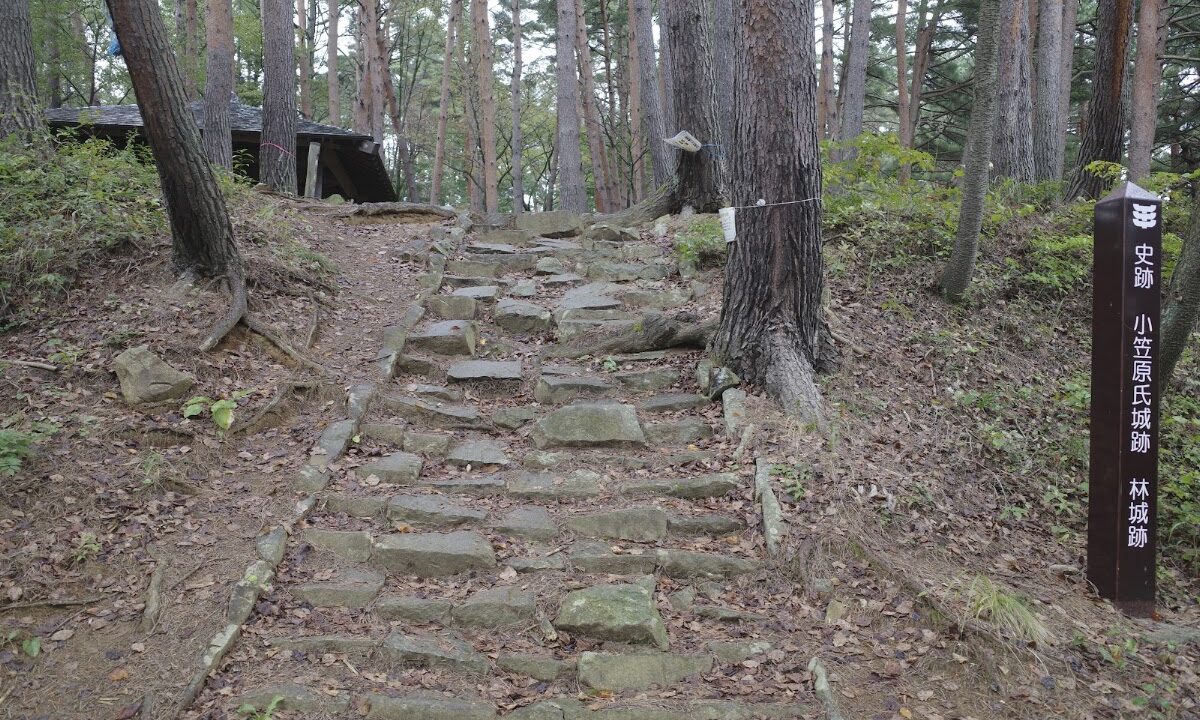
Hachimanbayashi Castle Ruins (Akita Prefecture): History of Medieval Castles and a Visiting Guide
The Hachimanbayashi Castle Ruins, a medieval castle site remaining in Akita Prefecture, is an important historical site that conveys the history of the region. This article provides a detailed explanation of the historical background of the Hachimanbayashi Castle Ruins, the characteristics of the remains, and points to note when visiting the site.
What are the Hachimanbayashi Castle Ruins?
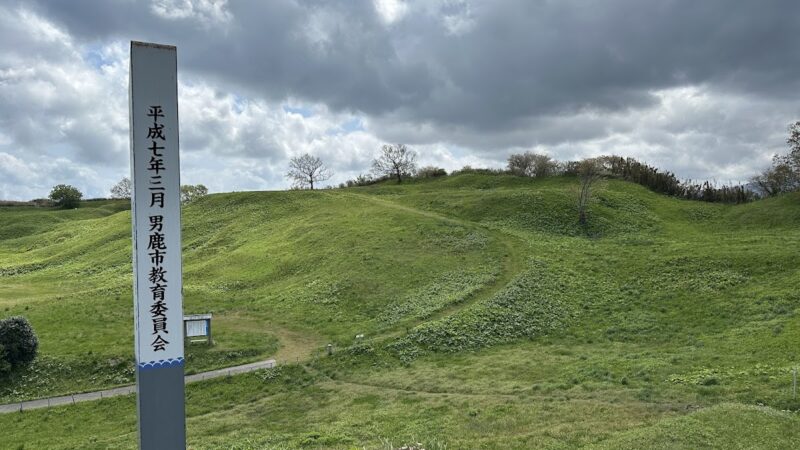
The Hachimanbayashi Castle Ruins are a medieval castle site located in Akita Prefecture. It is believed to have functioned as a base for regional control during the medieval period, and remains such as earthworks and moat traces still exist today.
Basic Information about the Castle
The Hachimanbayashi Castle Ruins are a flatland castle (hirajiro) type castle built on a plain, situated on a slightly elevated area overlooking the surrounding farmland and settlements. Such a location was typical for a base used by local powerful families to manage their territories during the medieval period.
Historical Background of the Hachimanbayashi Castle Ruins
Construction Period and Builder
While historical records are limited regarding the exact construction period of the Hachimanbayashi Castle Ruins, it is estimated to have been built in the late medieval period (from the Muromachi period to the Sengoku period). Many medieval castles existed in Akita Prefecture, and Hachimanbayashi Castle is believed to have been one of them, built by a powerful local figure.
In the Akita region, there was a time when powerful samurai groups such as the Ando and Onodera clans held influence, and local powerful families associated with these groups established castles throughout the region. It is highly probable that Hachimanbayashi Castle functioned as part of this regional control.
Political Situation in Medieval Akita
The Akita region during the medieval period was a region where multiple samurai groups competed for power. Particularly from the 15th to the 16th centuries, the Nanbu, Ando, and Onodera clans expanded their influence in various parts of Akita Prefecture.
The area where Hachimanbayashi Castle was built is thought to have been affected by these power struggles. A manor house was not merely a residential facility, but a multi-functional structure that governed the surrounding area and served as a defensive base in times of emergency.
Role and Function of a Manor House
Medieval manor houses had several functions, including:
- Residential Function: A place where the lord, his family, and retainers lived their daily lives
- Administrative Function: A base for managing the territory and collecting taxes
- Military Function: A defensive facility in times of emergency
- Economic Function: Management of the accumulation and distribution of goods
It is presumed that the Hachimanbayashi Manor House also possessed these functions.
Characteristics and Highlights of the Remains
Existing Remains
The Hachimanbayashi Manor House site has confirmed the following remains characteristic of medieval castles:
Earthworks
Traces of earthworks, defensive structures made by piling up earth, remain. These earthworks prevented enemy intrusion and also served as boundaries to clearly define the boundaries of the manor house.
Moat Remains
The remains of a moat that surrounded the manor can be seen as a topographical feature. In medieval manors, moats served not only a defensive function but also a symbolic meaning, indicating the authority of the manor.
Enclosures
The interior of the manor is thought to have been divided into sections called enclosures. It is possible that there was a main enclosure (shukaku) where the main buildings were constructed, and surrounding secondary enclosures.
Preservation of Remains
The preservation of the Hachimanbayashi Manor site has been affected by years of agricultural development and residential construction, and some remains may have been lost. However, elements that convey the appearance of a medieval manor, such as the topographical undulations and traces of earthworks, remain.
Archaeological Investigation and Research
Results of Excavation
While detailed reports on archaeological investigations at the Hachimanbayashi Manor site are limited in terms of publicly available information, comparative studies with similar sites have been conducted as part of research on medieval castle sites in Akita Prefecture in general.
The following artifacts are commonly unearthed from medieval manor sites:
- Pottery fragments: Tableware used in daily life
- Iron artifacts: Farming tools, weapons, tools, etc.
- Coins: Evidence of economic activity at the time
- Building materials: Foundation stones for pillars, roof tiles, etc.
Position in Regional History Research
The Hachimanbayashi Manor Site is one of the important historical sites for understanding medieval history in Akita Prefecture. Numerous medieval castle sites exist within the prefecture, and comprehensive research on these can reveal the structure of local communities and power relations at the time.
Access and Visiting Information for the Hachimanbayashi Manor Site
Access Methods
Access methods to the Hachimanbayashi Manor Site vary depending on your location. Generally, medieval castle sites in Akita Prefecture can be accessed in the following ways:
Access by Car
- Take local roads from the nearest highway interchange
- Set nearby landmarks (shrines, community centers, etc.) on your car navigation system
- Parking spaces may be limited, so prior confirmation is recommended.
Access by Public Transportation
- Take a bus or taxi from the nearest JR station
- As these are local routes, service may be infrequent
- It is recommended to check the timetable in advance.
Points to Note When Visiting
When visiting the Hachimanbayashi Castle Site, please note the following:
- Consideration for Private Property: If the ruins are located on private property, permission from the owner may be required.
- Safety Precautions: Wear appropriate footwear as some areas may have unstable footing.
- Protection of Remains: Be careful not to damage earthworks or moat remains.
- Season and Weather: Remains may be easier to observe in winter than in summer when vegetation is lush.
Related Historical Sites in the Surrounding Area
When visiting the Yawata-bayashi Castle Ruins, visiting other medieval castle ruins and historical facilities in the surrounding area will allow you to gain a deeper understanding of the region’s history:
- Nearby Medieval Castle Ruins: Other castle ruins built around the same time
- Local History Museum: Exhibits of excavated artifacts and local history
- Old Shrines and Temples: Religious facilities dating back to the Middle Ages
How to View and Enjoy Medieval Castles
Reading the Topography
One of the joys of visiting medieval castle ruins is imagining what it was like at the time based on the topography:
- Utilization of Slightly Elevated Land: Small differences in elevation were utilized for defense
- Securing Water Resources: There are often rivers or springs nearby
- Securing Visibility: Built in a location that allows for a panoramic view of the surrounding area
Points to Observe the Ruins
When visiting the Yawata-bayashi Castle Ruins, please pay attention to the following points:
- Height and Width of the Earthworks: An indicator of the strength of the defense
- Depth and Width of the Moat: The larger the manor, the larger the moat.
- Location of the Entrance (Koguchi): The location of the entrance to the manor.
- Layout of the Enclosures: Clues to understanding the structure and scale of the manor.
Tips for Photography
Points for effectively photographing the ruins:
- Utilize Oblique Light: The undulations of the earthworks are highlighted by the oblique light in the morning and evening.
- Season Selection: The ruins are easier to see in winter after the leaves have fallen.
- Use of a Wide-Angle Lens: Effective for capturing the overall layout.
Medieval Castle Culture of Akita Prefecture
Characteristics of Medieval Castles in the Prefecture
Numerous medieval castle sites remain in Akita Prefecture, each with its own characteristics:
- Flatland Castle Type: A manor built on a plain (Hachimanbayashi Manor is also of this type).
- Mountain Castle Type: A defensive castle that utilizes the mountainous terrain.
- Hill Castle Type: An intermediate castle built on a hillside.
Regional Differences
Even within Akita Prefecture, the characteristics of castles and fortifications differ by region:
- Northern Akita Prefecture: Castles and fortifications in areas strongly influenced by the Nanbu clan
- Central Akita Prefecture: Many castles and fortifications related to the Ando clan
- Southern Akita Prefecture: Castles and fortifications within the sphere of influence of the Onodera clan
Historical Value of the Hachimanbayashi Castle Site
Importance in Regional History
The Hachimanbayashi Castle Site possesses historical value in the following respects:
- Reality of Medieval Local Society: Conveys the lifestyle and rule of local powerful families
- Changes in Land Use: The history of land use from the medieval period to the present day
- Development of Defensive Technology: Changes in castle construction technology over time
- Regional Identity: A place that inherits the historical memory of the region
Protection as a Cultural Property
Protecting medieval castle sites is important for passing on regional history to future generations. Appropriate management is required for the Hachimanbayashi Castle Site, balancing the preservation and utilization of the remains.
Explanation of Related Historical Terms
This section explains historical terms that are helpful in understanding the Yawata-bayashi Manor Site:
Manor (Tate/Yakata)
A facility where samurai lived during the medieval period. While its defensive capabilities were weaker than a castle (shiro), it functioned as a base for daily residence and regional governance.
Local Lord (Zaichi Ryōshu)
A small to medium-sized samurai who established themselves in a specific region and ruled over the territory. It is believed that the lord of the Yawata-bayashi Manor was such a local lord.
Outer Enclosure (Sōgamae)
A defensive structure where the entire perimeter of a manor is surrounded by earthworks and moats. A characteristic seen in large manors.
Future Challenges in the Study of the Yawata-Rinkan Site
Necessary Research
To gain a more detailed understanding of the Yawata-Rinkan Site, the following research is desirable:
- Detailed Survey: Creation of an accurate layout map of the remains
- Excavation: Dating based on the discovery of artifacts
- Literature Research: Discovery and deciphering of relevant historical documents
- Comparative Research: Comparative analysis with similar sites in the surrounding area
Balancing Preservation and Utilization
To pass on the Yawata-Rinkan Site as a historical heritage to future generations:
- Preservation of the Remains: Efforts to protect the remains from development
- Information Dissemination: Providing historical information to local residents and visitors
- Educational Utilization: Utilization in school education and lifelong learning
- Tourism Resource Development: Contribution to regional development
It is important to promote sustainable preservation and utilization while balancing these factors.
Summary
The Yawata-Rinkan Site is a valuable historical site that conveys the medieval history of Akita Prefecture to the present day. The remains of earthworks and moats tell the story of the power structure and lifestyle in the local community at that time.
When visiting the site, you will gain a deeper understanding and appreciation by imagining the history of the people who lived there, rather than simply viewing them as mounds of earth or depressions.
Besides the Yawata-bayashi Castle ruins, many other medieval castle ruins remain in Akita Prefecture. Visiting these sites will allow you to experience firsthand the realities of local communities in the Akita region during the medieval period and the changes of the times.
For history enthusiasts and anyone interested in local history, the Yawata-bayashi Castle ruins are a historical site well worth visiting. With proper preparation, why not embark on a journey to experience the romance of medieval history?