Kaminoshuku Yakata Ruins (Akita Prefecture): A Thorough Explanation of the History and Current State of a Medieval Castle
The Kaminoshuku Yakata Ruins, one of the medieval castle ruins remaining in Akita Prefecture, is a valuable historical site that conveys the history of the region. This article provides a detailed explanation of the Kaminoshuku Yakata Ruins, including its historical background, location characteristics, current state, and access methods.
What are the Kaminoshuku Yakata Ruins?
The Kaminoshuku Yakata Ruins are a medieval castle site located in Akita Prefecture. Numerous small castles were built in the Akita region during the medieval period, serving as bases for powerful local figures. The Kaminoshuku Yakata Ruins are believed to have played an important role in the local community at the time, as one such medieval castle.
Characteristics of Medieval Castles
Unlike the large-scale castles of the Sengoku period, medieval castles were relatively small and were facilities built by local powerful families and lords for residence and defense. Generally, castles have the following characteristics:
- Defensive structures with earthworks and moats: Earthworks and dry moats are placed to prevent enemy intrusion.
- Residential function: Functions as the lord’s living space.
- Center for regional control: An administrative and military center for governing the surrounding area.
- Utilization of natural terrain: Natural terrain such as hills and rivers is used for defense.
Historical background of the Kami-no-Shuku Castle Ruins
Construction period and builder
Regarding the exact construction period of the Kami-no-Shuku Castle Ruins, it is difficult to say definitively due to the limited amount of historical documents, but it is estimated to have been built in the late medieval period (from the Muromachi period to the Sengoku period).
Many medieval castles in Akita Prefecture are closely associated with powerful samurai families of the time, such as the Ando and Onodera clans, and the Kami-no-Shuku Castle Ruins may have been located within their sphere of influence. It is possible that it was built by a small local lord or a vassal of a larger power.
Historical Situation in Medieval Akita
Medieval Akita was a region where multiple powers vied for control:
- Ando Clan: A powerful maritime clan with influence in the Tsugaru and Akita regions
- Onodera Clan: Expanding its influence primarily in the Ogachi and Hiraka regions
- Tozawa Clan: A powerful samurai family in the Senboku region
Caught between these forces, local minor lords constructed castles and fortifications for self-defense, sometimes maintaining their territories while sometimes becoming subordinate to larger powers. The Kami-no-Shukukan site is thought to have functioned within this historical context.
History of the Castle’s Abandonment
Like many medieval castles and fortifications, the Kami-no-Shukukan site is presumed to have ceased its function with the end of the Sengoku period (Warring States period). With Toyotomi Hideyoshi’s unification of Japan and the establishment of the Edo period’s shogunate system, small castles and fortifications were abolished, and lords generally relocated to the castle towns of their respective domains.
In Akita Prefecture, the establishment of the Kubota Domain (Akita Domain) by the Satake clan and the establishment of a governing system centered on Kubota Castle (Akita Castle) led to the loss of military and administrative functions of medieval castles and fortifications throughout the region, resulting in their abandonment.
Location and Geographical Characteristics of the Kami-no-Shuku Castle Site
Location
While the exact location of the Kami-no-Shuku Castle site requires confirmation of the specific city or town name within Akita Prefecture, it is believed to have been built in a location that met the following conditions, similar to many medieval castles and fortifications.
Topographical Characteristics
Typical conditions for the location of a medieval castle and fortification:
- Plateau along a river: For securing water and utilizing it as a natural moat
- High ground with good visibility: For monitoring the surroundings and defensive advantages
- Transportation hub: A key point for highways and river transportation
- Proximity to agricultural production areas: For securing an economic base
Surrounding Historical Environment
Other medieval castle sites and ancient ruins may be distributed around the Kami-no-Shuku Castle site. Hundreds of medieval castle and fortification sites have been identified within Akita Prefecture, forming a network of local communities at the time.
Remains and Current State of the Kami-no-Shuku Castle Site
Remaining Remains
Remains commonly found at medieval castle and fortification sites include:
- Earthwork: A defensive wall constructed by piling up earth.
- Dry Moat: A moat without water to prevent intrusion.
- Enclosure: A flat, leveled enclosure.
- Tiger’s Moat: A defensive structure serving as an entrance.
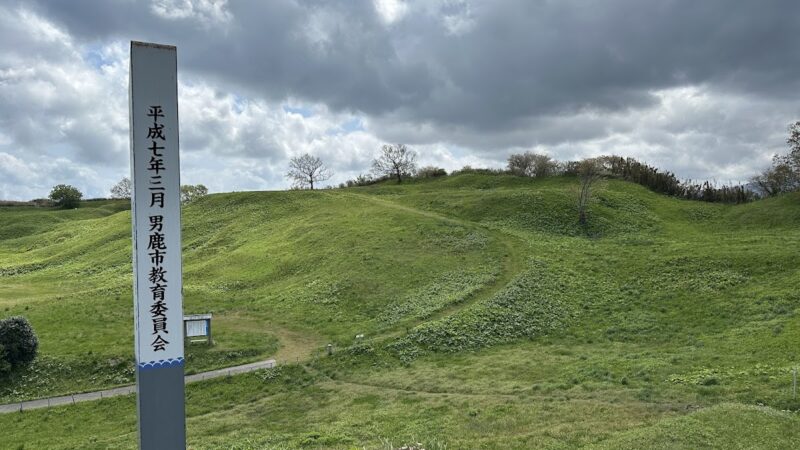
Some of these remains may still exist at the Kami-no-Shuku Castle site. However, due to the passage of time and later land use, the state of preservation of the remains varies.
Current Situation
Many medieval castle sites are currently in the following states:
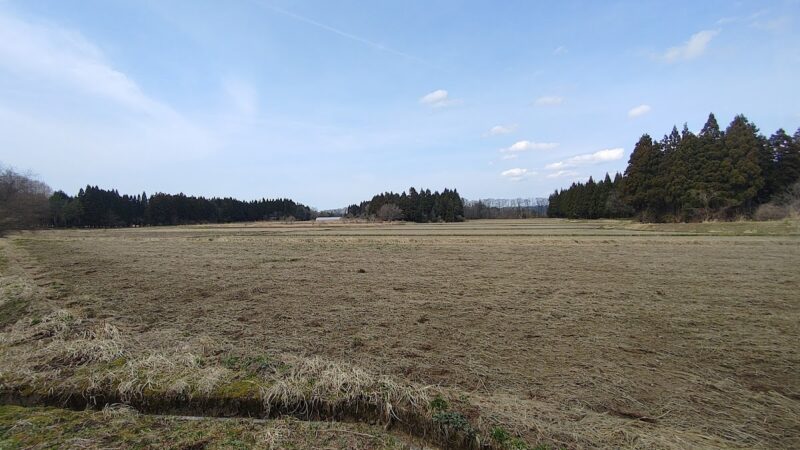
- Conversion to farmland or residential land: When the remains have been altered.
- Preservation as forest: When the remains remain in relatively good condition.
- Development as a park or historical site: When protected under cultural property designation.
For specific information regarding the current status of the above castle sites, it is recommended to check with the local board of education or the department in charge of cultural properties.
Archaeological Excavation
Some medieval castle sites in Akita Prefecture have undergone academic archaeological excavations. Archaeological excavations provide the following information:
- Building layout and structure
- Dating based on excavated artifacts
- Lifestyle of the time
- The process of castle changes over time
Whether archaeological excavations have been conducted on the above castle sites can be confirmed in reports from the Akita Prefectural Buried Cultural Properties Center or related research institutions.
Cultural Value of the Kami-no-Shukukan Site
Historical Value
Medieval castle sites are historically significant in the following ways:
- Elucidation of Local History: Tells the story of local history not recorded in historical documents
- Understanding Medieval Society: Provides clues to the political and social structure of the time
- Research on Defensive Techniques: Research materials on medieval castle construction techniques and tactics
Status of Cultural Property Designation
Some medieval castle sites in Akita Prefecture have received the following cultural property designations:
- National Historic Site: A nationally important historical site
- Prefectural Historic Site: A historical site important within the prefecture
- Municipal Historic Site: A historical site important within the region
The designation status of the Kami-no-Shukukan Site can be confirmed with the local government where it is located.
Challenges in Preservation and Utilization
Preserving medieval castle ruins presents the following challenges:
- Coordination with Development: Balancing land use and preservation
- Maintenance: Mowing grass and managing trees
- Increasing Awareness: Raising awareness among local residents and tourists
- Promoting Academic Research: The need for continuous research and investigation
Access and Visiting Information for Kami-no-Shukukan Ruins
Access Methods
General points to note when visiting Kami-no-Shukukan Ruins:
When using public transportation
- Use buses or taxis from the nearest station
- It is important to check transportation options in advance
When using a private car
- Set your car navigation system
- Check for parking space availability in advance
- Possibility of narrow or unpaved roads
Points to Note During Visits
General points to note when visiting medieval castle ruins:
- If it is private property: Permission from the owner may be required
- Safety: Appropriate clothing and shoes are necessary as some areas may have uneven footing
- Season: The ruins are easier to observe in winter than in summer when the vegetation is lush.
- Manners: Take your trash with you and protect the ruins.
Nearby Tourist Attractions
When visiting the Kami-no-Shukukan Ruins, you can have a more fulfilling historical exploration by also visiting other nearby historical sites and tourist facilities:
- Other Medieval Castle Ruins: Numerous castle ruins are distributed throughout Akita Prefecture.
- Local History Museums: Facilities where you can learn about the history of the region.
- Shrines and Temples: Religious facilities with a history dating back to the Middle Ages.
Major Medieval Castle Ruins in Akita Prefecture
Knowing about other medieval castle ruins in Akita Prefecture will be helpful in understanding the Kami-no-Shukukan Ruins.
Representative Castle Sites
Wakimoto Castle Site (Oga City)
- National Historic Site
- An important base for the Ando clan
- A large-scale mountain castle
Hiyama Castle Site (Noshiro City)
- One of the Ando clan’s strongholds
- Relatively well-preserved remains
Yokote Castle Site (Yokote City)
- The main castle of the Onodera clan
- Currently developed as a park
Kakunodate Castle Site (Semboku City)
- The residence of the Tozawa clan
- Developed as a tourist attraction along with samurai residences
Comparing these castle sites clarifies the characteristics and positioning of the above-mentioned castle sites.
Research Methods for Medieval Castle Sites
Research Using Documentary Sources
The following types of documentary sources are used in the study of medieval castle sites:
- Ancient Documents: Records concerning land ownership and disputes at the time
- Military Records: Records of battles
- Illustrated Maps: Old maps created during the Edo period
- Geographical Records: Books summarizing the history and geography of a region
Archaeological Investigation
Through excavation and surveying:
- Layout of Remains: Positional relationships of earthworks, moats, and building remains
- Excavated Artifacts: Ceramics, weapons, and daily necessities
- Dating: Scientific methods such as carbon-14 dating
Topographic Analysis
Through on-site surveys, aerial photographs, and analysis of topographic maps:
- Territory Layout: Reconstruction of the castle’s design and layout
- Layout of Defensive Facilities: Elucidation of defensive systems utilizing the terrain
- Evidence of Alteration: Understanding changes due to later land use
Significance of Visiting the Kami-no-Shukukan Ruins
As a Place for Historical Learning
By visiting the Kami-no-Shukukan Ruins:
- Local History Not Learned in Textbooks: Understanding history rooted in the local area
- Hands-on Historical Experience: A sense of reality gained by actually seeing the ruins
- Wisdom of Our Ancestors: Understanding the techniques used to build defensive facilities with limited resources
Fostering Regional Identity
For Local Residents:
- Pride in Their Hometown: Recognition of the historical importance of their region
- Cultural Property Protection Awareness: Increased awareness of protecting local treasures
- Intergenerational Exchange: Communication across generations through history
Potential as a Tourism Resource
With appropriate maintenance and information dissemination:
- Historical Tourism Destination: Visits from castle enthusiasts and history lovers
- Material for Educational Travel: Use in school field trips and excursions
- Regional Development: Revitalizing the local economy through tourism
Preservation and Transmission of Medieval Castle Sites to Future Generations
Importance of Preservation
Medieval castle sites are valuable cultural heritage that, once lost, can never be restored:
- Irreversibility: Destroyed remains cannot be restored
- Academic Value: Need for preservation for future research
- Cultural Landscape: Part of the region’s historical landscape
Efforts for Preservation
Effective preservation methods include:
- Cultural Property Designation: A legal protection framework
- Regular Management: Grass cutting, tree management, and landslide prevention
- Research: Clarifying value through continuous academic research
- Public Awareness: Installation of explanatory signs, creation of brochures
- Collaboration with the Community: Resident-participatory preservation activities
Utilization of Digital Technology
Preservation and utilization using the latest technology:
- 3D Scanning: Detailed recording of remains
- Drone Surveying: Topographic understanding from the air
- VR/AR Technology: Reconstruction and experience of the site’s past.
- GIS (Geographic Information System): Comprehensive analysis including the surrounding environment.
Summary
The Kami-no-Shukukan Ruins (Akita Prefecture) are a valuable historical site that conveys the local community of the Middle Ages. In medieval local history, where written historical materials are limited, archaeological sites such as castle ruins are indispensable resources for understanding the lives and social structures of the people of that time.
We, living in the present, have a responsibility to properly preserve such cultural heritage and pass it on to future generations. At the same time, by utilizing these historical sites as resources for local history learning and tourism, we can also contribute to the revitalization of the region.
When visiting the Kami-no-Shukukan Ruins, please reflect on the lives of the people of the Middle Ages who lived here and the history they created. Each of the remains quietly tells the story of the lives of people hundreds of years ago.
We hope that the Kami-no-Shukukan Ruins, one of Akita Prefecture’s rich historical heritage sites, will continue to be properly preserved and cherished by many people. If you’re interested in history, why not visit the site and experience the atmosphere of the Middle Ages for yourself?