The History and Remains of Rokugo Castle (Misato Town, Akita Prefecture) – Tracing the Transition from the Medieval to the Early Modern Period
Overview of Rokugo Castle
Rokugo Castle was a flatland castle that once existed in the Rokugo area of Misato Town, Senboku District, Akita Prefecture. Located north of the current Satellite Rokugo (a complex facility), it was a distinctive castle built as if floating on a marshy area. The Taoka Shrine still stands in the center of the castle, serving as an important landmark indicating the castle’s former center.
The Rokugo area is blessed with abundant spring water originating from the Ou Mountains and has been known as “Hyakushimizu” (Hundred Springs) since ancient times. This rich water resource played an important role in the castle’s defenses. Unfortunately, due to cultivation, most of the remains have been lost, making it difficult to clearly identify traces of the castle.
The history of Rokugo Castle symbolizes the political changes in the southern region of Akita Prefecture from the medieval to the early modern period, and it is an important historical site that tells the story of the rise and fall of local lords.
History of Rokugo Castle
Establishment of Rokugo Castle in the Middle Ages
The origins of Rokugo Castle date back to the Middle Ages. This region has long held military and administrative significance, with the presence of the Haruta Fort in ancient times. In the Middle Ages, powerful local clans are believed to have built castles here, using them as centers of control for the surrounding area.
Rokugo is located in the southeastern part of the Senboku Plain, a strategically important location with the Ou Mountains to the east and plains to the west. Abundant spring water and fertile land were important resources supporting the economic base of the castle town.
The Nikaido Clan and Rokugo Castle
The Nikaido clan played a crucial role in the history of Rokugo Castle. The Nikaido clan was a powerful local clan that ruled this region in the late Middle Ages, expanding their influence from Rokugo Castle. The Nikaido clan maintained their influence in the region while also having connections with nearby castles such as Hondō Castle.
Under the control of the Nikaido clan, Rokugo Castle functioned as the political and military center of the region, serving as a governing base for a wide area including the surrounding plains. It is presumed that during this period, Rokugo Castle was developed as a highly defensible flatland castle utilizing marshland.
The Satake Clan’s Entry into Akita and the Transformation of Rokugo Castle
In the early modern period, the history of Rokugo Castle underwent a major turning point. In 1602, when Satake Yoshishige (of the Satake clan) was transferred from Hitachi Province to Akita, the power structure of the southern region of Akita Prefecture changed dramatically.
During the process of the Satake clan’s rule over Akita, many local powerful families, including the Nikaido clan, either had their territories secured or were incorporated as vassals of the Satake clan. Rokugo Castle also came to be positioned within the Satake clan’s system of control and began to take on the characteristics of an early modern castle.
During the time of the Satake clan, the Rokugo area was under the control of the Kubota Domain (Akita Domain), and the castle functioned as a base for the domain’s local administration. It is possible that the castle underwent renovations or expansions during this period, but detailed records are limited.
Rokugo Castle in the Early Modern Period
Throughout the Edo period, Rokugo Castle continued to play a central role in the region’s administration and economy. However, with the prolonged period of peace, its military function as a fortress gradually declined.
After the Meiji Restoration, Rokugo Castle was officially abolished under the castle demolition order, and its fortifications were dismantled. Subsequently, the castle site was used for farmland, and as cultivation progressed, very few remains of the castle survive today.
Structure and Remains of Rokugo Castle
Castle Location and Layout
Rokugo Castle was built as a flatland castle floating in a marshy area. This location allowed for a defensive system utilizing natural moats, making enemy intrusion difficult. The abundant spring water from the Ou Mountains is thought to have filled the area around the castle with water, forming a natural fortress.
The central part of the castle is believed to have been located near the present-day Taoka Shrine, with baileys arranged around this core. The fact that the castle grounds extended over a relatively wide area north of Satellite Rokugo suggests that it was a castle of considerable size.
Current Status of Remains
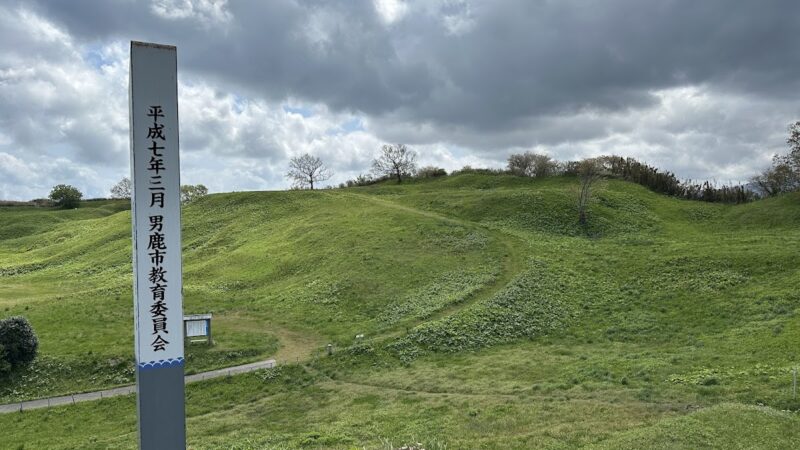
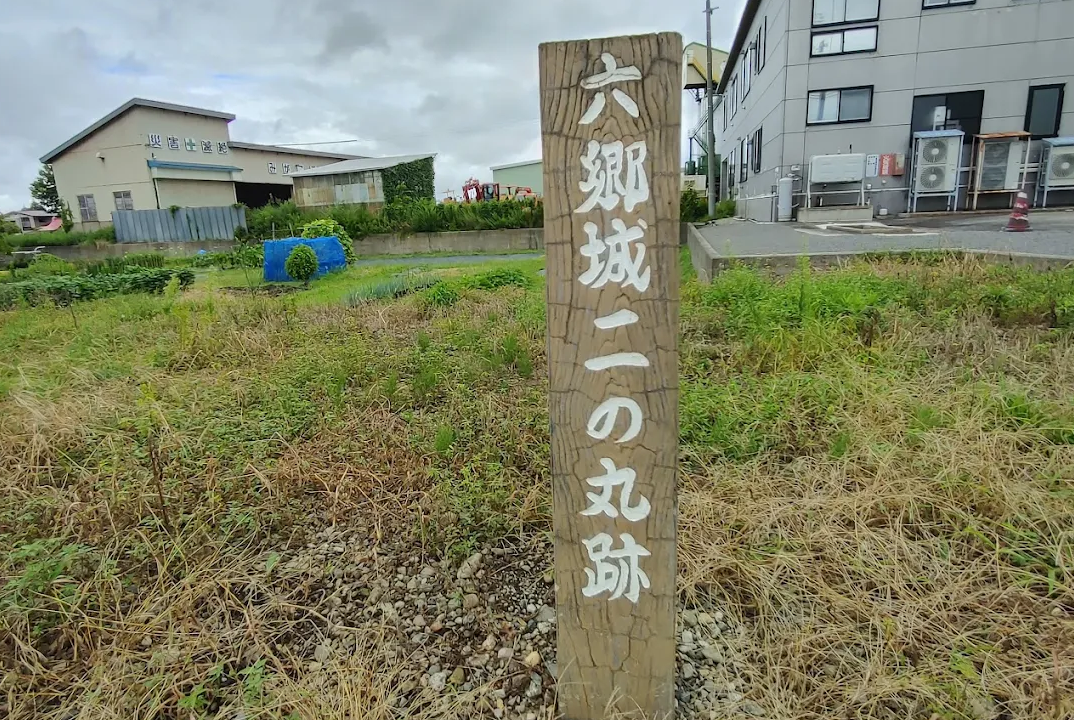
Unfortunately, the remains of Rokugo Castle have been almost completely lost due to cultivation. It is difficult to confirm clear traces such as earthworks, moats, and building remains on the surface.
Currently, Taoka Shrine stands where the castle’s central area once stood, and this is the only marker indicating the castle’s former center. Taoka Shrine was a shrine worshipped by the castle lord and local people, suggesting a deep connection to the castle.
There is a possibility that remains are buried underground, and it is hoped that future archaeological excavations will yield new insights.
Historical Background of the Rokugo Region
Ancient Rokugo – Relationship with Haruta-saku
The history of the Rokugo region dates back to ancient times. The presence of Haruta-saku, an ancient fortified settlement, nearby indicates that this region was considered important as a military and administrative base from ancient times. Haruta-saku was a large-scale fortified settlement built during the Heian period, functioning as a base for the Ritsuryo state’s control of the Tohoku region.
The area where Rokugo Castle was built is also situated within this historical context dating back to ancient times. It can be considered that Rokugo Castle was established as the ancient power base was inherited into the medieval and early modern periods.
Medieval Senboku Region and Regional Powers
The medieval Senboku region (present-day southern Akita Prefecture) was a situation where multiple powerful clans vied for power. Powerful lords existed in each region, such as the Hondō clan based at Hondō Castle and the Nikaidō clan at Rokugo Castle, each forming their own sphere of influence.
These powerful clans sometimes cooperated and sometimes clashed, maintaining a political balance in the region. Rokugo Castle also functioned as part of the political structure of the medieval Senboku region.
Rokugo in the Early Modern Period and the Rule of the Satake Clan
After the Satake clan’s arrival in Akita, the Rokugo region came under the control of the Kubota Domain. During the domain’s rule, Rokugo developed as a rice-producing area utilizing its abundant water resources, becoming one of the domain’s important economic bases.
The spring water of Rokugo was used not only for agricultural purposes but also for daily life, and was affectionately known as “Hyakushimizu” (Hundred Springs). This abundant water remains a major characteristic of the Rokugo region today, and it has been selected as one of the “100 Famous Waters” and “100 Water Villages.”
The Formation of Misato Town and the Rokugo Region
The Great Heisei Mergers and the Birth of Misato Town
On November 1, 2004 (Heisei 16), Rokugo Town, Senhata Town, and Sennan Village in Senboku District merged to form Misato Town. This merger was the first of the Great Heisei Mergers in Akita Prefecture.
The name Misato Town was chosen to mean “beautiful village.” Located in the southeastern part of the Senboku Plain, nestled between the Ou Mountains and the Dewa Mountains, it reflects the region’s characteristics of clean air, pure water, and fertile land.
The Rokugo Area Today
The Rokugo area continues to develop as one of the central areas of Misato Town. Its abundant spring water is utilized as a tourist resource, making it a popular tourist destination.
The Rokugo spring water group has received numerous accolades, including:
- 1985: Environment Agency “100 Famous Waters of Japan”
- 1995: National Land Agency “100 Water Villages of Japan”
- 1995: Forestry Agency “100 Water Source Forests of Japan”
- 2000: Minister of Construction “100 Revitalized Waters of Japan”
- 2002: Yomiuri Shimbun “100 Best Walking Trails of Japan”
These accolades demonstrate the high regard in which Rokugo’s water is held nationwide.
Historical Sites and Tourist Attractions Around Rokugo Castle
Taoka Shrine
Located in the heart of Rokugo Castle, Taoka Shrine is an important historical site marking the castle’s former location. The shrine grounds correspond to the castle’s center in its heyday and have long been a place of worship for the castle lord and local residents. It remains a cherished guardian deity of the region.
Rokugo Spring Water Group
The Rokugo spring water group, the largest tourist resource in the Rokugo area, is a rich water resource that has nourished the region since the time of the castle. Numerous spring points, such as Niteko Shimizu, Odaidokoro Shimizu, and Izumi Shimizu, are scattered throughout the area, each with its own history and legends.
A walking path has been developed around the springs, allowing visitors to enjoy the clear water flow and historical atmosphere.
Satellite Rokugo
Located south of the Rokugo Castle ruins, this complex houses a library, conference rooms, and other facilities. The area north of this facility is the castle site, now a peaceful urban area.
Rokugo Kamakura Festival
In the Rokugo region, the traditional New Year’s festival, “Rokugo Kamakura,” is held every February. This festival involves building cylindrical “kamakura” (snow huts) woven from bamboo, lighting a fire inside, and praying for good health and protection from illness. It is designated as a National Important Intangible Folk Cultural Property. This festival also has a long history and is considered one of the traditions that have continued since the time of Rokugo Castle.
Historical Significance of Rokugo Castle
Position in Regional History
Rokugo Castle is a historical site that symbolizes the political transition from the medieval to the early modern period in the southern region of Akita Prefecture. As rulers changed from local powerful families to Sengoku daimyo (warring states feudal lords) and then to early modern daimyo, the castle consistently functioned as the center of the region.
Although the remains have been lost, studying the history of Rokugo Castle is of great importance in understanding the history of this region.
Relationship between Water and Castles
A major characteristic of Rokugo Castle is its location, which takes advantage of abundant spring water. The structure of a flatland castle floating in a marshy area represents a form of medieval and early modern castle that utilized water for defense.
The Rokugo area, with its abundant groundwater springs from the Ou Mountains, provided an ideal environment for building a castle. This water resource served not only for military defense but also as the foundation for the life and economic activities of the castle town.
Access
Access to Rokugo Castle Ruins (Taoka Shrine)
Access by Train/Bus:
- Approximately 10 minutes by car from JR Ou Main Line “Iizume Station”
- Approximately 20 minutes by car from JR Ou Main Line “Omagari Station”
Access by Car:
- Approximately 15 minutes via National Route 13 from Akita Expressway “Omagari IC”
- Located in the center of the Rokugo area along National Route 13
The Rokugo area is located in the southern part of Akita Prefecture, in the southeastern part of the Senboku Plain, and is close to the city of Omagari. We recommend visiting in conjunction with a tour of the spring water areas.
Related Castles and Historic Sites
Hondō Castle
Like Rokugō Castle, this medieval castle was located in the Senboku region. Known as the residence of the Hondō clan, it also had connections with the Nikaidō clan of Rokugō Castle. Located in the present-day Misato Town area, it is an important historical site that, along with Rokugō Castle, tells the story of the region’s medieval history.
Haruta-saku
An ancient castle site located in the Senhata district of Misato Town, designated as a national historic site. A large-scale castle site from the Heian period, archaeological excavations have confirmed the remains of the outer fortifications and administrative offices. It is an important historical site for understanding the ancient history of the area where Rokugō Castle is located.
Yokote Castle
Located in Yokote City, north of Rokugō Castle. It played an important role in the Satake clan’s rule of Akita, and Rokugō Castle functioned as part of the ruling system centered around Yokote Castle.
Summary
Rokugō Castle was a flatland castle that once existed in the Rokugō region of Misato Town, Akita Prefecture. It was built as a marshy castle utilizing the abundant spring water. In the Middle Ages, it served as the residence of the Nikaido clan and a base for regional control. In the early modern period, it functioned as a local base within the Satake clan’s rule of Akita.
Currently, the castle’s remains have been almost entirely lost due to cultivation, but the Taoka Shrine in the center marks the former location of the castle. The abundant spring water of Rokugo remains a significant characteristic of the region and is cherished as a valuable resource that has continued since the time of the castle.
Although no remains exist, the history of Rokugo Castle is an important historical fact that tells the story of the region’s transition from the Middle Ages to the early modern period, and should continue to be passed down through generations. When visiting Misato Town, why not reflect on the history of the castle that once stood here, along with the Rokugo spring water group?