A Complete Guide to the History and Highlights of Omori Castle (Yokote City, Akita Prefecture) | From the Residence of the Onodera Clan to the Present Day
Located in Omori-cho, Yokote City, Akita Prefecture, Omori Castle is a mountain castle that played an important role as a branch castle of the Onodera clan during the Sengoku period. While it is now developed as Omori Park and serves as a place of relaxation for local residents, it was once a formidable fortress known for its natural defenses. This article provides a detailed explanation of Omori Castle’s history, from its construction to its abandonment, its structure, and its current appearance.
Basic Information on Omori Castle
Alternate Names: Iwabuchi Castle, Iwabuchi-jo
Location: Takaguchi Shimo-Mito-Tsutsumi, Omori-cho, Yokote City, Akita Prefecture
Former Province: Dewa Province
Castle Structure: Mountain Castle
Elevation: Approximately 120 meters (Relative height approximately 40 meters)
Construction Period: Bunmei era (1469-1487)
Builder: Onodera Michitaka (Nagato-no-kami Michitaka)
Main Lords: Onodera clan
Year of Abandonment: Keicho 6 (1601)
Current Status: Developed as Omori Park; Omori Shrine stands on the site of the former main keep
Parking: Available (Omori Park Parking Lot)
Access: Approximately 25 minutes by car from Omagari Station on the JR Ou Main Line; approximately 30 minutes from Omagari IC on the Akita Expressway
History of Omori Castle
Background and Origin of the Castle
Omori Castle was built during the Bunmei era (1469-1487) by Onodera Nagato-no-kami Michitaka. Initially, it was called “Iwabuchi Castle” or “Iwabuchi Castle.” The Onodera clan was a prestigious samurai family dating back to the Kamakura period, expanding their power primarily in the southern part of Dewa Province (present-day southern Akita Prefecture).
The purpose of its construction was to serve as a defensive base in the southern part of the Yokote Basin and as a subsidiary castle to solidify the Onodera clan’s sphere of influence. Omori Castle is a mountain castle that skillfully utilizes the natural terrain, built on a strategically advantageous site surrounded by steep cliffs.
Renaming to Omori Castle
During the Tensho era (1573-1592), Onodera Magogoro Yasumichi, the younger brother of Onodera Yoshimichi, the lord of Yokote Castle, became the lord of Omori Castle. Yasumichi was also known as “Omori Goro,” and it is believed that the castle came to be called “Omori Castle” around this time. Specifically, it is thought that the name change occurred around 1580.
Onodera Yasumichi was known by the common name Omori Goro and was entrusted with governing this region. Omori Castle, as one of the 42 castles (branch castles) of the Onodera clan, functioned as an important defensive base for the Onodera clan, whose main base was Yokote Castle.
Taiko Land Survey and the Uesugi Clan
In 1591 (Tensho 19), Toyotomi Hideyoshi carried out the pacification of Oshu. At this time, the Onodera clan submitted to Hideyoshi and their territories were secured. Records show that when the Taiko land survey was conducted in conjunction with the pacification of Oshu, the Uesugi clan (Uesugi Kagekatsu, who ruled Aizu at the time) used Omori Castle as their base to carry out the survey.
This indicates that Omori Castle held an important position as a regional administrative center. The implementation of the Taiko land survey finalized the region’s rice yield and facilitated the transition to a modern system of governance.
The Battle of Sekigahara and Omori Castle
In the Battle of Sekigahara in 1600, the Onodera clan sided with the Uesugi (Western Army). As a result, the Onodera territory was attacked by a coalition of surrounding forces belonging to the Eastern Army, including Mogami Yoshiaki and the Tozawa clan.
Omori Castle was also besieged by enemy forces, but it did not fall, utilizing its natural fortifications. However, the defeat of the Western Army in the main battle of Sekigahara sealed the fate of the Onodera clan.
Abandonment of the Castle and the Dispossession of the Onodera Clan
In 1601, following their defeat at the Battle of Sekigahara, the Onodera clan was dispossessed of their territory. Onodera Yoshimichi was exiled to Iwami Province (present-day Shimane Prefecture), and Omori Castle was abandoned.
Subsequently, this region became the territory of the Mogami clan, and then the Satake clan, but Omori Castle was never reused as a military base. Having lost its function as a fortress, Omori Castle gradually returned to nature.
Layout and Structure of Omori Castle
Topography and Location
Omori Castle is a mountain castle built on a hill approximately 120 meters above sea level. Its relative height from the surrounding plain is about 40 meters, making it a natural stronghold surrounded by steep cliffs. The northern and eastern sides of the castle had particularly rugged terrain, making enemy intrusion difficult.
The castle’s location was a strategic point overlooking the southern part of the Yokote Basin, making it suitable for monitoring roads and governing the surrounding area. The location also considered the securing of water sources.
Layout of the Enclosures
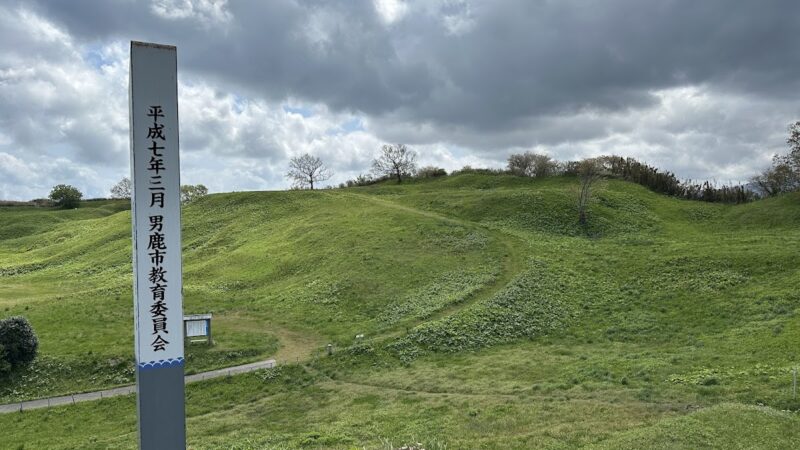
Omori Castle consisted of multiple enclosures (kuruwa). The central main enclosure (honmaru) was located at the highest point, and it is believed that the second and third enclosures were arranged in a stepped pattern around it.
The main enclosure is currently the site of Omori Shrine and is a relatively flat area. The main enclosure is estimated to be approximately 50 meters east-west and 40 meters north-south. From the main enclosure, one could overlook the surrounding terrain, serving a surveillance function.
The second and third enclosures were arranged surrounding the main enclosure, utilizing the elevation differences for defensive purposes. Even today, the undulations of the terrain allow us to infer the former layout of the enclosures.
Defensive Structures
Omori Castle’s defenses primarily utilized the natural terrain. The steep cliffs acted as natural moats, making it difficult for enemies to approach. The elevation changes between the baileys also likely functioned as defensive lines.
While traces of artificial moats and earthworks have become unclear due to years of weathering, some areas still show elevations resembling earthworks. No stone structures such as stone walls have been found, suggesting it was an earthen fortress.
The location and structure of the entrance (koguchi) remain largely unknown due to the lack of detailed archaeological excavations. However, based on the topography, it is believed that the main approach road was located on the relatively gentle slope on the south side.
Current Omori Castle (Omori Park)
Development as Omori Park
Currently, the Omori Castle site has been developed as “Omori Park,” a place of relaxation for local residents. Walking paths are maintained within the park, allowing visitors to enjoy strolling while experiencing the former castle’s topography.
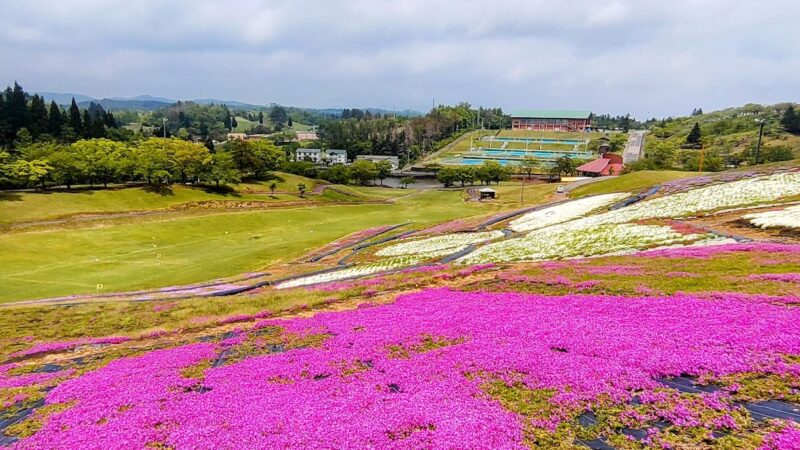
In spring, cherry blossoms bloom, and the “Omori Park Cherry Blossom Festival” is held. Furthermore, it is known as a famous spot for moss phlox, and at the “Omori Resort Village Moss Phlox Festa,” you can see a beautiful carpet of moss phlox. Currently, Omori Park is a tourist spot that combines historical value with natural beauty.
Omori Shrine
Omori Shrine is located on the site of the main keep. This shrine is revered as the guardian deity of the region and conveys the historical atmosphere of the castle ruins to this day. From the shrine, you can overlook the surrounding scenery and imagine the landscape seen by the former castle lords.
Omori Shrine also hosts local traditional events such as “Shimotsuki Kagura” and “Dengaku Toro,” playing a role as a center of local culture.
Current Status of the Remains
Many parts of the remains of Omori Castle are unclear due to years of weathering, but the layout of the baileys and the extent of the castle area can be inferred from the topography. The area around the main keep has undergone relatively little topographical alteration, preserving the topography from the castle era to some extent.
Detailed archaeological excavations have not been conducted, so the status of building remains and artifacts is unknown. Further academic research may reveal more detailed information about the castle’s structure.
Parking and Access
Omori Park has a parking lot, making it easily accessible by car. It’s about a 10-minute walk from the parking lot to the main keep site (Omori Shrine). While the walking paths are well-maintained, there are some steep slopes, so comfortable shoes are recommended.
If using public transportation, you will need to take a bus or taxi from Omagari Station on the JR Ou Main Line. The nearest public facility is the Omori Regional Office (formerly the Omori Town Hall).
Omori Castle and the Forty-Two Castles of the Onodera Clan
Omori Castle was one of the “Forty-Two Castles,” a group of branch castles built by the Onodera clan centered around Yokote Castle. The Forty-Two Castles were a network of branch castles built to defend the Onodera clan’s vast territory, with family members and important retainers stationed at each castle.
Among the 42 castles, Omori Castle was a relatively large fortress and played a central role in the region. Other major branch castles included Yoshida Castle, Kanazawa Castle, and Numadate Castle, and these castles worked together to protect the Onodera territory.
After the Onodera clan’s downfall, these branch castles were also abandoned, but many castle ruins are still preserved as local historical heritage. When visiting Omori Castle, exploring other castle ruins related to the Onodera clan in the surrounding area will allow for a deeper understanding of the history.
History and Culture of the Omori Region
Omori Town (present-day Omori area of Yokote City), where Omori Castle is located, has flourished as a transportation hub since ancient times. It has a history of developing as a castle town, and even today, the townscape retains a historical atmosphere.
Besides Omori Castle, the Omori region also has historical shrines and temples such as Sansuke Inari Shrine, which preserve the region’s culture. Furthermore, traditional events such as “Shimotsuki Kagura” and “Dengaku Toro” are passed down, forming the region’s cultural identity.
Omori Resort Village hosts seasonal events, including the Shibazakura Festival, and is attracting attention as a tourist destination. It is a charming area where history, nature, and local culture harmonize.
Attractions around Omori Castle
Omori Resort Village
Located close to Omori Castle, Omori Resort Village is known as a famous spot for shibazakura (moss phlox). During the “Shibazakura Festival,” held from spring to early summer, approximately 70,000 shibazakura plants color the hillsides, creating a magnificent landscape. The resort village also has hot spring facilities and accommodations, allowing visitors to enjoy a relaxing stay.
Yokote Castle (Yokote Park)
Yokote Castle, the base of the Onodera clan, is also located about 30 minutes by car from Omori Castle. It is now developed as Yokote Park, and a castle-style observation deck has been built. We recommend visiting both to learn more about the history of the Onodera clan.
Masuda’s Inner Storehouses
In the Masuda district of Yokote City, many merchant houses with traditional inner storehouses (uchigura) remain. This valuable collection of buildings, which conveys the prosperity from the Edo period to the early Showa period, has been designated a National Important Preservation District for Groups of Traditional Buildings. You can enjoy the historical streetscape of this area in conjunction with a visit to Omori Castle.
Points to Note When Visiting Omori Castle
Best Time to Visit
Omori Castle Ruins (Omori Park) can be visited throughout the year, but the following times are particularly recommended:
- Spring (Late April to Early May): Cherry blossoms are in full bloom, and the “Omori Park Cherry Blossom Festival” is held.
- Early Summer (Mid-May to Early June): Moss phlox is in full bloom, and the “Moss Phlox Festa” is held.
- Autumn (October to November): The autumn leaves are beautiful, making it the perfect season for strolling around the castle ruins.
Due to snow, caution is advised when visiting during winter.
Clothing and Equipment
Since the castle ruins are on a mountain, the following equipment is recommended:
- Comfortable walking shoes (sneakers or trekking shoes)
- Comfortable clothing
- Drinking water
- Insect repellent (spring to autumn)
- Hat and sunscreen (summer)
Estimated Time Required
A round trip from the parking lot to the main keep ruins (Omori Shrine) takes about 1 hour at a leisurely pace. Including photography and exploring the surrounding area, it’s best to allow 1.5 to 2 hours.
Summary
Omori Castle was a mountain castle that played an important role as a branch castle of the Onodera clan during the Sengoku period. It was built as Iwabuchi Castle during the Bunmei era and renamed Omori Castle during the Tensho era. It withstood the Battle of Sekigahara without falling, but was abandoned after the Onodera clan’s downfall.
Currently, the site is maintained as Omori Park, and Omori Shrine stands on the site of the main keep. Known as a famous spot for cherry blossoms and moss phlox in spring, it’s an attractive location where you can enjoy both history and nature.
The castle’s terrain, built as a natural fortress, still remains today, allowing you to enjoy a stroll while imagining the castle’s appearance during the Sengoku period. When visiting Yokote City in Akita Prefecture, be sure to visit the Omori Castle ruins and experience the history of the Onodera clan and the local culture.
Omori Castle is an important historical site indispensable to understanding the Sengoku period history of southern Akita Prefecture, and it is expected to continue to be preserved and utilized as a valuable historical heritage of the region.