A Thorough Explanation of the History and Highlights of Yuminoki Castle | The Last Stronghold of the Isshiki Clan and the Sacred Site of Inatomi-ryu Artillery
Yuminoki Castle is a Sengoku period mountain castle located in Iwataki, Yosano-cho, Kyoto Prefecture. Built on a hill 59m above sea level and 55m above ground level, this castle is known by several names, including Inatomi Castle, Imiki Castle, Yuminoki Castle, and Isshiki Castle, and played an important role in the history of Tango Province. It was the residence of the Inatomi clan, a renowned family of artillery masters, and the site where the Isshiki clan, the shugo (military governor) of Tango Province, attempted their last stand, making it a valuable historical site that conveys the turmoil of the Sengoku period.
History and Construction Background of Yuminoki Castle
Construction and Development by the Inatomi Clan
The exact construction date of Yuminoki Castle is unclear, but it is believed to have been built by the Inatomi clan sometime between the late Kamakura period and the early Muromachi period. The Inatomi clan initially went by the name “Yamada,” but adopted the name Inatomi after establishing their residence at Yumiki Castle in Inatomi-ho.
During the time of the second head of the Inatomi clan, Inatomi Naotoki, they became vassals of the Tango Isshiki family, and thereafter, the Inatomi clan became deeply involved in the politics and military affairs of Tango Province as important retainers of the Isshiki clan. Yumiki Castle was strategically located overlooking Aso Bay to the east and bordered by the Noda River to the south, functioning as a base in northern Tango Province.
The Isshiki Clan and Yumiki Castle
During the Muromachi period, Tango Province was ruled by the Isshiki clan, a powerful daimyo family and a branch of the Ashikaga shogunate, who controlled both Tango and Wakasa Provinces. Yumiki Castle was positioned as an important branch castle supporting the Isshiki clan, whose main base was Takebeyama Castle (Miyazu City).
The Inatomi clan served as vassals of the Isshiki family, serving as castle lords for generations and contributing to the defense and governance of Tango Province. In particular, Inatomi Naoie was known as a master of firearms and laid the foundation for the artillery techniques later established as “Inatomi-ryu Artillery.”
The Tango Invasion and the Siege of Yumiki Castle during the Tensho Era
The Beginning of Oda Nobunaga’s Conquest of Tango
In 1578 (Tensho 6), Akechi Mitsuhide and Hosokawa Fujitaka (Yusai), acting on orders from Oda Nobunaga, began their invasion of Tango Province. This invasion aimed to eliminate the Isshiki clan, who controlled Tango Province, as part of the Oda regime’s expansion of power.
Faced with the overwhelming military strength of the Oda army, the Isshiki clan was gradually cornered. In 1579 (Tensho 7), Takebeyama Castle, the residence of Isshiki Yoshimichi, fell to an attack by the Oda army. Yoshimichi was killed in battle, and the Isshiki clan’s power suffered a major setback.
Yoshisada Isshiki’s Siege of Yumiki Castle
After the fall of Takebeyama Castle, Yoshisada Isshiki, son of Yoshimichi Isshiki, holed up in Yumiki Castle and resisted the Oda army. Yumiki Castle was a strong mountain castle, and with the support of the Inatomi clan, it was a formidable stronghold that was difficult to capture.
Yoshisada continued his tenacious resistance from Yumiki Castle, but the Oda army’s siege became tighter, and he gradually became more and more isolated. Ultimately, a peace agreement was reached with Fujitaka Hosokawa, and Yoshisada surrendered Yumiki Castle. This peace agreement temporarily allowed the Isshiki clan to survive.
The Era of Yoshikiyo Isshiki and the Final Downfall
Yoshisada Isshiki was succeeded by Yoshikiyo Isshiki (also known as Mitsunobu Isshiki). Yoshikiyo attempted to maintain his power in Tango Province while maintaining relations with the Hosokawa clan, but the situation changed dramatically after the Honnoji Incident in 1582 (Tensho 10).
After the death of Akechi Mitsuhide, Hosokawa Tadaoki, son of Hosokawa Fujitaka, took control of Tango Province. Between 1582 and 1584, Hosokawa Tadaoki assassinated Isshiki Yoshikiyo, completely destroying the Isshiki clan. This assassination brought Tango Province entirely under the control of the Hosokawa clan, and Yumiki Castle ceased to serve its purpose.
The Inatomi Clan, Lords of Yumiki Castle, and the “Inatomi-ryu Artillery”
Inatomi Naoie and the Development of Firearms and Artillery
Among the Inatomi clan, who were lords of Yumiki Castle, Inatomi Naoie is particularly famous. Naoie was a leading master of firearms during the Sengoku period and had a significant influence on later generations as an artillery expert.
From a young age, Naoie studied firearms technology and established his own unique shooting theory and training methods. His artillery techniques were highly regarded for their effectiveness in actual combat, and many disciples came to learn from him. Yumiki Castle holds a significant place in the history of Japanese martial arts as the birthplace of the Inatomi-ryu school of artillery.
Inatomi Sukenao and the Succession of the School
Inatomi Sukenao, the successor to Inatomi Naoie, further systematized his father’s artillery techniques and established them as the “Inatomi-ryu School of Artillery.” Sukenao survived the fall of the Isshiki clan and served Toyotomi Hideyoshi and Tokugawa Ieyasu as an artillery instructor.
The Inatomi-ryu school of artillery was adopted by many domains throughout the Edo period and became one of the mainstream artillery techniques in Japan. Its high accuracy and practical training methods were particularly valued, and it was passed down until the end of the Edo period. Yumiki Castle can be considered a castle of significant cultural and historical importance as the origin of this martial arts culture.
Yumiki Castle’s Layout and Castle Structure
Characteristics as a Mountain Castle
Yumiki Castle is a typical medieval mountain castle built on a hill 59 meters above sea level. Although its relative elevation is not particularly high at 55m, the castle’s layout takes advantage of its advantageous terrain, utilizing natural moats—Aso Bay to the east and the Noda River to the south—for defensive purposes.
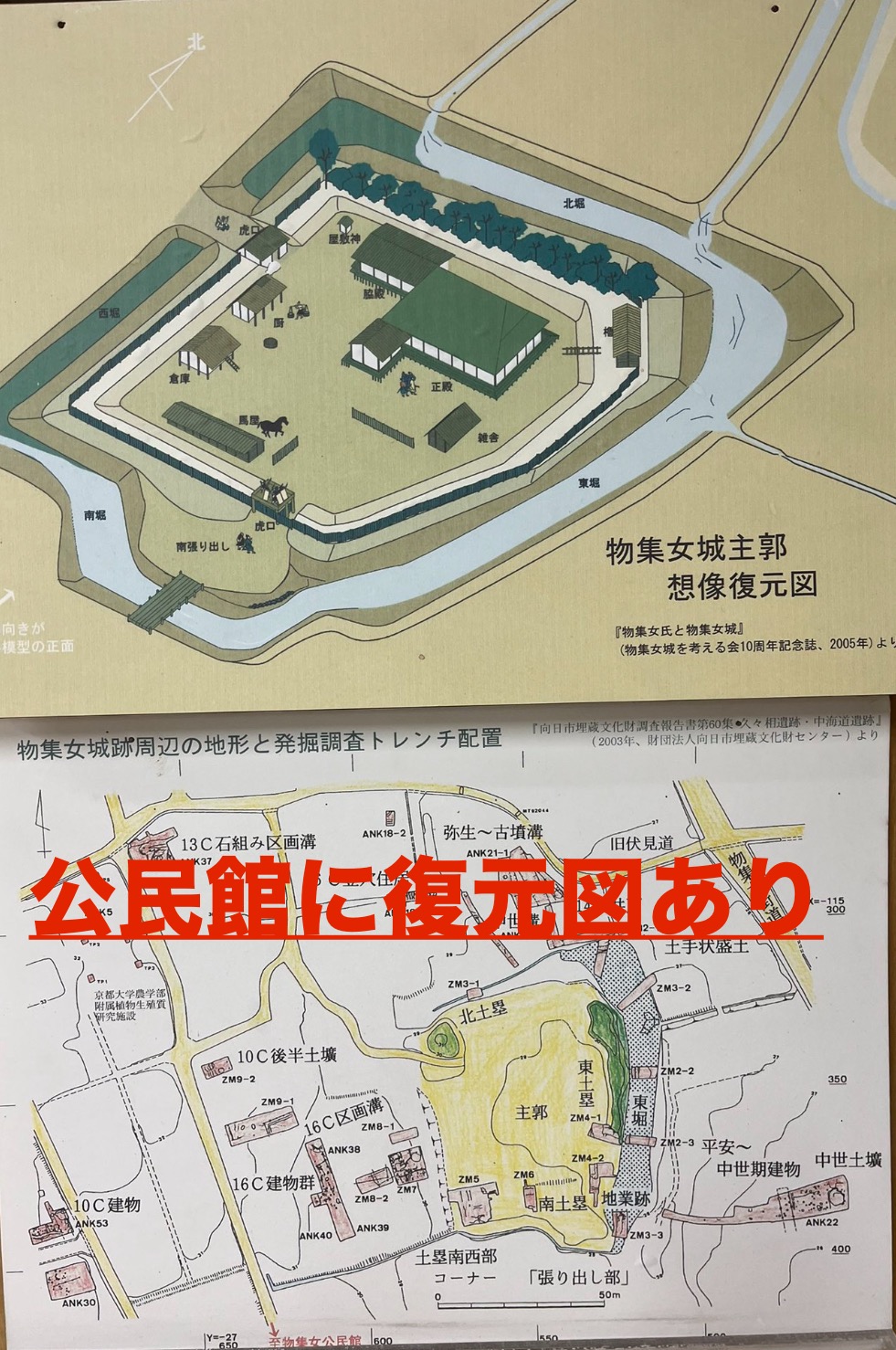
The castle grounds extend approximately 400m east-west and 300m north-south, making it the largest castle in Yosano Town. Multiple baileys (kuruma) are arranged in a stepped pattern, each demarcated by earthworks and trenches. The main bailey is at the center, surrounded by the second and third baileys, and it is presumed that each bailey had a watchtower and gate.
Major Remains
The following castle remains are preserved at the current Yumiki Castle site:
Main Bailey (Honmaru)
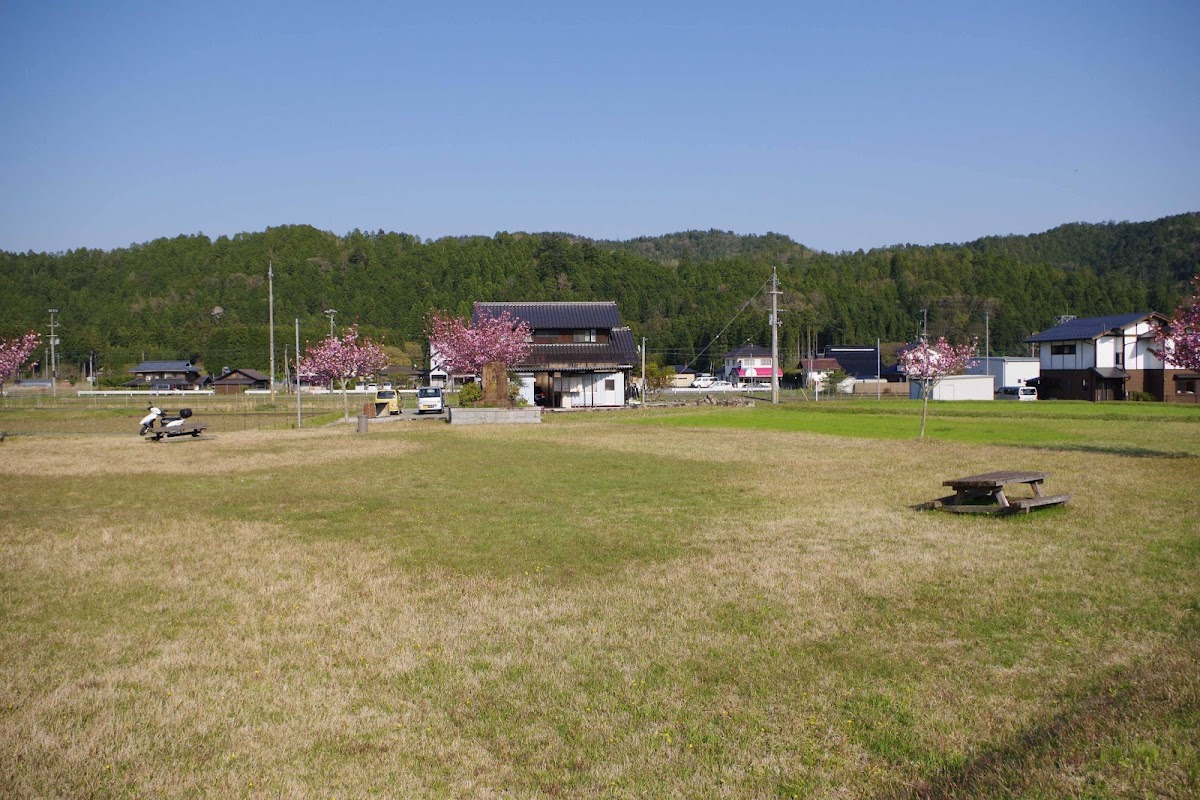
This is the most important bailey, located in the center of the castle. Currently, it is maintained as Shiroyama Park, and traces of earthworks can be seen in some areas. From the main bailey, one can enjoy a panoramic view of Aso Bay and Amanohashidate, experiencing the magnificent scenery of the past.
Enclosures
Multiple enclosures were arranged around the main enclosure. These enclosures functioned not only as defensive structures but also as garrisons for soldiers and storage areas for supplies. Traces of these structures remain in the terrain as elevation changes.
Moats
Several moats, dug to cut across the ridge, can be seen. These were important defensive structures to prevent enemy intrusion and are typical of mountain castles.
Earthworks
Earthworks were built around each enclosure. While much has been lost due to weathering and later development, clear traces of the earthworks can still be seen in some places.
Demolition and Current Status
After the fall of the Isshiki clan, Yumiki Castle is believed to have been demolished by the Hosokawa clan. From the late Sengoku period to the early Edo period, many mountain castles were abandoned, and their structures were dismantled. Yumiki Castle suffered a similar fate, and all its buildings were lost.
The current castle ruins have been developed into Shiroyama Park, and a shrine and school have been built, so the topography has been considerably altered. Nevertheless, with careful observation, the basic structure of a medieval mountain castle, such as the layout of the baileys and the moats, can still be discerned.
Highlights and Visitor Guide to Yumiki Castle
Development as Shiroyama Park
The Yumiki Castle ruins are currently developed as Shiroyama Park, serving as a place of relaxation for local residents. The park has a parking lot, making it easily accessible by car. It’s also a popular spot for cherry blossom viewing during the cherry blossom season, attracting many tourists.
Information boards are installed within the park, allowing visitors to learn about the history and structure of Yumiki Castle. Furthermore, from near the main bailey, you can enjoy beautiful views of Aso Bay and Amanohashidate, allowing you to relive the scenery seen by the former castle lords.
Points to Note When Visiting the Castle Ruins
When visiting the Yumiki Castle Ruins, paying attention to the following points will help you understand the castle’s structure more deeply:
- Elevation Differences of the Enclosures: As you walk through the park, pay attention to the elevation differences in the terrain. These are important clues indicating the layout of the enclosures.
- Traces of Earthworks: Around the main enclosure, slight traces of earthworks remain. Look for low mounds of earth.
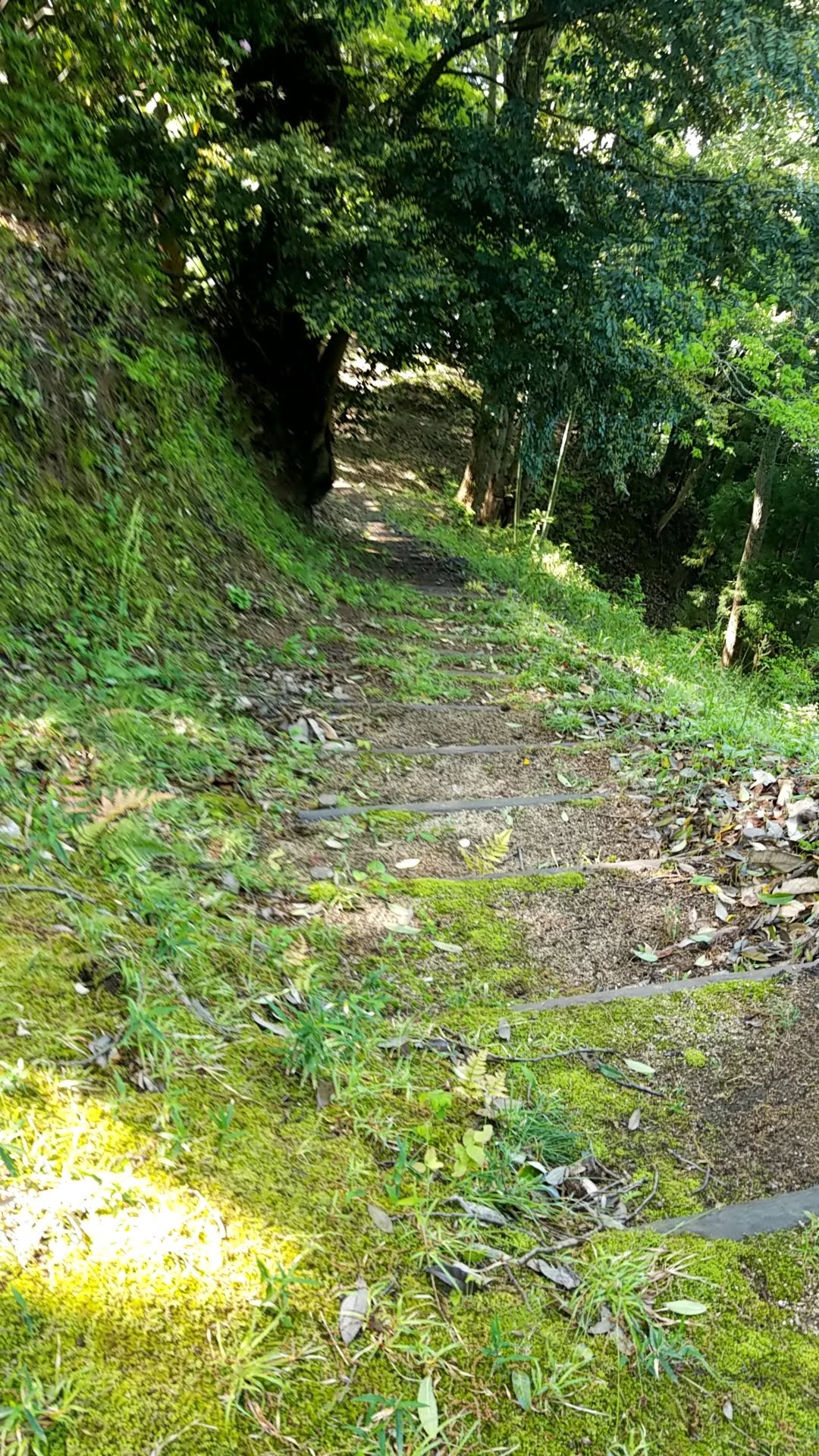
- Moats: Breaks in the ridges and deep ditches are remnants of former moats. Observe them while imagining their function as defensive structures.
- View: The view from the main enclosure is a must-see. You can see Aso Bay, Amanohashidate, and the Noda River, giving you a real sense of the castle’s strategic location.
Access Information
Location: Iwataki, Yosano-cho, Yosa-gun, Kyoto Prefecture
Access:
- By Car: Approximately 10 minutes from the Yosa-Amanohashidate Interchange on the Kyoto Jukan Expressway
- By Public Transport: Approximately 20 minutes on foot from Iwatakiguchi Station on the Kyoto Tango Railway
Parking: Available (Free)
Visiting Hours: Open (Always open as a park)
Admission Fee: Free
Yumiki Castle and Surrounding Tourist Spots
Combined Sightseeing with Amanohashidate
Yumiki Castle is located near Amanohashidate, one of Japan’s three most scenic views, making it easy to incorporate into your sightseeing route. For history buffs and castle enthusiasts, we recommend visiting the Yumiki Castle ruins when sightseeing in Amanohashidate.
The Iwataki area is located on the opposite shore of Amanohashidate, approximately 15 minutes by car from Amanohashidate, allowing you to enjoy the scenic view from a different perspective. The view from the ruins of Yumiki Castle is an excellent viewpoint offering a panoramic view of the beautiful Tango landscape, including Amanohashidate.
Exploring the History of Yosano Town
Besides Yumiki Castle, Yosano Town has many other historical sights. You can experience the history and culture of Tango through historical sites related to the Isshiki and Inatomi clans, old townscapes, and traditional crafts.
The Iwataki area, in particular, flourished as a transportation hub from ancient times, and buildings and temples that retain the atmosphere of the past are scattered throughout. Enjoying a historical stroll through the town in conjunction with a visit to Yumiki Castle is highly recommended.
Yumiki Castle’s Story of Tango in the Sengoku Period
The Place of Tango Province in the Sengoku Period History
The history of Yumiki Castle symbolizes the turmoil in Tango Province during the Sengoku period. The decline and downfall of the prestigious Isshiki clan, a powerful daimyo family that had existed since the Muromachi period, the expansion of the Oda regime, and the establishment of a new system of rule by the Hosokawa clan—the changes in the power structure of the Sengoku period—are condensed into this single castle.
The siege and resistance of Yoshisada Isshiki, and the eventual downfall of the Isshiki clan, are classic examples illustrating the fate of local powers during the transition from the medieval to the early modern period. Yumiki Castle is not merely a military facility, but a historical witness that tells the story of a turning point in history.
Cultural Significance of Inatomi-ryu Artillery
Another important aspect of Yumiki Castle is that it is the birthplace of Inatomi-ryu artillery. Approximately 30 years after firearms were introduced to Japan, the Inatomi clan developed their own unique artillery techniques based at Yumiki Castle.
This artillery technique was not merely a martial art, but a systematized martial way that fused spirituality and technique, and was studied by many samurai throughout the Edo period. Yumiki Castle is an important sacred site not only in military history but also in the history of Japanese martial arts culture.
Preservation and Future of Yumiki Castle Ruins
Value as a Historical Site
Yumiki Castle ruins possess high historical and cultural value as a representative mountain castle of Tango Province during the Sengoku period. Yumiki Castle is a valuable historical site with multiple important historical significances: it is the largest castle in Yosano Town, the stage for the last resistance of the Isshiki clan, and the birthplace of the Inatomi-ryu artillery technique.
Although some of the castle remains have been altered due to its current development as a park, the basic layout and topography have been preserved, making it a valuable teaching material for learning about the structure of medieval mountain castles.
Local Utilization
Yosano Town is utilizing the Yumiki Castle ruins as a local historical resource, working to promote tourism and history education. The development as Shiroyama Park has made it a place where local residents can easily experience history, and it is bustling with many visitors during cherry blossom season.
It is hoped that this valuable historical site will continue to be passed on to future generations while maintaining an appropriate balance between preservation and utilization. Further development, such as improving the information boards and implementing preservation measures for the remains, will allow more people to understand and enjoy the historical value of Yumiki Castle.
Summary
Yumiki Castle is an important historical site indispensable when discussing the Sengoku period history of Tango Province. Built by the Inatomi clan, this castle, the site of the Isshiki clan’s final resistance and a sacred site for Inatomi-ryu artillery, contributed significantly to Japanese martial arts culture. Though small in scale, it is a mountain castle of great historical significance.
Currently, it is maintained as Shiroyama Park and is easily accessible to everyone. Combining a visit with a trip to Amanohashidate allows you to enjoy both the scenery and the history. Standing on the hill overlooking Aso Bay, you can gaze upon the view once seen by the castle’s lords and reflect on the turmoil of the Sengoku period.
Yumiki Castle Ruins are a place worth visiting for history buffs, castle enthusiasts, and anyone interested in traditional Japanese culture. When you visit Yosano Town, be sure to stop by this historical site.