Yono Castle (Osaka Prefecture) Complete Guide: A Thorough Explanation of History, Remains, Access, and Surrounding Castles
What is Yono Castle?
Yono Castle (Yono-jo) is a medieval mountain castle located in Yono, Nose-cho, Toyono-gun, Osaka Prefecture. Also known as Yono Branch Castle and Yono Heinoki Castle, it is a historical castle that functioned as a strategic point in northern Settsu Province. Currently, the site is occupied by the Shiroyama Campus of the Yodonomizu Gakuin Educational Foundation, and although many of the remains have been lost, it holds an important position in the study of castle history.
Yono Castle is located east of Yono Honjo (also known as Yono Kojo, Yono Yamajo, and Suirōjo), and was part of the Yono clan’s group of castles. It is a flatland castle built on a plateau approximately 20-30 meters high, and is thought to have functioned as a defensive base in northern Settsu Province.
History of Yono Castle
Construction and the Yono Clan
The exact date of construction of Yono Castle is uncertain, but it is believed to have been built during the Meio era (1492-1501) by Yono Yamashiro-no-kami Yoriyuki. Yono Yoriyuki was a powerful local lord who ruled the northern part of Settsu Province and had close ties with the Nose clan.
The Yono clan maintained multiple castles in this region, with Yono Honjo Castle serving as the main castle and Yono Castle functioning as a branch castle. This castle layout is an important example for understanding the strategic defense system of the time.
Trends in the Sengoku Period
With the arrival of the Sengoku period (Warring States period), Yono Castle became embroiled in the complex political situation of northern Settsu Province. The Yono clan, as a powerful local lord, maintained their influence while maintaining friendly relations with surrounding forces.
Particularly during the Tensho era (1573-1592), as Oda Nobunaga’s influence extended to the Kinai region, the Yono clan was forced to adapt to the changing times. During this period, local lords such as the Nose and Shiokawa clans in northern Settsu Province were divided into pro-Oda and anti-Oda factions, engaging in conflicts, and Yono Castle is believed to have been affected by these events.
History of the Castle’s Abandonment
After the turmoil of the Tensho era, as Toyotomi Hideyoshi’s unification of Japan progressed, many medieval mountain castles were abandoned. Yono Castle was no exception, and it is presumed that it lost its function as a military base during this period. In the Edo period, the castle site was used for farmland and forests, and the remains gradually disappeared.
Structure and Remains of Yono Castle
Location and Layout
Yono Castle was built on a plateau approximately 20-30 meters high, towering north of the Kirihataguchi intersection. This plateau was ideally situated for its panoramic views, offering excellent defensive and surveillance advantages.
The castle’s layout skillfully utilized the plateau’s topography, exhibiting a typical medieval mountain castle structure that maximized the use of natural terrain. While Yono Honjo Castle was a mountain castle with a relative elevation of approximately 60 meters, Yono Castle was located at a relatively lower elevation, suggesting it had a stronger character as a more practical subsidiary castle.
Current Situation
The site of Yono Castle was formerly the grounds of Osaka Prefectural Shiroyama High School, but is now used as the Shiroyama Campus of Yodonomizu Gakuin. Due to the construction of school facilities, most of the castle remains have disappeared.
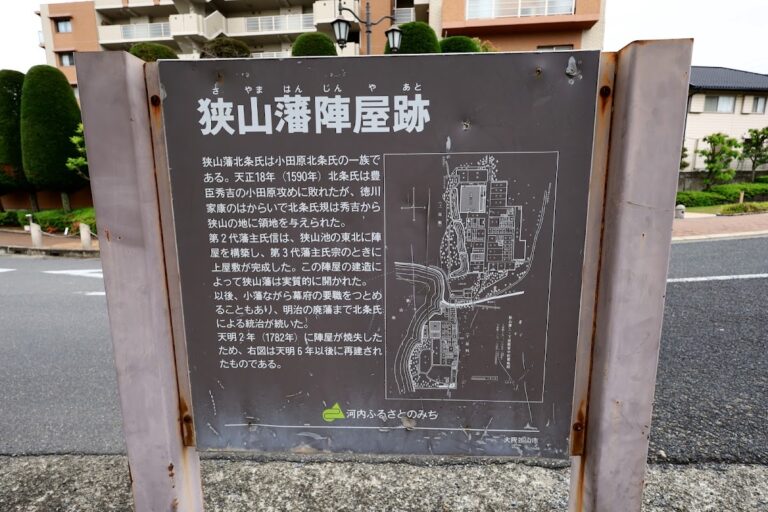
An information board is installed on the site, indicating that this was once a castle, but it is difficult to confirm any clear remains. Traces of defensive structures such as earthworks and moats have been almost completely lost due to the construction work during the school’s construction.
Observable Traces
Even visiting the site, it’s difficult to see clear castle remains, but the following traces allow us to infer its former appearance:
- Topographical Undulations: Slight elevation changes remain around the school grounds, providing clues to the castle’s extent.
- Information Boards: Information boards installed on the grounds provide insight into the castle’s historical background.
- Surrounding Topography: Observing the entire plateau from outside the school grounds helps understand the castle’s location.
Relationship with Yono Honjo Castle
Function as a Castle Group
Understanding Yono Castle is crucial to understanding its relationship with Yono Honjo Castle. Yono Honjo Castle is a full-fledged mountain castle built on a mountain approximately 60 meters high, west of Yono Castle. It is also known as Yono Kojo Castle, Yono Yamajo Castle, and Suirōjo Castle.
While Yono Honjo served as the main castle and the political and military center, Yono Castle is thought to have played the following roles as a subsidiary castle:
- Frontline Defense Base: Due to its lower elevation, it played a role in detecting enemy invasions early and delaying attacks on the main castle.
- Traffic Monitoring: It monitored surrounding roads and managed the transport of supplies and people.
- Supply Base: It served as a collection point for supplies to support the main castle.
Strategic Placement of the Two Castles
Yono Honjo and Yono Castle were located approximately several hundred meters apart, creating a system of mutual support. This arrangement is attracting attention from castle researchers as a typical example of a medieval castle network.
While the main castle was located on a steep mountaintop, Yono Castle, as a subsidiary castle, was in a relatively accessible location, and it has been suggested that it may have served as a residence or administrative facility during peacetime.
Highlights of Yono Castle
Historical Value
Yono Castle, while receiving mixed reviews from castle enthusiasts due to the lack of clearly surviving remains, possesses historical value in the following respects:
- An important example for understanding the castle system of medieval Settsu Province
- Physical evidence showing the sphere of influence and power structure of the Yono clan
- Valuable material for studying the relationship between main castles and branch castles
Significance of Visiting
Even though the remains are lost, visiting Yono Castle has the following significance:
- Feeling the traces of history: From the signboards and topography, you can truly feel that a castle once stood on this site.
- Visiting Yono Main Castle in conjunction: Visiting both the main castle and branch castles allows you to understand the overall structure of the castle complex.
- Understanding Local History: It serves as an entry point to learning about the medieval history of the Nose region.
Visiting Time and Evaluation
According to data from “Kojodan,” a community of castle enthusiasts, the average visiting time for Yono Castle is approximately 15 minutes. This figure reflects the fact that very few remains are left. The average rating is ★★★☆☆ (3.00), which is a reasonable rating considering the state of the remains.
With approximately 50 visitors, it’s classified as a minor castle, but it’s a must-see spot for enthusiasts who want to comprehensively visit castles in Settsu Province.
Access and Visiting Information
Location
Address: Yono, Nose-cho, Toyono-gun, Osaka Prefecture
Location: Yodono-sui Gakuin Shiroyama Campus Grounds
Access by Car
The most convenient way to access Yono Castle is by car:
- From Osaka: Head north on National Route 423 (Shin-Midosuji) to Prefectural Route 4 (Ibaraki-Nose Line)
- From Kyoto: Take National Route 477 to Prefectural Route 4
- Kirihataguchi Intersection: The Kirihataguchi intersection, where Prefectural Route 4 and Prefectural Route 108 intersect, is the nearest landmark.
The school facilities can be seen on the plateau north of the intersection. However, since the grounds are private school property, permission from the school is required for visits.
Access by Public Transportation
When using public transportation:
- Nearest Station: Yamashita Station on the Nose Railway Myoken Line
- Bus: Take the Hankyu Bus and get off at the Yono bus stop, then walk for approximately 10-15 minutes.
*Since the number of buses is limited, we recommend checking the timetable in advance.
Points to Note When Visiting
- School Grounds: Currently, this is school grounds, so please avoid entering without permission.
- Viewing from Outside: It is possible to observe the plateau from along the road.
- Information Boards: Information boards installed around the grounds may be visible from the road.
- Combined Visit with Yono Honjo Castle: If you have time, we recommend visiting Yono Honjo Castle, which is within walking distance.
Parking Information
There is no dedicated parking lot. Please avoid street parking and use nearby public facilities or roadside rest areas, and access on foot.
Related Castles in the Surrounding Area
When visiting Yono Castle, visiting the surrounding castles will give you a deeper understanding of the medieval history of this region.
Yono Honjo (Yono Old Castle)
Distance: Approximately 500 meters
Elevation Relative: Approximately 60 meters
Remains: Earthworks, baileys, moats, wells, etc.
This mountain castle is the main castle of Yono Castle, and relatively well-preserved remains. It has the structure of a full-fledged mountain castle, and a visit takes about an hour. Visiting it together with Yono Castle will allow you to appreciate the relationship between the main castle and its subsidiary castles.
Takayama Castle
Distance: Approximately 2 kilometers
Location: Nose Town
Another important castle in the Nose region. It has a deep connection with the Nose clan and is important for understanding the regional castle network.
Takayama Mukai Castle
This castle is located opposite Takayama Castle and functioned as a paired castle. It has a structure similar to the relationship between Yono Castle and Yono Honjo. ### Other Castles in Northern Settsu Province
- Akutagawa Castle (Takatsuki City): An important stronghold in Settsu Province
- Jio Castle: A castle associated with the Miyoshi clan
- Iimori Castle (Daito City/Shijonawate City): The residence of Miyoshi Nagayoshi
Visiting these castles together will provide a comprehensive understanding of the complex situation in Settsu Province during the Sengoku period.
Yono Castle Research and Materials
Main References
To learn more about Yono Castle, the following resources are helpful:
- “Medieval Castles and Residences of Osaka Prefecture”: A castle survey report published by the Osaka Prefectural Board of Education
- “Comprehensive Survey of Japanese Castles,” Volume 12 (Osaka/Hyogo): A fundamental text for castle research
- Various Castle Websites: Websites such as “Castle Wanderings” and “Castle Attack Group” contain visitor reports and photographs.
Maps and Layout Maps
While detailed layout maps of Yono Castle do not exist, the castle’s extent can be estimated from old maps and surrounding topographic maps. Topographic maps from the Geospatial Information Authority of Japan and estimated maps by castle researchers are useful references.
Archaeological Excavations
Partial excavations may have been conducted before and after the school’s construction, but detailed excavation reports do not appear to be publicly available. It is hoped that more detailed investigations will be conducted in the future, such as during renovations of school facilities.
Significance of Visiting Yono Castle
For Castle Enthusiasts
Yono Castle has limited appeal as a general tourist destination due to the lack of clearly defined remains. However, it is worth visiting for the following types of castle enthusiasts:
- Those who want to comprehensively visit castles in Settsu Province
- Researchers interested in the relationship between main castles and subsidiary castles
- Photographers who want to document vanished castles
- History fans with a deep interest in local history
As a Place for Learning Local History
Yono Castle is important as an entry point to learning about the medieval history of the Nose region. Starting from this castle, exploring the history of the Yono and Nose clans, and the Sengoku period in northern Settsu Province, allows one to learn about the depth of local history that is not found in textbooks.
Challenges of Castle Preservation
The current state of Yono Castle symbolizes the preservation challenges faced by many castles throughout Japan. The issues to consider through Yono Castle are numerous, including the balance between development and preservation, the recording and preservation of lost remains, and historical education for local residents.
Summary
Yono Castle (Nose-cho, Toyono-gun, Osaka Prefecture) is a flatland castle in Settsu Province, believed to have been built during the Meio era by Yono Yamashiro-no-kami Yoriyuki. Currently, it is the Shiroyama Campus of the Yodonomizu Gakuin Educational Foundation, and while no clear remains exist, its historical value as a subsidiary castle of Yono Honjo is highly regarded.
Its location on a plateau approximately 20-30 meters above sea level, its strategic positioning relative to Yono Honjo, and its role during the turbulent Tensho era give it an important place in the study of medieval castle history. Because the remains have been lost, visiting time is short and evaluation is limited, but it is indispensable for understanding the castle network in northern Settsu Province.
When visiting, combining it with Yono Honjo and surrounding castles will allow for a deeper understanding of the Sengoku period in this region. While respecting the current state of the site as a school, it is a valuable spot where you can feel the traces of history.