
Yoneda Castle (Gifu Prefecture) Complete Guide: A Thorough Explanation of History, Remains, and Access
What is Yoneda Castle?
Yoneda Castle is a Sengoku period mountain castle located in Fukushima, Kawabe-cho, Kamo-gun, Gifu Prefecture. Built on the summit of Mt. Atago, at an altitude of 261 meters, the castle sits atop a mountain with a beautiful conical shape, locally known as “Yoneda Fuji.” Mt. Atago, towering on the east bank of the Hida River, was a strategic location overlooking the surrounding area and functioned as an important military base in Mino Province.
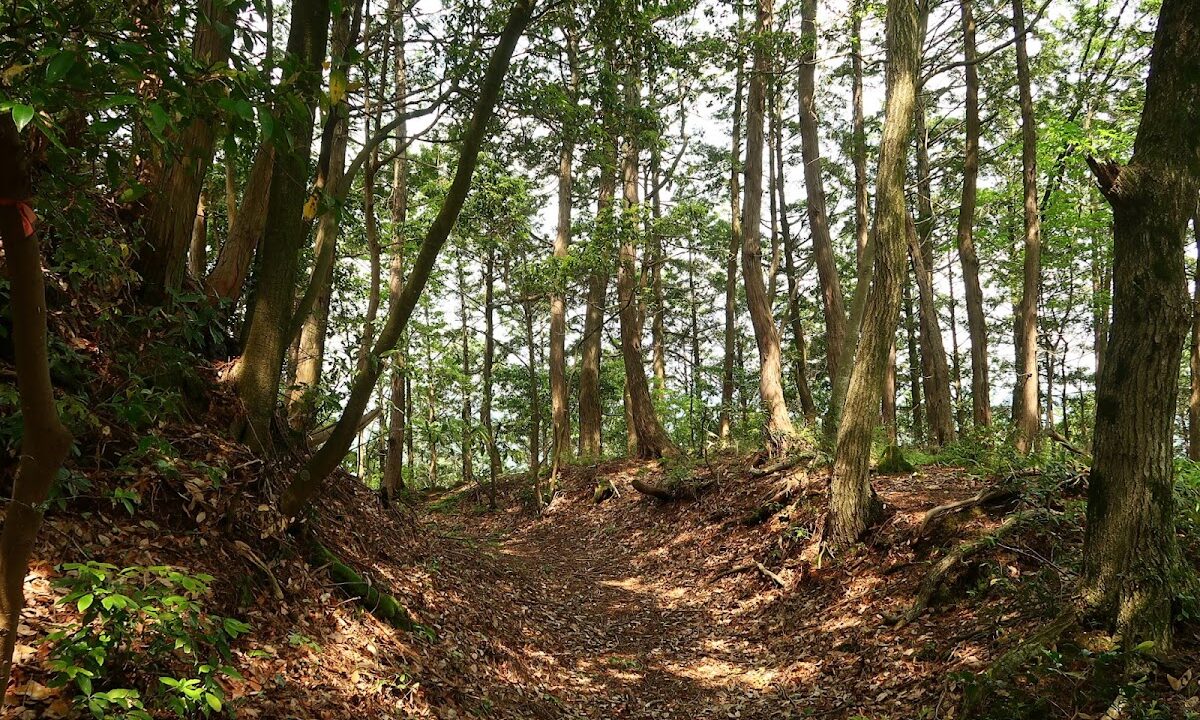
The remains of the castle, including the main enclosure which is now the grounds of Atago Shrine, as well as moats, lateral moats, and earthworks, are well-preserved, conveying the appearance of a Sengoku period mountain castle. Designated as a town historical site, and with well-maintained walking trails, it is popular not only with history enthusiasts but also with hikers.
History of Yoneda Castle
Construction History and the Hida Clan
Yoneda Castle was built by Hida Tadamasa, a samurai general of the Sengoku period. It is believed that Hida Tadamasa relocated Fukushima Castle, built on Gongen-yama by his father, Hida Tadanao (also known as Kikichi), to the summit of Atago-yama, a more defensible location, to construct Yoneda Castle.
The Hida clan was a powerful local lord in Mino Province, and they controlled the surrounding area from Yoneda Castle. Atago-yama was strategically important, overlooking the Hida River and controlling a crucial transportation hub. The selection of this location demonstrates Hida Tadamasa’s high level of military foresight.
The Turmoil of the Tensho Period and Mori Nagayoshi’s Attack
The most important event in the history of Yoneda Castle was its fall during the chaotic period following the Honnoji Incident in 1582.
Following the fall of Oda Nobunaga in the Honnō-ji Incident, a power vacuum arose in Mino Province, leading to intensified territorial disputes throughout the region. Amidst this chaos, Mori Nagayoshi, lord of Mino Kanayama Castle, successively captured surrounding castles.
Mori Nagayoshi was known as a fierce warrior nicknamed “Oni Musashi” (Demon Musashi), possessing overwhelming military power. In 1582 (Tenshō 10), Mori Nagayoshi besieged Yoneda Castle and, after a fierce battle, captured it. This battle marked the end of Hida Tadamasa’s rule, and Yoneda Castle was abandoned.
Yoneda Castle After Abandonment
After its fall, Yoneda Castle ceased to function as a military base and was subsequently abandoned. From the Edo period onward, Atago Shrine was erected on the mountaintop, becoming a place of worship cherished by the local people.
To this day, the castle remains are preserved in relatively good condition, making it a valuable historical site for understanding the structure of mountain castles from the Sengoku period.
Structure and Layout of Yoneda Castle
Main Enclosure (Honmaru)
The main enclosure of Yoneda Castle is located at the summit of Mt. Atago, at an altitude of 261 meters. Currently, it is the grounds of Atago Shrine, and a relatively flat enclosure has been formed. From the main enclosure, one can enjoy a panoramic view of the surrounding landscape, overlooking the Hida River, the townscape of Kawabe, and even distant mountains.
The main enclosure is of medium size for a mountain castle, and it is believed to have housed the lord’s residence and important facilities. Some foundation stones remain today, giving a glimpse into the former buildings.
Belt Enclosures and Defensive Facilities
Several narrow belt enclosures are arranged in layers south of the main enclosure. These belt enclosures were defensive structures for the main enclosure, serving to halt enemy advances.
The belt enclosures are built along the mountain slope, and the multiple elevation changes demonstrate ingenuity in making enemy intrusion difficult. This type of structure is typical of mountain castles from the Sengoku period and demonstrates the high level of castle-building technology at Yoneda Castle.
Moats and Horizontal Moats
Of particular note among the defensive structures of Yoneda Castle are the moats and horizontal moats.
A horizontal moat is located behind the main enclosure to the north, where bedrock is exposed. The horizontal moat, carved out of the bedrock, is a defensive structure that skillfully utilizes the natural terrain, serving as a strong barrier that physically prevented enemy intrusion.
Further north, a single moat remains. A moat is a dry moat dug to divide the ridge, and is an important defensive structure to prevent enemies from invading along the ridge. The moats at Yoneda Castle are relatively well-preserved and are valuable remains for understanding the defensive structure of the time.
Vertical Moats
A single vertical moat can be seen on the west side of the hiking trail. A vertical moat is a moat dug vertically along a mountain slope, designed to prevent enemies from climbing the slope and attacking.
Vertical moats make lateral movement difficult and effectively guide the attacking forces along a specific route. The vertical moats of Yoneda Castle are a prime example of a defensive structure that utilizes the unique terrain of a mountain castle.
Earthworks and Enclosure Arrangement
Traces of earthworks remain throughout the castle. These earthworks are defensive walls constructed by piling up earth, protecting defenders from enemy arrows and firearms, and clearly defining the boundaries of the enclosures.
The layout of the enclosures (enclosures) at Yoneda Castle follows a typical mountain castle structure, with the main enclosure at the mountaintop, a belt enclosure to the south, and defensive facilities to the north. This arrangement is based on a rational design philosophy of concentrating defensive facilities in the direction most vulnerable to attack.
Highlights of Yoneda Castle
Atago Shrine and a Place of Worship
The Atago Shrine, located within the main enclosure, is an important spot that conveys the history of Yoneda Castle. Atago worship is widely practiced as the god of fire prevention, and it serves as a spiritual pillar for the local people.
A magnificent view can be enjoyed from the shrine grounds, and on clear days, you can see as far as the distant mountains. This view is likely one of the reasons why Hida Tadamasa chose this location for his castle.
Exposed Stone Walls and Bedrock
Remnants of stone walls can be seen in some parts of Yoneda Castle. Furthermore, natural bedrock is exposed in the moat areas, allowing for close observation of the civil engineering techniques of the time, where moats were constructed by carving into the bedrock.
The exposed bedrock is a very interesting relic from the perspective of utilizing natural terrain in castle construction. It serves as valuable teaching material for learning about castle construction techniques of the Sengoku period.
Well-Preserved Moat
The moat on the north side is particularly well-preserved among the remains of Yoneda Castle. Its depth, width, and shape allow you to appreciate the scale of the defensive structure at the time.
Walking along the bottom of the moat, you can feel the sheer walls on both sides, experiencing how difficult it must have been for the enemy to break through this defense.
The Beautiful Shape of “Yoneda Fuji”
Atago Mountain, where Yoneda Castle was built, is called “Yoneda Fuji” because of its beautiful conical shape. Viewed from afar, its elegant form is truly reminiscent of Mount Fuji.
Yoneda Fuji can be seen from various locations in Kawabe Town, and its beautiful shape has become a symbol of the region. Before visiting the castle ruins, we recommend viewing Yoneda Fuji from a distance.
Access Information
Access by Car
If visiting Yoneda Castle by car, the nearest interchanges are the Mino-Kamo IC or Kawabe IC on the Tokai-Kanjo Expressway.
- From Minokamo IC: Approximately 15 minutes
- From Kawabe IC: Approximately 10 minutes
There is a parking lot at the foot of Mt. Atago, which can accommodate several cars. However, parking space is limited, so early arrival is recommended, especially on holidays.
When using a car navigation system, it is recommended to search for “Kawabe-cho Fukushima Atago Shrine” or “Yoneda Castle Ruins.”
Access by Public Transportation
When using public transportation, the nearest station is JR Takayama Main Line “Nakakawabe Station.”
- Walking from Nakakawabe Station: Approximately 30-40 minutes
- Taxi from Nakakawabe Station: Approximately 5 minutes
While it is possible to access the castle on foot from the station, the trailhead is quite a distance away, so those who are not confident in their physical fitness are advised to take a taxi.
Climbing Route
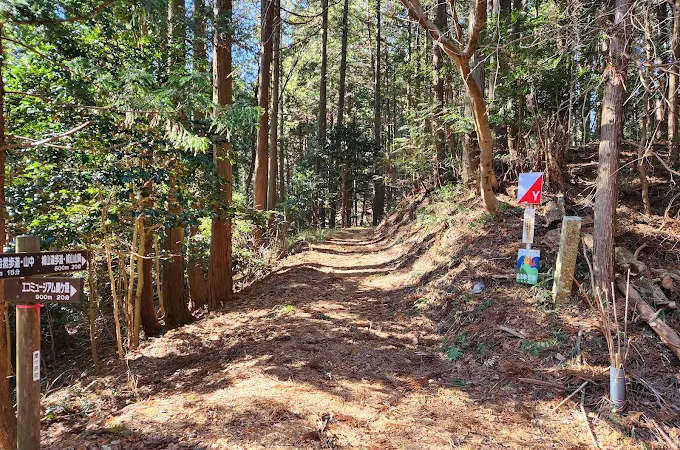
The climbing route to Yoneda Castle is a well-maintained hiking trail from the foot of the mountain to the summit.
- Hiking time: Approximately 20-30 minutes
- Difficulty: Intermediate (Suitable for those familiar with mountain trails)
- Elevation difference: Approximately 160 meters
The hiking trail is relatively well-maintained, but there are steep slopes and stairs typical of mountain castles. We recommend wearing comfortable shoes such as athletic shoes or trekking shoes.
Depending on the season, there may be many mosquitoes and other insects, so carrying insect repellent is recommended. Also, in summer, please bring plenty of water to prevent heatstroke.
Nearby Tourist Attractions
Mino Kanayama Castle Ruins
Mino Kanayama Castle, the residence of Mori Nagayoshi who conquered Yoneda Castle, is a mountain castle located in Kani City and designated as a national historic site. It is about a 30-minute drive from Yoneda Castle, and visiting both together will give you a deeper understanding of the history of Mino Province during the Tensho period.
Mino Kanayama Castle has well-preserved stone walls and baileys, making it an important historical site demonstrating the power of the Mori clan.
Kajita Castle Ruins
Kajita Castle is a mountain castle located in Tomika Town, known as an important base since the time of Saito Dosan. Like Yoneda Castle, it played a significant role in the Sengoku period history of Mino Province.
It is approximately a 20-minute drive from Yoneda Castle and can be included in a Mino mountain castle tour.
Historical and Cultural Facilities in Kawabe Town
Besides Yoneda Castle, Kawabe Town has other historical attractions. The town is dotted with old streets and temples and shrines, making it a pleasant place to stroll.
The scenery along the Hida River is particularly beautiful, showing different faces in each season. Cherry blossoms in spring and autumn leaves in fall can be enjoyed, allowing visitors to appreciate the natural beauty in conjunction with a visit to the castle ruins.
Roadside Station “Heisei”
The roadside station “Heisei,” located along National Route 41, is approximately a 15-minute drive from Yoneda Castle. It offers local specialties and fresh vegetables, as well as excellent rest facilities.
Before or after visiting Yoneda Castle, you can enjoy meals and shopping featuring local ingredients.
Points to Note When Visiting Yoneda Castle
Best Time to Visit
Yoneda Castle is accessible year-round, but each season offers a different charm.
Spring (March-May): The fresh greenery is beautiful, and the hiking trails are easy to walk. The temperature is mild, making for a comfortable stroll.
Summer (June-August): The greenery is lush, allowing you to enjoy forest bathing. However, precautions against heat and insects are necessary.
Autumn (September-November): The autumn foliage is beautiful, making this the most scenic time. The temperature is moderate, making it ideal for hiking.
Winter (December-February): If there is snow, the hiking trails can be slippery, so caution is necessary. However, the air is clear, allowing for panoramic views.
What to Bring and Wear
When visiting Yoneda Castle, we recommend preparing the following items and clothing.
- Athletic shoes or trekking shoes
- Comfortable clothing
- Drinking water (especially plenty in summer)
- Towel
- Insect repellent spray (spring to autumn)
- Camera (for photographing ruins and scenery)
- Rain gear (during periods of unpredictable weather)
Estimated Time Required
Please use the following as a guideline for the time required to visit Yoneda Castle:
- Climbing to the castle only (round trip): Approximately 1 hour
- Including viewing of ruins: Approximately 1 hour 30 minutes to 2 hours
- Including exploring the surrounding area: Approximately 2 hours to 3 hours
If you plan to carefully observe the ruins or enjoy taking photographs, we recommend allocating ample time.
Historical Significance of Yoneda Castle
Position in Mino Province
Yoneda Castle was located in a strategically important location within Mino Province, controlling the Hida River basin, a vital transportation route. The Hida River was a crucial waterway connecting Mino and Hida provinces, and controlling this area held significant economic and military importance.
The fact that the Hida clan established Yoneda Castle as their base indicates their recognition of the region’s strategic importance.
The Chaos of the Tensho Period and the Expansion of Mori Nagayoshi’s Power
The fall of Yoneda Castle occurred in 1582, a turning point in the Sengoku period. After the fall of Oda Nobunaga in the Honnoji Incident, various forces in Mino Province sought to expand their territories, leading to fierce conflict.
Mori Nagayoshi’s capture of Yoneda Castle was part of a reorganization of power during this chaotic period and is a significant event in the history of Mino Province during the Sengoku period. Mori Nagayoshi subsequently captured numerous surrounding castles, establishing his power in eastern Mino Province.
A Legacy of Mountain Castle Culture
Yoneda Castle is a valuable historical site that well preserves the characteristics of a mountain castle from the Sengoku period. Defensive structures such as moats, horizontal moats, vertical moats, and earthworks are preserved in relatively good condition, making them important historical materials for learning about the castle construction techniques and tactics of the time.
In particular, the horizontal moats carved into the bedrock are a fine example of the advanced civil engineering techniques of the Sengoku period, skillfully utilizing the natural terrain.
Preservation and Utilization of Yoneda Castle
Designation as a Town Historic Site
Yoneda Castle is designated as a town historic site by Kawabe Town and is protected as a local historical heritage. The town has taken care to ensure that visitors can safely explore the castle ruins by developing walking courses and installing information boards.
Connection with the Community
Due to the presence of Atago Shrine, the Yoneda Castle ruins function not only as a historical site but also as a place of worship for the community. Every year, a festival is held at Atago Shrine, serving as a gathering place for local people.
This connection with faith has a positive impact on the preservation of the castle ruins, and natural conservation activities are carried out by the local community.
Utilization as a Tourism Resource
Kawabe Town is working to utilize historical heritage sites, including Yoneda Castle, as a tourism resource. Efforts are being made to help visitors understand the history and appeal of Yoneda Castle, such as developing walking trails and creating brochures.
It is expected that Yoneda Castle will continue to play an important role in local history education and tourism promotion.
Current Status of Yoneda Castle Research
Historical Documents
While historical documents concerning Yoneda Castle are limited, fragments of its history can be gleaned from documents related to the Hida clan and Mori Nagayoshi. In particular, documents describing the turmoil in Mino Province during the Tensho period contain descriptions of the siege of Yoneda Castle.
Archaeological Investigations
While no full-scale excavations have been conducted at Yoneda Castle, the castle’s structure can be estimated from the remains remaining on the surface. Further detailed surveys and excavations may reveal a more accurate picture of the castle.
Castle Layout Research
Through the creation and analysis of castle layout maps by castle researchers, the defensive structure of Yoneda Castle is gradually becoming clear. The arrangement of moats and trenches, and the configuration of the baileys, reveal characteristics of mountain castle construction techniques from the Sengoku period.
Summary
Yoneda Castle is a Sengoku period mountain castle built on the summit of Mt. Atago in Kawabe-cho, Gifu Prefecture. Built by Hida Tadamasa, it was captured and fell in 1582 by Mori Nagayoshi.
Built on Mt. Atago, known as “Yoneda Fuji” for its beautiful shape, Yoneda Castle retains well-preserved remains such as moats, trenches, trenches, and earthworks, conveying the appearance of a Sengoku period mountain castle to the present day. Atago Shrine is located in the main bailey, and it is a place of worship cherished by the local community.
Access is easy: a 10-15 minute drive from any interchange on the Tokai Loop Expressway, followed by a 20-30 minute hike up the mountain trail to reach the summit. Yoneda Castle, where you can learn about the Sengoku period history of Mino Province and experience the charm of a mountain castle, is recommended not only for history buffs but also for hikers who enjoy nature.
Nearby, there are other mountain castles from the same period, such as Mino Kanayama Castle and Kajita Castle. Visiting them together will give you a deeper understanding of the Sengoku period in Mino Province. Be sure to visit Yoneda Castle and experience the history of the Sengoku period and the beauty of nature.

--765x450.png)