--765x720.png)
Complete Guide to Wachi Castle (Yaotsu Town, Gifu Prefecture) | A Mountain Castle in Mino Province Built by the Fourth Son of Inaba Ittetsu
What is Wachi Castle?
Wachi Castle is a mountain castle from the Sengoku period located in Nogami, Yaotsu Town, Kamo District, Gifu Prefecture. Also known as Inaba Castle, it was built by Inaba Katamichi, the fourth son of Inaba Yoshimichi (Inaba Ittetsu), one of the three most powerful figures in Mino Province. Its distinctive feature is its location, utilizing a natural stronghold at the tip of a river terrace between the Kiso River and the Ishikawa River.
Currently, it is maintained as “Inaba Castle Park,” a place of relaxation for local residents and history enthusiasts. A restored Yakuimon gate and a castle-like observation deck have been built, allowing visitors to experience the atmosphere of the castle in its heyday.
History of Wachi Castle
Background of Construction and the Inaba Clan
Wachi Castle was built in the late Sengoku period. Inaba Katamichi, the castle’s builder, was born the fourth son of Inaba Yoshimichi (Ittetsu), who served Oda Nobunaga as one of the “Three Lords of Mino.” Inaba Yoshimichi, along with Ando Morinari and Ujiie Bokuzen, was known as one of the “Three Lords of Mino” and played a crucial role in the transition of power from the Saito clan to the Oda clan.
In recognition of his father’s achievements, Inaba Katamichi was granted this land and built Wachi Castle. By constructing the castle at a strategic point controlling the important waterway of the Kiso River, it is believed to have served as a defensive stronghold in eastern Mino Province.
Wachi Castle in the Sengoku Period
Wachi Castle functioned as one of the Inaba clan’s power bases within Mino Province. Its topography—a river terrace between the Kiso River and the Ishikawa River—made it extremely difficult for attackers to conquer, and its structure made it easy to defend even with a small force.
The Inaba clan cooperated with Oda Nobunaga in his conquest of Mino and subsequently held an important position under the Oda regime. It is presumed that Wachi Castle was maintained as a base in eastern Mino Province during this period.
Changes after the Early Modern Period
Like many medieval mountain castles, Wachi Castle is thought to have been abandoned during the Edo period. While historical records are limited regarding the exact date of its abandonment, it is believed to have lost its function as part of the castle reorganization policies of the early modern period.
Afterward, the castle ruins were neglected for a long time, but were re-evaluated as a regional historical heritage site and developed into the current Inaba Castle Park.
Structure and Layout of Wachi Castle
Location and Topographical Characteristics
The most distinctive feature of Wachi Castle lies in its location. Built on the tip of a river terrace between the Kiso River and the Ishikawa River, it is a natural stronghold surrounded on three sides by steep cliffs. This terrain belongs to a type called a “river terrace castle,” and is a fine example of castle construction techniques that utilize the unique topography of the Mino region.
The defensive structure, utilizing the difference in elevation, limited enemy incursion routes, creating favorable conditions for the defenders.
Layout of the Enclosures
Wachi Castle’s layout is centered around the main enclosure (Honmaru) and the second enclosure (Ninmaru). The Honmaru is the core of the castle, and it is believed to have housed the lord’s residence and important facilities. The Ninmaru functioned as an enclosure to defend the Honmaru.
A massive dry moat separates the Honmaru and Ninmaru, making it the most remarkable feature of Wachi Castle. This dry moat boasts considerable depth and width, demonstrating the advanced castle-building techniques of the time.
Defensive Structures
Besides the dry moat, it is presumed that Wachi Castle had various other defensive structures. Earthen ramparts surrounded the enclosures, and defensive structures such as masugata (square enclosures) may have been incorporated into the castle gates (koguchi).
A well remains in the Honmaru, serving the important function of securing a water source during sieges. This well can still be seen today as a historical remains.
Highlights of Wachi Castle
The Massive Dry Moat
A must-see when visiting Wachi Castle is the massive dry moat separating the main keep (Honmaru) and the second bailey (Ninmaru). This moat boasts an impressive scale in both depth and width, making it a valuable historical relic that allows you to experience the castle’s defensive system from the Sengoku period (Warring States period).
Looking up from the bottom of the moat, you’ll be amazed by its depth and the steepness of the cliffs on both sides. You’ll truly understand how difficult it must have been to attack this moat. Walking along the bottom of the moat allows you to imagine what a siege battle was like at the time.
The Well in the Main Keep
The well remaining in the main keep is a vital water source for the castle. Securing water was one of the most important issues for mountain castles, and the existence of this well indicates that Wachi Castle was designed to withstand a long siege.
The depth and structure of the well also reveal the level of civil engineering technology at the time. The well remains are still well-preserved and serve as important historical material for castle research.
The Well in the Main Keep
The well remaining in the main keep is a vital water source for the castle. Securing water was one of the most important issues for mountain castles, and the existence of this well indicates that Wachi Castle was designed to withstand a long siege.
The depth and structure of the well also provide insight into the level of civil engineering technology at the time. The well remains are still well-preserved and serve as important historical material for castle research. ### Restored Yakuimon Gate
When Inaba Castle Park was developed, the Yakuimon gate was restored. The Yakuimon gate is one of the representative gate styles in castle architecture, characterized by its structure with supporting pillars behind the main pillars and a gable roof.
This restored gate is an important structure that evokes the former appearance of Wachi Castle and welcomes visitors at the park’s entrance.
Castle Tower-Style Observation Deck
A castle tower-style observation deck has been built within the park. While there are no historical records of a castle tower existing at Wachi Castle, this observation deck offers panoramic views of the Kiso River and surrounding mountains, allowing visitors to appreciate the magnificent location of Wachi Castle.
The view from the observation deck changes with the seasons, and particularly beautiful scenery can be enjoyed during the seasons of fresh greenery and autumn leaves. The landscape created by the flow of the Kiso River and the surrounding mountain range is truly breathtaking.
River Terrace Topography
A stroll around the castle ruins allows you to appreciate the unique topography of a river terrace. Located on the tip of a plateau between the Kiso River and the Ishikawa River, it functioned as a natural stronghold.
Looking down from the edge of the bailey, you can see the steep cliffs, demonstrating that this terrain alone provided sufficient defensive capabilities.
Development as Inaba Castle Park
Park Overview
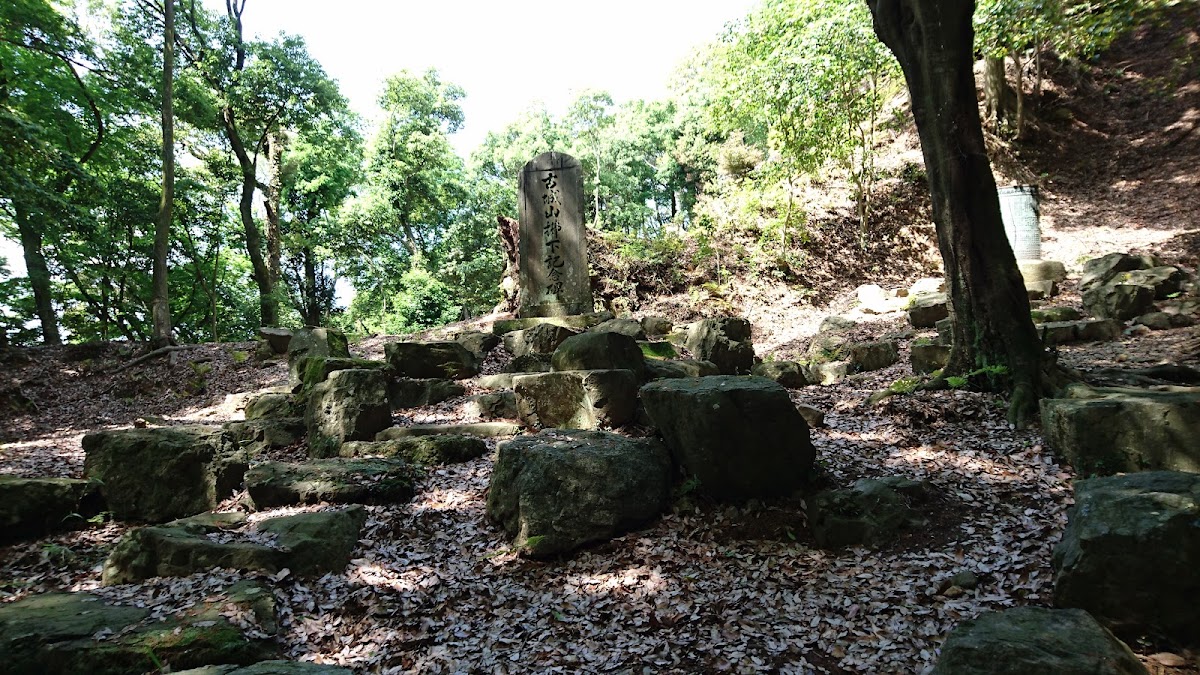
The Wachi Castle ruins are currently maintained and managed by Yaotsu Town as “Inaba Castle Park.” While preserving the remains of the castle, it is used as a place of relaxation for local residents and a place for historical learning.
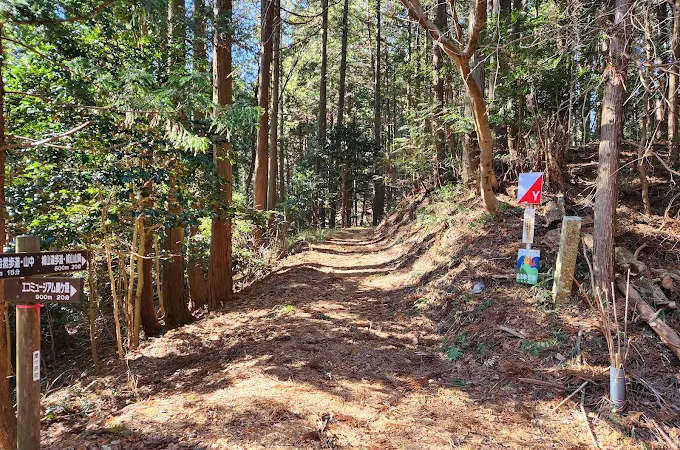
Walking paths are maintained within the park, allowing for safe viewing of the castle ruins. Information boards are also installed, making it easy for first-time visitors to understand the history and structure of Wachi Castle.
Park Facilities
The park includes an observation deck, a reconstructed Yakuimon gate, and rest facilities. A parking lot is also available, making it easily accessible by car.
This park, where visitors can enjoy nature throughout the four seasons, is bustling with cherry blossom viewers during the cherry blossom season and is also known as a popular spot for viewing autumn foliage.
Access Information
Location
- Address: Nogami, Yaotsu-cho, Kamo-gun, Gifu Prefecture
- Landmark: Inaba Castle Park
Access by Car
Approximately 30 minutes from Tajimi IC on the Chuo Expressway via National Route 248 and prefectural roads. The park has a parking lot, making access by car convenient.
Access by Public Transportation
You will need to take a bus from Tajimi Station or Mino-Ota Station on the JR Chuo Main Line. However, since the number of buses is limited, it is recommended to check the timetable in advance.
Points to Note When Visiting
- The park is generally open to visitors, but please avoid entering at night.
- Please be careful not to damage the dry moats or earthworks to protect the historical remains.
- As it is a mountain castle, we recommend wearing comfortable walking shoes.
- Insect repellent is recommended during the summer months.
Nearby Tourist Attractions
History and Culture of Yaotsu Town
Yaotsu Town has many attractions besides Wachi Castle. Within the town is the Sugihara Chiune Memorial Museum, where you can learn about the achievements of diplomat Sugihara Chiune, known for his “visas for life.”
Nearby Castles
Around Wachi Castle, there are other castle ruins from the Sengoku period, such as Mino Kanayama Castle. Mino Kanayama Castle is known as the residence of the Mori clan and is an important castle designated as a national historical site. Those who enjoy visiting castles can gain a deeper understanding of the Sengoku history of Mino Province by visiting multiple castles in combination.
Scenic Spots of the Kiso River
The Kiso River, flowing below Wachi Castle, boasts a beautiful gorge. There are many spots in the surrounding area where you can enjoy the scenery of the Kiso River, allowing you to enjoy both nature and history simultaneously.
The Relationship Between Wachi Castle and the Inaba Clan
Inaba Yoshimichi (Ittetsu) and His Family
The existence of the Inaba clan is indispensable when discussing Wachi Castle. Inaba Yoshimichi (Ittetsu), the father of the castle’s builder Inaba Katamichi, is an important figure who left his mark on Sengoku period history as one of the “Three Great Lords of Mino.”
Initially, Inaba Yoshimichi served Saito Dosan and his son Yoshitatsu, but later defected to Oda Nobunaga and greatly contributed to Nobunaga’s conquest of Mino. Due to this achievement, the Inaba clan established a firm position within Mino, and Katamichi was granted the land of Wachi.
The Life of Inaba Katamichi
Inaba Katamichi, despite being the fourth son, was entrusted with the territory of Wachi, suggesting he held an important position within the Inaba clan. It is presumed that he governed the eastern part of Mino Province from his base at Wachi Castle.
While historical records regarding Katamichi’s detailed achievements are limited, it is certain that he was active under the Oda regime as a member of the Inaba clan.
The Later Life of the Inaba Clan
The Inaba clan continued as a daimyo family into the Edo period, maintaining deep ties with the shogunate, including producing Kasuga no Tsubone (wet nurse of Tokugawa Iemitsu). The main branch of the Inaba clan continued as lords of the Odawara Domain until the Meiji Restoration.
The Historical Value of Wachi Castle
Its Place in the History of Castles in Mino Province
Wachi Castle is important as a typical example of a small to medium-sized castle in Mino Province during the Sengoku period. Unlike large-scale fortresses such as Gifu Castle (Inabayama Castle), Wachi Castle has the characteristics of a local lord’s castle that functioned as a base for regional control.
These small and medium-sized castles played an important role as a foundation supporting the ruling system of Sengoku daimyo, and Wachi Castle is positioned as one such example within the castle network of Mino Province.
As an example of a river terrace castle
In the Mino region, where rivers such as the Kiso River and Nagara River developed, many castles were built utilizing river terraces. Wachi Castle is one of the representative examples and is a valuable historical site for learning castle construction techniques that made the most of the terrain.
The river terrace terrain not only functioned as a natural stronghold but also offered an advantageous location for monitoring and controlling river traffic. It is thought that there were such complex strategic intentions in the selection of Wachi Castle’s location.
Preservation of the remains
The remains of Wachi Castle, in particular, the dry moats and wells, are well-preserved. While many medieval castles have been lost due to development and weathering, the relatively well-preserved remains of Wachi Castle are valuable from the perspective of castle research.
The fact that the site has been developed as Inaba Castle Park, achieving both protection and utilization of the remains, is also commendable.
How to Enjoy Visiting Wachi Castle
Observing the Castle Remains
When visiting Wachi Castle, we recommend carefully observing the massive dry moat first. Not only should you look down from the moat, but if possible, descend to the bottom to experience its depth and scale.
The well in the main enclosure is also an important remains. Observing the area around the well will deepen your understanding of the structure and layout of the main enclosure.
Understanding the Topography
When walking around the castle ruins, pay attention to the topography. By observing the relationship between the topography and the castle structure—such as the arrangement of the baileys, the angle of the cliffs, and the positional relationship with the Kiso River and Ishikawa River—you can understand the castle-building techniques and strategic thinking of the Sengoku period.
The view from the observation deck is an excellent opportunity to truly appreciate the magnificent location of Wachi Castle. By surveying the surrounding terrain, you’ll clearly understand why the castle was built in this spot.
Seasonal Scenery
Inaba Castle Park displays different expressions throughout the seasons. Cherry blossoms bloom in spring, the fresh greenery is dazzling in summer, the autumn leaves are beautiful, and the snowscape in winter is fantastic.
The park is especially crowded with visitors during cherry blossom and autumn foliage seasons. The opportunity to enjoy both historical exploration and nature appreciation simultaneously is a major attraction of Wachi Castle.
Photography Tips
Wachi Castle is also a great spot for photography. The impressive dry moat, the dignified style of the restored Yakuimon gate, and the views from the observation deck offer plenty of subjects to photograph.
The light in the morning and evening is particularly beautiful, and you can capture fantastical photos in the early morning when mist hangs over the Kiso River.
Resources for Learning About Wachi Castle
Related Literature
Those who wish to learn more about Wachi Castle should consult books on castles in Gifu Prefecture and literature dealing with the Sengoku period history of Mino Province. Local history museums and libraries also hold materials related to the history of Yaotsu Town.
Online Information
Castle information websites such as Kojodan (Castle Attack Group) feature photos, evaluations, and visit records from people who have actually visited Wachi Castle. This information is useful for pre-visit research and understanding the perspectives of other visitors.
On-site Information Boards
Information boards are installed within Inaba Castle Park, explaining the history and structure of Wachi Castle. Reading these boards carefully on-site will lead to a deeper understanding.
Summary
Wachi Castle is a Sengoku period mountain castle built by Inaba Katamichi, the fourth son of Inaba Yoshimichi, one of the three most powerful figures in Mino Province. Built on a natural stronghold at the tip of a river terrace between the Kiso River and the Ishikawa River, Wachi Castle boasts remarkably well-preserved remains, including a massive dry moat and a well in the main keep.
Currently, it has been developed as Inaba Castle Park, featuring a reconstructed Yakui Gate and a castle-like observation deck, making it popular not only with history enthusiasts but also with general tourists and local residents. The observation deck offers panoramic views of the Kiso River and surrounding mountains, a major attraction of Wachi Castle.
When visiting Yaotsu Town in Gifu Prefecture, be sure to stop by Wachi Castle Ruins (Inaba Castle Park). You’ll be able to experience the spirit of the Sengoku period while enjoying both the history and nature of Mino Province. As part of a tour of castles in the Mino region, and as a place to learn about local history, Wachi Castle is a historical site well worth visiting.

--765x450.png)