Complete Guide to Yokosuka Castle | History, Stone Wall Features, Successive Lords, and Access Information
Located in Nishi-Obuchi, Kakegawa City, Shizuoka Prefecture, Yokosuka Castle is a fortress that played a crucial role in Tokugawa Ieyasu’s battles against the Takeda clan. Built in 1578, this castle is known for its unique stone walls constructed with cobblestones and its nickname, “The Castle with Two Heads.” It is now designated a national historical site. This article provides a detailed explanation of Yokosuka Castle’s history, architectural features, successive lords, and current highlights.
History and Construction Background of Yokosuka Castle
Construction Process and the Capture of Takatenjin Castle
The construction of Yokosuka Castle took place during the fierce battles between the Tokugawa and Takeda clans in Totomi Province at the end of the Sengoku period. In 1574, Takeda Katsuyori captured Takatenjin Castle, a Tokugawa stronghold, posing a significant threat to Tokugawa Ieyasu’s control in southern Totomi Province.
In the Battle of Nagashino in 1575, Tokugawa Ieyasu dealt a major blow to the Takeda clan. He was compelled to recapture Takatenjin Castle and build a siege network. As the core of this strategy, in 1578, he ordered his retainer, Osuga Yasutaka, to construct Yokosuka Castle.
Yokosuka Castle was newly built after the abandonment of Mabushizuka Castle and functioned as the central base of a group of auxiliary castles that tightened their grip on Takatenjin Castle from the south. This strategy proved successful, and in 1581, Takatenjin Castle fell and was abandoned. From then on, Yokosuka Castle occupied an important position as a base for controlling southern Totomi Province.
From the Edo Period to the Meiji Restoration
After the fall of Takatenjin Castle, Yokosuka Castle developed into an important base for the Tokugawa clan in southern Totomi Province. During the Edo period, Yokosuka Castle served as the administrative center of the Yokosuka Domain, and for 288 years until its demolition in 1868 (Meiji 1), 20 different lords ruled the castle.
Throughout this long history, Yokosuka Castle retained many medieval elements while becoming a valuable historical site representing the transitional period between modern and early modern castles. Also known by other names such as Matsuo Castle and Ryotou Castle, its unique structure has attracted considerable attention.
After the Meiji Restoration, while many castles were demolished, Yokosuka Castle’s buildings were also dismantled. However, the remains, such as the stone walls and moats, survived and are now protected as a national historical site.
Features and Highlights of Yokosuka Castle
Unique Stone Walls Made of Cobblestones
The most distinctive feature of Yokosuka Castle is its stone walls, constructed using cobblestones transported from the Tenryu River. This type of stone masonry (cobblestone wall) is constructed using rounded river stones that have been smoothed by river flow, possessing a unique beauty rarely seen in other castles.
While typical castle stone walls employ processing methods such as rough masonry, fitted stonework, and cut stonework, Yokosuka Castle’s stone walls are on a different level. The skillful technique of combining and stacking round stones is highly advanced, demonstrating the high level of skill of the stonemasons of the time.
The most likely reason for adopting this cobblestone masonry method is the need to expedite the castle’s construction. It is believed that using readily available cobblestones from the Tenryu River allowed for the castle’s rapid construction. However, this unique stone wall ultimately became a major attraction of Yokosuka Castle, leaving a strong impression on visitors.
Currently, the stone walls of the main keep and the western keep have been restored and maintained, allowing visitors to observe their unique beauty up close.
The nickname “The Castle with Two Heads”
Yokosuka Castle has the nickname “The Castle with Two Heads.” This stems from the fact that while typical castles have only one main gate (Otemon), Yokosuka Castle had two, one on the east and one on the west.
This unique structure arose during the development of Yokosuka Castle from a medieval mountain castle to a modern castle. Originally a medieval mountain castle consisting of Mount Matsuo and the main keep, Yokosuka Castle expanded into its modern form by adding the second and third baileys on the east and west plains. This expansion process resulted in the unique structure of having main gates on both the east and west sides.
This structure not only offered defensive advantages but also contributed to the development of the castle town. It is believed that the castle town spread out from both the east and west main gates, leading to increased commercial activity.
Keep and Major Buildings
It is believed that Yokosuka Castle had a keep. Although detailed records are not available, contemporary documents and drawings confirm that a keep stood in the main keep.
After the castle was abandoned in 1868 (Meiji 1), all buildings, including the keep, were demolished, so no remains of the buildings exist today. However, the remains of the castle, such as stone walls, moats, and earthworks, allow us to infer the scale and structure of the former castle.
Currently, Kakegawa City is carrying out a restoration project, including the restoration of stone walls and the installation of information boards. This allows visitors to more concretely imagine what Yokosuka Castle looked like in its heyday.
Successive Castle Lords and the Osuga Clan
First Castle Lord: Osuga Yasutaka
The first lord of Yokosuka Castle was Osuga Yasutaka, a retainer of Tokugawa Ieyasu. Yasutaka was the nephew of Sakai Tadatsugu, one of the Four Heavenly Kings of Tokugawa, and held an important position within the Tokugawa family.
In 1578, Yasutaka built Yokosuka Castle at Ieyasu’s command and became its first lord. He played a crucial role in the siege of Takatenjin Castle and greatly contributed to its fall in 1581.
Yasutaka Osuga, as lord of Yokosuka Castle, solidified his control over southern Tōtōmi Province and dedicated himself to developing the castle town. Under Yasutaka’s rule, Yokosuka Castle transformed from a mere military base into a regional political and economic center.
Successive Lords of Yokosuka Castle After the Osuga Clan
After the Osuga clan, various daimyo served as lords of Yokosuka Castle. Throughout the Edo period, 20 different lords ruled the castle, each contributing to the development of the Yokosuka Domain.
Notable successive lords include the Nomi-Matsudaira, Nishio, and Honda clans, who succeeded the Osuga clan. During the Honda clan’s rule, in particular, the castle town was developed and commerce flourished.
Subsequently, hereditary daimyo such as the Inoue, Ōta, and Matsudaira clans (the Nishio Domain lords) served as lords, and the castle continued to function as an important base for the shogunate’s control of the Tōkaidō region.
The last lord of the castle was Nishio Tadaatsu, who ruled the Yokosuka Domain until the castle’s demolition in 1868 (Meiji 1). After the Meiji Restoration, the Yokosuka Domain became Yokosuka Prefecture under the abolition of the feudal domains and the establishment of prefectures, and was later incorporated into Shizuoka Prefecture.
Current Status and Development of Yokosuka Castle Ruins
National Historic Site Designation and Preservation Activities
Yokosuka Castle Ruins have been designated a National Historic Site in recognition of their historical value and the unique characteristics of their stone walls. This designation legally protects the preservation and appropriate development of the remains.
Kakegawa City is actively working to preserve and utilize the historic site, and is implementing continuous development projects. Restoration of the stone walls, development of walking paths, and installation of information boards are being carried out to create an environment where visitors can learn about and enjoy history.
In particular, detailed investigations and records are being conducted on the stone walls, which are constructed using a unique technique of piled-up stonework, in order to pass on this technique to future generations. Furthermore, efforts are being made to reproduce the techniques of the time as closely as possible in the restoration of collapsed sections.
Current Visiting Points
The main points of interest when visiting Yokosuka Castle Ruins are as follows:
Main Enclosure and Cobblestone Walls
The main enclosure retains restored cobblestone walls, allowing visitors to observe their unique beauty up close. These walls, skillfully constructed with round stones, are a valuable historical structure not found in other castles.
Western Enclosure Remains
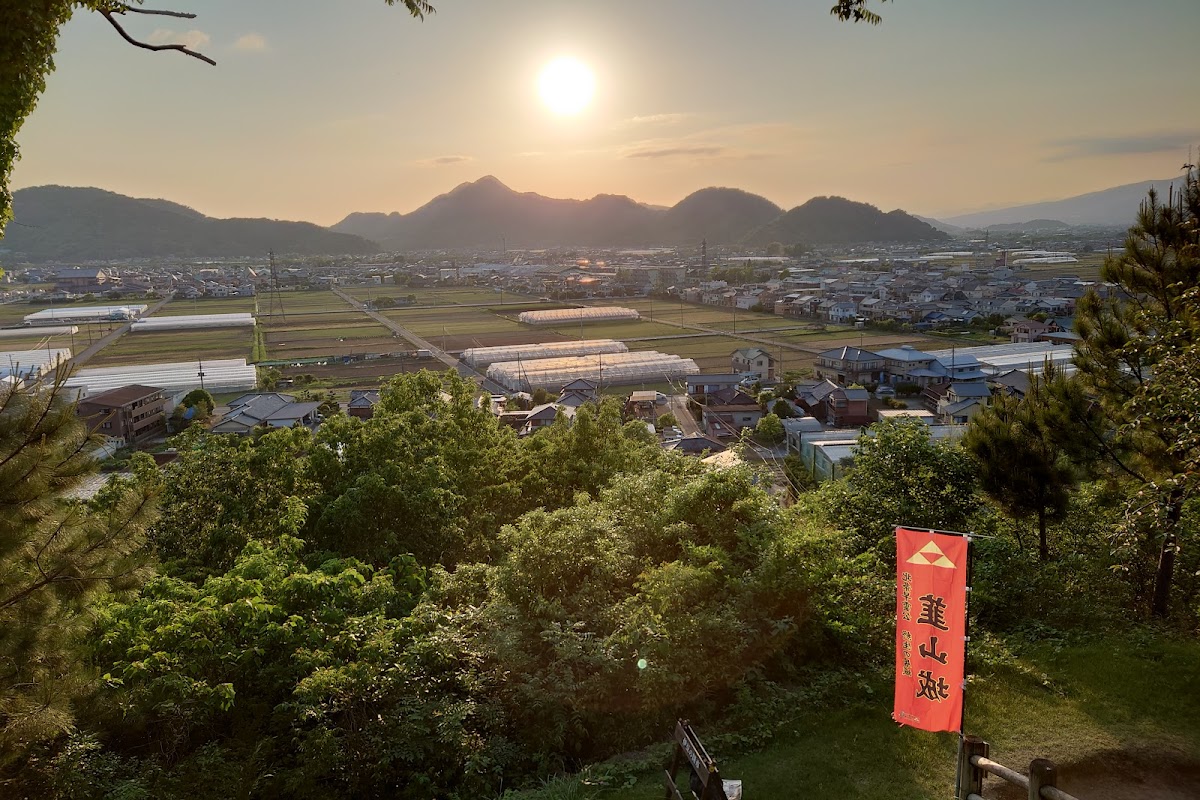
Stone walls also remain at the western enclosure, giving a sense of the castle’s scale. From here, you can view the surrounding geographical landscape and understand the importance of the castle’s location.
Moats and Earthworks
Remains of moats and earthworks surround the castle, providing insight into the defensive system of the time. The remains of the water moat, in particular, clearly demonstrate the characteristics of Yokosuka Castle as a flatland castle.
Information Boards and Panels
Information boards explaining the history and structure are installed within the castle ruins. Referring to these while visiting will allow for a deeper understanding of Yokosuka Castle’s history.
Map and Access Information
Location of Yokosuka Castle Ruins
Address
5298-1 Nishi-Obuchi, Kakegawa City, Shizuoka Prefecture (Yokosuka Castle Ruins)
Yokosuka Castle Ruins are located in the southern part of Kakegawa City, in the center of the former Yokosuka town. The surrounding area retains the atmosphere of a castle town, making it an ideal environment for historical walks.
Transportation Access
Using Public Transportation
- From JR Tokaido Main Line “Kakegawa Station,” take the Shizutetsu Bus bound for “Yokosuka Bus Depot,” get off at the “Yokosuka” bus stop, and walk for approximately 5 minutes.
- By taxi from Kakegawa Station, approximately 20 minutes.
By Car
- Approximately 15 minutes from Tomei Expressway “Kakegawa IC” via National Route 1.
- Approximately 20 minutes from Tomei Expressway “Kikugawa IC” via Prefectural Road 37.
Parking
Free parking is available around Yokosuka Castle Ruins. However, since parking is limited, we recommend arriving early, especially on holidays.
Visiting Information
Visiting Hours
Yokosuka Castle Ruins are maintained as a park and are generally open for free viewing. However, for safety reasons, we recommend avoiding nighttime visits.
Admission Fee
Free
Estimated Time Required
To leisurely view the entire castle ruins, approximately one hour is a good guideline. Including a stroll through the surrounding castle town, it’s best to allocate about two hours.
Nearby Tourist Attractions
Kakegawa Castle
Located about 15 minutes by car from Yokosuka Castle, Kakegawa Castle is known as a famous castle in the Tokai region. The keep has been restored in wood, and you can tour the interior. Visiting both Yokosuka Castle and Kakegawa Castle will give you a deeper understanding of the history of castles in Totomi Province.
Takatenjin Castle Ruins
The Takatenjin Castle Ruins, which were the impetus for the construction of Yokosuka Castle, are also located within Kakegawa City. This castle site, the stage for fierce battles between the Takeda and Tokugawa clans, retains many of the remains of a mountain castle, allowing visitors to experience a Sengoku period mountain castle.
By visiting the three castles of Yokosuka Castle, Kakegawa Castle, and Takatenjin Castle, you can comprehensively learn about the history of Tōtōmi Province from the Sengoku period to the Edo period.
Yokosuka Castle Town
Around the Yokosuka Castle ruins, a townscape that retains the atmosphere of a former castle town spreads out. Old merchant houses and temples and shrines are scattered throughout, making it ideal for historical walks. The atmosphere of an Edo-period post town remains particularly well-preserved along the old Tōkaidō road.
Historical Significance of Yokosuka Castle
As a Military Base at the End of the Sengoku Period
Yokosuka Castle is a castle that symbolizes the Tokugawa clan’s rule over Tōtōmi Province at the end of the Sengoku period. While built as an auxiliary castle for the conquest of Takatenjin Castle, it later developed into a central base for regional control.
The existence of this castle allowed Tokugawa Ieyasu to solidify his control over southern Tōtōmi Province and ultimately succeed in driving out the Takeda clan. The construction and operation of Yokosuka Castle are a prime example of Ieyasu’s sharp strategic vision.
Remains Showing a Transition to Early Modern Castles
Yokosuka Castle is a valuable remains that shows the transitional period from medieval mountain castles to early modern flatland castles. The structure, combining the mountain castle section on Mount Matsuo with the flatland castle section, clearly represents the characteristics of castle architecture from this era.
Furthermore, the unique stonework technique of stacking pebbles is an important resource in castle research, demonstrating the technological trial and error of the time.
As a Regional Cultural Center
Throughout the Edo period, Yokosuka Castle functioned not merely as a military base, but as the political, economic, and cultural center of the region. The development of the castle town led to a flourishing commercial sector and a gathering place for many people.
Even today, the Yokosuka Castle ruins are an important cultural asset in Kakegawa City and a part of the region’s identity. Many tourists visit throughout the year, making it a place to learn about the region’s history and culture.
Contact Information
For inquiries regarding visits to the Yokosuka Castle ruins and their maintenance status, please contact the following:
Kakegawa City Tourism Promotion Section (Industrial Tourism Division)
Phone: 0537-21-1121 (Main)
Website: Kakegawa City Official Tourism Site
For the latest maintenance status and event information, please check the official Kakegawa City website.
Summary
Yokosuka Castle was an important base built by Tokugawa Ieyasu during his battles against the Takeda clan. It is a valuable historical site known for its unique stone walls constructed of rubble and its nickname, “The Castle with Two Heads.” From its construction in 1578 to its abandonment in 1868, it served as the political, economic, and cultural center of southern Totomi Province for 288 years, under the rule of 20 different lords.
Currently, it is designated as a national historical site and is continuously maintained by Kakegawa City. The unique stone walls, constructed using pebbles transported from the Tenryu River, are a valuable historical feature not seen in other castles, leaving a strong impression on visitors.
When visiting Kakegawa City, be sure to visit the Yokosuka Castle ruins and experience the history of Totomi Province from the Sengoku period to the Edo period. Visiting the nearby Kakegawa Castle and Takatenjin Castle ruins in conjunction with the Yokosuka Castle ruins will allow you to gain a deeper understanding of the region’s history.