Complete Guide to Fugyu Castle (Iwate Prefecture): History, Highlights, and Access Explained in Detail
What is Fugyu Castle?: A Historic Castle Remaining in Kitakami City, Iwate Prefecture
Fugyu Castle (浮牛城) is a hilltop castle located in Matsusaka, Kuchinai-cho, Kitakami City, Iwate Prefecture. Built on a hill approximately 140m above sea level and 30m above ground level, this castle, also known as “Kamikuchinai Fortress,” “Kamikuchinai Castle,” and “Kuchinai Castle,” functioned as an important military base in Mutsu Province.
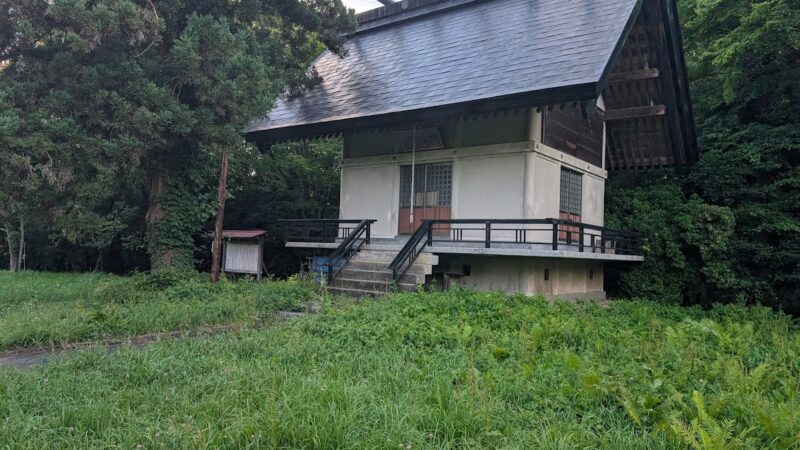
Currently, the site is within the grounds of Takehiko Shrine, and the remains of earthworks, baileys, and moats are well-preserved. The name “Fugyu” (浮牛) is said to originate from the fact that the inner and outer moats were water moats, making the castle (mansion) appear to float on water, as well as from a legend that a cow was buried alive during its construction.
While Iwate Prefecture boasts many famous castles such as Morioka Castle, Kunohe Castle, Hanamaki Castle, Shiwa Castle, and Nabekura Castle, Ukiushi Castle, situated on the border between the Date and Nanbu domains, holds unique historical value.
History of Ukiushi Castle: From the Abe Clan to the Edo Period
Construction Period: Legend of Construction by Abe no Sadato
The exact construction date of Ukiushi Castle is unclear, but according to tradition, it was built by Abe no Sadato, a military commander of the late Heian period. Abe no Sadato was a powerful local lord of Oshu who fought against Minamoto no Yoriyoshi and his son Yoshiie in the Former Nine Years’ War (1051-1062).
A legend remains that three oxen were buried alive as part of a ground-breaking ceremony during the castle’s construction, which is one of the origins of the castle’s name, “Ukiushi” (Floating Ox). This legend illustrates the importance of rituals in castle construction at the time and indicates an intention to enhance the castle’s defensive capabilities through mystical power.
Kamakura and Muromachi Periods: The Era of the Kasai and Kuchinai Clans
During the Kamakura period, Ukiushi Castle became the residence of the Kuchinai clan, a branch of the Esashi clan, one of the seven branches of the Kasai clan. The Kasai clan were retainers granted vast territories in Mutsu Province by Minamoto no Yoritomo after the fall of the Oshu Fujiwara clan, and their family extended their influence from southern Iwate Prefecture to northern Miyagi Prefecture.
The Kuchinai clan, a branch of the Esashi clan whose base was Iwayado Castle, developed and expanded Ukiushi Castle as their base of operations in this region. Throughout the Sengoku period, the Kuchinai clan used this castle as their residence and acted as a powerful local clan.
Dispossession of Territory and Incorporation into Date Territory under the Toyotomi Regime
In 1590, during Toyotomi Hideyoshi’s siege of Odawara, the Kasai clan did not participate and were consequently dispossessed of their territory. This punishment affected all of the Kasai clan’s territory, and the Kuchinai clan was forced to leave the castle.
Subsequently, this region came under the control of Date Masamune, and Ukiushi Castle increased in importance as a border castle with the Nanbu domain. The Date domain referred to Ukiushi Castle as “Kamiguchi-uchi Fortress” and positioned it as a strategically important military point.
Edo Period: As a Border Fortress of the Date Domain
Throughout the Edo period, Ukiushi Castle functioned as a strategically important location along a secondary road connecting the Date and Nanbu domains. Because it was a border region between the two domains, it was constantly in a state of tension, and Date retainers were stationed at the castle to guard it.
In 1695 (Genroku 8), the Nakajima clan became the lords of the castle, and they defended it for generations until the Meiji Restoration. During this period, Ukiushi Castle increasingly took on the character of an administrative and governing center rather than a military facility.
Structure and Remains of Ukiushi Castle
Layout and Defensive Facilities
Ukiushi Castle, as a flatland castle, has a layout that skillfully utilizes the natural terrain. The castle complex consists of multiple enclosures centered around the main enclosure, defended by earthworks and moats.
Main Remains:
- Earthworks: The earthworks surrounding the main enclosure are well-preserved, reaching a height of 2-3 meters, and convey the defensive structure of the time.
- Enclosures (Kuruwa): Multiple enclosures arranged in stages can be identified, forming a layered defensive system.
- Moats: Both the inner and outer moats are believed to have been water moats, a distinctive structure that gave rise to the name “Ukiushi” (Floating Ox).
- Gate: Some defensive structures at the entrance can also be seen.
The current grounds of Takehiko Shrine correspond to the main enclosure, and the topographical features of the castle can be experienced as one ascends the approach to the shrine.
Preservation Status of Existing Remains
The remains of Ukiushi Castle are in a good state of preservation compared to other medieval castles in Iwate Prefecture. The well-preserved earthworks, in particular, are excellent, providing valuable information for estimating the castle’s scale at the time.
Preservation Status of Existing Remains
The fact that it was used as Takehiko Shrine has, in effect, spared development and contributed to the preservation of the ruins. However, some alterations due to the shrine’s architecture are visible, so it is not in a perfect state.
Highlights of Ukiushi Castle
Fusion of Takehiko Shrine and Castle Ruins
Currently, Takehiko Shrine is located on the site of Ukiushi Castle, making it a unique spot where visitors can enjoy both shrine worship and castle ruins simultaneously. The shrine’s main building is built on the main enclosure, allowing visitors to experience the castle’s topography as they ascend the approach.
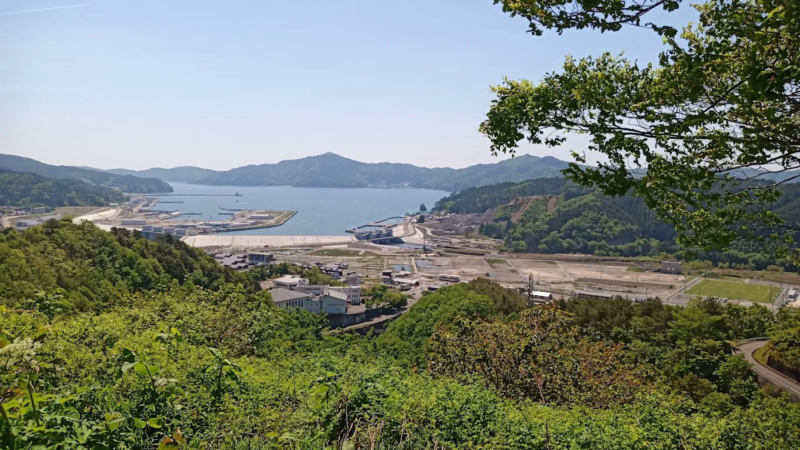
From the shrine grounds, you can enjoy a panoramic view of the Kitakami Basin, helping you understand why this area was considered a strategically important military location. On particularly clear days, you can even see as far as Mount Iwate.
Remains of Earthworks and Moats
The greatest highlight when visiting the castle ruins are the well-preserved remains of earthworks and moats. The earthworks around the main enclosure, in particular, are high, allowing visitors to experience the defensive structure of a medieval castle.
While parts of the moat are currently filled in, the original layout can be estimated from the topography. Traces of the water moat remain as depressions in the terrain, and water sometimes accumulates after rain.
Ukigyu Castle Festival: A Local Traditional Event
Every year, the “Ukigyu Castle Festival” is held in the area, featuring historical reenactments such as a daimyo procession. This event is an important one for preserving the region’s history and culture, playing a vital role in conveying the history of Ukigyu Castle to the present day.
The festival features a procession of warriors in armor and performances of traditional local arts, attracting many tourists and local residents. This historical event, held at the castle ruins, also contributes to raising awareness of cultural property preservation.
Access and Visiting Information
Location and Transportation
Location: Matsusaka, Kuchinai-cho, Kitakami City, Iwate Prefecture (Takehiko Shrine)
Access by Public Transportation:
- Approximately 20 minutes by car from JR Tohoku Main Line “Kitakami Station”
- Bus service is limited, so taxis are recommended.
Access by Car:
- Approximately 15 minutes from Tohoku Expressway “Kitakami-Ezuri IC”
- Parking: Parking available for visitors to Takehiko Shrine (a few cars)
Points to Note When Visiting
Visiting Hours: As it is within the grounds of Takehiko Shrine, it is freely accessible during the daytime.
Estimated Time Required: Approximately 30 minutes to 1 hour (if carefully observing the remains)
Clothing and Equipment:
- Comfortable walking shoes (due to hilly terrain)
- Insect repellent is recommended in summer.
- Caution is advised as the ground can be slippery in rainy weather.
Notes:
- As this is a shrine site, please observe proper etiquette when visiting.
- To protect the historical remains, please refrain from climbing on the earthworks, etc.
- Please take all your trash with you.
Visit nearby castles as well
Nearby Major Castles
When visiting Ukiushi Castle, visiting other castles in Iwate Prefecture in conjunction with this site will allow you to gain a deeper understanding of the region’s history.
Castles around Kitakami City:
- Futago Castle (approx. 6.8km): A stronghold along the Kitakami River, the residence of the Waga clan.
- Kuroiwa Castle (approx. 4.3km): A medieval castle located near Ukiushi Castle.
- Takadate (approx. 4.9km): A castle site different from Takadate in Hiraizumi, known for its connection to Minamoto no Yoshitsune.
Major Castles in Iwate Prefecture:
- Morioka Castle: The residence of the Nanbu clan, a representative early modern castle of Iwate Prefecture.
- Kunohe Castle: An important Sengoku period castle designated as a National Historic Site.
- Hanamaki Castle: A castle located in the center of Hanamaki City, now maintained as a park.
- Shiwa Castle: The ruins of an ancient castle fort, designated as a National Historic Site.
- Ichinoseki Castle: A castle that functioned as a branch castle of the Date clan.
By visiting these castles, you can systematically understand the history of castles in Iwate Prefecture from ancient times to the early modern period.
Historical Value and Future Preservation of Ukiushi Castle
Importance as a Border Fortress
The greatest historical value of Ukiushi Castle lies in its role as a fortress located on the border between the two major powers, the Date and Nanbu domains. Its continued importance as the “Kamiguchi Fortress” throughout the Edo period speaks to the strategic importance of this area.
Its location along a side road is also significant, serving not only as a military surveillance point but also as a crucial transportation hub. Such border castles also functioned as diplomatic and trade hubs during peacetime, influencing the regional economy.
Significance in Regional History Research
Research on Ukiushi Castle provides important clues to understanding the activities of the Kasai clan, the relationship between the Date and Nanbu domains, and the changes in the local community. In particular, as one of the few historical sites that reveals the reality of the Kuchinai clan, a local powerful family, its academic value is highly regarded.
Recent archaeological excavations and surveys are revealing the castle’s structure in greater detail, and it is attracting attention as an example of the transformation of castles during the transition from the medieval to the early modern period.
Challenges in Preservation and Utilization
Currently, the Ukiushi Castle ruins are not designated as a historical site, but their importance as a valuable historical heritage of the region is recognized. While its use as the Takehiko Shrine contributes to its preservation, the following challenges exist:
- Detailed Investigation of Remains: Many areas have not undergone full-scale excavation, making it difficult to fully understand the castle’s structure.
- Improvement of Information Boards and Explanations: Information provided to visitors is limited.
- Preservation and Management Plan: A long-term preservation and management framework is needed.
- Collaboration with the Community: Dissemination of its value as a cultural property through local events such as the Ukiushi Castle Festival.
It is hoped that it will be appropriately preserved and utilized as a historical resource of the region in the future.
Summary: The Charm of Ukiushi Castle
Ukiushi Castle (Kitakami City, Iwate Prefecture) is a historical castle that began with the legend of Abe Sadato, played an important role throughout the Edo period as a border stronghold of the Date clan, and later under the rule of the Kasai clan.
The well-preserved earthworks and bailey remains are valuable historical sites that convey the castle structure from the medieval to early modern periods, and have been protected by the local community as part of the grounds of Takehiko Shrine. While Iwate Prefecture has many famous castles such as Morioka Castle and Kunohe Castle, Ukiushi Castle has a unique historical position as a border stronghold, making it indispensable for understanding the region’s history.
When visiting Kitakami City, why not take a visit to this little-known but magnificent castle and experience a part of Tohoku’s complex history? Visiting during the Ukiushi Castle Festival will offer a special experience where history and the present intersect.