Futago Castle (Iwate Prefecture) Complete Guide: A Thorough Explanation from the Waga Clan’s Residence to the Iwasaki Rebellion
Overview
Futago Castle (Futago-jo) was a Japanese castle that once existed in Kitakami City, Iwate Prefecture. Also known as Tobase Castle, it was located in Futago Village, Waga District, Mutsu Province (present-day Futago-cho, Kitakami City). This castle served as the residence of the Waga clan, who ruled Waga District during the medieval period, and functioned as the political and military center of the region for approximately 150 years.
Origin of the Name of Futago Castle
The name Futago Castle originates from the two small hills located side-by-side in the northwestern part of the castle grounds. Specifically, the hill on the west side, where Akiba Shrine is enshrined, and the hill on the east side, where Hachiman Shrine is enshrined, are paired together, hence the name “Futago” (two hills). This topographical feature became established as the castle’s name.
Location and Scale
Futago Castle is a flatland castle built on a hilly area on the western bank of a bend in the Kitakami River. Its elevation is approximately 130 meters, with a relative height difference of about 70 meters. The Kitakami River side is a cliff-like terrain, functioning as a natural stronghold. The castle’s overall size extends approximately 1,000 meters from north to south and 500 meters from east to west, and it is known as the largest castle site in the medieval Waga County.
Within this vast castle area, the lord’s residence, known as “Shiratori-kan,” was located in the center, with the residences of the retainers arranged around it. Even today, the remains of the retainers’ residences can be seen in the surrounding area, allowing us to imagine what the castle town looked like at the time.
History and Background
Establishment and Early History of the Waga Clan
The Waga clan was a family that advanced into the Tohoku region as a Kanto Gokenin (vassal of the Kanto region) during the Kamakura period. The history of the Waga clan began when the Odajima clan, the younger brother of the Karita branch of the Waga clan, changed their surname to Waga and established their base in this area. While the exact construction date is unclear, it is estimated to have been built sometime between the Kamakura and early Muromachi periods.
The Futago Waga Clan during the Nanboku-cho Period
During the Nanboku-cho period, the Futago Waga clan sided with the Southern Court and, in collaboration with other branches of the clan in the Nishiwaga area and the Hondō clan (a branch of the Odajima clan) in Senboku County (present-day Akita Prefecture), formed a powerful force. During this period, the Waga clan grew into a prominent samurai group in the region.
Establishment as a Main Castle
In 1400 (Ōei 7), the Kantō Kanrei (Governor of the Kanto region) recognized Waga Tokiyoshi (Waga Shimōsa Nyūdō Tokiyoshi) as the head of the Waga clan and granted him control over the entire Waga County. As a result, Futago Castle was established as the headquarters of the Waga clan, and from the mid-15th century onward, Futago Castle became the main castle of the Waga clan.
Therefore, Futago Castle functioned as the political and military center of the Waga clan, who controlled the entire Waga district, and successive lords of the clan resided in this castle.
The Oshu Settlement of 1590
In 1590 (Tensho 18), Toyotomi Hideyoshi launched the Odawara Campaign. At this time, Waga Yoshitada, the lord of the castle, did not participate in the Odawara Campaign, and as a result, his territory was confiscated during Toyotomi Hideyoshi’s Oshu Settlement. Consequently, Futago Castle, which had existed as the main castle of the Waga clan for approximately 150 years, was abandoned.
After the Oshu Settlement, Waga district came under the control of the Nanbu clan, and the former territory of Futago Castle was governed by Nanbu clan vassals.
Iwasaki Rebellion (Waga-Hienuki Rebellion)
Background of the Rebellion
In 1600 (Keicho 5), a major upheaval occurred in the Tohoku region, coinciding with the Battle of Sekigahara. Taking advantage of the Nanbu clan’s absence due to their main forces being deployed to Mogami, movements to reclaim their former territories intensified.
Waga Tadachika’s Uprising
Waga Tadachika (believed to be the son of Waga Yoshitada), a member of the Waga clan who lost their territory in the Oshu Settlement, raised an army with the support of the Date clan, aiming to reclaim their former lands. This was the Iwasaki Rebellion (Waga-Hienuki Rebellion).
Waga Tadachika gathered his former retainers and fought against the Nanbu clan from Futago Castle. At one point, he recovered most of his former territory and expanded his power, but ultimately, the rebellion was suppressed by a counterattack from the Nanbu clan.
Outcome of the Rebellion
This rebellion was suppressed quickly, and Waga Tadachika was forced to flee. While there are various theories about his subsequent fate, the Waga clan’s attempt to reclaim their former territory was a complete failure. After the Iwasaki Rebellion, Futago Castle was completely abandoned, and the Nanbu clan’s rule was established.
Structure
Basic Structure of the Castle
Futago Castle is a flatland castle utilizing the hills on the right bank of the Kitakami River, with a layout that skillfully makes use of the natural terrain. The castle area was broadly divided into a fortified outpost and a residence area for peacetime.
Fortified Outpost (Mountain of Hachiman Shrine)
The mountain on the east side, where Hachiman Shrine is enshrined, functioned as the fortified outpost. This area was designed as a final defensive base in times of emergency, and a moat surrounded the eastern foot of the mountain. Defensive structures such as earthworks and trenches were positioned in the fortified outpost area, boasting a strong defense.
Shiratori-kan (Residence Site)
The area where the Shiratori Shrine and Waga Shrine stand at the eastern foot of the mountain is called “Furukan” or “Shiratori-kan,” and is believed to be the site of the lord’s residence during peacetime. This central area was where the lord and his family lived their daily lives and where they conducted government affairs.
Around the residence site, the residences of senior retainers were systematically arranged, giving the area the function of a castle town.
Characteristics of the Remains
The following remains have been confirmed to exist today:
- Earthworks: Traces of earthworks remain in various parts of the castle grounds, forming a defensive line.
- Moats: Multiple moats, cut across the ridge, have been confirmed in several locations.
- Horizontal Moats: Horizontal moats encircled the western lower part of the castle, providing protection against attacks from the flanks.
- Enclosures: Multiple enclosures arranged in a stepped pattern have been confirmed.
These remains exhibit typical structures of medieval castles and are valuable resources for understanding the level of castle construction technology at the time.
Genealogy of the Castle Lords and the Waga Clan
Successive Castle Lords
The main lords of the Waga clan, who made Futago Castle their main base, are as follows:
- Waga Tokiyoshi (Oei era): The head of the Waga clan who established Futago Castle as their base as the main Waga family.
- Waga Yoshitada (Tensho era): The last lord whose territory was confiscated for not participating in the Siege of Odawara.
- Waga Tadachika (Keicho era): The person who led the Iwasaki Rebellion and temporarily used Futago Castle as his base.
The Waga Clan’s Retainers
The Waga clan’s retainers established residences around the castle and, in peacetime, engaged in agriculture and commerce, while maintaining a system to fight as samurai in times of emergency. Even today, place names such as “○○ Yashiki” (○○ Residence) remain in the vicinity of Futago-cho, Kitakami City, allowing us to imagine the arrangement of the retainers at that time.
Current Futago Castle Ruins
Development as a Municipal Park, Hisei Castle Ruins
Currently, a portion of the Futago Castle ruins has been developed as “Municipal Park, Hisei Castle Ruins,” serving as a place of relaxation for citizens. Walking paths have been established within the park, allowing visitors to experience history while strolling through the castle ruins.
Main Highlights
The main highlights when visiting the Futago Castle ruins are as follows:
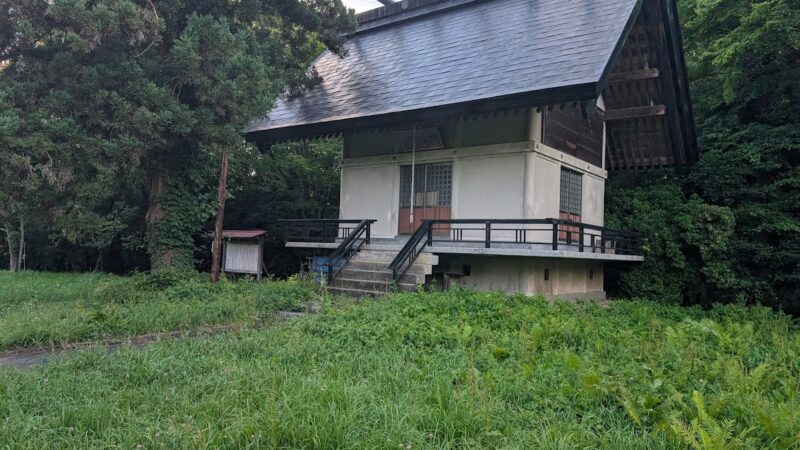
- Shiratori Shrine/Waga Shrine: Shrines built on the site of the lord’s residence, historical sites associated with the Waga clan.
- Hachiman Shrine: Shrine built on the site of the inner castle, which guarded the eastern side of the castle.
- Akiba Shrine: Enshrined on the western mountain, one of the two mountains from which Futago Castle derives its name.
- Remains of Earthworks and Moats: You can observe traces of defensive structures remaining throughout the castle grounds.
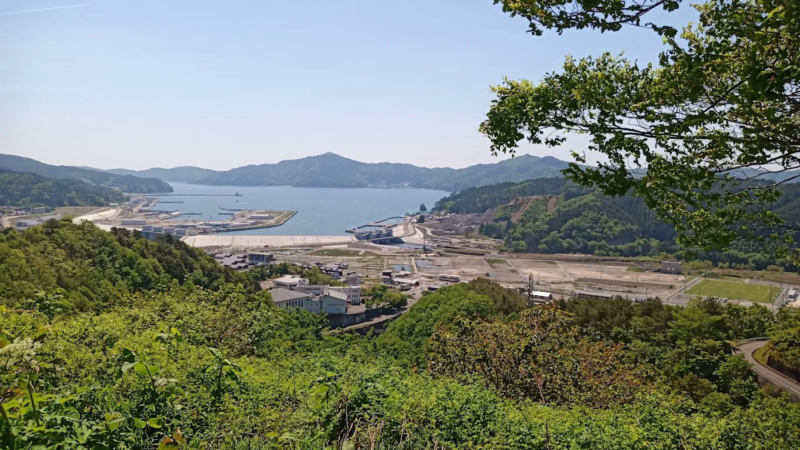
- View of the Kitakami River: From the castle ruins, you can enjoy a panoramic view of the Kitakami River, allowing you to appreciate the importance of the location at the time.
Access Information
Location: Futago-cho, Kitakami City, Iwate Prefecture
Transportation Access:
- Approximately 15 minutes by car from JR Tohoku Main Line “Kitakami Station”
- Approximately 20 minutes by car from Tohoku Expressway “Kitakami-Ezuri IC”
Parking: Parking spaces available around the park
Visiting Hours: Free (however, subject to the shrine’s visiting hours)
Notes for Visitors
- As the castle ruins are located on a hillside, comfortable walking shoes are recommended.
- Many of the remains are preserved in nature, so insect repellent is necessary during the summer.
- Information boards and explanatory signs are limited, so learning about the history beforehand will deepen your understanding.
- Please behave quietly and respectfully while visiting the shrine grounds.
Historical Significance of Futago Castle
Position in Medieval Tohoku History
Futago Castle occupies an important position in regional history as the base of the Waga clan, a powerful samurai group in the Tohoku region during the medieval period. As the largest castle site in Waga County, it is a valuable historical site for understanding the realities of regional governance and the lifestyle of samurai groups at the time.
The Oshu Settlement and the Sengoku Period in Tohoku
The Oshu Settlement of 1590 (Tensho 18) brought about significant changes in the Tohoku region as part of Toyotomi Hideyoshi’s unification of Japan. The abandonment of Futago Castle can be said to be one of the events symbolizing this historical turning point. It is also attracting attention from a historical perspective as an important example showing the transition from medieval regional governance to early modern territorial governance.
Historical Background of the Iwasaki Rebellion
The Iwasaki Rebellion of 1600 (Keicho 5) was a regional conflict linked to the nationwide upheaval of the Battle of Sekigahara, marking the final stage of the Sengoku period in Tohoku. Waga Tadachika’s uprising, aimed at reclaiming his former territory, represented a movement seeking a return to a medieval regional order and symbolizes the turmoil in local communities during the transition to the early modern period.
Related Historical Sites in the Surrounding Area
Historical Sites Related to the Waga Clan
Several historical sites related to the Waga clan exist around Futago Castle:
- Iwasaki Castle: One of the Waga clan’s branch castles, and the origin of the name of the Iwasaki Rebellion.
- Oniyanagi Castle: The residence of a member of the Waga clan.
- Fujine Castle: An important branch castle of the Waga clan.
Visiting these castle ruins provides a deeper understanding of the Waga clan’s sphere of influence and governing system.
Other Historical Sites in Kitakami City
Besides Futago Castle, Kitakami City has many other historical sites:
- Kitakami City Museum: Exhibits materials related to the Waga clan and Futago Castle.
- Kunimiyama Temple Ruins: The site of an ancient temple, offering insights into the ancient history of this region.
- Oni no Yakata: An exhibition facility related to the demon legends of the Kitakami region.
Reference Materials and Research Materials
Major Literature
Major literature and materials for learning about Futago Castle and the Waga clan:
- “Iwate Prefecture History”: A general history of Iwate Prefecture, it provides detailed descriptions of the Waga clan and Futago Castle.
- “Kitakami City History”: A city history that meticulously records the history of Kitakami City, with abundant descriptions of Futago Castle.
- Survey Report Published by the Iwate Prefectural Board of Education: Summarizes the results of excavation and surveying of the castle ruins.
- “Studies on Medieval Samurai Groups”: This is an academic book that studies samurai groups in the Tohoku region, including the Waga clan.
Current Status of Research
Several surveys and archaeological confirmation surveys have been conducted at the Futago Castle site. However, detailed excavations of the entire vast castle area have not been carried out, and further research may reveal many more facts.
In particular, the arrangement of the retainers’ residences and the structure of the castle town are areas where further research is expected. Furthermore, clarifying the castle’s transformation process in more detail through comparison with historical documents is also a future challenge.
Other
Legends Related to Futago Castle
Several legends remain about Futago Castle. These include tales of the Waga clan’s valor and stories of hidden treasures within the castle. These oral traditions, separate from historical facts, are important elements that form the region’s identity.
Local Preservation Activities
Currently, the city of Kitakami and local history enthusiasts are engaged in preservation and utilization activities for the Futago Castle ruins. Efforts to pass on the historical site to future generations continue through regular grass cutting, maintenance of walking paths, and installation of information boards.
Utilization as a Tourism Resource
In recent years, interest in medieval castles has been growing among castle enthusiasts and history lovers. The Futago Castle ruins, as one of Iwate Prefecture’s representative medieval castle ruins, are expected to be utilized as a tourism resource. Kitakami City is working to promote tourism utilizing historical heritage, including the Futago Castle ruins, and is creating guide maps and conducting guided tours.
Utilization in Education
The Futago Castle ruins are also used as teaching material for local history education. Local elementary and junior high schools provide opportunities for students to visit the Futago Castle ruins as part of their local history studies. Walking through the castle ruins allows students to experience living history that cannot be learned from textbooks.
Summary
Futago Castle, located in Kitakami City, Iwate Prefecture, is a crucial historical site indispensable to understanding the medieval history of the Tohoku region, as it is the site of the main castle of the medieval Waga clan. It functioned as the Waga clan’s residence for approximately 150 years, from 1400 to 1590, and flourished as the political and military center of Waga County.
The vast castle grounds, approximately 1,000 meters north-south and 500 meters east-west, featured the Shiratori Mansion, the lord’s residence, surrounded by the residences of his retainers, presenting the appearance of a medieval castle town. The natural fortifications utilizing the cliffs of the Kitakami River demonstrate the advanced castle-building techniques of the time.
Even after being abandoned following the pacification of Oshu in 1590, it reappeared on the historical stage when Waga Tadachika temporarily used it as a base during the Iwasaki Rebellion of 1600. After the suppression of this uprising, Futago Castle was completely abandoned, but remnants such as earthworks and moats still remain, allowing us to imagine what it was like in those days.
Currently, the site has been developed as the Hiseijo Castle Ruins Municipal Park, serving as a place of relaxation for citizens and also as a place to learn about history. When you visit Iwate Prefecture, why not take a trip to Futago Castle Ruins and experience a glimpse of the glory of the Waga clan and a part of Tohoku’s medieval history?