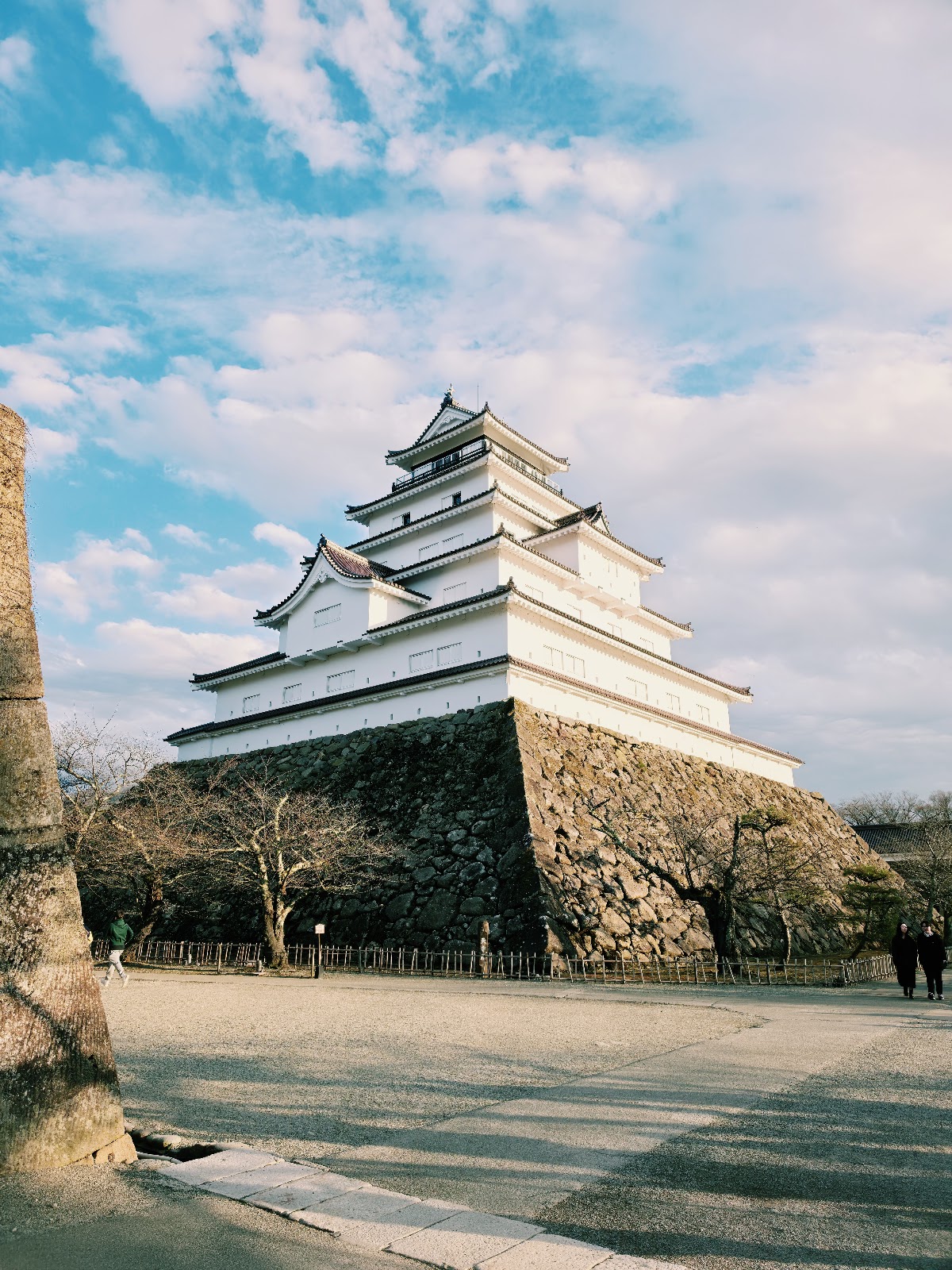
Tsuruga Castle (Sukumo City, Kochi Prefecture) Complete Guide: A Thorough Explanation of the Remains and History of a Mountain Castle in Tosa
Tsuruga Castle, located in Yoshina, Yamana-cho, Sukumo City, Kochi Prefecture, is an important mountain castle that supported the expansion of Chosokabe Motochika’s power, who unified Tosa Province during the Sengoku period. Also known as Yoshina Castle, this castle was built on a mountaintop approximately 80 meters above sea level, and its remains, such as moats and earthworks, remain in excellent condition even today. This article comprehensively explains everything a castle enthusiast and history buff would want to know, from the historical background of Tsuruga Castle to its structure, highlights, and access methods.
History and Construction Background of Tsuruga Castle
Chosokabe Motochika and the Unification of Tosa
Tsuruga Castle first appears in history in Tensho 3 (1575). During this period, Chosokabe Motochika was expanding his power in Tosa Province and proceeding with the unification of the province. Motochika consolidated his rule by placing important retainers throughout Tosa Province and having them build castles at strategic locations.
The Sukumo region was located at the western edge of Tosa Province, a crucial area close to the borders of Iyo Province (present-day Ehime Prefecture) and Bungo Province (present-day Oita Prefecture). Controlling this area was an essential strategy for the Chosokabe clan, who aimed to unify Shikoku.
Entry of Toichi Bingo-no-kami (Hosokawa Sōtō)
In 1575 (Tenshō 3), Chosokabe Motochika appointed his subordinate general, Toichi Bingo-no-kami, as the lord of Tsuruga Castle. Toichi Bingo-no-kami, also known as Hosokawa Sōtō, was one of the most trusted generals within the Chosokabe clan.
The Toichi clan originally hailed from Yamato Province (present-day Nara Prefecture) and entered Tosa Province following the Chosokabe clan. Using Tsuruga Castle as his base, he dedicated himself to controlling the Sukumo region and expanding his power westward. It is believed that the castle functioned not only as a military base but also as a center of regional governance.
Transition from the Sengoku Period to the Edo Period
Chosokabe Motochika achieved the unification of Shikoku in 1585, but subsequently surrendered during Toyotomi Hideyoshi’s conquest of Shikoku, leaving him with the rule of only Tosa Province. After the Battle of Sekigahara, in 1601, the Chosokabe clan was dispossessed of their domain, and Yamauchi Kazutoyo became the lord of Tosa Province.
During this period, the Tokugawa shogunate issued the One Castle Per Province decree, resulting in the abandonment of castles in each domain except for major castles. It is believed that Tsuruga Castle was also abandoned as a result of this policy. In the Sukumo region, Sukumo Castle (Sukumo Doi) was later developed as a branch castle of the Yamauchi clan and became the regional center throughout the Edo period.
Structure and Characteristics of Tsuruga Castle
Location as a Mountain Castle
Tsuruga Castle is a typical mountain castle built on a mountaintop with a relative elevation of approximately 80 meters. Relative elevation refers to the difference in height from the base of the castle to the mountaintop, and 80 meters is a standard size for a medium-sized mountain castle. Its location, surrounded by forests, demonstrates the characteristics of Sengoku period castle construction, utilizing terrain advantageous for defense and allowing for early detection of approaching enemies.
From the mountaintop, one can see Sukumo Bay and the surrounding plains, suggesting it also functioned as a military surveillance base. Its strategic location controlling a key transportation point in western Tosa Province made it a castle of high strategic value.
Arrangement of Enclosures (Kuruwa)
Tsuruga Castle’s layout features enclosures arranged on ridges extending east-west and south from the mountaintop. The main enclosure (honmaru) is located at the mountaintop, with multiple enclosures arranged in a stepped fashion along the ridge.
This layout allows for a gradual defense against enemies advancing along the ridge, with each enclosure providing a step-by-step retaliation. Each enclosure is surrounded by an earthen rampart, further enhancing its defensive capabilities. These ramparts, constructed by piling up earth, served to protect soldiers from arrows and firearms.
Continuous Arrangement of Moats
The most distinctive feature of Tsuruga Castle is its defensive system, which consists of multiple layers of sharp moats. A moat is a dry ditch dug across a ridge, serving as a crucial defensive structure to prevent enemy intrusion.
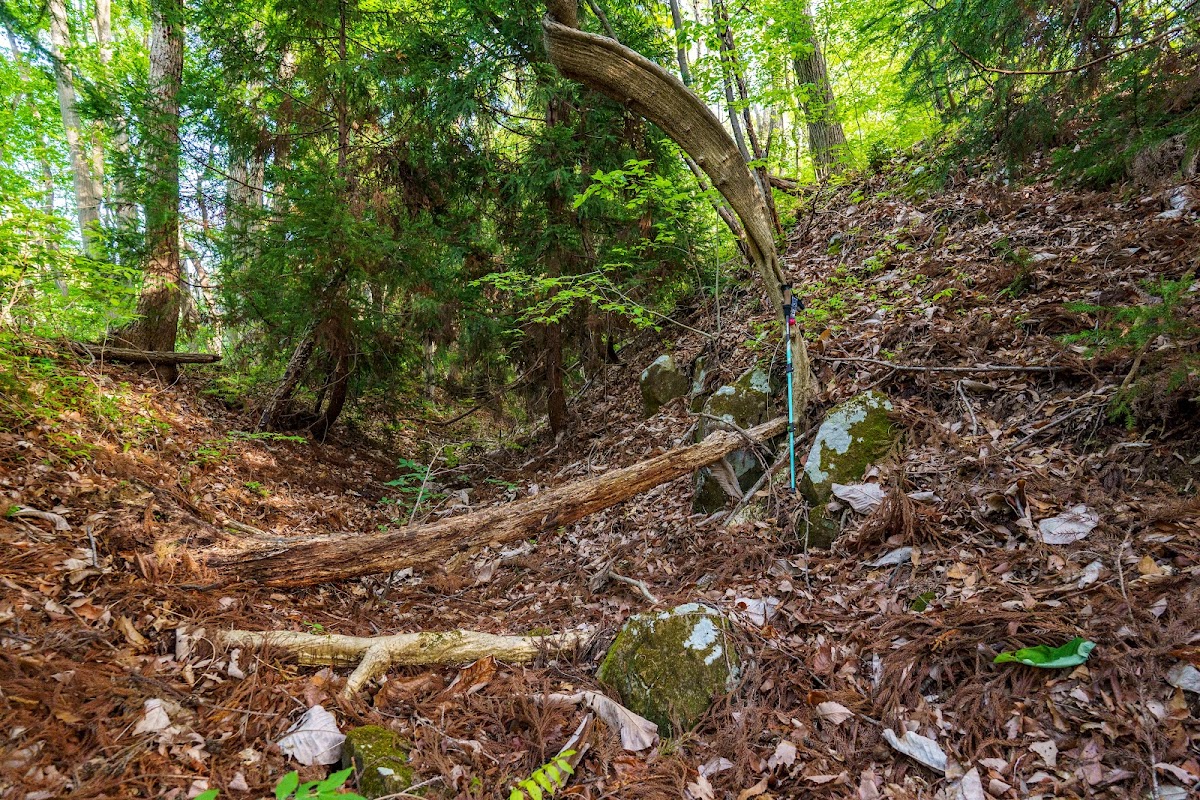
At Tsuruga Castle, multiple moats are arranged in a continuous pattern, particularly along the east-west ridges. Their number and scale are remarkable even among mountain castles in Tosa Province. Some moats reach several meters in depth and possess steep cliffs, demonstrating their high defensive strength even today.
The continuous arrangement of these trenches demonstrates the development of castle construction techniques in the late Sengoku period and clearly represents the characteristics of the Chosokabe clan’s castle architecture.
Scale
Tsuruga Castle is known as one of the largest castles among the mountain castles in the Sukumo region. The remains extend approximately 200 meters east-west and 150 meters north-south from the main enclosure to the outermost bailey, indicating its capacity to accommodate a considerable number of troops.
This scale suggests that Tsuruga Castle was not merely a fort, but played an important role as a base for regional control. A depression believed to be the remains of a well has also been confirmed within the castle grounds, suggesting that facilities capable of withstanding a siege may have been in place.
Highlights and Remains of Tsuruga Castle
Main Enclosure (Honmaru)
Located on the mountaintop, the main enclosure was the central area where the lord’s residence and command post were located. Currently, it is a flat space surrounded by earthen ramparts. From the main enclosure, you can overlook Sukumo Bay and the surrounding mountains, making it a valuable place to experience the view of the time.
The main enclosure measures approximately 30 meters east-west and 20 meters north-south. While no building foundations have been found, it is presumed that a post-and-beam building stood here.
A Series of Moats
What attracts castle enthusiasts visiting Tsuruga Castle the most attention is the series of moats arranged along the east and west ridges. In particular, the eastern ridge features three or more moats in a row, their depth and sharpness being truly impressive.
The height from the bottom to the top of the moats reaches 3 to 5 meters in some places, demonstrating the advanced castle-building techniques of the time. The steep angles of the moat cliffs indicate that it would have been extremely difficult for enemy soldiers to climb.
Remaining Earthworks
The earthworks surrounding each enclosure are also well-preserved. The earthworks around the main enclosure, in particular, remain at a height of 1 to 2 meters, clearly revealing the defensive line of the time. The top of the earthen rampart was flat, allowing soldiers to stand and aim their bows and guns. The outside of the rampart was a steep slope, making it difficult for the enemy to approach.
Arrangement of the Enclosures
The main enclosure is at the center, surrounded by the second and third enclosures arranged in a stepped pattern. Each enclosure functioned as an independent defensive unit, creating a multi-layered defense system where even if one enclosure was breached, the next could provide defense.
Several enclosures were also located on the southern ridge, indicating that the entire castle formed a three-dimensional defensive network.
Traces of Vertical Moats
Traces of vertical moats (tatebori), dug vertically along the slope, have also been confirmed in some areas. Vertical moats were designed to restrict enemy movement from lateral ascent, allowing the defenders to concentrate their attacks.
While some parts of Tsuruga Castle’s moat are obscured by sediment accumulation and tree growth, careful observation reveals them as streaky depressions on the slope.
How to Access Tsuruga Castle
Access by Public Transportation
When accessing Tsuruga Castle by public transportation, the nearest stations are Hirata Station or Sukumo Station on the Tosa Kuroshio Railway Sukumo Line.
Access from Hirata Station:
- Approximately 26 minutes on foot from Hirata Station (approximately 2 kilometers)
- Exit the station and head west along the prefectural road towards Yoshina, Yamana-cho.
Access from Sukumo Station:
- Take the Nakamura-Sukumo Line bus operated by Kochi Seinan Kotsu from Sukumo Station
- Get off at the “Yoshinaguchi” bus stop (approximately 15 minutes)
- Approximately 13 minutes on foot from the bus stop
Since bus services are limited, it is recommended to check the timetable in advance.
Access by Car
Access by car is the most convenient. From Kochi City, head west on National Route 56, passing through Sukumo town, and then towards Yoshina in Yamana-cho. The journey from Kochi City takes approximately 2 hours and 30 minutes.
The entrance to the castle ruins is in the Yoshina area, but there is no designated parking lot. Therefore, you will need to park in a location that does not inconvenience local residents. You will likely need to use the roadside near the entrance, but be careful not to interfere with farm work.
Ascent Route and Time Required
From the entrance to the main enclosure, it takes approximately 15-20 minutes to climb the mountain path. The path is an unpaved mountain trail, so appropriate clothing and shoes for hiking are necessary. Particular caution is needed after rain, as the path can become slippery.
There are very few signs along the way, so it is recommended to check your location beforehand using a topographic map or castle-related materials. Using a GPS app is also recommended.
Points to Note When Visiting
- Season: Spring to autumn is the best time to visit. During the summer, vegetation can become overgrown, making the ruins difficult to see.
- Clothing: Long-sleeved shirts, long pants, and trekking shoes are recommended.
- Items to bring: Drinking water, insect repellent, map, camera, etc.
- Safety: Avoid visiting alone; it is recommended to travel in groups.
- Manners: As you may need to pass through private property, consideration for local residents is necessary.
Related Historical Sites around Tsuruga Castle
Sukumo Castle (Sukumo Doi)
Sukumo Castle, located in the center of Sukumo City, was a castle developed as a branch castle of the Yamauchi clan during the Edo period. In 1601, Yamauchi Yoshiuji, nephew of Yamauchi Kazutoyo, entered the castle with a stipend of 6,000 koku and renovated it. However, it was abandoned due to the “One Castle Per Province” decree, and subsequently survived as Sukumo Doi.
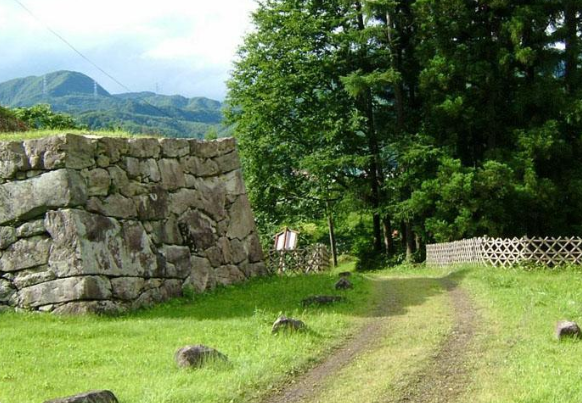
Currently located within the Sukumo city area, some of the stone walls and moat remains remain. Visiting Tsuruga Castle along with other castle sites allows you to understand the changes in castle architecture from the Sengoku period to the Edo period.
Other Castle Sites in Sukumo City
Besides Tsuruga Castle, there are several other mountain castle sites in Sukumo City:
- Hirano Castle: A mountain castle located in the Hirano district of Sukumo City
- Yamada Castle: A mountain castle in the Yamada district of Sukumo City
- Nuno Castle: A mountain castle within Sukumo City
These castle sites are important historical sites that demonstrate the Chosokabe clan’s rule in western Tosa Province. For castle enthusiasts, visiting these sites along with Tsuruga Castle will allow you to understand the regional castle network.
Sukumo City Tourist Attractions
In addition to visiting the castle ruins, consider visiting other tourist attractions in Sukumo City:
- Daruma Sunset: A natural phenomenon where the sunset over Sukumo Bay appears in the shape of a Daruma doll.
- Sukumo Machi-no-Eki Hayashi Residence: A tourist facility utilizing a merchant’s house from the Edo period.
- Kanyo Island Park: A park on a small island in Sukumo Bay.
Cultural Property Designation and Preservation Status of Tsuruga Castle
Currently, Tsuruga Castle has not received cultural property designation, but it is a castle site with important remains as a Sengoku period mountain castle in Tosa Province. Local castle researchers and history enthusiasts are conducting surveys and recordings, and its value is gradually being recognized.
The preservation state of the remains is relatively good, but some remains are becoming unclear due to tree growth and natural erosion. Future cultural property designation and preservation work are anticipated.
How to Enjoy Your Visit to Tsuruga Castle
Castle Photography
Tsuruga Castle is also an attractive subject for photography. Including people in your shots is particularly effective in conveying the depth of the moats and the height of the earthworks, creating a sense of scale. The view from the main enclosure is also a popular photo spot.
Creating a Castle Layout Map
One of the joys of castle research is creating a castle layout map (a blueprint of the castle). When visiting Tsuruga Castle, it’s a fun experience to actually walk around, record the locations of the baileys and moats, and create your own layout map.
Experiencing Historical Romance
You can reflect on the history of the Chosokabe clan’s warriors who strategized here over 400 years ago, pursuing their dream of unifying Shikoku. The castle ruins, nestled in the quiet mountains, evoke the romance of the Sengoku period.
Summary: The Charm of Tsuruga Castle, a Mountain Castle in Tosa
Tsuruga Castle in Sukumo City, Kochi Prefecture, is an important mountain castle that tells the history of Chosokabe Motochika’s unification of Tosa and his conquest of Shikoku. Since Toichi Bingo-no-kami became the lord of the castle in 1575, it has functioned as a strategic point in western Tosa Province.
Built on a mountaintop with a relative elevation of 80 meters, the castle possesses valuable remains that convey the castle-building techniques of the Sengoku period, such as continuous moats, clearly defined earthworks, and a stepped layout of baileys. Its large scale and the excellent state of preservation of its remains are particularly noteworthy among mountain castles in Tosa Province.
While access is somewhat inconvenient, this means fewer visitors, allowing for a peaceful and enjoyable experience of the castle ruins. For castle enthusiasts and history buffs, it is a hidden gem well worth a visit.
If you’re planning a castle tour in Shikoku, or if you’re interested in the history of the Chosokabe clan, be sure to visit Tsuruga Castle in Sukumo City and experience the charm of a mountain castle in Tosa. It will be a valuable experience that will allow you to feel the spirit of the Sengoku period.