Tsuruga Castle Complete Guide | History, Highlights, Access, and Admission Fees: A Thorough Explanation
Tsuruga Castle, officially known as Wakamatsu Castle, is a magnificent castle beloved by the citizens of Aizuwakamatsu City, Fukushima Prefecture, and a symbol of the city. It is counted among Japan’s 100 Famous Castles and gained nationwide fame as an “impregnable fortress” that withstood a month-long onslaught by the New Government Army during the Boshin War at the end of the Edo period. With a history of approximately 630 years, this castle continues to fascinate many history buffs and tourists as the only castle in Japan with a red-tiled keep.
This article provides a thorough explanation of Tsuruga Castle’s detailed history, highlights, exhibits at the keep museum, access methods, admission fees, opening hours, parking information, and other information you should know before visiting.
The History of Tsuruga Castle | Over 630 Years
Origins in the Muromachi Period: Construction of Higashi-Kurokawa Manor
The history of Tsuruga Castle dates back approximately 630 years to the first year of the Shitoku era (1384). In that year, Ashina Tadamori, who ruled Aizu, built Higashi-Kurokawa Manor, which became the predecessor of Tsuruga Castle. At that time, Aizu was an important base in the Tohoku region, and the Ashina clan ruled this area for approximately 200 years.
During the Ashina clan’s rule, Higashi-Kurokawa Manor gradually expanded and developed into the political, economic, and cultural center of the Aizu region. However, in the 17th year of the Tensho era (1589), the Ashina clan was defeated in the Battle of Suriagehara against Date Masamune, and Aizu came under the control of the Date clan.
Construction of the Castle Tower by Gamo Ujisato
Tsuruga Castle was transformed into a full-fledged castle in 1593 (Bunroku 2). Gamo Ujisato, who was appointed to Aizu by order of Toyotomi Hideyoshi, constructed the first full-fledged seven-story castle tower in eastern Japan. It is said that at this time, Ujisato named the castle “Tsuruga Castle.”
Ujisato was a samurai from Omi Province (present-day Shiga Prefecture) and a man deeply knowledgeable in tea ceremony and culture. Under his rule, Aizu developed significantly, and the castle town was also improved. After the Gamo clan, Uesugi Kagekatsu took over, and then the castle lords changed hands again to the Kato clan and the Hoshina clan (later the Matsudaira clan).
Major Renovations in the Edo Period and the Completion of the Five-Story Castle Tower
In 1639 (Kanei 16), during the time of Kato Akimasa, a major earthquake struck Aizu, severely damaging the castle tower. Following this damage, extensive renovation work was undertaken, resulting in the reconstruction of the castle tower into its current five-story form. This original form served as the basis for the restoration during the Heisei era.
In 1643 (Kanei 20), Hoshina Masayuki became the lord of the Aizu domain, and thereafter, the Hoshina clan (later renamed Matsudaira) ruled Aizu until the end of the Edo period. The Matsudaira clan’s rule was stable, and the Aizu domain was positioned as an important collateral domain within the Tokugawa shogunate.
The Boshin War and the Impregnable Castle
Tsuruga Castle became famous throughout Japan during the Boshin War of 1868 (Keio 4). The Aizu domain chose to fight on the side of the shogunate against the new government forces, and Tsuruga Castle came under fierce attack from the new government army. During the siege that lasted approximately one month, Tsuruga Castle endured intense bombardment from state-of-the-art Armstrong cannons and other weapons, but its sturdy stone walls and fortifications held out. During this time, many Aizu samurai and their families fought to defend the castle, including the tragic Byakkotai (White Tiger Corps). Women and children also supported the fight within the castle by nursing the wounded and providing meals.
Ultimately, the Aizu domain surrendered, but Tsuruga Castle’s strength was etched into history as a “masterpiece of impregnable fortress.” However, in 1874 (Meiji 7), the castle tower was demolished due to the policies of the Meiji government.
Restoration Projects in the Showa and Heisei Eras
In 1965 (Showa 40), the Tsuruga Castle tower was rebuilt due to the fervent wishes of the citizens. Although it is a reinforced concrete structure, the exterior faithfully reproduces its Edo period appearance.
In 2000 (Heisei 12), the “Hoshii Yagura” (dried rice tower) and “Minami Hashiri Nagaya” (southern longhouse) leading to the main keep were restored using Edo period construction methods and techniques. This restoration utilized traditional wooden building techniques, successfully recreating the original appearance more accurately.
In 2011 (Heisei 23), a large-scale project was completed to replace the roof tiles of the main keep with “red tiles” to bring it closer to its appearance during the late Edo period. These red tiles are special tiles suited to the climate of the Aizu region, making it the only existing main keep in Japan with red tiles.
Highlights of Tsuruga Castle | Japan’s Only Red-Tiled Main Keep
Red-Tiled Main Keep
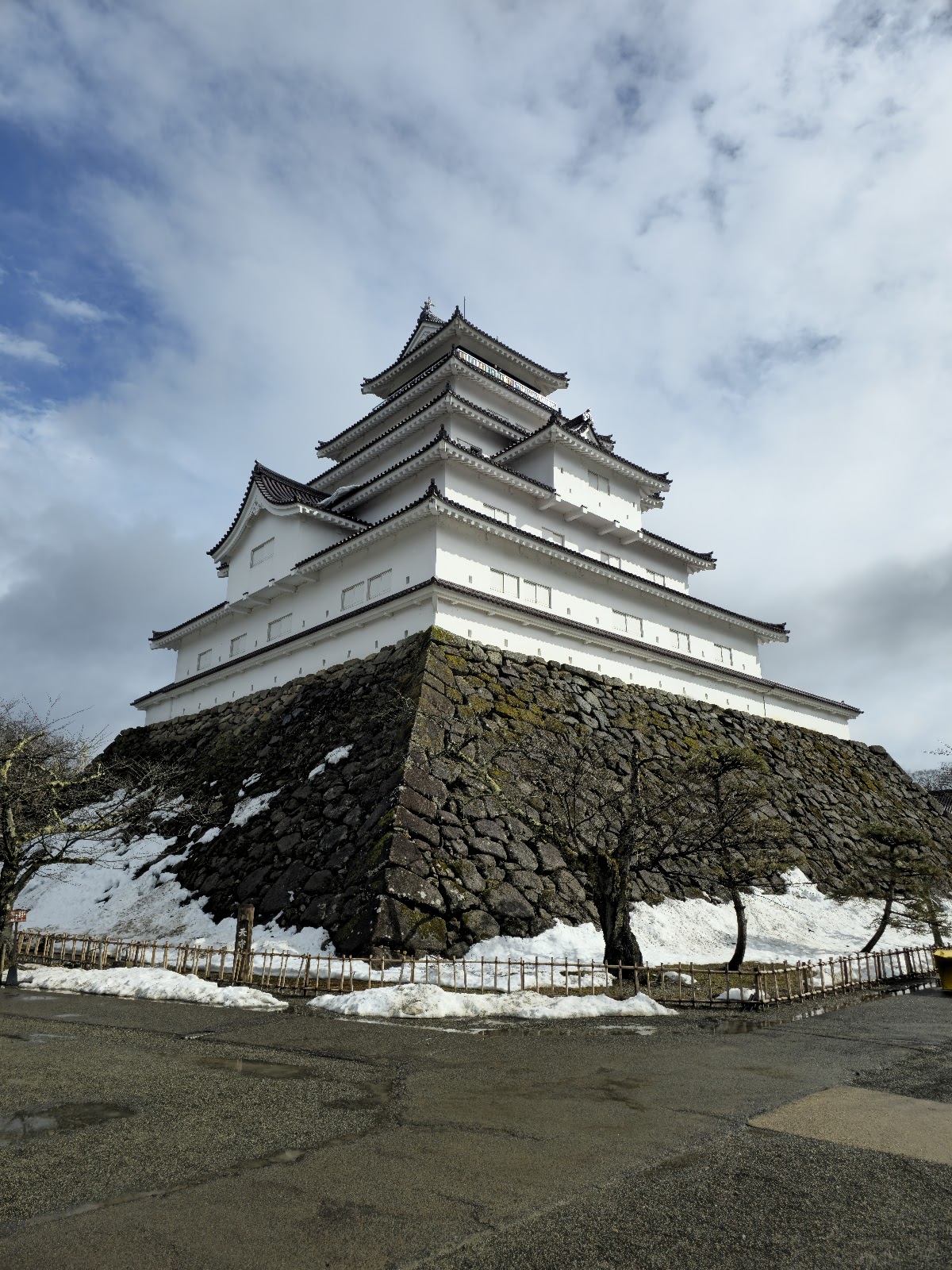
The most distinctive feature of Tsuruga Castle is undoubtedly its red-tiled main keep, the only one of its kind in Japan. While most castles have black or gray tiles, Tsuruga Castle’s red tiles are special tiles developed to withstand the harsh winter cold of the Aizu region.
The red roof tiles are made from clay rich in iron, and turn reddish-brown when fired. These tiles are highly resistant to cold and frost damage. The red-tiled castle tower against the blue sky exudes a unique beauty not seen in other castles.
Stone Walls and Castle Structure
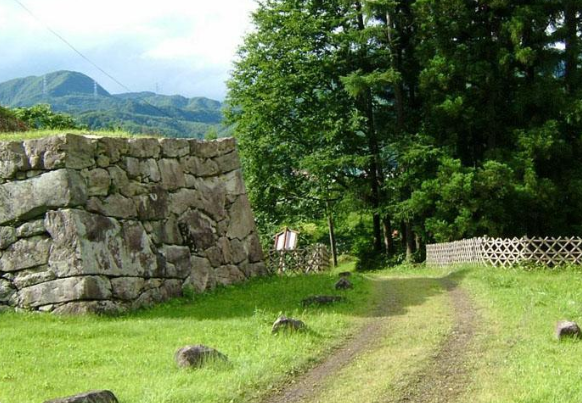
Tsuruga Castle is a flatland castle with a stepped layout, centered around the main keep, with the west, north, second, and third baileys surrounding it. The stone walls still bear the marks of artillery fire from the Boshin War, allowing visitors to feel the vividness of history.
Particularly noteworthy is the high level of construction technology used in the stone walls. Techniques such as “nozurazumi” (rough stone masonry) and “uchikomi-tsugi” (fitted stone masonry) are evident, showcasing the pinnacle of stonemasonry technology at the time.
View from the Castle Tower
From the top floor of the castle tower, you can enjoy a panoramic view of Aizu-Wakamatsu city. The beautiful scenery of Mount Bandai and the Aizu Basin unfolds before you, allowing you to enjoy the landscapes of each season. Especially during cherry blossom season and autumn foliage season, you can enjoy the spectacular view created by the castle and nature.
Rinkaku Tea House
Within Tsuruga Castle Ruins Park is the Rinkaku Tea House. It is said that this tea house was built by Shoan, the son of Sen no Rikyu, when he was invited to Aizu by Gamo Ujisato.
Rinkaku Tea House is a valuable building that conveys the tea ceremony culture of the Momoyama period. Inside, you can learn about the history of the tea ceremony and the structure of the tea house, and you can also enjoy matcha tea and Japanese sweets (additional charge applies).
Tsuruga Castle as a Cherry Blossom Spot
Tsuruga Castle is also a famous cherry blossom spot, selected as one of “Japan’s Top 100 Cherry Blossom Spots.” The castle grounds are home to approximately 1,000 cherry trees, primarily Somei Yoshino varieties, creating a breathtaking spectacle in spring when the entire castle is enveloped in blossoms.
At night, the castle is illuminated, creating a magical atmosphere with the red-tiled keep and cherry blossoms. The cherry blossoms typically bloom from mid- to late April, attracting many visitors.
Exhibits at the Castle Keep Museum
The interior of Tsuruga Castle’s keep is open to the public as the “Wakamatsu Castle Keep Local History Museum,” a valuable facility for learning about the history and culture of Aizu.
Permanent Exhibitions
The museum features extensive permanent exhibitions showcasing the history of Aizu chronologically.
1st Floor: Boshin War Exhibition
A wealth of materials related to the Boshin War are on display. Weapons and armor used by Aizu samurai, documents from the time, and photographs allow visitors to experience the turbulent end of the Edo period. The exhibits on the Byakkotai (White Tiger Corps) are extensive, allowing visitors to learn in detail about the tragedy of the young soldiers.
2nd Floor: History of the Aizu Domain
Learn about the achievements of successive lords of the Aizu Domain, from Gamo Ujisato to the Matsudaira clan, and the system of governance of the Aizu Domain. There are also exhibits on the Nisshinkan, the Aizu Domain’s educational institution, demonstrating the high level of education among Aizu samurai.
3rd Floor: Castles and Architecture
The architectural techniques and structure of Tsuruga Castle are explained in detail using models and drawings. You can gain a deep understanding of the charm of castle architecture, including the construction methods of the stone walls and the structure of the keep.
4th Floor: Culture of Aizu
Traditional crafts of the Aizu region, such as Aizu lacquerware and Aizu cotton, are on display. You can feel the development of the lacquerware industry encouraged by Gamo Ujisato and the cultural richness of Aizu.
5th Floor: Observation Floor
The top floor is an observation floor where you can enjoy a 360-degree view. From here, you can enjoy a panoramic view of Aizu-Wakamatsu city and the surrounding mountains, and on clear days, you can even see the majestic Mount Bandai.
Special Exhibitions
Various special exhibitions and themed exhibitions are held throughout the year. From themed exhibitions on Aizu’s history and culture to seasonal events, there’s something new to discover with every visit. The latest event information can be found on the Aizu-Wakamatsu Tourism Bureau’s official website.
Museum Shop
On the first floor of the castle tower is the Tsuruga Castle Museum Shop, where you can purchase Aizu’s local specialties and original Tsuruga Castle goods. A wide variety of Aizu-specific souvenirs are available, including Aizu lacquerware, Akabeko (red cow) figurines, Aizu cotton products, and local sake.
Visitor Information | Opening Hours & Holidays
Castle Tower Museum Opening Hours
Opening Hours: 8:30 AM – 5:00 PM
Last Entry: 4:30 PM
Closed: Open Year-Round
Tsuruga Castle Tower is open year-round, so you can visit anytime. However, opening hours may change during the New Year holidays or when events are held, so it is recommended to check the official website in advance.
Estimated Visit Time
A visit to the Castle Tower Museum usually takes 30 minutes to 1 hour. If you want to carefully view the exhibits or explore the entire castle grounds, it is recommended to allow about 2 hours.
If you also plan to visit the Rinkaku Tea House, it is advisable to allow an additional 30 minutes.
Castle Tower Museum Admission Fees
Individual Rates
Castle Tower Only
- Adults: 410 yen
- Elementary and Junior High School Students: 150 yen
Castle Tower & Rinkaku Tea House Combined Ticket
- Adults: 520 yen
- Elementary and Junior High School Students: 150 yen
Group Rates (30 or more people)
Castle Tower Only
- Adults: 360 yen
- Elementary and Junior High School Students: 135 yen
Castle Tower & Rinkaku Tea House Combined Ticket
- Adults: 470 yen
- Elementary and Junior High School Students: 135 yen
Disability Discount
Admission is free for the person with a disability and one caregiver upon presentation of a disability certificate. Please present your certificate at the reception.
Other Discounts
Combined tickets with other tourist facilities in Aizuwakamatsu City and various discount plans are available. Details can be found on the Aizuwakamatsu Tourism Bureau’s official website.
Access Methods | How to Get to Tsuruga Castle
Access by Train
From JR Aizu-Wakamatsu Station
- Machinaka Loop Bus “Haikara-san” or “Akabee”
- Travel time: Approximately 20 minutes
- Get off at the “Tsuruga Castle Entrance” bus stop, 5-minute walk
- Fare: 210 yen per ride, 600 yen for a one-day pass
- Aizu Bus
- Get off at the “Tsuruga Castle San-no-maru Entrance” bus stop, immediately
- Travel time: Approximately 15 minutes
- Taxi
- Travel time: Approximately 10 minutes
- Fare: Approximately 1,000 yen
- Rental Bicycle
- Approximately 15 minutes using rental bicycles in front of the station
- Convenient for sightseeing in Aizu-Wakamatsu city
Access by Car
From the Expressway
- Approximately 15 minutes from the Ban-etsu Expressway “Aizu-Wakamatsu IC”
- Via the Tohoku Expressway “Koriyama JCT,” take the Ban-etsu Expressway to “Aizu-Wakamatsu IC.”
Travel Time from Major Cities
- From Tokyo: Approximately 3 hours 30 minutes
- From Sendai: Approximately 2 hours
- From Niigata: Approximately 1 hour 30 minutes
Parking Information
There are three paid parking lots around Tsuruga Castle.
Nishidemaru Parking Lot
- Capacity: 200 regular cars
- Fee: 200 yen for the first hour, 100 yen for each additional hour
- Closest parking lot to the castle tower
East Entrance Parking Lot
- Capacity: 129 regular cars
- Fee: 200 yen for the first hour, 100 yen for each additional hour
South Entrance Parking Lot
- Capacity: 35 regular cars
- Fee: 200 yen for the first hour, 100 yen for each additional hour
All parking lots are paid, but the rates are relatively reasonable. During cherry blossom season and peak tourist season, crowds are expected, so we recommend arriving early.
Nearby Tourist Attractions
Oyakuen Garden
This is a nationally designated scenic Japanese garden built as the garden of the Aizu Matsudaira clan. Located about 5 minutes by car from Tsuruga Castle, you can enjoy the beautiful scenery of each season.
Iimoriyama and Byakkotai Memorial Museum
Iimoriyama, where the graves of the Byakkotai (White Tiger Corps) who committed suicide during the Boshin War are located, is about 3 km from Tsuruga Castle. It is a must-visit spot for those who want to learn more about the history of Aizu.
Nanokamachi Street
Nanokamachi Street has a retro atmosphere, with cafes and shops housed in renovated storehouses. You can purchase traditional crafts such as Aizu lacquerware and Aizu cotton, as well as enjoy Aizu cuisine.
Higashiyama Onsen
Higashiyama Onsen, known as the inner sanctuary of Aizu-Wakamatsu City, is about 15 minutes by car from Tsuruga Castle. After sightseeing, we recommend relaxing and unwinding in a hot spring.
Tips for Enjoying Tsuruga Castle
Best Season
Tsuruga Castle offers beautiful scenery throughout the four seasons, but the following times are especially recommended:
Spring (Mid-April to Late April): Approximately 1,000 cherry trees bloom, and the castle is illuminated at night.
Autumn (Late October to Early November): The autumn foliage is beautiful, and the contrast between the red-tiled castle tower and the autumn leaves is magnificent.
Winter (January to February): The snow-covered castle tower is exceptionally beautiful. Winter events are also held.
Photo Spots
View from Kitademaru: A classic spot for photographing the entire castle tower.
Along the stone walls during cherry blossom season: An excellent spot for photographing cherry blossoms and the castle tower together.
Top floor of the castle tower: Offers a panoramic view of Aizu-Wakamatsu city and the surrounding mountains.
Estimated Time Required
- Castle Tower Museum only: 1 hour
- Castle Tower + Castle Grounds Walk: 1.5-2 hours
- Castle Tower + Rinkaku Tea House + Castle Grounds Walk: 2-2.5 hours
- Including surrounding sightseeing: Half a day to a full day
Summary
Tsuruga Castle is a magnificent castle boasting a history of over 630 years, serving as a symbol of Aizu-Wakamatsu. Its unique red-tiled castle tower, sturdy stone walls that withstood the fierce battles of the Boshin War, and beautiful scenery throughout the seasons continue to fascinate many tourists.
At the museum inside the castle tower, you can learn about Aizu’s rich history and culture, and a stroll through the castle park allows you to appreciate the beauty of traditional Japanese castle architecture. With easy access and ample parking, it’s a tourist spot easily accessible by both car and public transport.
When visiting Aizu-Wakamatsu, be sure to visit Tsuruga Castle and experience Aizu’s history and culture. The unique landscape created by the red-tiled castle tower and the weight of history etched within will surely create unforgettable memories.