Tsumagi Castle (Toki City, Gifu Prefecture) Complete Guide | History, Highlights, and Access Information
Tsumagi Castle is a mountain castle ruin located in Kamigo, Tsumagi-cho, Toki City, Gifu Prefecture. Built on the summit of Shiroyama Mountain at an altitude of 407 meters (some sources say 409 meters), the castle was situated in the center of pottery production known for Mino ware, and served as the residence of the Tsumagi clan, a branch of the Akechi clan, for generations. The remains, including stone walls, baileys, and earthworks, remain well-preserved today, and the castle was designated a Gifu Prefecture Historic Site in 1956.
History of Tsumagi Castle
Construction and the Akechi Clan Era
The exact construction date of Tsumagi Castle is unclear, but it is presumed to have been built in 1339 (Ryakuō 2) when Toki Akechi Hikokuro Yorishige, grandson of Toki Yorishige, inherited his grandfather’s territory and ruled Tsumagi. The Toki-Akechi clan was a branch of the Toki clan, a powerful daimyo family of Mino Province, and established their power base in the Tsumaki area.
Initially, it was the territory of the Akechi clan, but later the Tsumaki clan, a branch of the Akechi clan, became the lords of the castle. It is said that they began to use the name Tsumaki during the time of Hirotada, and thereafter, the Tsumaki clan reigned as the lords of this area for generations. Pottery production has flourished in the Tsumaki area since ancient times, and it is known as the region that laid the foundation for Mino ware. Kiln ruins still remain around the castle, suggesting that the Tsumaki clan protected and encouraged pottery production.
The Tsumaki Clan in the Sengoku Period
During the Sengoku period, the Tsumaki clan became subordinates of Oda Nobunaga and Mori Yoshinaga (father of Mori Ranmaru), and survived the turbulent times. During the Honnō-ji Incident of 1582, Tsumaki Hirotada followed Akechi Mitsuhide, and it is said that he committed suicide in Sakamoto, Ōmi Province, after Mitsuhide’s defeat. Akechi Mitsuhide and the Tsumaki clan were related and had a deep connection to this historical event.
The Tsumaki clan continued to exist after the Honnō-ji Incident, adapting to the subsequent changes in the political situation. They skillfully survived the turbulent Sengoku period, maintaining their territory.
The Battle of Sekigahara and the Activities of the Tsumaki Clan
In the Battle of Sekigahara in 1600, the Tsumaki clan sided with the Eastern Army. They achieved military success by defeating the Tamaru forces, lords of Iwamura Castle, who belonged to the Western Army. For this achievement, they were granted a territory of 7,500 koku in the Tsumaki area. This increase further stabilized the Tsumaki clan’s position.
After the Battle of Sekigahara, the Tsumaki clan continued to rule the Tsumaki area as hatamoto (direct retainers of the shogun) throughout the Edo period. It is believed that the Tsumaki clan ruled this area until 1658, during which time the castle and castle town continued to be developed and improved.
Structure and Layout of Tsumaki Castle
Location and Size of the Castle
Tsumaki Castle is a typical mountain castle located on the tip of a hill on the left bank of the Tsumaki River, at an elevation of 407 meters. The relative height from the Tsumaki-Kamigo settlement is approximately 200 meters, making it a strategically important location offering panoramic views of the surrounding terrain.
The castle grounds extend over an area of approximately 200 meters square, centered on the mountaintop. It consists of the main enclosure (Ichino-kuruwa) and the second enclosure, along with a group of smaller enclosures along the main approach and enclosures built on the southwestern and southern ridges. This layout is thought to have been gradually developed from the Sengoku period to the early Edo period.
Remains on the Mountaintop
First Enclosure (Main Enclosure)
Located on the mountaintop, the first enclosure is the most important section of Tsumaki Castle, forming its core. It is believed that the lord’s residence and important facilities were located here. The shape of the enclosure remains clearly visible today, and traces of stone walls and earthworks can be seen around it. The view from the mountaintop is magnificent, overlooking the mountains of Mino and the city of Toki.
Second Enclosure
Adjacent to the first enclosure, the second enclosure is presumed to have housed defensive facilities and vassal quarters. There is a difference in elevation between the two enclosures, separated by a stone wall. The second enclosure is also relatively large, making it an important section that constituted the main part of the castle.
Characteristics of the Stone Walls
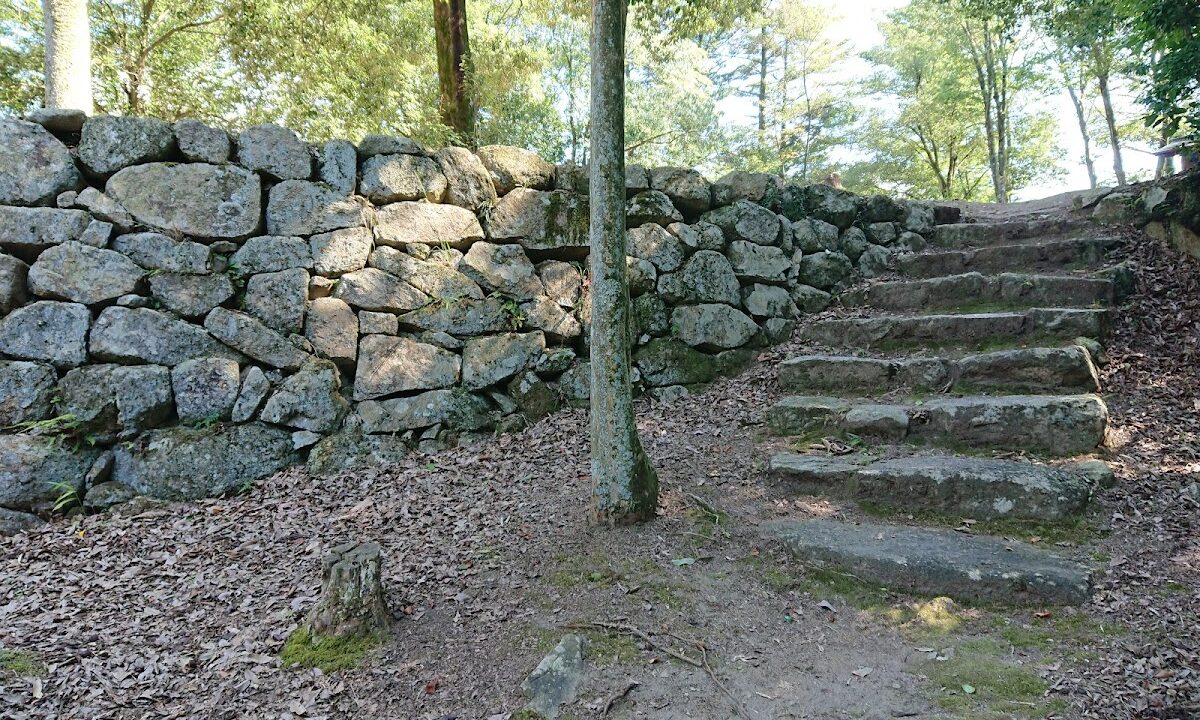
The stone walls of Tsumaki Castle are valuable remains that demonstrate castle construction techniques from the Sengoku period to the early Edo period. Stone walls built using the nozurazumi method (a technique involving stacking natural stones) remain in various places, preserving the stone-laying techniques of the time. The stone walls are particularly well-preserved along the steps of the baileys and pathways, providing important clues to understanding the castle’s defensive structure.
The height of the stone walls varies depending on the location, but some reach approximately 3 meters in height, indicating that a fairly substantial amount of stone wall construction was carried out for a mountain castle.
Arrangement of the Baileys
In addition to the main bailey and the second bailey, several smaller baileys are arranged in a stepped pattern along the main approach. These were defensive structures designed to intercept approaching enemies, and various ingenious features such as flanking fire positions can be seen. Baileys were also constructed on the southwestern and southern ridges, creating a layout designed to withstand attacks from multiple directions.
Highlights of the Tsumaki Castle Samurai Residence Site
Samurai Residences at the Foot of the Mountain
One of the distinctive features of Tsumaki Castle is the well-preserved samurai residence site at the foot of the mountain. These residences, located on both sides of the slope leading up to Shiroyama, are the remains of samurai residences where retainers of Tsumaki Castle lived. In 1957, they were designated a Gifu Prefecture Historic Site as the “Tsumaki Castle Samurai Residence Site.”
Today, stone walls, stone steps, and wells that once divided the residence grounds remain, conveying the appearance of samurai residences during the Edo period. Stone walls approximately 3 meters high remain at the boundaries with adjacent residences, clearly confirming the original layout of the residences.
Stone Walls and Garden Stones at the Samurai Residence Site
At the samurai residence site, some of the original garden stones remain, allowing visitors to experience the atmosphere of the gardens of the time. Although the surrounding area is now a cypress forest, the stone walls and steps are well-preserved, making them valuable resources for understanding the structure of samurai residences.
Stone Walls Along the Valley Stream Behind the Samurai Residence Site
Stone walls also remain along the valley stream flowing through the hillside behind the samurai residence site. These structures were built in conjunction with the development of residential areas and the construction of waterways, and are noteworthy as relics demonstrating the civil engineering techniques of the Tsumaki castle town. The stone walls along the valley are thought to have also served to protect the residences from floods.
Relocated Castle Gate (Sozenji Temple Gate)
The remains of Tsumaki Castle exist not only as castle ruins but also as relocated structures. At Sozenji Temple in Tsumaki town, there is a structure said to be a castle gate from Tsumaki Castle that was relocated and used as the temple gate. This gate is valuable as one of the few remaining structures from Tsumaki Castle, and it preserves the architectural style of castle gates from that period.
The Sozenji Temple gate was relocated after Tsumaki Castle was abandoned and is an important cultural property that tells the history of the castle. When visiting the castle ruins, it is recommended to also visit Sozenji Temple.
The Relationship Between Tsumaki Castle and Mino Ware
The Tsumaki area has long been a thriving center for pottery production and was one of the important production areas for Mino ware. The Tsumaki clan, lords of Tsumaki Castle, are credited with protecting and encouraging pottery production, laying the foundation for Mino ware. Numerous kiln sites remain around the castle, indicating that urban planning closely linked to pottery production was implemented in the castle town.
The Tsumaki clan’s emphasis on pottery production stemmed not only from economic gain but also from the aspect of industrial development in their domain’s administration. Mino ware became a nationally recognized pottery brand, becoming an important industry supporting the prosperity of the Tsumaki region.
Even today, Toki City is known as a production center for Mino ware, and visitors to the Tsumaki Castle ruins can also learn about the history and culture of Mino ware.
Tsumaki Castle Photo Spots
View from the Mountaintop
The best photo spot at Tsumaki Castle is undoubtedly the view from the mountaintop. From the first and second baileys, you can enjoy a panoramic view of the Mino mountains and Toki city, especially on a clear day. In spring, cherry blossoms bloom, and in autumn, the autumn leaves are beautiful, allowing you to photograph scenery throughout the seasons.
Stone Wall Photography Spots
The stone walls remaining on the stepped sections of the baileys and along the pathways are excellent photographic subjects that evoke the history of Tsumaki Castle. In particular, the moss-covered stone walls exude the atmosphere of a castle ruin that has stood the test of time, making for impressive photographs.
Stone Walls and Steps of the Samurai Residence Site
The stone walls and steps remaining at the samurai residence site at the foot of the mountain are also popular photography spots. These remains, which retain the atmosphere of samurai residences, are important subjects that tell the story of Tsumaki Castle’s history.
Photography During Cherry Blossom Season
In spring, cherry blossoms bloom around the castle ruins, allowing you to enjoy a picturesque landscape. The combination of cherry blossoms, stone walls, and baileys creates a beautiful scenery unique to Japanese castle ruins. Many photography enthusiasts visit during cherry blossom season to capture the charm of Tsumaki Castle in photographs.
Access and Visiting Guide to Tsumaki Castle
Access Methods
Access by Car
- Approximately 15 minutes from the Toki Interchange on the Chuo Expressway
- Accessible via National Route 19 and a prefectural road
- Parking: Parking space available near the castle ruins entrance (note that spaces are limited)
Access by Public Transportation
- Approximately 15 minutes by taxi from Toki City Station on the JR Chuo Main Line
- Bus services are limited, so access by car is more convenient
Ascent Routes
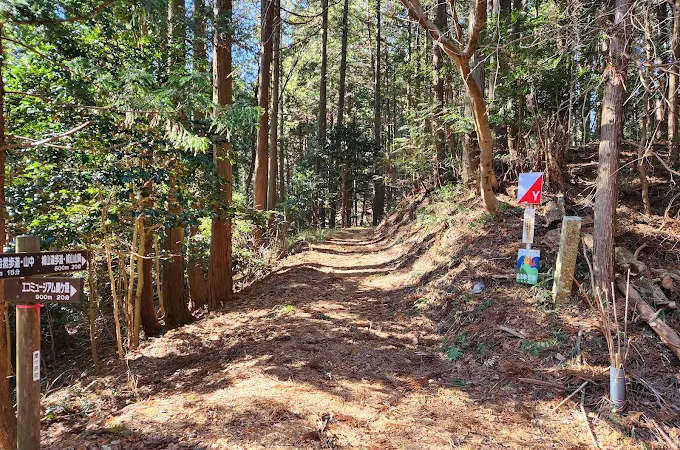
There are two main ascent routes to Tsumaki Castle ruins.
- Ote-michi Route: A traditional route that ascends via the samurai residence ruins. You can ascend while viewing stone walls and residence ruins.
- Karamete-michi Route: A route that ascends from the back of the castle. There are some steep sections, but you can enjoy the castle ruins from a different angle.
Both routes are mountain trails, so appropriate clothing and shoes for hiking are necessary. The climb to the summit takes approximately 30 to 40 minutes.
Notes for Visitors
- Clothing and Equipment: Since you will be walking on a mountain trail, trekking shoes or athletic shoes and comfortable clothing are essential.
- Season: Spring (cherry blossom season) and autumn (autumn foliage season) are especially recommended, but in summer, insect repellent is necessary, and in winter, be aware of snow and ice.
- Estimated Time: Allow approximately 1.5 to 2 hours round trip.
- Drinking Water: There are no vending machines on the mountain, so please bring plenty of drinking water.
- Toilets: There are no toilets at the castle ruins, so it is recommended to use the restroom beforehand.
Nearby Attractions
When visiting Tsumaki Castle Ruins, we recommend also visiting the following nearby spots:
- Sozenji Temple: It has a temple gate that was relocated from Tsumaki Castle.
- Mino Ware Museum: A facility in Toki City where you can learn about the history of Mino ware.
- Kiln Tour: Many kilns still producing pottery are scattered around Tsumaki.
- Michi-no-Eki Shino-Oribe: A facility where you can purchase Mino ware.
Cultural Property Designation and Preservation Activities of Tsumaki Castle
Tsumaki Castle ruins were designated a Gifu Prefecture Historic Site in 1956, and the samurai residence ruins were also designated a Prefectural Historic Site the following year, 1957. This meant that the castle ruins and samurai residence ruins were protected as a single entity.
Currently, the Toki City Board of Education is leading efforts to preserve and utilize the castle ruins. Care is being taken to ensure visitors can safely view the castle ruins, including the maintenance of hiking trails, the installation of information boards, and regular grass cutting. Local history enthusiasts and preservation societies are also actively working to pass on the history of Tsumaki Castle to future generations.
Summary
Tsumaki Castle, a mountain castle built in the heart of Mino ware pottery, is an important historical site in Gifu Prefecture. The Tsumaki clan, a branch of the Akechi clan, resided there for generations. Their territory was secured after their achievements in the Battle of Sekigahara. The castle’s remains, including stone walls, baileys, and earthworks, are well-preserved, and the ruins of samurai residences are also preserved at the foot of the mountain.
The view from the 407-meter-high summit is magnificent, allowing visitors to experience the atmosphere of a Sengoku period mountain castle while enjoying the changing seasons. Besides the castle ruins, there are many other points of interest, such as the relocated Sozenji Temple gate and surrounding kiln sites. Visiting Tsumaki Castle in conjunction with the history of Mino ware pottery will allow for a deeper understanding of Tsumaki’s history and culture.
While it’s a challenging mountain castle requiring proper climbing equipment, the rewards are immense, offering a sense of accomplishment and historical romance. When visiting Gifu Prefecture, be sure to visit Tsumaki Castle ruins and experience the history of Mino.